Creatine: More Than a Muscle Supplement — What the Science Says About Energy, Strength, Aging, and Brain Health
What creatine actually does: how it helps regenerate ATP, what the evidence shows for strength, muscle preservation, aging and cognition, and how it affects creatinine and kidney testing.
Erik Natkin, DO • 33 min read
Medically reviewed by Erik Natkin, DO — Founder, R2 Medical Clinic, Denver, Colorado
Last medically reviewed: October 2026
Creatine has been used as a sports supplement for decades, but describing it simply as a supplement for bodybuilders significantly understates its biological role.
Creatine is a naturally occurring compound involved in one of the body’s fundamental cellular energy systems. It helps tissues rapidly regenerate adenosine triphosphate (ATP)—the molecule cells use to perform energy-dependent work.
That matters in skeletal muscle, where ATP is required for muscle contraction.
But creatine metabolism is not limited to muscle.
The creatine-phosphocreatine system also operates in other tissues with substantial or rapidly changing energy requirements, including the brain and heart.
Some of these applications are supported by considerably stronger evidence than others.
This has led researchers to investigate creatine not only for athletic performance, but also for:
- Muscle strength
- Lean tissue preservation
- Healthy aging
- Sarcopenia
- Exercise recovery
- Cognitive performance
- Neurologic health
- Metabolic health
The strongest evidence remains creatine’s ability to increase intramuscular creatine availability and improve certain aspects of strength, power, repeated high-intensity exercise performance, and training adaptation.
But to understand why creatine can do those things, we first need to understand something more fundamental:
How does the human body produce, store, transfer, and rapidly regenerate cellular energy?
That story begins with creatine—but quickly leads us to ATP.
What Is Creatine?
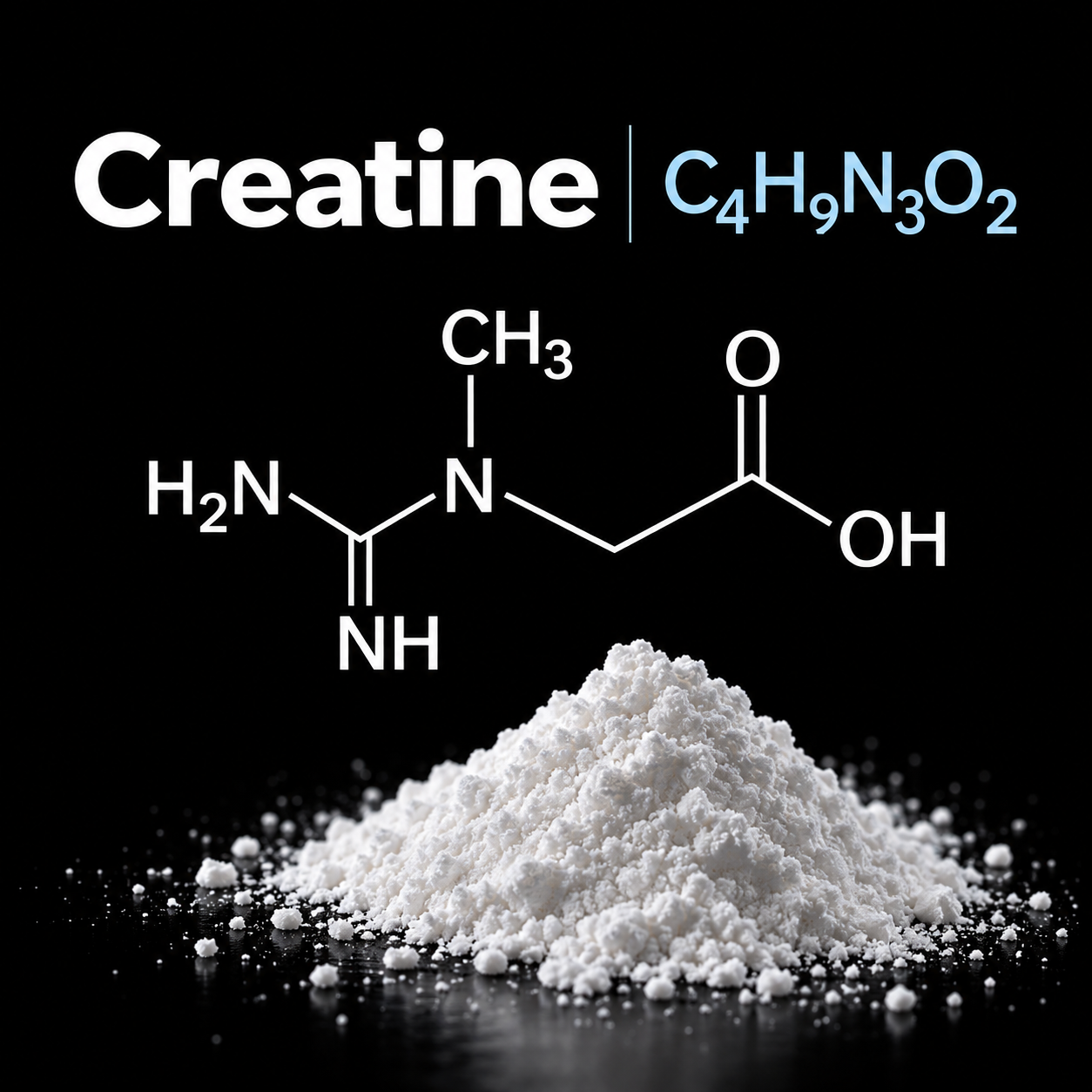
Creatine is a naturally occurring nitrogen-containing compound that plays an important role in cellular energy metabolism.
It is not a hormone.
It is not a stimulant.
And despite a surprisingly persistent misconception, creatine is not an anabolic steroid.
The body obtains creatine in two primary ways:
We synthesize it internally, and we obtain it through food.
How Does the Body Synthesize Creatine?
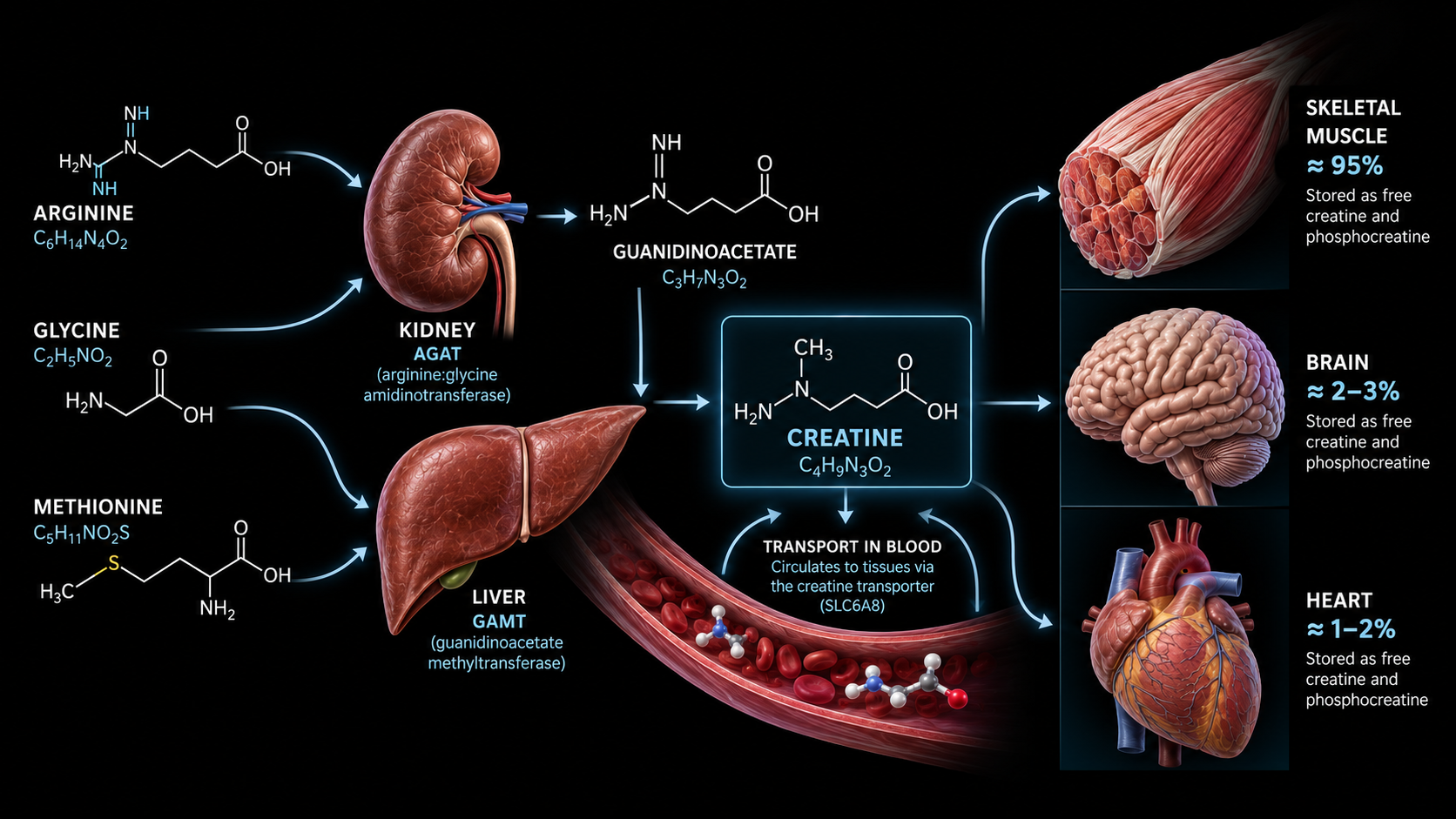
The human body can synthesize creatine using three amino acids:
- Arginine
- Glycine
- Methionine (essential amino acid, obtained from diet)
Creatine synthesis occurs through a two-step biochemical pathway involving several tissues, with the kidneys and liver playing particularly important roles.
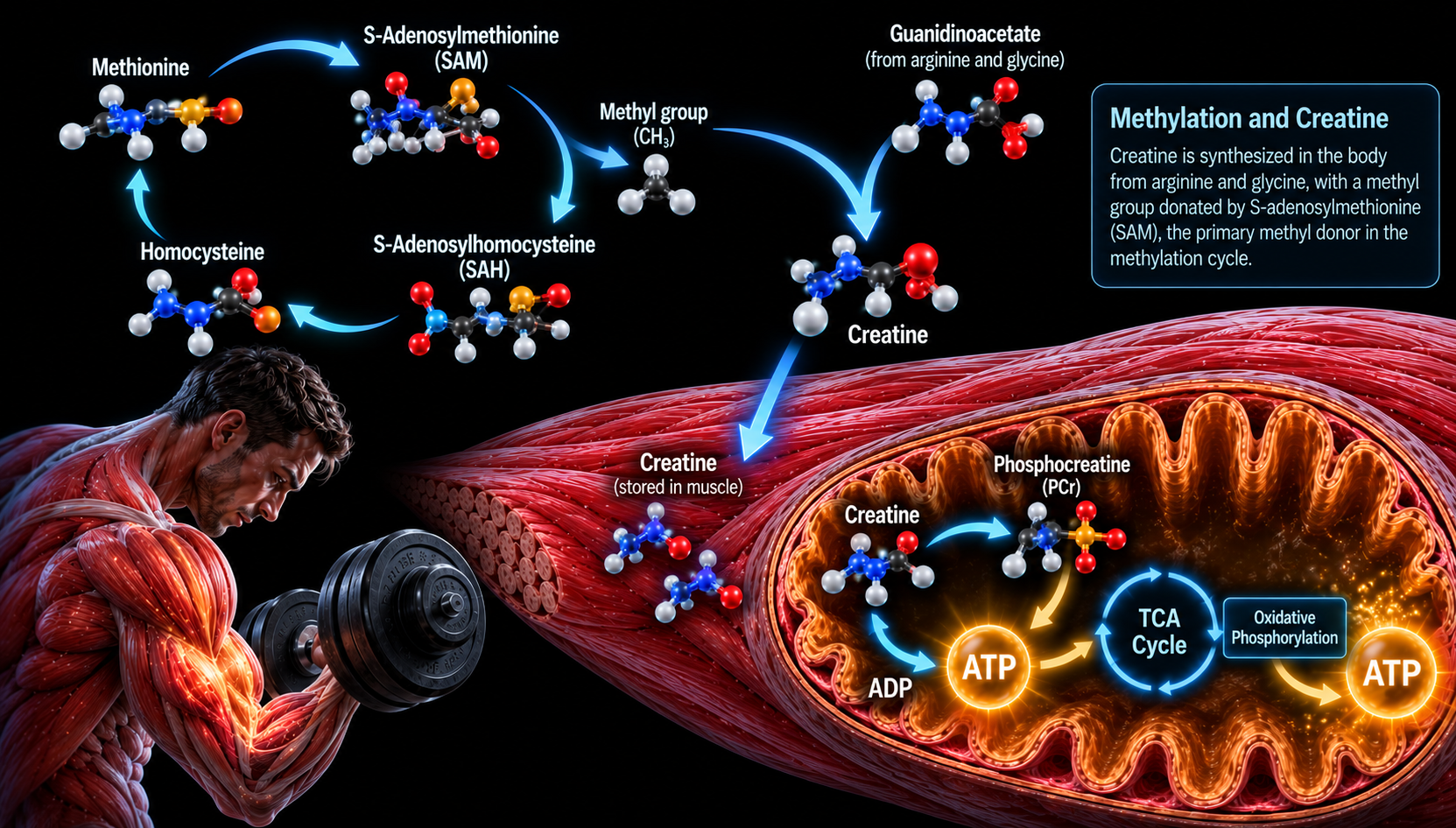
In the first step, an enzyme called arginine:glycine amidinotransferase (AGAT) transfers an amidino group from arginine to glycine.
This produces a molecule called guanidinoacetate.
This reaction occurs prominently in the kidneys and other tissues expressing AGAT.
Guanidinoacetate can then enter the circulation and travel to tissues including the liver.
There, another enzyme—guanidinoacetate methyltransferase (GAMT)—adds a methyl group to guanidinoacetate.
That methyl group comes from S-adenosylmethionine (SAM).
The result is:
Creatine.
Methionine participates in this process through the methylation cycle.
Methionine is used to generate S-adenosylmethionine (SAM), one of the body’s major methyl-group donors. SAM then donates the methyl group required to convert guanidinoacetate into creatine.
This makes creatine synthesis directly connected to methylation. Endogenous creatine synthesis represents a meaningful component of the body’s normal methyl-group demand. As SAM donates its methyl group during creatine synthesis, it is converted to S-adenosylhomocysteine (SAH), which can subsequently contribute to the formation of homocysteine. This creates an important biochemical connection among creatine synthesis, methionine metabolism, methylation, and homocysteine.
We have discussed methylation and homocysteine in greater detail in other R2 Medical Clinic articles, and we will return to this relationship later when we examine how creatine supplementation can influence the body’s own creatine synthesis.
The pathway can be simplified as:
Arginine + Glycine → Guanidinoacetate → + methyl group from SAM → Creatine
Where Does Creatine Go After It Is Synthesized?
Once creatine is synthesized, it enters the circulation.
Creatine obtained through food or supplementation also reaches the bloodstream after intestinal absorption.
From there, creatine is transported into tissues through a specialized creatine transporter commonly called CRT1, encoded by the SLC6A8 gene.
The remainder is distributed among other tissues, including the:
- Brain
- Heart
- Smooth muscle
- Other metabolically active tissues
Approximately 95% of the body’s creatine pool is located in skeletal muscle.
Within skeletal muscle, creatine exists primarily in two forms:
Free creatine
and
Phosphocreatine (PCr)
A substantial portion of the muscle creatine pool exists as phosphocreatine.
That distinction is central to understanding why creatine matters.
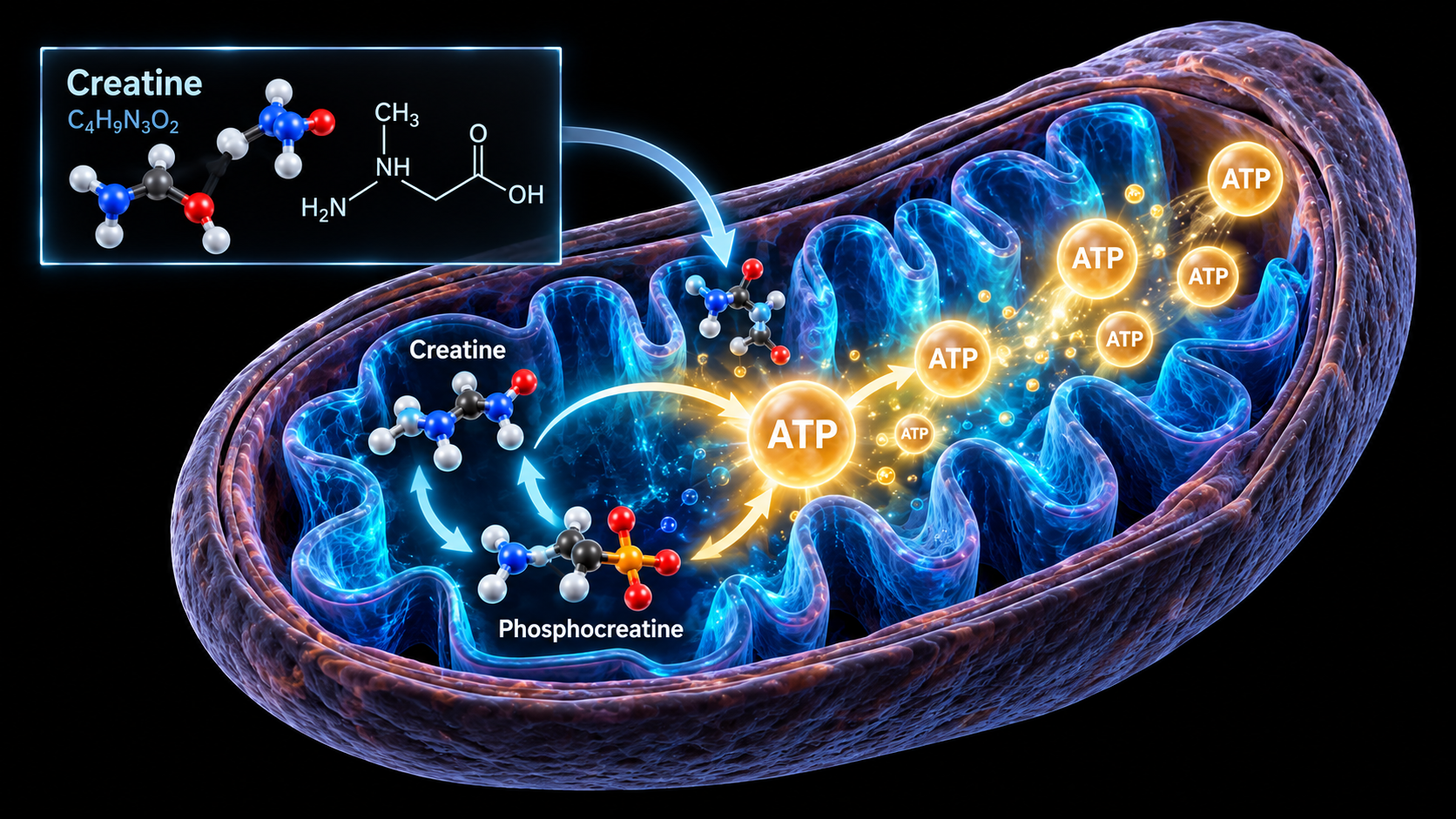
Phosphocreatine functions as a rapidly accessible energy buffer that helps regenerate ATP when cellular energy demand suddenly increases. This becomes important because, although mitochondria can produce large amounts of ATP from carbohydrates and fats, mitochondrial ATP production cannot always increase quickly enough to match a sudden surge in energy demand. The phosphocreatine system helps bridge that gap by rapidly transferring a phosphate group to ADP, regenerating ATP almost immediately.
We will explore this relationship in much greater detail when we discuss ATP and cellular energy production.
We Also Obtain Creatine From Food
Creatine occurs naturally primarily in animal-derived foods, particularly:
- Red meat
- Pork
- Poultry
- Fish
- Seafood
Plant foods generally contain very little creatine.
Vegetarians and vegans therefore typically consume substantially less dietary creatine and may have lower baseline muscle creatine stores than people who regularly consume meat or fish.
This can become relevant during supplementation.
Someone beginning with lower muscle creatine stores may have greater capacity to increase those stores when supplemental creatine is introduced.
The body therefore maintains a dynamic creatine pool through a combination of:
Endogenous synthesis + dietary intake
A small portion of creatine and phosphocreatine is also continuously converted into creatinine, which enters the bloodstream and is ultimately eliminated by the kidneys.
That relationship becomes clinically important when interpreting kidney-function blood tests, which we will discuss later.
But before understanding why increasing the body’s creatine pool might be useful, we first need to understand what creatine is helping cells accomplish.
That brings us to ATP.
ATP: The Energy Currency of the Cell
ATP stands for adenosine triphosphate.
ATP is the fundamental energy currency of the cell and is essential for nearly every energy-dependent biological process required to sustain life. Cells continuously produce, consume, and regenerate ATP to power the work necessary for normal cellular function and survival.
Without a continuous ability to regenerate ATP, cells cannot maintain the processes necessary for normal function and ultimately cannot survive.
ATP provides usable energy for processes including:
- Muscle contraction
- Nerve signaling
- Maintenance of cellular ion gradients
- Active transport across cell membranes
- Protein synthesis
- DNA and RNA synthesis and repair
- Cellular signaling
- Tissue growth and repair
- Metabolic reactions
We obtain energy from food, but our cells cannot directly use the calories contained in a steak, bowl of rice, or stored body fat to contract a muscle, transmit a nerve impulse, maintain an ion gradient, or repair cellular structures.
Those nutrients must first be metabolized.
Their stored chemical energy is converted through a series of metabolic pathways into forms the cell can use—most importantly ATP.
ATP therefore serves as the critical link between:
Energy stored in nutrients → ATP → biological work
This is why understanding ATP is essential to understanding creatine.
Creatine does not replace ATP and is not itself the primary energy currency of the cell.
Instead, the creatine-phosphocreatine system helps the body regenerate ATP rapidly when cellular energy demand suddenly increases.
Where Does ATP Come From?
At a broad level, the body generates ATP by extracting chemical energy primarily from carbohydrates and fats.
Protein can also contribute to energy production, particularly during fasting, calorie restriction, prolonged exercise, or other metabolic circumstances.
However, amino acids have numerous structural and metabolic roles and are generally not the body’s preferred primary fuel source under normal conditions.
Carbohydrates and fats begin their journeys through different metabolic pathways.
Eventually, much of their energy production converges on mitochondrial metabolism.
Carbohydrates: Glucose and Glycolysis
Dietary carbohydrates are broken down largely into glucose.
Glucose can circulate through the bloodstream and be used by tissues or stored as glycogen, particularly in the:
Liver
and
Skeletal muscle
These glycogen stores serve somewhat different purposes.
Liver glycogen can be broken down to help maintain blood glucose availability for the rest of the body.
Muscle glycogen primarily provides a local carbohydrate reserve for the muscle itself.
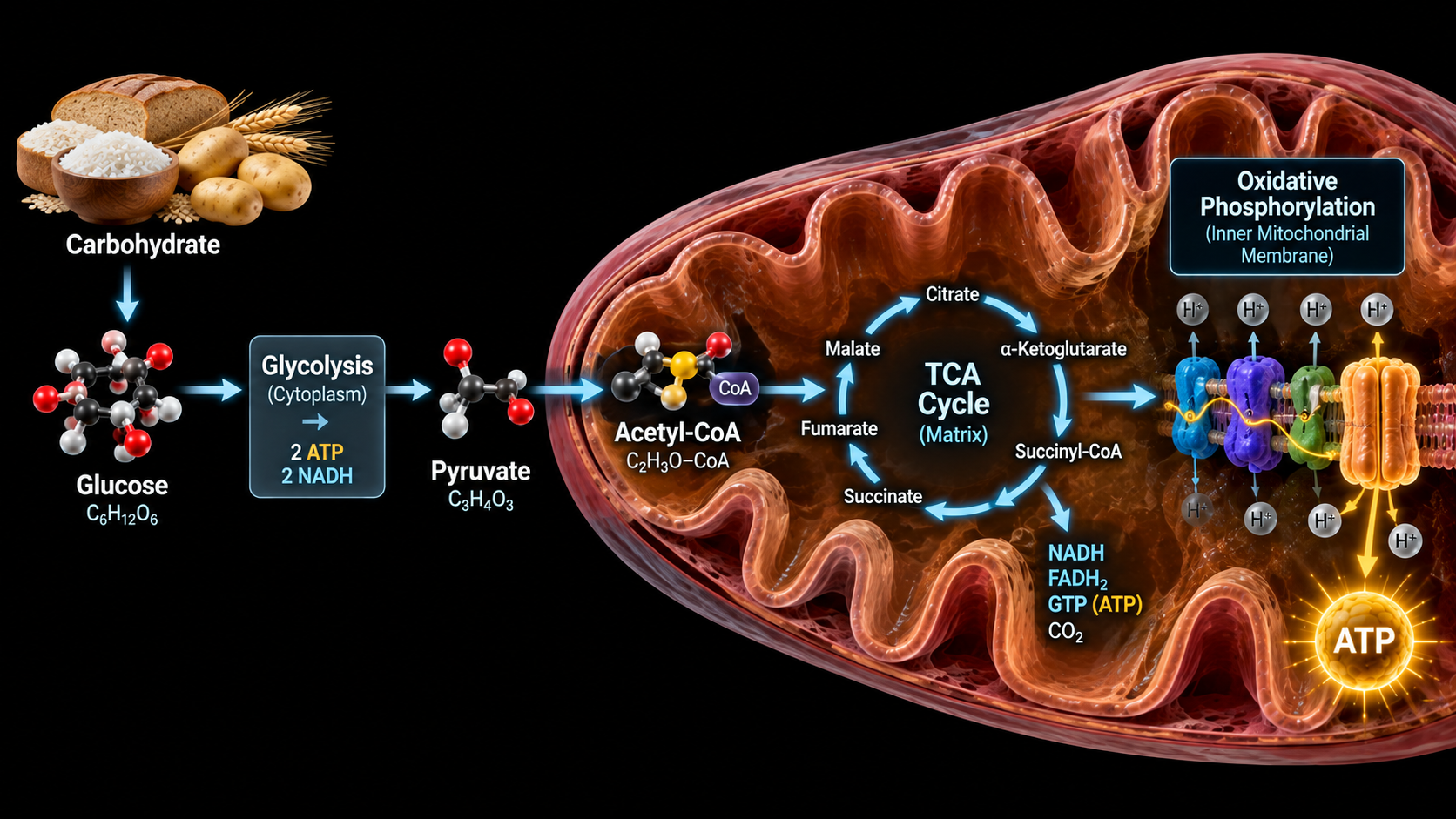
When cells metabolize glucose, one of the first major pathways is glycolysis.
Importantly, glycolysis occurs in the cytosol, not inside the mitochondria:
Glucose → Glycolysis → Pyruvate
Glycolysis can generate ATP relatively rapidly and produces a small amount of ATP directly.
Pyruvate can then enter the mitochondria and be converted into:
Acetyl-CoA
Acetyl-CoA subsequently enters the citric acid cycle, also known as the Krebs cycle or TCA cycle.
The overall pathway can be simplified as:
Carbohydrate → Glucose → Glycolysis → Pyruvate → Mitochondria → Acetyl-CoA → TCA Cycle → Oxidative Phosphorylation → ATP
Carbohydrate becomes particularly important when the body needs to generate ATP rapidly.
As exercise intensity increases, reliance on carbohydrate generally increases because carbohydrate metabolism can support high rates of ATP turnover.
Do We Burn Carbohydrates Before We Burn Fat?
This is an important misconception.
Human metabolism does not operate through a simple system in which the body burns carbohydrate for the first 20 or 30 minutes of exercise and then suddenly switches to fat.
Carbohydrate and fat are generally being used at the same time.
What changes is their relative contribution.
During lower-intensity and longer-duration activity, fat oxidation can supply a greater proportion of the body’s energy requirements.
As exercise intensity increases, the body generally becomes increasingly dependent on carbohydrate because carbohydrate metabolism can support more rapid ATP production.
This also helps explain why body-fat loss is more complicated than simply exercising long enough to “enter the fat-burning zone.”
Fat metabolism is already occurring.
Actual reduction of stored body fat depends primarily on energy balance and metabolic regulation over much longer periods of time.
Fat: Our Large Stored Energy Reserve
Fat represents the body’s largest stored energy reserve.
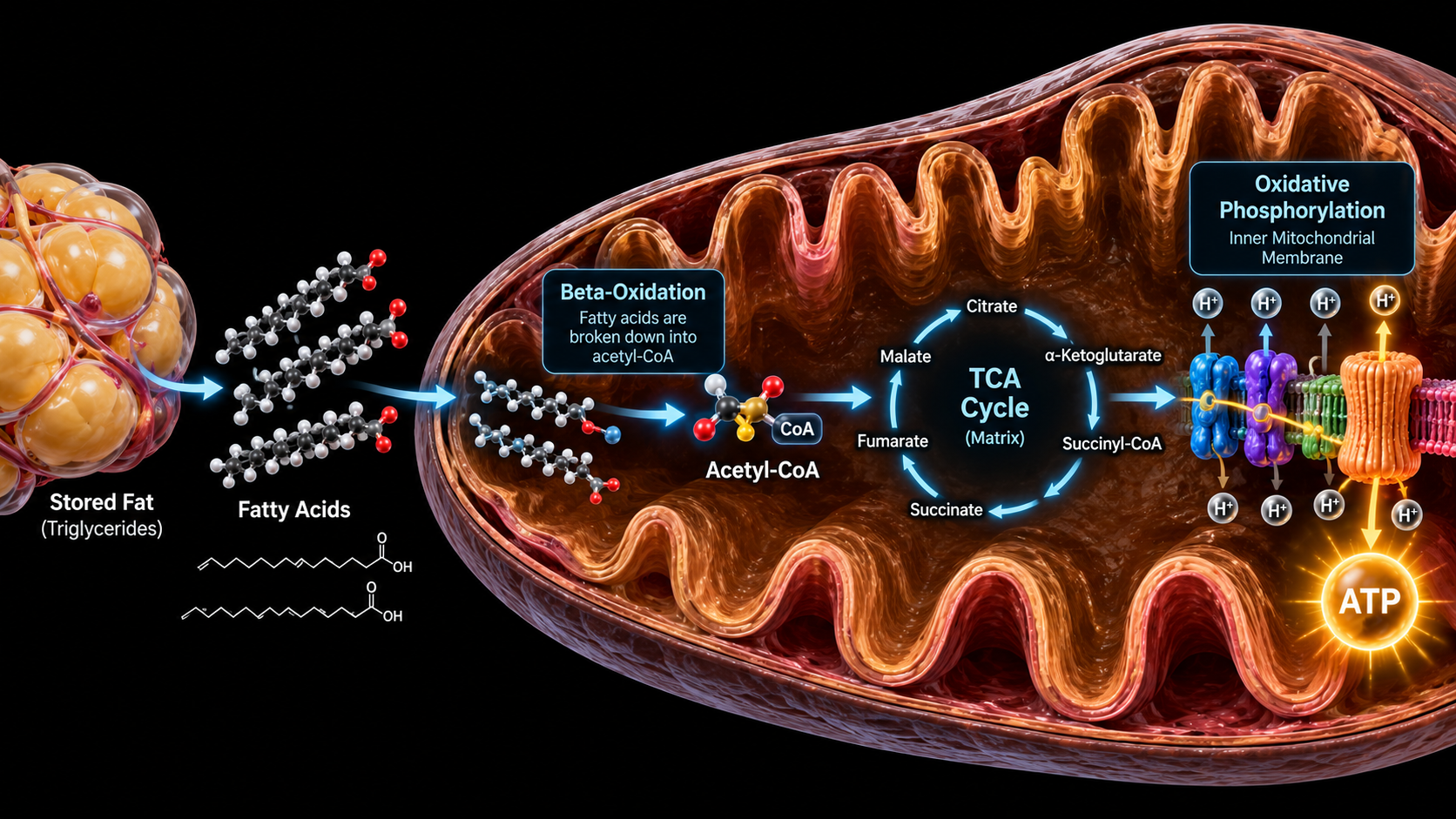
Most stored body fat exists as triglycerides within adipose tissue.
When energy is required, triglycerides can be broken down and fatty acids released into the circulation.
Those fatty acids can be taken up by tissues and transported into mitochondria.
Within mitochondria, fatty acids undergo beta-oxidation.
Beta-oxidation progressively breaks fatty acids into acetyl-CoA while also generating high-energy electron carriers.
Acetyl-CoA then enters the TCA cycle.
The simplified pathway becomes:
Stored fat → Fatty acids → Mitochondria → Beta-oxidation → Acetyl-CoA → TCA Cycle → Oxidative Phosphorylation → ATP
Carbohydrate and fat therefore begin through different metabolic pathways but ultimately converge on much of the same mitochondrial machinery for ATP production.
However, they are not interchangeable energy sources.
Carbohydrate can support ATP production at a much faster rate, making it particularly important when energy demand rises rapidly, such as during high-intensity exercise. Glucose can also generate ATP through glycolysis before mitochondrial oxidation occurs, allowing carbohydrate to contribute to ATP production especially quickly.
Fat, in contrast, is a slower fuel to mobilize and oxidize, but it is an extraordinarily energy-dense fuel capable of yielding substantially more ATP per molecule than glucose. Fat therefore becomes particularly valuable for sustained energy production when ATP demand does not exceed the rate at which fatty acids can be mobilized and oxidized.
A useful way to think about the distinction is:
Carbohydrate = faster ATP production, particularly valuable when energy demand is high
Fat = slower ATP production, but much greater stored energy capacity and high ATP yield per molecule
The body continuously uses both. What changes is their relative contribution depending on exercise intensity, duration, nutritional state, training status, and overall metabolic demand.
The Mitochondria and ATP Production
In most aerobic tissues, mitochondrial oxidative metabolism provides much of the ATP required during rest and sustained activity.
Inside mitochondria, acetyl-CoA enters the TCA cycle.
Rather than producing enormous amounts of ATP directly, the TCA cycle captures much of the energy derived from fuel in high-energy electron carriers, particularly:
NADH
and
FADH₂
These molecules deliver electrons to the electron transport chain located along the inner mitochondrial membrane.
As electrons move through this system, their energy is used to pump hydrogen ions—protons—across the mitochondrial membrane.
This produces an electrochemical gradient.
Those protons then flow back across the membrane through an extraordinary molecular enzyme called ATP synthase.
ATP synthase uses the energy contained within that gradient to drive:
ADP + phosphate → ATP
This process is called oxidative phosphorylation.
Oxygen plays a critical role at the end of the electron transport chain by accepting electrons and ultimately participating in the formation of water.
This is one of the fundamental reasons humans require oxygen.
The oxygen we breathe allows the mitochondrial electron transport system to continue operating efficiently, supporting sustained ATP production.
ATP Connects Fuel to Cellular Work
The larger picture can therefore be simplified:
Food or stored energy → metabolic fuel → cellular metabolism → ATP → cellular work
ATP powers an enormous number of biological processes, including:
- Muscle contraction
- Nerve signaling
- Maintenance of cellular ion gradients
- Protein synthesis
- Cellular transport
- Enzyme activity
- Tissue repair
- Metabolic reactions
This is why ATP is commonly called the energy currency of the cell.
How ATP Releases Energy
ATP consists of adenosine attached to three phosphate groups.
When cells require energy, ATP can undergo hydrolysis:
ATP + H₂O → ADP + Pi + energy
ATP becomes adenosine diphosphate (ADP) and inorganic phosphate (Pi).
The free energy associated with this reaction can then be coupled to cellular work.
In skeletal muscle, ATP is required at several points in the contraction-relaxation cycle.
ATP interacts with myosin, the molecular motor protein that generates force against actin during muscle contraction.
ATP is also required to pump calcium back into the sarcoplasmic reticulum and to maintain ion gradients necessary for repeated electrical signaling and muscle contraction.
ATP therefore helps muscle fibers:
Contract → Relax → Reset → Contract again
The Body Stores Surprisingly Little ATP
Despite continuously producing and consuming ATP, skeletal muscle does not maintain a large reserve of ATP.
ATP must therefore be continuously regenerated from ADP.
The body’s major energy systems differ in both speed and capacity.
These systems are not separate engines that switch on and off one at a time.
They operate simultaneously.
A useful way to think about them is:
Stored ATP
Immediately available, but present in very small quantities.
Phosphocreatine
Extremely rapid ATP regeneration, but limited capacity.
Glycolysis
Rapid ATP generation from glucose or glycogen, with greater capacity than the phosphocreatine system.
Mitochondrial oxidative metabolism
Slower to respond to abrupt changes in demand but capable of producing enormous quantities of ATP over sustained periods using carbohydrate and fat.
What changes is how much each contributes as energy demand, exercise intensity, and exercise duration change.
During sudden, extremely intense muscular work, ATP demand can rise faster than oxidative metabolism can immediately increase ATP production.
The muscle therefore needs an energy buffer between ATP consumption and the body’s larger ATP-producing systems.
That buffer is the creatine-phosphocreatine system.
How Creatine Helps Regenerate ATP
This is the central reason creatine matters.
Inside skeletal muscle, creatine can accept a high-energy phosphoryl group and become phosphocreatine.
When ATP availability is adequate:
Creatine + ATP → Phosphocreatine + ADP
Energy can therefore be temporarily stored within the phosphocreatine pool.
When ATP demand suddenly increases, the reaction rapidly moves in the opposite direction:
Phosphocreatine + ADP + H⁺ ⇌ Creatine + ATP
The enzyme creatine kinase catalyzes this reaction.
And it can occur extremely rapidly.
Speed vs. Capacity
The human body has enormous stores of potential energy.
A relatively lean adult still stores tens of thousands of calories in adipose tissue.
But having energy stored somewhere in the body is not the same thing as being able to convert it into ATP instantaneously.
Extracting energy from fat requires fatty-acid mobilization, transport, mitochondrial entry, beta-oxidation, the TCA cycle, electron transport, and oxidative phosphorylation.
Carbohydrate can support faster ATP turnover, particularly through glycolysis, but still requires metabolic processing.
Phosphocreatine has a different advantage:
It is already inside the muscle fiber and can transfer a phosphoryl group directly to ADP.
Its total energy capacity is small.
Its rate of ATP regeneration is extremely high.
This makes the phosphocreatine system particularly important during the first seconds of intense muscular activity, including:
- Heavy resistance exercise
- Sprinting
- Jumping
- Explosive acceleration
- Repeated high-intensity contractions
The simplest way to think about the hierarchy is:
Stored ATP = immediate
Phosphocreatine = fastest ATP regeneration
Glycolysis = rapid carbohydrate-derived ATP
Oxidative metabolism = enormous sustained ATP capacity
All are contributing.
The balance simply changes according to what the body is being asked to do.
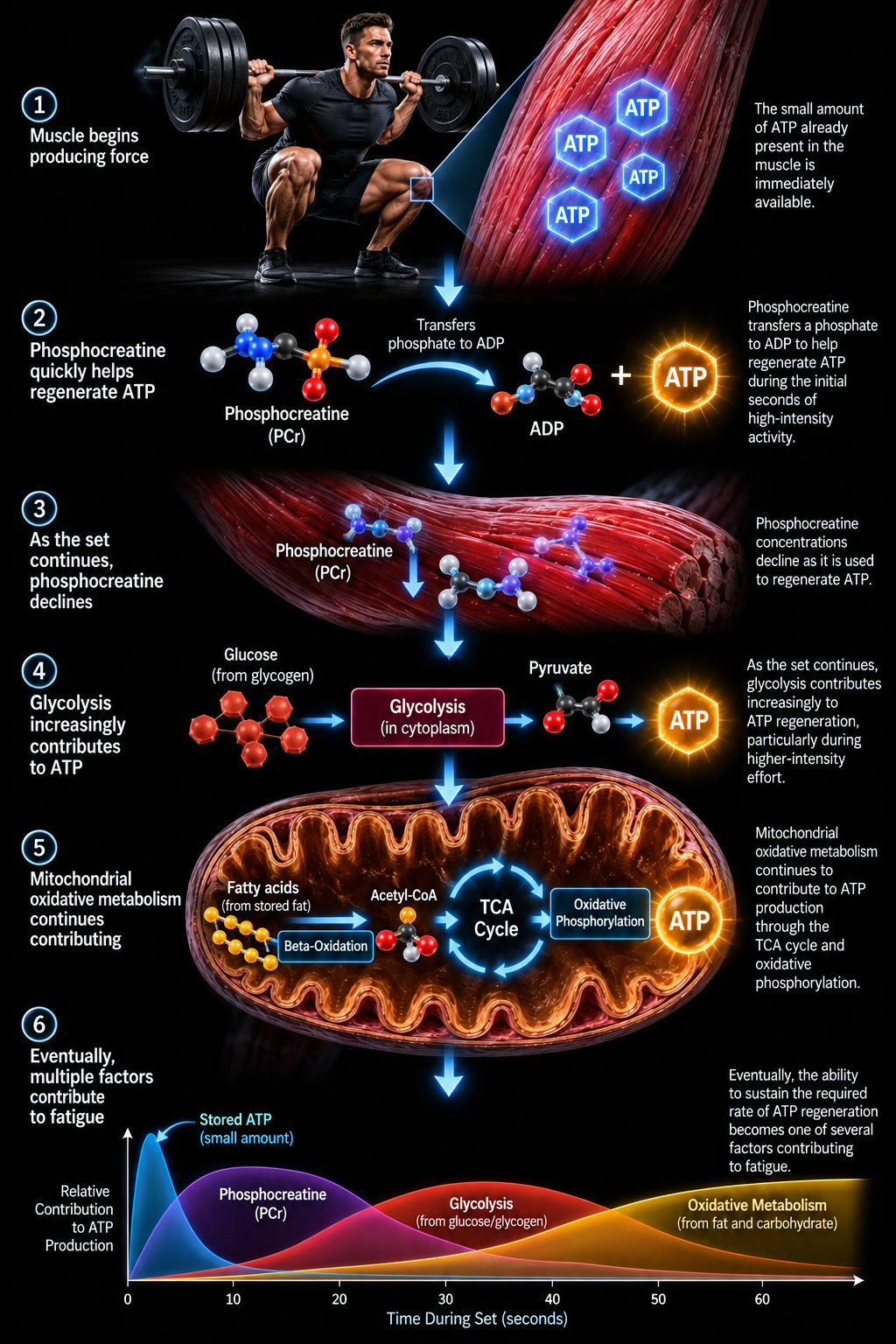
What Happens During a Heavy Set?
Imagine beginning a heavy set of squats.
The moment the muscle begins producing substantial force, ATP consumption increases dramatically.
The small amount of ATP already present inside the muscle is immediately available.
Almost immediately, phosphocreatine begins transferring phosphate to ADP to help regenerate ATP.
As the set continues, phosphocreatine concentrations decline.
Glycolysis contributes increasingly to ATP regeneration, while mitochondrial oxidative metabolism continues contributing as well.
Eventually, the ability to sustain the required rate of ATP regeneration becomes one of several factors contributing to fatigue.
Creatine Also Matters Between Sets
The phosphocreatine system is important not only during muscular contraction but also during recovery.
After an intense effort, phosphocreatine stores must be replenished.
ATP produced largely through oxidative metabolism can be used to re-phosphorylate creatine:
Creatine + ATP → Phosphocreatine
This means the mitochondria and phosphocreatine system are not competing energy systems.
They are intimately connected.
During recovery, mitochondrial ATP production helps rebuild the phosphocreatine reserve that can then be rapidly used during the next intense effort.
This also helps explain why rest intervals influence repeated high-intensity performance.
What Does Creatine Supplementation Actually Change?
Creatine supplementation does not create energy from nothing.
It does not replace glucose.
It does not replace fat.
It does not replace mitochondria.
And it does not function like a stimulant.
Instead, supplementation increases the amount of creatine available within the muscle’s creatine-phosphocreatine energy-buffering system.
That can increase the amount of phosphocreatine available for rapid ATP regeneration.
The fundamental sequence becomes:
Creatine supplementation → increased muscle creatine → increased phosphocreatine availability → greater capacity for rapid ATP regeneration
This can translate into:
- Slightly greater power output
- An additional repetition
- Better maintenance of force during repeated contractions
- Better performance across repeated high-intensity efforts
- Greater total training volume
A single additional repetition may seem insignificant.
But muscle adaptation occurs through repeated training over time.
An additional repetition here, slightly greater resistance there, or better performance during later sets can accumulate across hundreds of sets and months of training.
That is one of the most important ways creatine can ultimately contribute to strength and muscle development.
Creatine Does Not Directly Build Muscle
Creatine is sometimes discussed as though it directly builds muscle in the same way that anabolic hormones influence muscle protein synthesis.
That is not an accurate description of its primary established mechanism.
Creatine does not provide the amino acids needed to construct new muscle proteins.
And taking creatine without an appropriate training stimulus does not reproduce the adaptations produced by resistance training.
Its best-established muscular effects begin with:
Increasing the muscle creatine pool
which supports:
Rapid ATP regeneration
which can improve:
Training capacity
which can increase:
The cumulative training stimulus
which can contribute over time to:
Greater strength and muscle adaptation
This is the primary mechanism we can discuss with confidence.
But it may not be the entire story.
Established Effects vs. Additional Possible Muscle Effects
It is useful to separate what is strongly established from mechanisms that remain less certain.
Creatine supplementation can:
- Increase intramuscular creatine stores
- Increase phosphocreatine availability
- Improve certain measures of strength and power
- Improve repeated high-intensity exercise capacity
- Increase training capacity in some settings
- Enhance gains in lean body mass when combined with resistance training
These effects are supported by decades of research.
Researchers have also investigated whether creatine influences:
- Intracellular hydration
- Cell-volume signaling
- Satellite-cell activity
- Myogenic signaling
- IGF-1-related pathways
- Glycogen storage
- Muscle protein turnover
- Exercise recovery
There is evidence supporting biological effects in several of these areas.
But they should not all be treated as equally established explanations for creatine’s clinical effects.
The strongest and most consistent story remains the simplest:
Creatine improves the muscle’s capacity to rapidly regenerate ATP and can thereby support higher-quality training.
Creatine and Muscle Cell Hydration
One of the earliest changes some people notice after beginning creatine is an increase in body weight.
This is frequently misunderstood.
Creatine is osmotically active.
As creatine concentrations increase within skeletal muscle, intracellular water can increase as well.
In other words:
Some early weight gain associated with creatine represents water stored within muscle cells.
This is different from gaining body fat.
It is also different from simply developing generalized fluid retention.
Changes in cell volume have been investigated as possible signals influencing muscle adaptation, but the clinical importance of this effect remains less certain than creatine’s established role in cellular energetics.
A modest increase in scale weight after starting creatine therefore does not necessarily represent fat gain.
This distinction becomes particularly important during medical weight loss.
Creatine During Medical Weight Loss
At R2 Medical Clinic, we frequently emphasize that successful weight loss should not be judged by the scale alone.
The goal is generally not simply to become lighter.
The goal is to reduce excess body fat while preserving as much healthy skeletal muscle, strength, and physical function as possible.
That distinction becomes particularly important when weight loss occurs rapidly.
Weight Loss Creates an Energy Deficit
To lose stored body fat, the body must ultimately expend more energy than it receives over time.
That creates an energy deficit.
This is necessary for fat loss.
But the body does not exclusively remove energy from adipose tissue while perfectly protecting every other tissue.
During weight loss, changes can occur in multiple body compartments:
- Body fat
- Glycogen
- Water
- Lean tissue
When calorie intake falls substantially, protein and micronutrient intake may also fall unless they are deliberately maintained.
This can become particularly relevant when appetite is strongly suppressed.
Eating much less may successfully reduce calories—but it can also unintentionally reduce protein and other nutrients.
Without adequate protein and a resistance-training stimulus, skeletal muscle becomes more vulnerable to loss.
Why Preserving Muscle Matters
Muscle is not metabolically irrelevant weight that we simply want the scale to remove.
Skeletal muscle contributes to:
- Strength
- Mobility
- Glucose disposal
- Insulin sensitivity
- Physical function
- Bone loading
- Resting energy expenditure
- Long-term metabolic health
The goal should therefore not simply be:
Lose as much weight as possible.
A better goal is:
Lose excess body fat while preserving as much functional lean tissue as reasonably possible.
Where Creatine Fits
Creatine does not independently prevent muscle loss.
And it cannot compensate for inadequate protein or the absence of resistance training.
Its potential value becomes more logical when we consider the physiology we have already discussed.
Resistance training tells the body:
This muscle is still needed.
Adequate dietary protein provides:
The amino acids required to maintain and repair muscle proteins.
Creatine may help support:
The energetic demands of high-quality resistance training.
The combination therefore becomes much more meaningful:
Resistance training + adequate protein + appropriate nutrition + creatine
Creatine may help someone maintain training performance during a period when total calorie intake is reduced.
That can help preserve the mechanical stimulus necessary to maintain strength and muscle.
The Scale Can Become Even More Misleading
Consider someone who is simultaneously:
Losing body fat
while
Preserving more muscle
and
Increasing intracellular muscle water after beginning creatine.
The scale may move less than expected.
If we looked only at total body weight, we might conclude that progress was inadequate.
But physiologically, that person may have:
- Less body fat
- Better preserved muscle
- Greater strength
- Better body composition
This is another reason medical weight loss should increasingly focus on what weight is being lost, not simply how many pounds disappear.
Creatine and Healthy Aging
The creatine discussion becomes increasingly interesting with age.
Beginning in midlife and progressing with aging, humans tend to experience gradual declines in skeletal muscle mass, strength, and physical performance.
Age-related loss of muscle is often discussed in the context of sarcopenia, although modern definitions emphasize strength and physical function in addition to muscle mass.
Muscle is not merely cosmetic tissue.
Maintaining adequate muscle supports:
- Strength
- Balance
- Mobility
- Glucose metabolism
- Bone loading
- Independence
- Recovery from illness or injury
- Overall physical resilience
Resistance training and adequate dietary protein therefore become increasingly important with age.
Creatine may enhance some of the adaptations produced by resistance training.
Meta-analyses generally suggest that adding creatine to resistance training in older adults can provide additional benefits for strength and may support improvements in lean tissue.
Effects vary among studies, and outcomes related to physical function are less consistent.
Creatine should therefore not be promoted as something that independently prevents aging or sarcopenia.
A more scientifically appropriate conclusion is:
Creatine may be a useful adjunct to resistance training as part of a broader strategy designed to preserve strength, muscle, and physical function with aging.
Creatine in Women
Creatine is sometimes incorrectly viewed as primarily a supplement for men.
There is no biological reason to think of it that way.
Women rely on the same creatine-phosphocreatine energy system.
Research involving postmenopausal women has generated particular interest in whether creatine combined with resistance training may support lean tissue and strength.
Research interest in creatine supplementation among women has increased substantially, including potential applications involving:
- Resistance training
- Muscle preservation
- Aging
- Menopause
- Cognitive function
- Mood
- Recovery
The evidence continues to evolve.
Importantly, creatine does not masculinize women and is not an androgen.
Its primary mechanism involves cellular energy metabolism—not activation of androgen receptors.
Creatine and the Brain
Skeletal muscle is not the only tissue requiring rapid and reliable ATP availability.
The brain is one of the most metabolically demanding organs in the body.
The brain contains creatine, phosphocreatine, creatine kinase, and creatine transport systems.
Neurons continuously require ATP to maintain:
- Ion gradients
- Membrane potentials
- Neurotransmission
- Synaptic activity
- Cellular repair
- Intracellular signaling
This has generated considerable interest in whether increasing creatine availability could influence cognitive function.
There is biological plausibility for the idea.
But biological plausibility is not the same thing as proven clinical benefit.
Does Creatine Improve Memory or Cognitive Function?
Possibly in certain circumstances—but the evidence is considerably less established than it is for muscular performance.
However, benefits have not been demonstrated consistently across every cognitive domain or population.
Researchers have proposed that creatine may become particularly relevant when cerebral energy demand is increased or baseline creatine availability is relatively low.
Populations of research interest include:
- Older adults
- Vegetarians and vegans
- Sleep-deprived individuals
- People exposed to metabolic stress
This remains an evolving area of research.
At present, describing creatine as a proven universal “nootropic” or cognitive enhancer goes beyond the available evidence.
A more appropriate conclusion is:
Creatine participates in brain bioenergetics, and supplementation may influence certain aspects of cognition under some circumstances, but its clinical significance remains under investigation.
Creatine and Methylation
Creatine metabolism has an important relationship with methylation.
As discussed in our previous R2 Medical Clinic articles on methylation and homocysteine, methyl groups are continuously transferred among molecules throughout the body.
These reactions are involved in numerous biological processes, including:
- DNA methylation
- Neurotransmitter metabolism
- Phospholipid synthesis
- Cellular signaling
- Numerous metabolic reactions
One of the body’s most important methyl donors is S-adenosylmethionine, or SAM.
Earlier, we discussed how the body synthesizes creatine:
Arginine + Glycine → Guanidinoacetate
Guanidinoacetate must then receive a methyl group before it becomes creatine.
That methyl group is donated by SAM through the enzyme guanidinoacetate methyltransferase (GAMT):
Guanidinoacetate + SAM → Creatine + SAH
When SAM donates its methyl group, it becomes S-adenosylhomocysteine (SAH).
SAH can subsequently be converted into homocysteine.
This creates a direct biochemical connection:
Methionine → SAM → Creatine synthesis → SAH → Homocysteine
Why Is This Important?
The significance of this pathway is not simply that creatine synthesis happens to require a methyl group.
Endogenous creatine synthesis represents a substantial component of the body’s normal SAM-dependent methylation demand.
In other words, synthesizing creatine internally requires the body to continually use methyl groups.
This makes creatine synthesis one of the meaningful metabolic pathways drawing from the body’s methylation system.
That becomes particularly interesting when supplemental creatine is introduced.
What Happens When We Supplement With Creatine?
The body regulates its own creatine synthesis.
When more creatine is supplied through supplementation, feedback mechanisms can reduce endogenous creatine synthesis.
The body therefore does not need to synthesize as much creatine from arginine, glycine, guanidinoacetate, and SAM.
This can reduce some of the methyl-group demand associated with endogenous creatine synthesis.
Conceptually:
Without supplementation:
Guanidinoacetate + SAM → Creatine + SAH → Homocysteine
With supplemental creatine:
↑ Supplemental creatine → ↓ endogenous creatine synthesis → ↓ SAM-dependent methylation required for creatine synthesis
This is a fascinating biochemical relationship because it connects nutritional creatine intake with the methylation cycle.
Does Creatine Lower Homocysteine?
This is where biochemical plausibility needs to be separated from demonstrated clinical outcomes.
Because creatine synthesis consumes methyl groups and contributes to SAH and homocysteine formation, it is reasonable to investigate whether suppressing endogenous creatine synthesis through supplementation could influence homocysteine concentrations.
But that does not mean creatine supplementation has been proven to reliably lower homocysteine in everyone.
Homocysteine metabolism is influenced by many factors, including:
- Folate (Vitamin B9)
- Vitamin B12
- Vitamin B6
- Riboflavin (Vitamin B2)
- Methionine intake
- Kidney function
- Genetics
- Medications
- Overall methylation metabolism
Creatine supplementation should therefore not be described as a treatment for elevated homocysteine or as a way to “fix methylation.”
The more scientifically appropriate conclusion is:
Creatine synthesis is an important consumer of methyl groups, and supplemental creatine can reduce the body’s requirement for endogenous creatine synthesis. This may reduce some of the methylation demand associated with creatine production, but the clinical consequences for homocysteine and overall methylation remain more complex.
This is also a useful example of a broader principle:
Understanding a biochemical pathway does not automatically mean that manipulating one part of that pathway will produce a predictable clinical outcome.
From Creatine to Creatinine
Creatine does not remain in the body’s creatine pool indefinitely.
A small portion of creatine and phosphocreatine continuously undergoes spontaneous conversion into creatinine.
Creatine and creatinine are not the same molecule.
Creatine participates in cellular energy metabolism.
Creatinine is a breakdown product formed from creatine and phosphocreatine.
This conversion occurs spontaneously and does not require a specific enzyme.
The process can be simplified as:
Creatine / Phosphocreatine → Creatinine → Bloodstream → Kidneys → Urine
Because approximately 95% of the body’s creatine pool is located in skeletal muscle, muscle mass can influence creatinine production.
This is one reason a muscular individual may naturally have a higher serum creatinine concentration than someone with substantially less muscle mass.
Creatinine production and serum concentration can also be influenced by:
- Age
- Sex
- Recent strenuous exercise
- Dietary meat intake
- Hydration status
- Certain medications
- Creatine supplementation
This matters because serum creatinine is routinely used to estimate kidney function.
Creatine, Creatinine, and Kidney Function
Once creatinine enters the bloodstream, the kidneys remove it primarily through glomerular filtration, with some contribution from tubular secretion.
Under relatively stable conditions:
Creatinine production → bloodstream → kidney filtration → urine
The serum creatinine concentration therefore reflects a balance between:
How much creatinine is being produced
and
How effectively it is being cleared.
If kidney filtration declines, creatinine clearance generally decreases and serum creatinine rises.
But decreased filtration is not the only reason serum creatinine can increase.
Creatinine can also rise because production has increased.
This distinction becomes particularly important in someone taking creatine.
Creatine supplementation increases the body’s creatine pool.
Because a portion of creatine and phosphocreatine continuously becomes creatinine, supplementation can modestly increase serum creatinine in some people without representing actual kidney damage.
Therefore:
A higher serum creatinine does not automatically mean kidney function has deteriorated.
It may reflect:
Reduced clearance
Increased production
Or both
Why This Can Affect eGFR
One of the most commonly reported measurements of kidney function is estimated glomerular filtration rate, or eGFR.
Most routine eGFR calculations use serum creatinine.
If creatinine increases because production has increased rather than because filtration has declined, a creatinine-based eGFR may appear lower even when actual kidney filtration has not meaningfully changed.
Serum creatinine is therefore a valuable but indirect marker of kidney filtration.
When the distinction is clinically important, additional information may include:
- Creatinine trends over time
- Urinalysis
- Urine albumin measurements
- Cystatin C
- Other assessments of glomerular filtration when appropriate
Importantly, creatinine itself is not damaging the kidneys. An increase in serum creatinine is clinically important because it can be a marker of reduced kidney filtration—but when creatinine rises because its production has increased, as can occur with creatine supplementation, the higher value does not necessarily represent kidney injury.
Cystatin C: a blood marker used to estimate kidney filtration that is less influenced by muscle mass and creatine intake than serum creatinine, making it particularly useful when creatinine-based eGFR may be misleading.
This does not mean kidney monitoring should be ignored.
People with known kidney disease, abnormal renal function, significant renal risk factors, or complex medical conditions should discuss creatine supplementation with their healthcare provider.
Creatine Monohydrate vs. Other Forms
The supplement industry has developed numerous forms of creatine, including:
- Creatine hydrochloride
- Buffered creatine
- Creatine ethyl ester
- Creatine nitrate
- Creatine citrate
- Micronized creatine
Many are marketed as being more advanced than traditional creatine.
But newer does not automatically mean better.
Creatine monohydrate remains the most extensively studied form of creatine.
It has decades of research supporting its effectiveness, safety, and ability to increase muscle creatine concentrations.
For most people, there is little evidence that more exotic—and often more expensive—forms provide meaningful advantages over creatine monohydrate.
Micronized creatine monohydrate is still creatine monohydrate. Its smaller particle size may improve how easily it disperses in liquid, but it does not fundamentally change the creatine molecule.
How Much Creatine Should You Take?
There are several perspective of timing and optimal dosing of creatine.
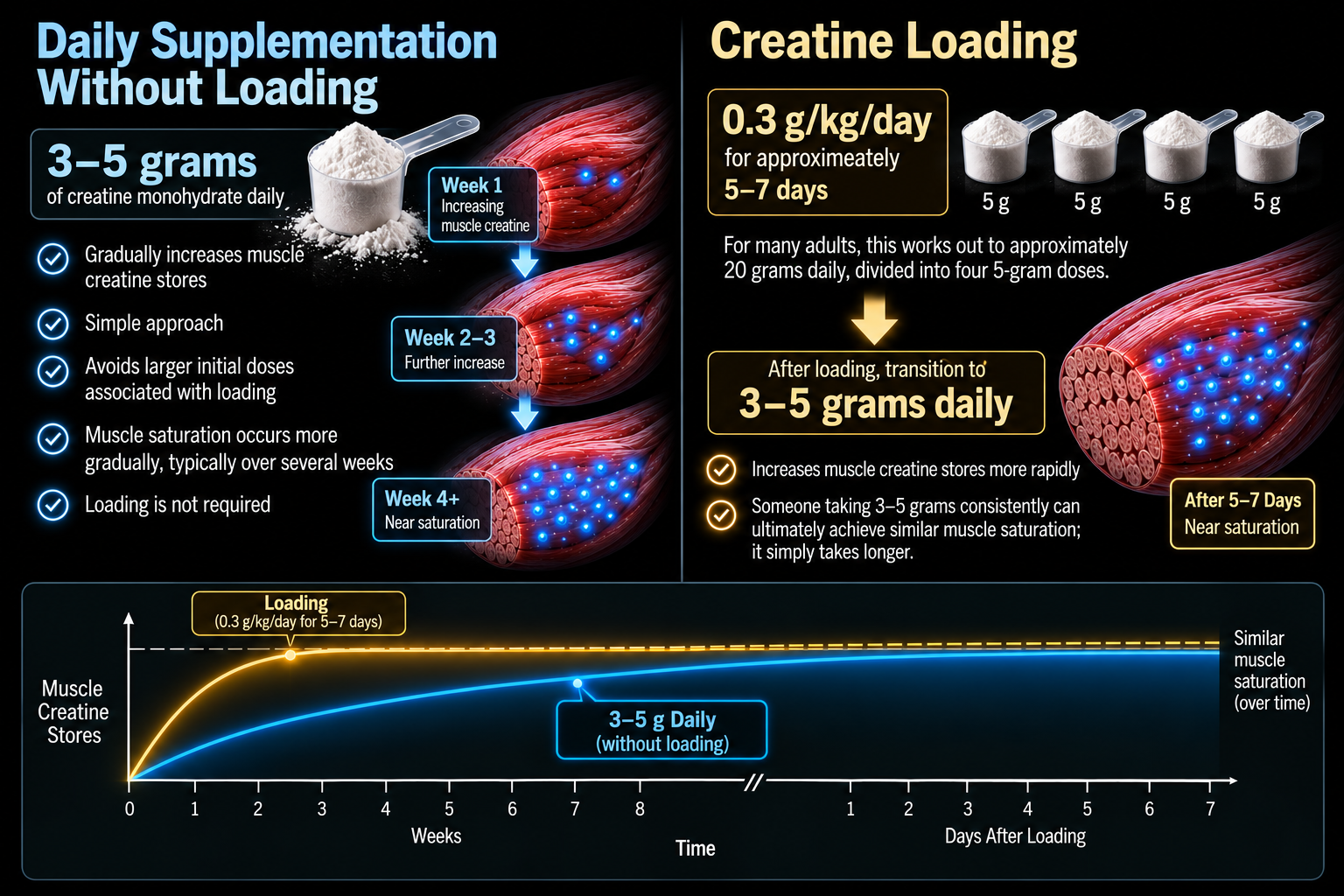
There are two commonly used approaches.
For many adults:
3–5 grams of creatine monohydrate daily
can gradually increase muscle creatine stores.
This approach is simple and avoids the larger initial doses associated with loading.
Muscle saturation occurs more gradually, typically over several weeks.
Loading is not required.
A traditional loading protocol uses approximately:
0.3 g/kg/day
usually divided into several doses for approximately 5–7 days.
For many adults, this works out to approximately 20 grams daily divided into four 5-gram doses.
After loading, supplementation usually transitions to approximately:
3–5 grams daily
It simply increases muscle creatine stores more rapidly.
Someone taking 3–5 grams consistently can ultimately achieve similar muscle saturation; it simply takes longer.
Does Creatine Need to Be Taken Before a Workout?
Probably not.
Creatine does not function like caffeine.
You do not take creatine immediately before exercising and suddenly experience a pharmacologic burst of energy.
Its effects primarily result from gradually increasing tissue creatine stores.
Therefore:
Consistency matters more than precise timing.
Taking creatine before exercise, after exercise, with breakfast, or with another regular meal is generally less important than taking it consistently.
Do You Need to Cycle Creatine?
There is no established physiological requirement to cycle creatine.
Some supplement regimens historically recommended taking creatine for several weeks, stopping, and then restarting.
There is little evidence that this is necessary in otherwise healthy adults using conventional doses.
When supplementation stops, elevated muscle creatine concentrations gradually return toward baseline.
Creatine supplementation does not appear to permanently suppress the body’s ability to synthesize creatine.
Does Creatine Cause Dehydration or Muscle Cramps?
This is another longstanding belief that has not held up particularly well under controlled research.
Creatine can increase water associated with muscle tissue.
But increased intracellular muscle water does not mean the rest of the body becomes dehydrated.
Research generally has not demonstrated that conventional creatine supplementation causes dehydration or increases muscle cramping in healthy individuals.
Normal hydration remains important—particularly during exercise, heat exposure, illness, or heavy sweating—but creatine does not appear to require extreme water consumption.
Does Creatine Cause Hair Loss?
This claim largely originated from a small study reporting changes in dihydrotestosterone, or DHT, following creatine supplementation.
That observation eventually became widely repeated online as:
“Creatine causes baldness.”
That conclusion was not demonstrated.
Hair loss itself was not measured in that study.
Subsequent evidence has not established that creatine supplementation causes male-pattern hair loss.
At present, there is insufficient evidence to conclude that creatine causes baldness.
Does Creatine Cause Fat Gain?
Creatine can increase body weight.
But body weight and body fat are not the same thing.
Early increases in body weight may reflect increased intracellular muscle water.
Longer-term increases may also reflect greater lean tissue when creatine is combined with resistance training.
Creatine itself has not been shown to meaningfully increase body fat.
This again illustrates why interpreting changes in scale weight without considering body composition can be misleading.
Is Creatine a Longevity Supplement?
This is an area where marketing sometimes moves faster than science.
Creatine is increasingly included in discussions about longevity.
There are legitimate reasons for that interest.
Muscle strength, physical function, metabolic health, and preservation of lean tissue become increasingly important with age.
Creatine may support several of those areas—particularly when combined with resistance training.
Research into brain energetics, cognition, cellular energy metabolism, and other potential clinical applications also continues.
But creatine has not been proven to extend human lifespan.
Its potential relationship with healthspan is more plausible, although it remains theoretical and indirect.
By supporting strength, skeletal muscle, physical function, and exercise capacity—and potentially aspects of brain energetics—creatine may support several physiological systems that are important for maintaining independence and function as we age.
In that sense, creatine may contribute to strategies intended to improve healthspan—the portion of life spent in relatively good health and physical function—even though creatine itself has not been shown to directly extend healthspan or lifespan.
A better way to think about creatine is therefore not as a “longevity drug,” but as a potential tool for preserving some of the physiological capabilities that contribute to healthier aging.
Creatine Works Best as Part of a Larger Strategy
No supplement compensates for poor lifestyle fundamentals.
For muscle preservation, physical performance, and healthy aging, creatine should be considered alongside:
Resistance Training
Muscle requires a mechanical stimulus to maintain strength and adapt.
Adequate Protein
Muscle protein synthesis requires amino acids.
Creatine does not replace dietary protein.
Appropriate Energy Intake
Extreme caloric restriction can make muscle preservation more difficult.
Sleep and Recovery
Training adaptation requires recovery.
Hormonal and Metabolic Health
Testosterone, estrogen, thyroid function, insulin sensitivity, and other physiologic systems can influence body composition and physical performance.
Consistent Physical Activity
Strength is important, but cardiovascular fitness, mobility, balance, and daily movement also matter.
Creatine can complement these fundamentals.
It does not replace them.
Who Should Be More Cautious With Creatine?
Creatine monohydrate has an extensive safety record in generally healthy adults, but supplementation should still be individualized.
Supplement quality also matters.
Dietary supplements are regulated differently from prescription medications, and product purity can vary among manufacturers.
Choosing products with reputable independent third-party testing can help reduce the risk of contamination or inaccurate labeling.
Medical guidance may be particularly appropriate for people with:
- Known chronic kidney disease
- Unexplained elevations in creatinine
- Significant renal risk factors
- Complex medical conditions
- Multiple medications affecting renal function or fluid balance
- Pregnancy or breastfeeding
- Situations in which laboratory kidney monitoring is already complicated
The Bigger Picture
Creatine is unusual in the supplement world.
Many supplements become popular first and are studied afterward.
Creatine has accumulated decades of human research.
Its fundamental physiology is well established.
The larger energy story can be summarized as:
Carbohydrate and fat → cellular metabolism → ATP
ATP is then consumed to perform biological work:
ATP → ADP + phosphate + usable energy
When ATP demand rises suddenly, the creatine-phosphocreatine system provides a rapid buffer:
Phosphocreatine + ADP → Creatine + ATP
Creatine therefore sits at an important intersection between energy production and energy utilization.
It does not replace the body’s larger metabolic systems.
It helps bridge the gap between how quickly those systems can increase ATP production and how quickly a cell may suddenly need ATP.
In skeletal muscle, that can translate into improved high-intensity exercise capacity and greater training adaptation.
During medical weight loss, those effects may help support the resistance training needed to preserve muscle while body fat is being reduced.
With aging, they may complement strategies designed to preserve strength, muscle, and physical function.
In the brain, the same energy-buffering system has generated legitimate scientific interest, although cognitive benefits remain less certain.
And in clinical medicine, creatine provides a useful reminder that laboratory numbers require context: supplemental creatine can influence serum creatinine without necessarily representing deterioration in kidney filtration.
Creatine is therefore neither a miracle supplement nor simply “gym powder.”
It is a naturally occurring component of human energy metabolism with one of the stronger evidence bases among commonly used nutritional supplements.
Related Anti-Aging Resources
Methylation Explained: Why This Cellular Process Matters for Your Health
Vitamin D: Hype vs. Reality — What the Science Really Tells Us
Frequently Asked Questions
Is creatine a steroid?
No. Creatine is not an anabolic steroid, hormone, or testosterone derivative. It is a naturally occurring compound involved primarily in cellular energy metabolism.
What type of creatine is best?
For most people, creatine monohydrate remains the preferred form because it is the most extensively studied and has a long history of effectiveness and safety research.
How much creatine should I take?
A commonly studied maintenance dose is approximately 3–5 grams daily. Individual dosing may vary according to body size, goals, diet, and clinical circumstances.
Do I need to load creatine?
No. Loading increases muscle creatine stores more rapidly, but taking 3–5 grams daily can also gradually increase stores.
Should I take creatine before or after exercising?
Consistency is probably more important than exact timing. Creatine works primarily by increasing tissue stores over time rather than producing an immediate stimulant-like effect.
Will creatine make me gain weight?
Possibly. Some people experience an early increase in weight due primarily to increased water within muscle cells. Over time, creatine combined with resistance training may also contribute to increased lean tissue.
Does creatine make you gain fat?
Creatine itself has not been shown to meaningfully increase body fat.
Does creatine damage the kidneys?
In generally healthy adults using conventional doses, available research has not demonstrated meaningful impairment in kidney filtration.
Creatine can, however, influence serum creatinine and therefore complicate interpretation of creatinine-based kidney testing.
People with kidney disease or abnormal renal function should discuss supplementation with their healthcare provider.
Does creatine cause hair loss?
Current evidence has not established that creatine causes hair loss.
Does creatine cause dehydration?
Controlled research does not support the common claim that conventional creatine supplementation causes dehydration in healthy individuals.
Can women take creatine?
Yes. Creatine physiology applies to both men and women. Research continues to examine potential benefits across the female lifespan, including after menopause.
Can older adults benefit from creatine?
Possibly. Evidence suggests that creatine combined with resistance training can improve some measures of strength and may support lean tissue in older adults.
Does creatine improve brain function?
Possibly in certain populations or cognitive domains, but the evidence remains less consistent than the evidence for muscle and exercise performance.
Creatine should not currently be considered a universally proven cognitive enhancer.
Is creatine useful during weight loss?
It may be useful as part of a broader muscle-preservation strategy, particularly when combined with adequate protein and resistance training.
Creatine may help support training quality during a calorie deficit, but it does not independently prevent muscle loss.
Because creatine can also increase intracellular muscle water, changes in scale weight should be interpreted carefully.
Creatine at R2 Medical Clinic
At R2 Medical Clinic, we view supplements as potential tools—not substitutes for physiology.
Whether the goal is medical weight loss, maintaining muscle during aging, improving physical performance, or optimizing overall metabolic health, the first question should not simply be:
“What supplement should I take?”
The better questions are:
What are we trying to improve?
What does the physiology tell us?
What does the evidence actually support?
And how does it fit into the rest of the patient’s health strategy?
Creatine is a particularly good example of this approach.
Its value does not come from a mysterious ability to “build muscle.”
Its biology is much more fundamental.
Creatine participates in the system that allows cells to rapidly regenerate the ATP required to perform work.
It is inexpensive, extensively studied, biologically relevant, and potentially useful for many adults.
But its greatest value is generally realized when it complements the fundamentals: resistance training, adequate nutrition, appropriate protein intake, recovery, and a broader individualized health plan.
R2 Medical Clinic
Denver • Wheat Ridge • Castle Rock, Colorado
References
- Kreider RB, Kalman DS, Antonio J, et al. International Society of Sports Nutrition position stand: safety and efficacy of creatine supplementation in exercise, sport, and medicine. Journal of the International Society of Sports Nutrition. 2017;14:18.
- Kreider RB, Stout JR. Creatine in health and disease. Nutrients. 2021;13(2):447.
- Wyss M, Kaddurah-Daouk R. Creatine and creatinine metabolism. Physiological Reviews. 2000;80(3):1107–1213.
- Brosnan JT, da Silva RP, Brosnan ME. The metabolic burden of creatine synthesis. Amino Acids. 2011;40(5):1325–1331.
- Antonio J, Candow DG, Forbes SC, et al. Common questions and misconceptions about creatine supplementation: what does the scientific evidence really show? Journal of the International Society of Sports Nutrition. 2021;18:13.
- Devries MC, Phillips SM. Creatine supplementation during resistance training in older adults—a meta-analysis. Medicine & Science in Sports & Exercise. 2014;46(6):1194–1203.
- Chilibeck PD, Kaviani M, Candow DG, Zello GA. Effect of creatine supplementation during resistance training on lean tissue mass and muscular strength in older adults: a meta-analysis. Open Access Journal of Sports Medicine. 2017;8:213–226.
- Xu C, Bi S, Zhang W, Luo L. The effects of creatine supplementation on cognitive function in adults: a systematic review and meta-analysis. Frontiers in Nutrition. 2024;11:1424972.
Medically reviewed by Erik Natkin, DO
Founder & Medical Director
R2 Medical Clinic
This information is for educational purposes only and should not replace professional medical advice. Consult with a qualified healthcare provider before starting any treatment.
Reviewed 10/06/2026