Preserving Muscle During Medical Weight Loss: Why the Scale Is Only Part of the Story
How to lose fat without losing muscle during medical weight loss: protein targets and timing, resistance training, Zone 2, body composition and strength monitoring.
Erik Natkin, DO • 18 min read
Medically reviewed by Erik Natkin, DO — Founder, R2 Medical Clinic, Denver, Colorado
Last medically reviewed: October 2026
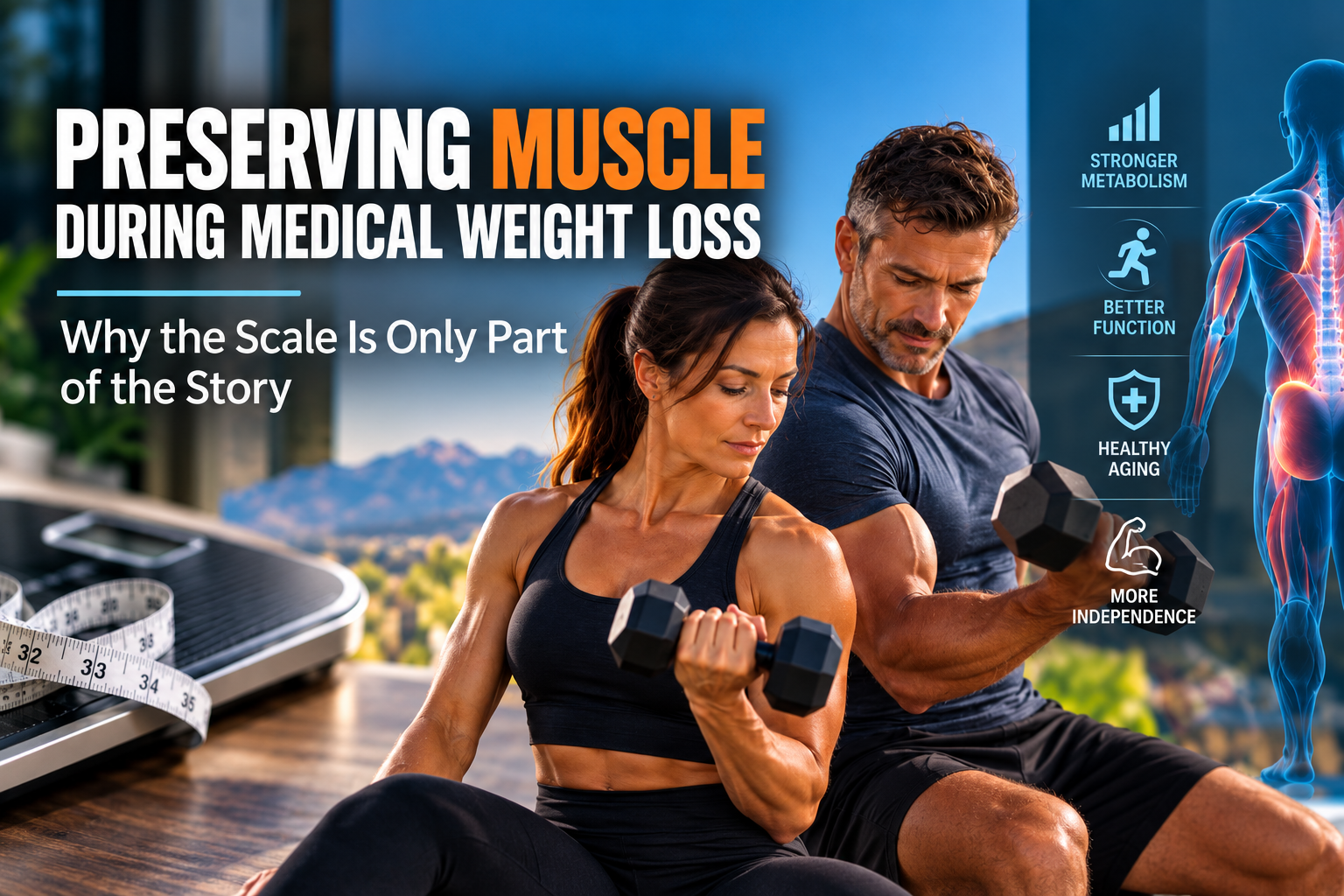
Losing weight can improve metabolic health, mobility, blood pressure, blood sugar, and many other aspects of health. But successful medical weight loss should involve more than simply making the number on the scale smaller.
Ideally, we want to lose excess body fat while preserving as much healthy muscle as possible.
This becomes particularly important when weight loss occurs rapidly or when medications significantly reduce appetite and overall calorie intake. Whenever the body is in a calorie deficit, some loss of lean tissue can occur along with fat loss.
The goal of a thoughtful medical weight-loss program should therefore not simply be weight loss.
It should be better body composition, better metabolic health, and preservation of physical function.
What Happens to Muscle When You Lose Weight?
When the body loses a significant amount of weight, that weight typically comes from several different compartments.
These may include:
- Body fat
- Water
- Glycogen
- Connective and other lean tissues
- Skeletal muscle
This is why a 20-pound decrease on the scale does not necessarily mean that 20 pounds of body fat were lost.
Studies evaluating modern medical weight-loss therapies demonstrate that the majority of weight lost is generally fat mass, but measurable reductions in lean mass can also occur. A 2026 systemic review and meta-analtysis found that lean mass represented approximately 25–39% of total weight loss in trials of incretin-based medications, although the proportion varied by medication and study. Interestingly, the proportion of lean-mass loss was broadly comparable with intensive lifestyle-induced weight loss.
There is an important distinction, however:
Lean mass is not exactly the same thing as skeletal muscle.
Lean or fat-free mass measurements can include water, organs, connective tissue, bone-related components, glycogen, and other non-fat tissues. A decrease in measured lean mass therefore should not automatically be interpreted as an equivalent loss of functional skeletal muscle.
This distinction is especially important during active weight loss because changes in hydration and glycogen stores can alter lean-mass measurements even when actual muscle tissue has changed much less. For example, when calorie and carbohydrate intake decrease, glycogen stores may fall, and because glycogen is stored with water, some of the apparent reduction in lean mass can reflect changes in fluid and glycogen rather than true muscle loss.
That does not mean muscle loss should be ignored. It means body-composition results need to be interpreted in context. Changes in strength, physical performance, exercise capacity, protein intake, and trends over time can help provide a more complete picture of whether meaningful muscle loss is occurring.
Nevertheless, preserving skeletal muscle during weight loss remains an important clinical objective.
Why Does Preserving Muscle Matter?
Skeletal muscle is far more than tissue that helps us lift, walk, or exercise. It is one of the body’s most important metabolic and functional tissues and plays a major role in overall health, resilience, and healthy aging.
Muscle is a primary site for glucose uptake, which means it has an important role in blood sugar regulation and insulin sensitivity. In practical terms, maintaining healthy muscle mass can support better metabolic health and may help the body handle glucose more efficiently.
Muscle also contributes to resting energy expenditure. Although it is not the only factor that determines metabolism, maintaining lean tissue helps support the amount of energy the body uses at rest and can become particularly important during and after weight loss.
From a functional standpoint, muscle is essential for:
- Strength and physical performance
- Balance and stability
- Mobility and independence
- Joint support
- Exercise capacity
- Fall prevention
- Recovery from illness or injury
- Maintaining bone health through mechanical loading
Muscle also functions as an active endocrine tissue. During physical activity, skeletal muscle releases signaling molecules known as myokines, which can influence inflammation, metabolism, and communication with other organs. This is one reason muscle should be viewed as an active component of whole-body health rather than simply as a structural tissue.
Preserving muscle becomes even more important as we age. Beginning in adulthood, muscle mass and strength tend to decline gradually over time, and this process can accelerate with inactivity, illness, inadequate protein intake, hormonal changes, and significant weight loss. Over the years, excessive loss of muscle can contribute to frailty, reduced mobility, falls, loss of independence, and a condition known as sarcopenia.
This is particularly relevant during medical weight loss. If someone is already experiencing age-related muscle decline, losing additional muscle unnecessarily while reducing body weight can work against some of the health benefits we are trying to achieve.
The goal should not simply be to become lighter.
It should be to become leaner while remaining strong, metabolically healthy, physically capable, and resilient.
Maintaining muscle is therefore not a cosmetic concern. It is a central part of preserving metabolic health, physical function, quality of life, and long-term wellness.
Medical Weight Loss Changes More Than Appetite
Many modern weight-loss medications work, at least in part, by substantially decreasing appetite and reducing spontaneous food intake.
That can be extremely helpful for patients who have struggled with hunger, cravings, portion control, or maintaining a calorie deficit.
But there is another side to appetite suppression:
If someone eats much less food, they may also eat much less protein, vitamins, minerals, and total nutrition.
This can become particularly relevant when patients describe eating only one very small meal per day, routinely skipping meals, or feeling that virtually nothing sounds appealing.
Reduced intake may be amplified further if someone experiences:
- Nausea
- Early fullness
- Vomiting
- Food aversions
- Constipation
- Reflux
- Significant changes in taste or appetite
A review of strategies for minimizing muscle mass loss during incretin-based weight loss treatment emphasizes that effective obesity treatment should include adequate protein and micronutrient intake together with physical activity—particularly resistance training—to help preserve muscle mass and function.
More recently, an EASO, EFAD, and ECPO international consensus statement on incretin based therapies similarly emphasized nutrition, protein intake, progressive resistance exercise, physical function, and appropriate monitoring during medical weight loss.
Medical weight-loss therapy should therefore involve more than medication alone.
Protein Becomes Particularly Important During Weight Loss
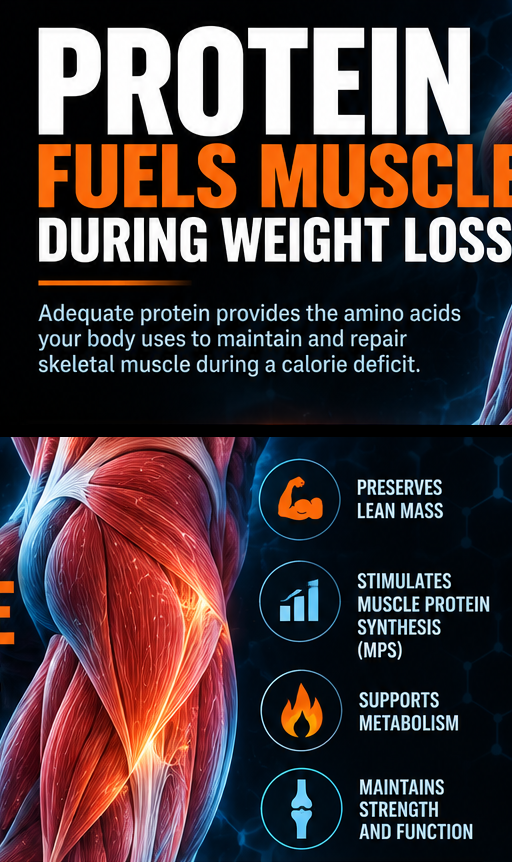
Adequate dietary protein provides amino acids that the body uses to maintain and repair skeletal muscle.
During a calorie deficit, protein requirements may deserve greater attention because the body is receiving less total energy.
There is no single protein prescription that is appropriate for every patient.
Protein needs vary based on factors such as:
- Body size
- Age
- Activity level
- Current muscle mass
- Degree of calorie restriction
- Kidney function
- Medical conditions
- Weight-loss rate
A 2026 review examining protein strategies, micro nutritional monitoring, and lean-muscle preservation during medical weight loss proposed daily protein intake of approximately 1.2 grams per kilogram per day, with intake approaching 1.6 grams per kilogram per day in selected appropriate adults.
These numbers should be individualized and may not be appropriate for people with certain medical conditions, including some forms of kidney disease.
The more important practical lesson is this:
Do not allow appetite suppression to unintentionally turn into chronic protein deprivation.
Protein Distribution May Matter Too
Getting enough protein over the course of the day is important, but when that protein is eaten may matter as well.
A common misconception is that the body can only “absorb” 20 or 30 grams of protein at one time. That is not accurate. The digestive system can absorb substantially more protein than that. Protein eaten in a large meal is still digested and its amino acids can be used throughout the body.
The more relevant question is:
How much protein at one meal is needed to optimally stimulate muscle protein synthesis?
Muscle protein synthesis, or MPS, is the process through which the body builds and repairs muscle proteins. After eating a protein-containing meal, amino acids—particularly essential amino acids such as leucine—act as both building materials and signals that stimulate this process.
Research suggests that roughly 20–40 grams of high-quality protein per meal can provide a strong muscle-building stimulus for many adults, although the ideal amount depends on body size, age, activity level, and the quality of the protein source.
A frequently cited review examining how much protein can be effectively used for muscle building at a single meal proposed approximately 0.4 grams of protein per kilogram of body weight per meal when protein is distributed across several meals.
A more recent review focused specifically on medical weight loss and lean-mass preservation similarly suggested meal-by-meal protein targets of approximately 0.3–0.4 grams per kilogram.
Older adults may sometimes benefit from amounts toward the higher end because the muscle-building response to protein can become less sensitive with age, a phenomenon sometimes referred to as anabolic resistance.
Importantly, eating substantially more protein than this at one meal is not necessarily “wasted.” Those amino acids may still be used for other tissues and metabolic processes. However, consuming 70 or 80 grams of protein at dinner does not necessarily provide twice the muscle-building effect of consuming 35 or 40 grams.
For muscle preservation, it may therefore make more sense to provide the body with several meaningful protein exposures throughout the day rather than eating very little protein during the day and trying to make up for it with one enormous evening meal.
A practical pattern might look like:
- Breakfast: 25–35 grams
- Lunch: 25–35 grams
- Afternoon snack or shake: 20–30 grams
- Dinner: 30–40 grams
Protein feedings separated by roughly 3–4 hours are commonly recommended because they provide repeated opportunities to stimulate muscle protein synthesis throughout the day. The International Society of Sports Nutrition position stand on protein and exercise similarly describes approximately 20–40 grams of high-quality protein every 3–4 hours as a practical strategy for supporting muscle protein synthesis.
For example, someone targeting approximately 120 grams of protein per day might distribute it like this:
- Breakfast: 30 g
- Lunch: 30 g
- Afternoon: 25 g
- Dinner: 35 g
That is likely more useful for muscle preservation than eating 10 grams at breakfast, 10 grams at lunch, and trying to consume the remaining 100 grams at dinner.
What Does 25–35 Grams of Protein at a Meal Actually Look Like?
Here are several separate examples of what one protein-focused meal or snack might look like:
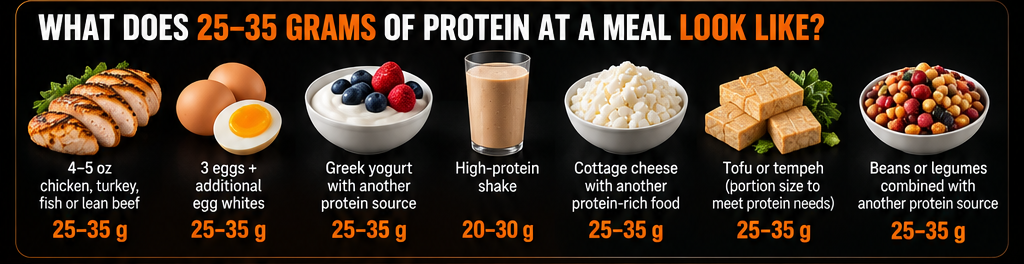
Example 1: 4–5 ounces of chicken, turkey, fish, or lean beef
Example 2: 3 eggs plus additional egg whites
Example 3: Greek yogurt paired with cottage cheese or another protein source
Example 4: A high-protein shake
Example 5: Cottage cheese paired with another protein-rich food
Example 6: Tofu or tempeh in a portion large enough to provide the desired amount of protein
Example 7: Beans or legumes combined with another protein source as needed
Each example represents a different meal or eating occasion, not foods that need to be eaten together.
Plant-based proteins can absolutely contribute to daily protein needs, although larger portions or combinations of foods may sometimes be required to provide comparable amounts of essential amino acids.
Why This Matters During Medical Weight Loss
This becomes especially important when appetite is significantly reduced.
Someone taking a medication that suppresses appetite may unintentionally go most of the day consuming almost no protein simply because they are not hungry. By dinner, they may realize they have consumed only 15 or 20 grams all day.
Trying to correct that with a very large protein-heavy dinner is difficult and may be uncomfortable, particularly for patients who experience early satiety.
A better strategy may be to think of protein as something that should be intentionally distributed throughout the day, even when meals are smaller.
For some patients that may mean eating smaller amounts of protein more frequently rather than forcing themselves to eat large meals.
For example:
7:30 AM — Eggs or Greek yogurt
11:30 AM — Chicken, turkey, fish, or another protein-rich lunch
3:00 PM — Protein shake, Greek yogurt, or cottage cheese
6:30 PM — Protein-centered dinner
This approach may be particularly useful during medical weight loss because smaller meals can be easier to tolerate while still providing repeated amino-acid availability throughout the day.
The goal is not to become obsessive about meal timing or count every gram of protein.
The goal is simply to avoid a pattern where protein intake becomes an afterthought.
During medical weight loss, protein should be intentional, adequately distributed, and paired with resistance exercise whenever appropriate. Together, these provide two of the strongest signals available to help the body preserve muscle while losing excess body fat.
Resistance Training and Aerobic Exercise: Preserving Muscle While Promoting Fat Loss
When the goal is healthy weight loss, the ideal exercise strategy is usually not resistance training or cardiovascular exercise.
It is often a combination of both.
Resistance training provides the most direct signal to the body that skeletal muscle is still needed. During a calorie deficit, that signal becomes especially important because the body is being asked to operate with less available energy.
Muscle adapts to the demands placed upon it. If someone is eating fewer calories and rarely challenging their muscles, the body has less reason to maintain metabolically expensive lean tissue.
Resistance exercise sends a very different message:
This muscle is being used. Keep it.
Research supports this approach. A 2025 systematic review and meta-analysis of resistance exercise during dietary weight loss found that adding resistance exercise to dietary weight loss helped protect fat-free mass, increased fat-mass loss, and improved muscular strength compared with dietary weight loss alone.
That makes resistance training particularly valuable during medical weight loss because it can help shift the quality of weight loss in the direction we want:
More fat loss. Less unnecessary lean-mass loss.
Cardiovascular Exercise Still Matters
Resistance training should not replace cardiovascular activity.
Walking, cycling, swimming, rowing, incline treadmill work, and other forms of aerobic exercise can increase total energy expenditure while improving:
- Cardiovascular fitness
- Mitochondrial function
- Endurance
- Insulin sensitivity
- Blood pressure
- Exercise capacity
- Overall metabolic health
Lower- to moderate-intensity aerobic exercise is often particularly practical during medical weight loss because it can be performed for longer periods without producing the same level of fatigue as repeated high-intensity training.
What About Zone 2?
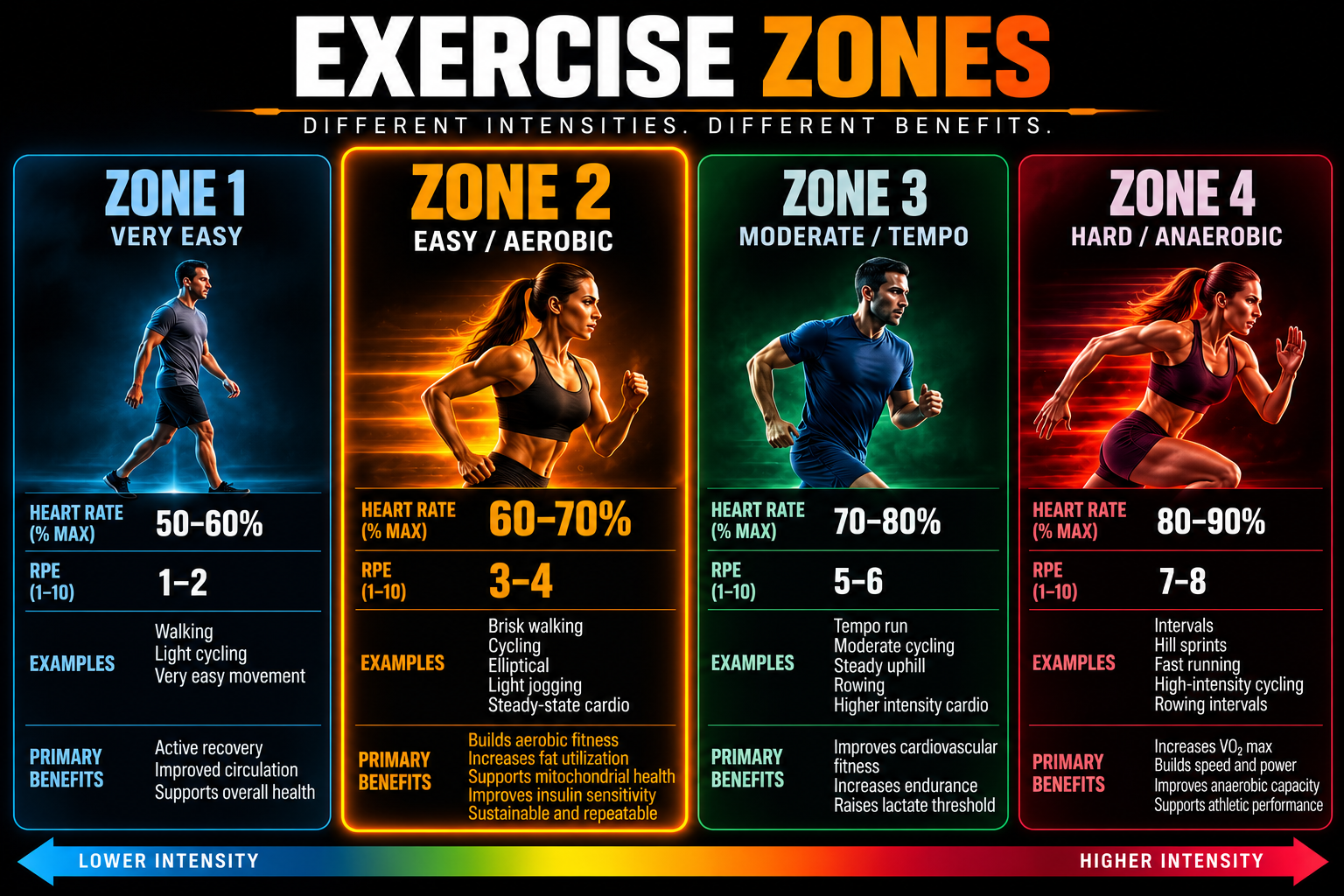
Zone 2 training has become popular because exercise at this intensity generally relies more heavily on aerobic metabolism and uses a relatively high proportion of fat as a fuel source.
That can make it a useful component of a weight-loss program.
However, Zone 2 should not be defined by a universal heart-rate range such as 120–140 beats per minute. For one person, 125 bpm may be appropriate Zone 2 exercise; for another, it may be too easy or too intense.
The important distinction is that exercising in a “fat-burning zone” does not mean body fat disappears simply because more fat is being used for fuel during that particular workout.
Long-term fat loss still depends largely on overall energy balance.
Zone 2 can contribute to that process by allowing someone to perform meaningful volumes of aerobic exercise while limiting fatigue and improving aerobic conditioning.
It is useful—not magical.
Zone 2 is better thought of as a moderate, sustainable aerobic intensity below the lactate threshold. Practically, many people experience it as an effort where breathing is increased but controlled and conversation is still possible.
Combining Resistance Training and Aerobic Exercise
For many patients undergoing medical weight loss, a balanced approach might include:
- Resistance training 2–4 days per week
- Moderate aerobic exercise 3–5 days per week
- Regular daily walking and general physical activity
- Periods of higher-intensity exercise when appropriate for fitness level and medical status
For example:
Monday: Full-body resistance training
Tuesday: 30–45 minutes of moderate aerobic exercise
Wednesday: Full-body resistance training
Thursday: Walking or moderate aerobic conditioning
Friday: Full-body resistance training
Weekend: Longer walk, bike ride, hike, swim, or other enjoyable aerobic activity
This allows resistance exercise to help preserve muscle while aerobic activity contributes additional energy expenditure and cardiovascular conditioning.
There is also evidence that combining strength and endurance exercise during calorie restriction may be particularly effective for preserving fat-free mass. A 2026 systematic review and network meta-analysis comparing strength, endurance, and mixed exercise during calorie restriction found that exercise prevented nearly half of the fat-free-mass loss associated with calorie restriction. Mixed training produced the largest estimated benefit, followed by strength training, although differences between exercise modalities were not statistically significant in the subgroup analysis.
The Goal Is Better Body Composition, Not Just More Exercise
More exercise is not always better.
During medical weight loss, especially when calorie intake is substantially reduced, excessive training without adequate protein, hydration, sleep, and recovery can become counterproductive.
The objective is to create enough training stimulus to:
Preserve muscle, increase energy expenditure, improve cardiovascular fitness, and encourage fat loss—without compromising recovery or nutrition.
In practical terms, that often means making resistance training the foundation for muscle preservation and layering aerobic exercise around it.
The combination is more useful than focusing on either one in isolation.
You Do Not Have to Become a Bodybuilder
Resistance training does not require spending two hours per day in a gym.
Depending on a patient’s health, experience, and physical limitations, resistance exercise might include:
- Weight machines
- Dumbbells
- Resistance bands
- Body-weight exercises
- Squats or modified squats
- Rows
- Pressing movements
- Hip-hinge movements
- Supervised strength training
What matters is that the muscles are challenged progressively and safely.
Someone who has never exercised before should not begin with the same program as an experienced athlete.
The appropriate program depends on age, orthopedic history, cardiovascular health, balance, mobility, and baseline conditioning.
Rapid Weight Loss Is Not Always Better Weight Loss
It is tempting to view faster weight loss as automatically better.
But the objective of treatment should not be to make someone’s weight fall as rapidly as physically possible.
Very aggressive calorie restriction can make it increasingly difficult to consume adequate:
- Protein
- Essential fats
- Vitamins
- Minerals
- Fiber
- Fluids
It may also make regular exercise more difficult because of fatigue or inadequate energy intake.
The ideal rate of weight loss varies considerably from person to person.
Instead of asking only:
“How much weight did I lose this month?”
it may be more useful to ask:
“What kind of weight did I lose, and how do I feel and function?”
The Scale Cannot Tell You What You Are Losing
A standard bathroom scale provides one measurement:
Total body weight.
It cannot distinguish between:
- Fat
- Muscle
- Water
- Bone
- Glycogen
Depending on the clinical setting, body composition may be estimated using:
- Bioelectrical impedance analysis
- DEXA scanning
- Circumference measurements
- Progress photographs
- Strength and functional testing
None of these measurements is perfect.
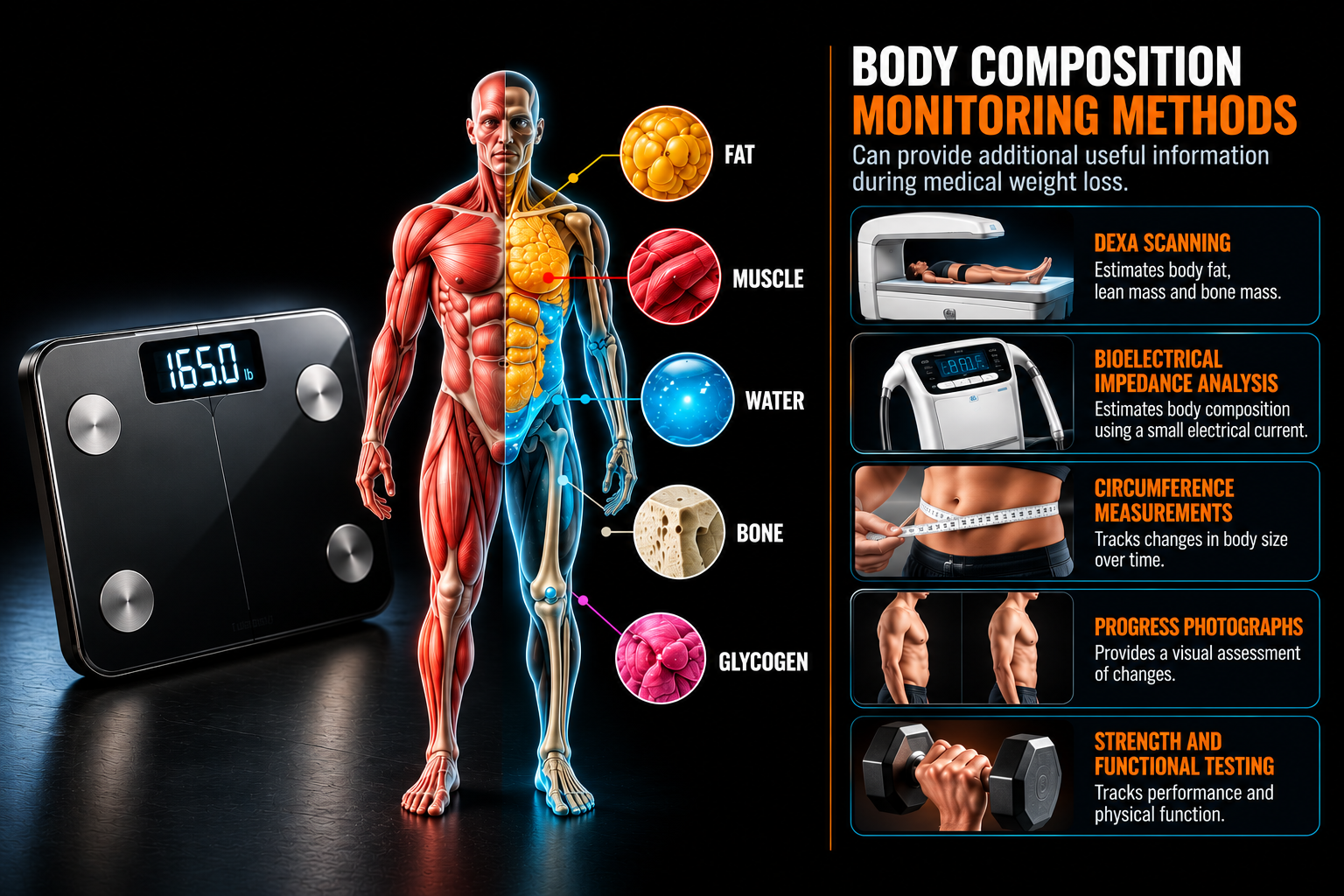
This is why body-composition monitoring can sometimes provide additional useful information during medical weight loss.
DEXA-derived lean mass and bioimpedance-derived fat-free mass should not automatically be interpreted as direct measurements of skeletal muscle. Hydration, glycogen, organs, connective tissues, and other non-fat components can influence these measurements.
The most useful approach is often to look at trends over time rather than obsessing over a single measurement.
Strength May Matter as Much as Muscle Mass
Muscle health is not purely about how many pounds of lean mass appear on a body-composition report.
Function matters.
Questions we may care about include:
- Are you maintaining strength?
- Can you perform normal daily activities comfortably?
- Are your workouts progressing or deteriorating?
- Has your energy declined dramatically?
- Are you becoming weaker while the scale falls?
- Can you get up from a chair easily?
- Are you maintaining balance and mobility?
Modern obesity care is increasingly moving toward assessing not simply body weight, but also muscle quantity, muscle quality, strength, physical performance, nutritional status, and bone health.
What About Creatine and Other Supplements?
Patients frequently ask whether supplements can prevent muscle loss during weight reduction.
Creatine is one of the better-studied nutritional supplements for supporting strength and resistance-training performance in general populations.
Other compounds commonly discussed include:
- Essential amino acids
- Leucine
- HMB
- Omega-3 fatty acids
- Vitamin D
However, supplementation should not distract from the fundamentals.
A recent review of nutrition, exercise, supplements, and weight loss medications for notes that supplements such as creatine, essential amino acids, leucine, HMB, and omega-3 fatty acids remain adjunctive strategies, with much of the evidence during medication-assisted weight loss still indirect or derived from other populations.
The foundation remains:
Adequate nutrition + adequate protein + resistance training + appropriate medical monitoring.
Supplements may occasionally complement that foundation, but they should not replace it.
Do You Need to Eat More Just to Protect Muscle?
Not necessarily.
The goal is not to eliminate the calorie deficit that is producing fat loss.
Instead, the goal is to make the calories you are consuming nutritionally productive.
For example, a patient eating substantially less food may need to prioritize:
- Adequate protein
- Vegetables and fiber-rich foods
- Essential fats
- Nutrient-dense whole foods
- Appropriate hydration
This becomes especially important when appetite is significantly suppressed.
There is a major difference between:
Eating less
and
Eating poorly.
Medical weight loss should ideally accomplish the first without causing the second.
Muscle Preservation Becomes Even More Important With Age
Muscle loss deserves particular attention in middle-aged and older adults.
Age-related loss of skeletal muscle and strength can eventually contribute to sarcopenia, which is associated with reduced mobility, falls, frailty, and loss of independence.
An older patient beginning medical weight-loss therapy may therefore have a different risk profile than a healthy 25-year-old undergoing modest weight reduction.
Additional attention may be appropriate for people who:
- Are older
- Already have low muscle mass
- Are physically inactive
- Have experienced previous large weight losses
- Have limited protein intake
- Have chronic disease
- Have prolonged appetite suppression
- Lose weight very rapidly
- Are unable to perform resistance exercise
For these patients, body composition and functional outcomes may deserve even greater attention.
Weight Loss Should Improve Health—Not Simply Reduce Body Size
A successful medical weight-loss program should ideally leave someone:
- Leaner
- Metabolically healthier
- Stronger or equally strong
- More physically capable
- Better nourished
- More active
- Better positioned to maintain their results
That means treatment cannot simply consist of prescribing medication and watching the scale.
Medication may be an extremely useful tool, but it is still only one component of treatment.
Nutrition, exercise, sleep, metabolic health, hormones when appropriate, behavioral habits, and long-term maintenance all matter.
A Practical Approach to Preserving Muscle During Medical Weight Loss
At R2 Medical Clinic, our goal is not simply to produce the lowest possible number on the scale.
A more comprehensive approach may include:
1. Establish an Appropriate Weight-Loss Goal
Treatment should be individualized rather than driven by an arbitrary number.
2. Prioritize Protein
Make sure reduced appetite does not result in inadequate protein intake.
3. Perform Regular Resistance Exercise
Provide the muscle with a reason to remain.
4. Avoid Unnecessary Extreme Calorie Restriction
More rapid weight loss is not automatically better weight loss.
5. Monitor Nutrition and Symptoms
Persistent nausea, food intolerance, weakness, or profound appetite suppression should not simply be ignored.
6. Evaluate Body Composition When Useful
Scale weight alone does not tell the entire story.
7. Monitor Strength and Physical Function
Muscle quality and performance matter in addition to muscle quantity.
8. Adjust the Plan Over Time
Medical weight loss should evolve as body weight, appetite, activity, and metabolic health change.
The Bottom Line
The objective of medical weight loss should not simply be:
“Lose as much weight as possible.”
A better objective is:
Lose excess body fat while preserving muscle, strength, nutrition, and long-term metabolic health.
Some reduction in lean mass can accompany substantial weight loss whether that weight loss comes from lifestyle intervention, medication, or both. The answer is not necessarily to avoid effective weight-loss therapy.
The answer is to make muscle preservation part of the treatment plan from the beginning.
Adequate protein, progressive resistance training, appropriate nutrition, thoughtful medication management, and monitoring of body composition and function can help make weight loss not only successful—but healthier and more sustainable.
Related Medical Weight Loss Resources
Medical Weight Loss: A Physician’s Guide to Medications, Nutrition, Exercise & Long-Term Success
Injectable vs. Oral Weight-Loss Medications: How Medical Weight-Loss Treatment Is Individualized
Your Health Is More Than a Subscription: Why Quality Medical Care Matters
Frequently Asked Questions
Do Weight-Loss Medications Cause Muscle Loss?
Substantial weight loss from almost any method can include some loss of lean tissue. Modern medical weight-loss medications generally produce substantially more fat loss than lean-mass loss, but measurable reductions in lean mass have been reported.
A 2026 systematic review comparing incretin therapy with intensive lifestyle intervention found that the proportion of total weight lost as lean mass was broadly comparable between the two approaches. The degree of lean-mass loss nevertheless varies significantly among individuals and studies.
Is Lean Mass the Same as Muscle?
No. Lean or fat-free mass includes more than skeletal muscle. Water, organs, connective tissues, glycogen, and other non-fat components contribute to these measurements.
A 2026 review examining the interpretation of lean-mass changes during medical weight loss emphasizes that DEXA and bio impedance measurements of lean or fat-free mass should not automatically be interpreted as equivalent changes in functional skeletal muscle.
How Much Protein Should I Eat While Losing Weight?
There is no universal target.
A 2026 review with the use of weight loss medications suggests approximately 1.2–1.6 g/kg/day may be appropriate for selected adults during active weight loss, but protein intake should be individualized based on body size, kidney function, activity, age, medical history, and overall nutritional intake.
Is Walking Enough to Prevent Muscle Loss?
Walking is excellent exercise, but it does not provide the same muscle-building stimulus as progressive resistance training.
A comprehensive program will often include both cardiovascular activity and resistance exercise.
Should I Lift Weights While Using Medical Weight-Loss Medications?
For many patients, some form of resistance exercise is beneficial and may help preserve muscle and strength.
A review specifically examining resistance exercise during incretin-based weight loss pharmacotherapy concluded that resistance training should be considered an important adjunct to medical weight-loss treatment to help optimize body composition.
The appropriate exercise program should still be tailored to an individual’s fitness level and medical or orthopedic limitations.
Should I Take Creatine During Medical Weight Loss?
Creatine may be appropriate for some people, particularly those performing resistance exercise, but it should not be viewed as a substitute for adequate protein, nutrition, and training.
Patients with medical conditions or kidney concerns should discuss supplementation with their healthcare provider.
How Do I Know Whether I Am Losing Fat or Muscle?
Body-composition testing can provide estimates, while strength, physical performance, measurements, and clinical trends provide additional information.
No single measurement is perfect, so repeated measurements and overall trends are generally more useful than one isolated result.
References
- Eisa N, Barood O. Lean Mass Changes With Incretin Therapy Versus Lifestyle Intervention: A Systematic Review and Meta-Analysis of Randomised Controlled Trials. Diabetes, Obesity and Metabolism. 2026;28(6):4818-4827.
- Schoenfeld BJ, Aragon AA. How much protein can the body use in a single meal for muscle-building? Implications for daily protein distribution. Journal of the International Society of Sports Nutrition. 2018;15:10.
- Jäger R, Kerksick CM, Campbell BI, et al. International Society of Sports Nutrition Position Stand: protein and exercise. Journal of the International Society of Sports Nutrition. 2017;14:20.
- Binmahfoz A, Dighriri A, Gray C, Gray SR. Effect of resistance exercise on body composition, muscle strength and cardiometabolic health during dietary weight loss in people living with overweight or obesity: a systematic review and meta-analysis. BMJ Open Sport & Exercise Medicine. 2025;11(3):e002363.
- Deller M, Weiershaus J, Held S, Brinkmann C. Effects of Calorie Restriction With and Without Strength, Endurance or Mixed Training on Fat-Free and Skeletal Muscle Mass in Overweight or Obese Individuals: A Systematic Review With Pairwise Meta-Analysis and Network Meta-Analysis of Randomized Controlled Studies. Diabetes, Obesity and Metabolism. 2026;28(8):6810-6823.
Medically reviewed by Erik Natkin, DO
Founder & Medical Director
R2 Medical Clinic
This information is for educational purposes only and should not replace professional medical advice. Consult with a qualified healthcare provider before starting any treatment.
Reviewed 10/04/2026