The Complete Guide to Obtaining a Legal TRT Prescription
Getting a legal TRT prescription requires the right doctor and lab work. R2 Medical Clinic in Denver walks you through every step of obtaining
R2 Medical Clinic • 7 min read
Introduction: Understanding TRT and Its Importance
Are you feeling tired, having trouble with sexual function, or noticing a change in mood or memory? You're not alone. These are symptoms that many middle-aged individuals experience, and they could be a sign of low testosterone levels. But don't worry, we at R2 Medical are here to guide you on a potential solution - Testosterone Replacement Therapy (TRT).
What is Testosterone Replacement Therapy (TRT)?
TRT is a medical treatment used to replenish the testosterone levels in men who exhibit signs of hypogonadism – a condition where the body doesn't produce enough testosterone.
The Role of Testosterone in Men's Health
Testosterone plays a crucial role in men's health, primarily influencing sexual function, bone health, muscle growth, memory, mood, and energy levels.
Symptoms and Causes of Testosterone Deficiency
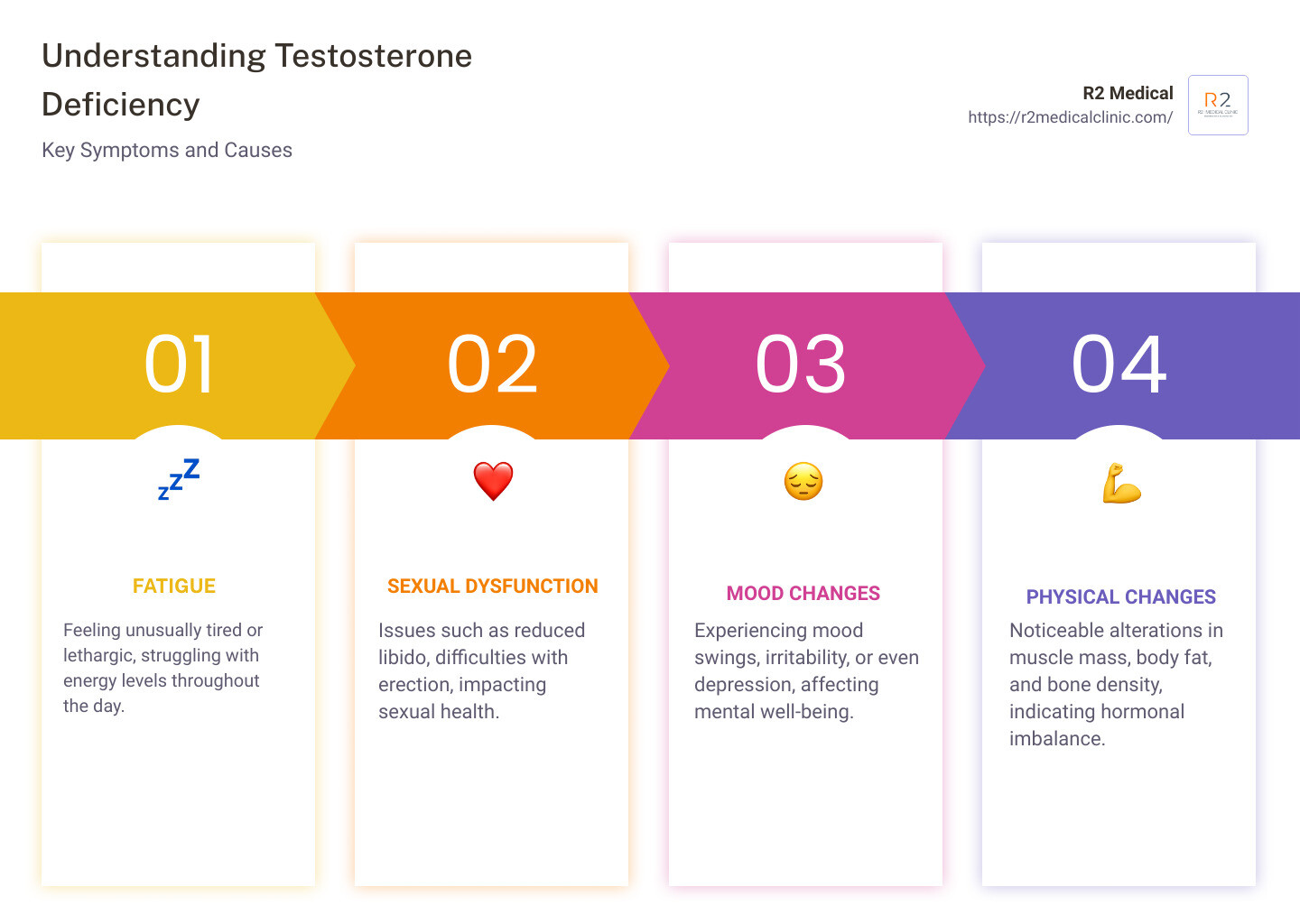
Common symptoms of low testosterone can include fatigue, sexual dysfunction such as reduced libido and erectile problems, and mental health issues like mood swings and depression. It's typically caused by stress, aging, trauma, or infections.
Testosterone levels below 300 nanograms per deciliter (ng/dl) are usually an indication of deficiency; other symptoms must accompany this for an accurate diagnosis.
Over the next sections, we'll explain the process of obtaining a legal TRT prescription, the benefits and risks of undergoing the therapy, and how we at R2 Medical can support you throughout the entire procedure. It's time to regain control of your health – let's begin this journey together.
The Process of Getting a TRT Prescription
Obtaining a TRT prescription isn't a complicated process, but it does require detailed medical evaluations and tests. The goal is to ensure the therapy is suitable for you and will provide the health benefits you seek.
Medical Evaluation for TRT: History, Examination, and Lab Tests

The first step towards getting a TRT prescription is a comprehensive medical evaluation. This usually entails a detailed discussion about your medical history, a physical examination, and laboratory tests. It's crucial to be honest and thorough during this evaluation, as it helps in making an accurate diagnosis.
As a part of your medical history, your doctor will ask about your symptoms, their duration and severity, and how they affect your daily life. They will be interested in any existing medical conditions, medications you're currently on, and your lifestyle habits.
Next, a physical examination will be carried out, and blood tests ordered to measure your testosterone levels. Usually, two separate blood tests are needed, conducted on different days, to confirm testosterone deficiency. Most insurance companies will cover replacement therapy if your levels are below 350ng/dL.
How to Get a TRT Prescription: Steps and Procedures
Once the results from your tests are in, your doctor will review them and discuss the findings with you. If you're diagnosed with testosterone deficiency, a customized treatment plan will be designed to suit your individual needs, goals, and overall health.
The prescription might include different forms of testosterone such as injections, patches, gels, or capsules. The dosage is usually based on your testosterone concentration level, and the maximum dose does not exceed 396 mg per day. Your doctor will adjust the dose as needed to achieve the best results with minimal side effects.
Understanding the Role of a Hormone Clinic in TRT Prescription
Picking the right hormone clinic is pivotal in your journey to getting a TRT prescription. A specialized clinic, like R2 Medical Clinic, plays a crucial role in prescribing and managing your testosterone therapy.
Not only do we have a team of hormone experts to guide you through the process, but we also provide a patient-centric approach. We understand that each patient is unique - hence our treatment plans are tailored to your individual needs and circumstances.
We also offer ongoing support and management throughout your therapy. Regular follow-up visits are scheduled to monitor your progress, adjust dosage if necessary, and address any concerns or side effects you might experience.
In conclusion, obtaining a TRT prescription is not a daunting task. It involves a straightforward process of medical evaluation, laboratory tests, and finally, the prescription by a specialized hormone clinic. With R2 Medical Clinic, you're not alone in this journey. We ensure you get the best care and the most effective treatment to improve your quality of life.
The Benefits and Risks of TRT
Ensuring a well-rounded understanding of TRT involves exploring both the proven benefits as well as the potential risks and side effects. It's also important to distinguish between TRT and performance-enhancing steroids, a common confusion among many.
The Proven Benefits of TRT: From Improved Energy Levels to Enhanced Sexual Function
One of the main reasons individuals seek a TRT prescription is due to its array of benefits. Many men report an improvement in energy levels, sex drive, and quality of erections after starting the therapy.
Improved Memory: Higher levels of testosterone have been linked to a reduced risk for Alzheimer’s disease and an increase in spatial memory abilities for men aged 34-70.
Enhanced Mood and Energy Levels: Testosterone therapy, particularly via transdermal application, results in increased energy levels, reduced anxiety, and overall better mood.
Increased Libido and Sexual Performance: Men on TRT have reported a significant reduction in penile venous leakage, a common cause of erectile dysfunction, and an increase in sexual desire.
Increased Muscle Mass and Better Body Composition: TRT has a regulatory effect on the body’s fat composition and its ability to build muscle.
Increased Bone Density: Testosterone therapy increases bone mineral density in sufficient doses.
Potential Risks and Side Effects of TRT
While TRT has proven benefits, it's also essential to recognize possible risks. Any decision concerning medical treatment should be based on a comprehensive understanding of both the benefits and the potential risks.
Common side effects include rash, itching, or irritation where the testosterone is applied. More serious risks could include an increased risk of heart attack or stroke, benign prostatic hypertrophy (BPH), prostate cancer, worsening of sleep apnea, and blood clots.
It's also advised that men with severe congestive heart failure should usually not take testosterone replacement, as it can worsen the condition.
The Difference Between TRT and Performance-Enhancing Steroids
It's important to clarify that testosterone replacement therapy is not the same as taking anabolic steroids used by athletes for performance enhancement. While both contain testosterone or substances that act like testosterone, the doses used in TRT only achieve physiologic levels of hormone in the blood. The testosterone used in performance-enhancing steroids is in much higher doses and often combined with other substances to maximize the muscle-building effect.
At R2 Medical, we prioritize patient safety and seek to provide an individualized approach to hormone therapy. We continually monitor your response to treatment, ensuring the potential benefits outweigh any risks. We're here to guide you every step of the way, from obtaining a TRT prescription to managing your therapy effectively.
Conclusion: Making an Informed Decision about TRT
Deciding to pursue testosterone replacement therapy (TRT) is a significant decision that demands careful thought and discussion with your healthcare provider. It's essential to weigh the potential benefits against any possible risks, and to consider the role of lifestyle changes in managing low testosterone levels.
Discussing the Risks and Benefits with Your Doctor
As with any medical intervention, TRT has potential benefits and risks. The proven benefits of TRT include improved energy levels, reduced body fat, enhanced sexual function, and improved mood. Yet there's also a potential for side effects, such as blood clots. These risks and benefits should be thoroughly discussed with your healthcare provider to ensure that TRT is a suitable choice for you.
The Role of Lifestyle Changes in Managing Low Testosterone Levels
While TRT can be an effective treatment for low testosterone, it's not a standalone solution. Maintaining a healthy lifestyle, including regular exercise and a balanced diet, can play a crucial role in managing low testosterone levels. These lifestyle changes can boost the effectiveness of TRT and contribute to overall health and well-being.
How R2 Medical Clinic Can Help You with TRT Prescription and Management
At R2 Medical Clinic, we specialize in personalized care for individuals experiencing symptoms of aging, including low testosterone. Our experienced professionals will guide you through the entire process, from initial evaluation to obtaining a legal TRT prescription.
We use a comprehensive approach, considering your medical history, symptoms, and overall health to design a treatment plan tailored to your specific needs. We are committed to providing ongoing support and monitoring throughout your treatment, ensuring that the potential benefits of TRT outweigh any risks.
Our goal is to help you regain your health and improve your quality of life. To find out more about how we can assist you with TRT, explore our Testosterone Replacement Therapy page, or contact us directly for a personalized consultation.

In conclusion, obtaining a TRT prescription is a process that involves careful evaluation, discussion of risks and benefits, and ongoing management. At R2 Medical Clinic, we are here to guide and support you every step of the way, providing personalized care that is tailored to your unique needs and goals.