Testosterone Replacement Therapy in Denver, CO
Transform Your Health Today
Physician-Supervised Testosterone Therapy & Bio-identical Hormone Optimization
Regain your vitality, strength, and confidence with our comprehensive hormone optimization programs designed specifically for men.
R2 Medical Clinic provides testosterone replacement therapy (TRT) and bioidentical hormone replacement therapy (BHRT) for men in Denver. Every treatment plan is physician-supervised and personalized to address the symptoms of low testosterone. Our approach starts with identifying the underlying causes of hormonal imbalance, then builds a plan to support overall men's health, anti-aging, vitality, and long-term wellness.
Unlike chain “Low T centers” that often check only total testosterone, R2 takes a comprehensive approach with full hormone panel testing for accurate results, ongoing medical supervision, and root-cause medicine that addresses why your levels dropped in the first place.
What Is Testosterone Replacement Therapy?
Testosterone replacement therapy is a physician-supervised treatment that uses bioidentical hormones to restore optimal testosterone levels in men with clinically diagnosed low testosterone (hypogonadism). TRT is the only FDA-approved treatment for men diagnosed with hypogonadism, and its popularity has increased significantly — prescriptions rose fivefold over a four-year period according to a study from the University of North Carolina.
TRT is tailored to each patient based on comprehensive lab work, symptoms, medical history, and treatment goals. The pituitary gland plays a key role in regulating testosterone production by signaling the testicles to produce testosterone, making its function important to assess during evaluation. At R2 Medical Clinic, testosterone therapy programs in Denver include ongoing monitoring, dosage adjustments, and support for overall hormonal balance and men's health.
Reading the Labs
Laboratory values should be interpreted in clinical context. Evaluation should consider symptoms, total and free testosterone, other relevant hormone levels, medical history, medications, metabolic health, lifestyle factors and treatment goals. A testosterone result within a laboratory reference range does not necessarily explain—or exclude a hormonal contribution to—a patient’s symptoms.
How Does Testosterone Replacement-Optimization Therapy Work?
R2 Medical Clinic follows a structured, evidence-based approach to hormone replacement therapy:
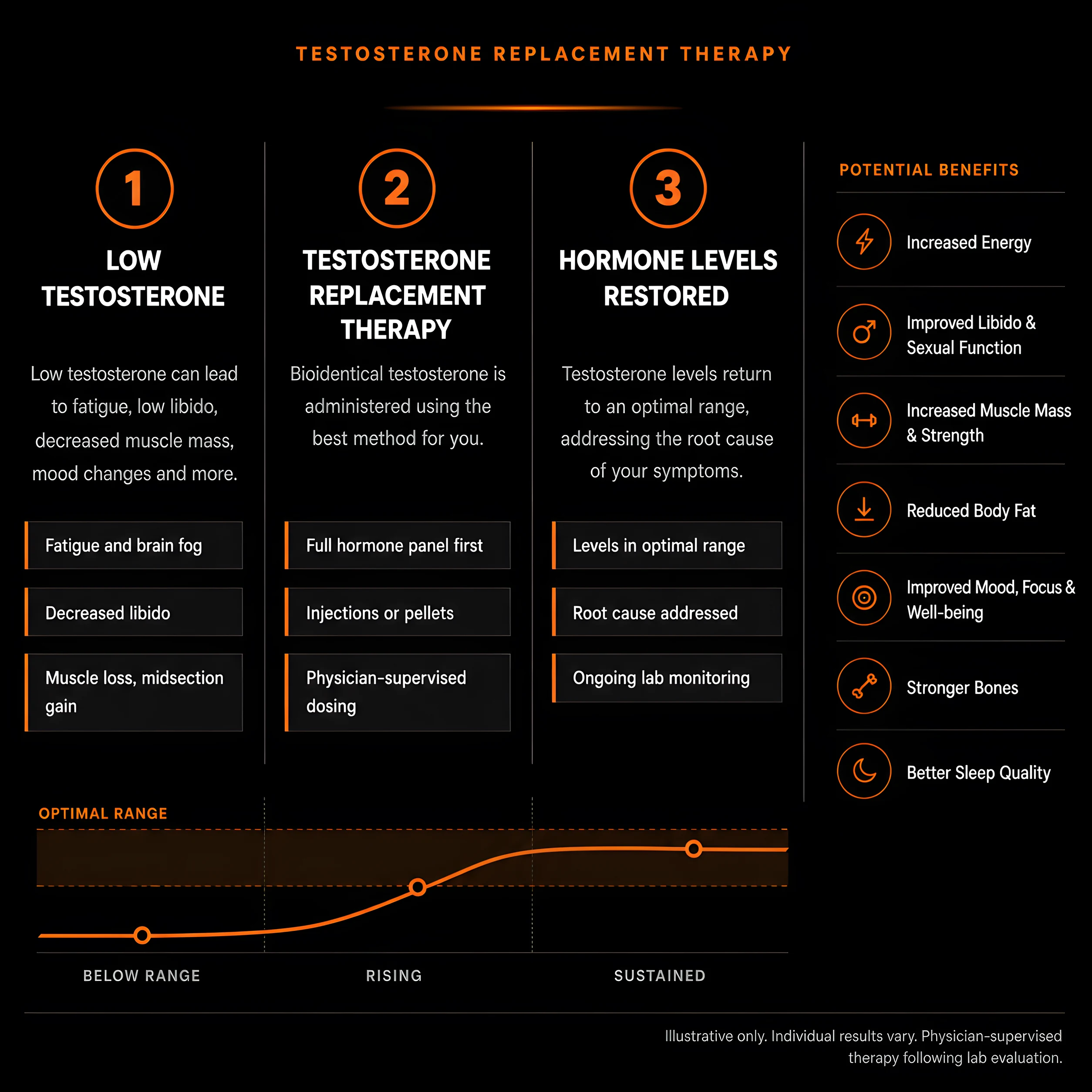
Step 1 — Comprehensive Consultation
During your first visit, you receive a detailed evaluation of symptoms, health history, lifestyle factors, and treatment goals. Many men delay seeking help due to stigma — our confidential, judgment-free environment ensures you can discuss concerns openly.
Step 2 — Complete Hormone Panel & Lab Work
Complete laboratory bloodwork is important and may include total testosterone, free testosterone, estradiol, SHBG, LH, FSH, PSA, CBC, and other relevant markers. Our comprehensive testing ensures accurate results for informed decision-making, helping determine root causes rather than just treating numbers.
Step 3 — Personalized TRT Protocol
We develop a custom treatment plan based on your individual needs and lab results, tailored to your unique physiology, symptoms, and goals.
Step 4 — Ongoing Monitoring & Optimization
Regular follow-ups, progress tracking, and protocol adjustments ensure optimal results and safety. Your testosterone levels are closely monitored with blood work to minimize potential risks and side effects.
What Are the Symptoms of Low Testosterone?
Low testosterone affects many men, particularly after age 30 when testosterone levels drop approximately 1% per year. Recognizing symptoms is the first step toward treatment:
- Persistent fatigue and low energy levels
- Decreased libido and reduced sex drive
- Erectile dysfunction and sexual performance issues
- Difficulty building or maintaining lean muscle mass
- Unexplained weight gain, especially around the midsection
- Brain fog and difficulty concentrating
- Mood changes, irritability, and depression
- Sleep disturbances and poor recovery
- Reduced motivation, self-confidence, and overall well-being
- Low testosterone may also coexist with metabolic conditions such as obesity, insulin resistance and adverse changes in body composition
Beyond the Symptom List
Testosterone results should not be interpreted in isolation. Total testosterone, free testosterone, SHBG and other laboratory findings should be considered alongside symptoms, medical history and the individual patient. Laboratory reference ranges are useful, but they do not replace clinical evaluation.
These symptoms can have a significant impact on quality of life, relationships, and overall wellness. If you're experiencing several of these issues, a comprehensive hormone evaluation can help determine whether testosterone deficiency is contributing.
Potential Benefits of Testosterone Therapy
When testosterone deficiency is contributing to a man’s symptoms, appropriately prescribed testosterone therapy may improve certain aspects of health and quality of life. Individual responses vary.
- Improved libido and sexual desire — restored drive and interest in intimacy
- Enhanced erectile strength — better performance and confidence
- Reduced depression and anxiety — improved mood stability and mental health
- Increased confidence and motivation — renewed sense of purpose and ambition
- Greater muscle mass and strength — faster gains from exercise and training
- Improved recovery time — bounce back faster from workouts and physical stress
- Increased bone density — reduced risk of fractures and osteoporosis
- Better fat metabolism and cholesterol — improved body composition
- Improved insulin resistance — better blood sugar regulation
- Enhanced cognition and mental clarity — sharper focus and memory
- Reduced fatigue — more sustained energy throughout the day
Individual results may vary.
Metabolic & Cardiovascular Markers
- Improved glycemic control — Testosterone is important in insulin sensitivity and thus glycemic control. Testosterone optimization may reduce insulin resistance and reduction in HgbA1c.
- Reduction in cholesterol — improved lipid profile and cardiovascular markers
What TRT Treatment Options Does R2 Offer?
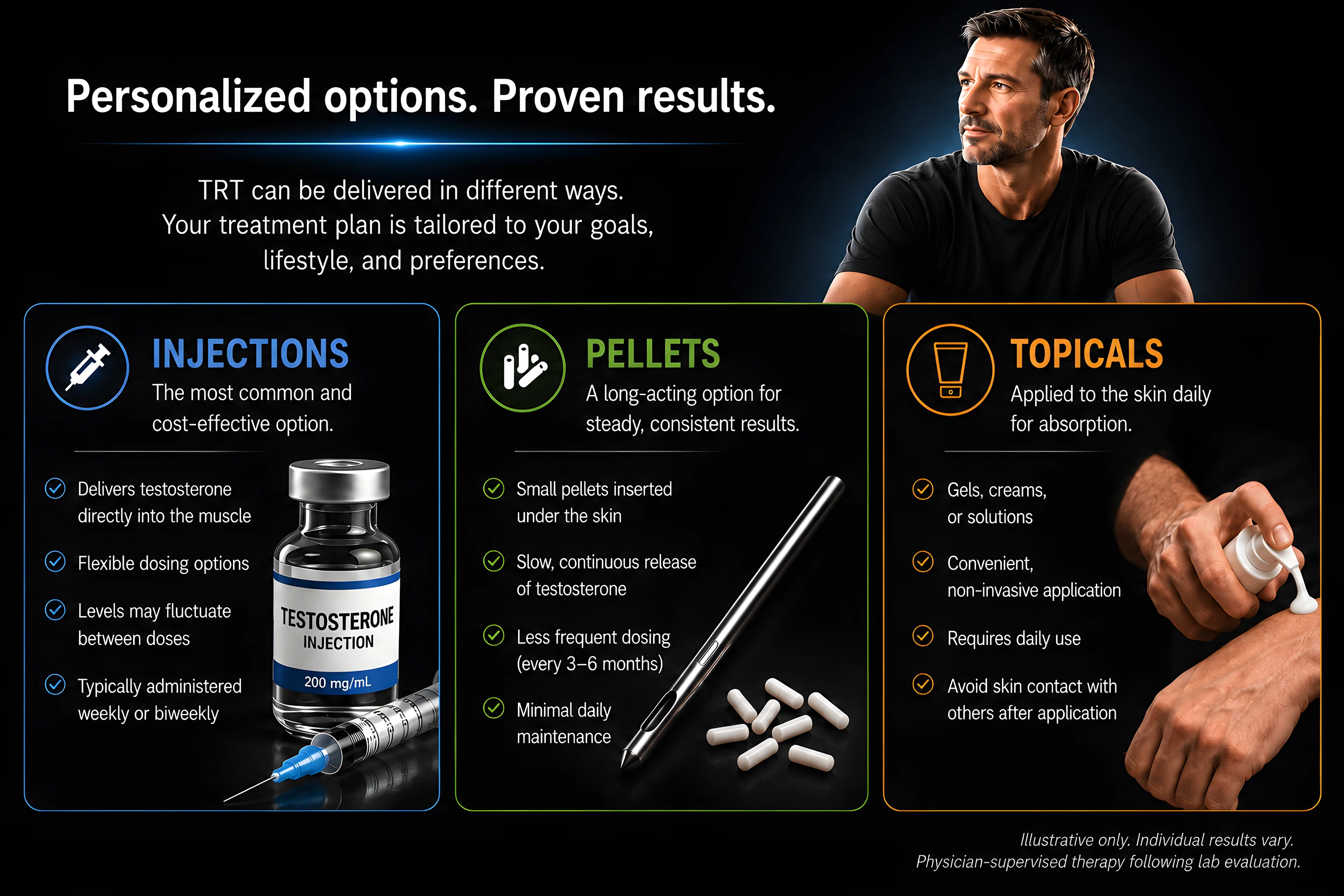
Testosterone Injections
Injections are the most clinically established TRT method, delivering testosterone directly into the muscle for precise, adjustable dosing. Most patients inject once or twice per week.
- In-clinic or at home — After a brief training session at R2, most patients self-administer injections at home. No weekly clinic visits required.
- Easily adjustable — Dosage can be fine-tuned quickly based on your lab results and how you're feeling.
- Cost-effective — Monthly costs typically range from $150–$500 including medication and supplies.
Testosterone Pellets (Sustained Release)
Pellet therapy is a longer-acting option for men who want a true set-it-and-forget-it approach. During a simple, in-office procedure, small bioidentical hormone pellets are inserted under the skin — typically in the hip area. They dissolve gradually over 3–6 months, providing steady hormone delivery without weekly injections or daily maintenance.
- No weekly schedule — One procedure every 3–6 months.
- Consistent levels — Eliminates the hormone fluctuation some men experience with injections.
- Ideal for busy schedules — One office visit, months of results.
Gels or Creams
Transdermal gels and creams are available at R2. Generally, absorption varies significantly from person to person and day to day, making it challenging to achieve consistent, optimized hormone levels compared to injections or pellets.
Supportive Therapies
To enhance your results, we integrate peptide therapy, nutritional support, and lifestyle optimization. These supportive treatments are designed to improve metabolic health, support weight loss goals, and maximize overall vitality alongside your primary TRT protocol.
Body fat is a site where testosterone is converted to estrogen, so body composition and hormone levels can influence one another. Where weight is also a concern, we can evaluate our physician-supervised medical weight loss program alongside your TRT protocol. All treatments require a medical evaluation and prescription by a licensed provider, and individual results vary.
Important Note: Before starting any TRT regimen, inform your provider about any herbal remedies or supplements you are using, as these may interact with your treatment or affect outcomes.
What Can I Expect When Starting TRT?
At R2 Medical Clinic, patients begin with a confidential consultation and comprehensive hormone evaluation at our Denver, Arvada-Wheat Ridge or Castle Rock locations.
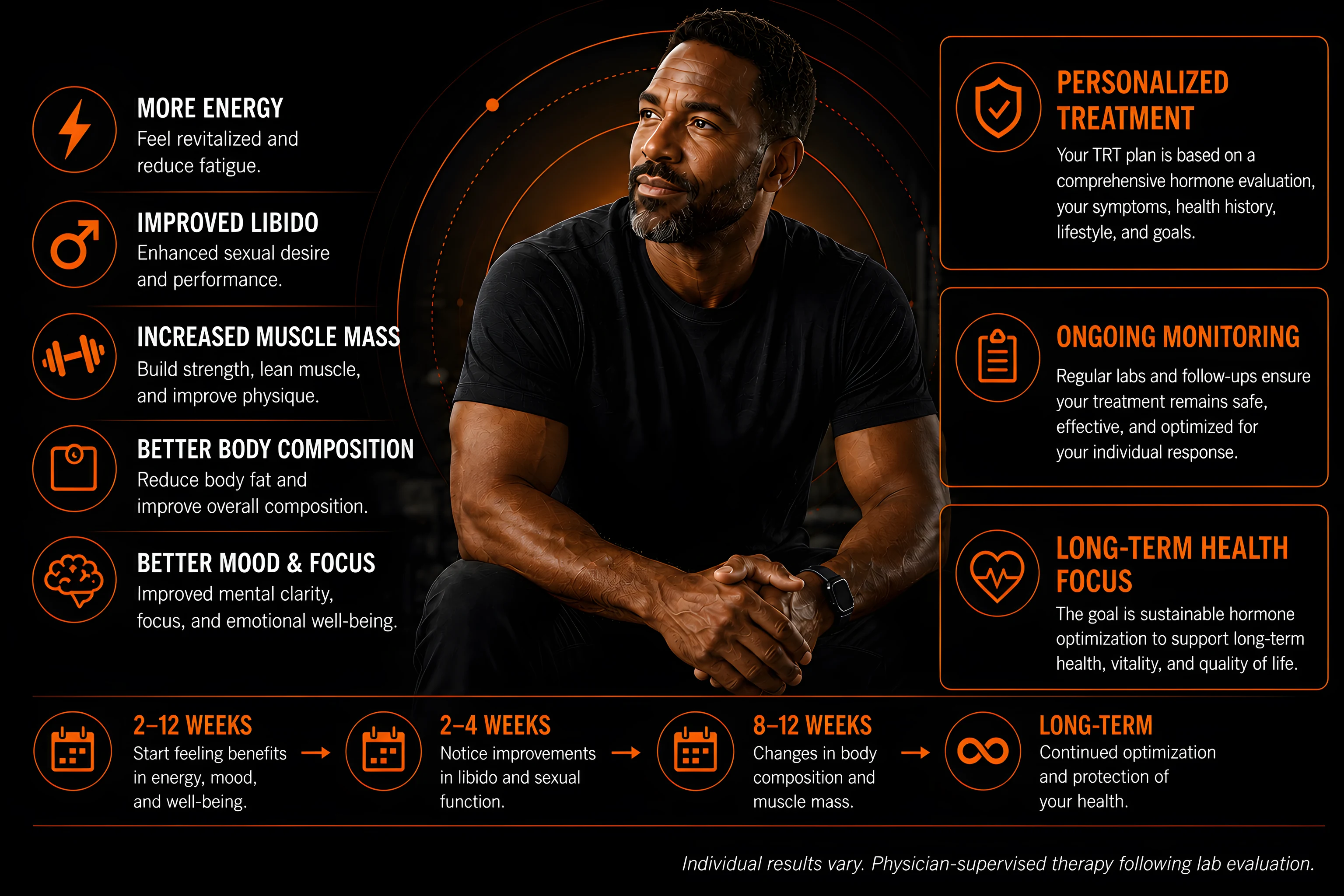
Patients undergoing testosterone replacement therapy in Denver can expect to start feeling benefits within 2–12 weeks after beginning treatment, depending on individual responses and the specific therapy used. Most men notice improvements in energy levels and mood within 2–4 weeks, with full benefits in sexual function, body composition, and muscle mass typically seen within 8–12 weeks.
TRT is generally a long-term treatment; discontinuation may cause symptoms of low testosterone to return. The goal is sustainable hormone optimization that supports long-term health, vitality, and quality of life.
Safety & Monitoring
Regular monitoring of men receiving testosterone Therapy ensures treatment remains safe, effective, and optimized for your individual response. Denver's high altitude can impact red blood cell production and necessitate closer monitoring during TRT — an important consideration our providers actively account for.
Historically, testosterone replacement therapy had been associated with a potential increased risk of cardiovascular disease and prostate cancer. Current evidence does not support a causal link between TRT and prostate cancer. In fact, prostate cancer is at greater risk in patients with low testosterone levels — an inverse relationship indicating testosterone may potentially decrease the risk of some prostate cancers. The TRAVERS study demonstrated the safety of testosterone in patients with elevated cardiovascular risks, debunking decades of incorrect assumptions that TRT increases the risk of cardiovascular events. Recent studies also indicate that maintaining testosterone levels within the normal range may actually decrease cardiovascular risk.
What Is Andropause?
Andropause, often referred to as “male menopause,” is the gradual decline in testosterone production that affects most men beginning in their 30s. Unlike female menopause, andropause occurs slowly over decades, making the symptoms easy to dismiss as “just getting older.”
Common symptoms of low testosterone include persistent fatigue, difficulty concentrating, irritability, loss of muscle mass, increased body fat (particularly around the midsection), decreased libido, erectile dysfunction, sleep disturbances, and mood changes.
The Good News
These symptoms are treatable. With proper diagnosis through comprehensive blood work and a customized TRT protocol, most men experience significant improvement within weeks.
How Does Estrogen Affect Men on TRT?
Estrogen balance is a critical and often misunderstood component of successful male hormone optimization.
Many men are surprised to learn that estrogen plays an important role in male health. While testosterone is the dominant hormone, men also produce estrogen — and maintaining the right balance between the two is critical for optimal results.
Estrogen Balance
When testosterone is converted to estrogen via the aromatase enzyme, elevated levels can lead to side effects like water retention, gynecomastia (breast tissue growth), mood swings, reduced libido, erectile dysfunction, and reduced effectiveness of TRT. At R2 Medical Clinic, we carefully monitor estrogen levels alongside testosterone and use targeted interventions when needed to maintain the optimal ratio.
Why Does Thyroid Health Matter for TRT?
Optimal thyroid function is a crucial, often overlooked component of men's hormone optimization.
Thyroid function is closely connected to testosterone levels and overall metabolic health. An underactive thyroid (hypothyroidism) can mimic many symptoms of low testosterone — fatigue, weight gain, brain fog, and depression — and can also reduce the effectiveness of TRT.
Thyroid Markers We Check
As part of our comprehensive evaluation, we may assess thyroid function including TSH, Free T3, Reverse T3, and Free T4 levels. When thyroid optimization is needed, we integrate thyroid support into your overall treatment plan to maximize your results and ensure every piece of the hormonal puzzle is in place.
Why Choose R2 Medical Clinic for TRT in Denver?
R2 Medical Clinic takes a different approach than chain Low T centers:
- Comprehensive hormone testing beyond just testosterone — Full panel approach including free testosterone, SHBG, LH, FSH, and estradiol to identify root causes
- Personalized treatment protocols — Tailored to your unique physiology, symptoms, and goals
- Ongoing medical supervision — Regular monitoring, blood work, and protocol adjustments to ensure safety and results
- Prostate health monitoring — We monitor prostate health and PSA levels as part of comprehensive care
- Cardiovascular risk management — We optimize testosterone levels within therapeutic ranges for safety
- Confidential, judgment-free care — Comfortable clinical setting where men can discuss sensitive health concerns openly
- Focus on root-cause medicine — We address why your hormones declined, not just treat a number
- Anti-aging focus — Our protocols support vitality, longevity, and overall anti-aging benefits
- Convenient Denver metro locations — Flexible scheduling at our Denver, Arvada-Wheat Ridge, and Castle Rock clinics
Where Is R2 Medical Clinic Located?
R2 Medical Clinic serves men throughout the Denver metropolitan area, including Arvada-Wheat Ridge, Castle Rock, Aurora, Lakewood, Highlands Ranch, Centennial, and surrounding communities.
Denver Location
1873 South Bellaire Street Suite 1215
Denver, CO 80222
(720) 640-2333
Arvada-Wheat Ridge Location
4891 Independence Street, Suite 230
Wheat Ridge, CO 80033
(720) 640-2333
Castle Rock Location
509 Wilcox Street Suite 107
Castle Rock, CO 80104
(720) 640-2333
Related Men's Hormone Health Resources
Testosterone & Hormone Optimization for Men: A Physician's Guide
My Testosterone Is Normal—So Why Do I Still Have Symptoms?
TRT Bloodwork Explained: Testosterone, Free Testosterone, SHBG, Estradiol, Hematocrit, PSA & More
TRT & Estradiol: Why Men Need Estrogen and When Levels Matter
What Does “Anti-Aging” Actually Mean? A Physician's Look at Longevity, Biological Age & Healthspan
Your Health Is More Than a Subscription: Why Quality Medical Care Matters
Frequently Asked Questions
Schedule Your Free Consultation
References & Medical Resources
- Bhasin S, Brito JP, Cunningham GR, et al. Testosterone Therapy in Men With Hypogonadism: An Endocrine Society Clinical Practice Guideline. Journal of Clinical Endocrinology & Metabolism. 2018;103(5):1715–1744.
doi:10.1210/jc.2018-00229
Comprehensive clinical guidance regarding the diagnosis of testosterone deficiency, total and free testosterone testing, appropriate use of testosterone therapy, contraindications, fertility considerations, hematocrit and prostate monitoring, and ongoing patient evaluation. - American Urological Association (AUA). Evaluation and Management of Testosterone Deficiency: AUA Guideline.
auanet.org
Evidence-based recommendations addressing the diagnosis and management of testosterone deficiency, laboratory testing, treatment decisions, fertility considerations, cardiovascular counseling, and monitoring during testosterone therapy. - Endocrine Society. Statement on Testosterone Replacement Therapy. 2026.
endocrine.org
Updated clinical perspective emphasizing accurate diagnosis of hypogonadism, appropriate testosterone testing, consideration of reversible causes of low testosterone, individualized assessment of benefits and risks, and newer evidence regarding the cardiovascular safety of testosterone therapy. - Lincoff AM, Bhasin S, Flevaris P, et al. Cardiovascular Safety of Testosterone-Replacement Therapy. New England Journal of Medicine. 2023;389:107–117.
doi:10.1056/NEJMoa2215025
The TRAVERSE cardiovascular safety trial evaluated more than 5,000 men with hypogonadism and preexisting or increased cardiovascular risk and found testosterone therapy was noninferior to placebo for major adverse cardiovascular events during the study period. - Snyder PJ, Bhasin S, Cunningham GR, et al. Effects of Testosterone Treatment in Older Men. New England Journal of Medicine. 2016;374:611–624.
doi:10.1056/NEJMoa1506119
Part of the Testosterone Trials, this randomized controlled study evaluated the effects of testosterone treatment on sexual function, physical function, vitality, mood, and other outcomes in older men with low testosterone. - Qaseem A, Horwitch CA, Vijan S, et al. Testosterone Treatment in Adult Men With Age-Related Low Testosterone: A Clinical Guideline From the American College of Physicians. Annals of Internal Medicine. 2020;172(2):126–133.
doi:10.7326/M19-0882
Evidence-based recommendations regarding potential benefits, limitations, and shared decision-making when considering testosterone treatment in men with age-related low testosterone. - Bhasin S, Pencina M, Jasuja GK, et al. Reference Ranges for Testosterone in Men Generated Using Liquid Chromatography Tandem Mass Spectrometry in a Community-Based Sample of Healthy Nonobese Young Men in the Framingham Heart Study and Applied to Three Geographically Distinct Cohorts. Journal of Clinical Endocrinology & Metabolism. 2011;96(8):2430–2439.
doi:10.1210/jc.2010-3012
Provides important background regarding testosterone measurement and reference ranges and illustrates why laboratory methodology and clinical context matter when interpreting testosterone results.
Important Note
Testosterone levels and symptoms should be interpreted in the context of the individual patient. Symptoms commonly associated with low testosterone can have multiple causes, and laboratory results alone do not determine whether testosterone therapy is appropriate.
Medically reviewed by Erik Natkin, DO — Founder, Medical Director, & Physician, R2 Medical Clinic. Content last reviewed August 2026.
R2 Medical Clinic uses medications sourced from compounding pharmacies. Compounded drugs have not been approved by the FDA; have not been reviewed by the FDA for safety, efficacy, or quality; and have not been demonstrated to the FDA to be safe or effective for their intended use. The processes by which the compounded drugs are manufactured have not been reviewed by the FDA.