Top 10 TRT Supplements: Detailed Reviews & Options
Explore the top 10 TRT-supportive supplements and how they compare to physician-prescribed testosterone replacement therapy at R2 Medical Clinic in Denver, CO.
R2 Medical Clinic • 7 min read
As we age, it's common to experience symptoms such as fatigue, decreased energy, and a lower libido. But did you know that these effects could be linked to lower testosterone levels? Testosterone Replacement Therapy (TRT), often discussed in the context of men with low testosterone, works to restore these hormone levels and alleviate symptoms.
As early as 40, men can begin to experience a decline in testosterone, leading to a range of physical and mental health challenges. For some, TRT becomes a vital treatment option. While the primary focus of TRT is treating symptoms of low testosterone, supplements can play a key role in this therapy. The right TRT supplement can help not only stabilize testosterone levels, but also improve spatial and verbal abilities, cognitive function, and muscle mass.
That said, note that engaging in TRT is not akin to using steroids. The difference lies in the dosages used: TRT is a medically supervised treatment that restores natural testosterone levels, while anabolic steroids involve higher, illegal doses for bodybuilding purposes.
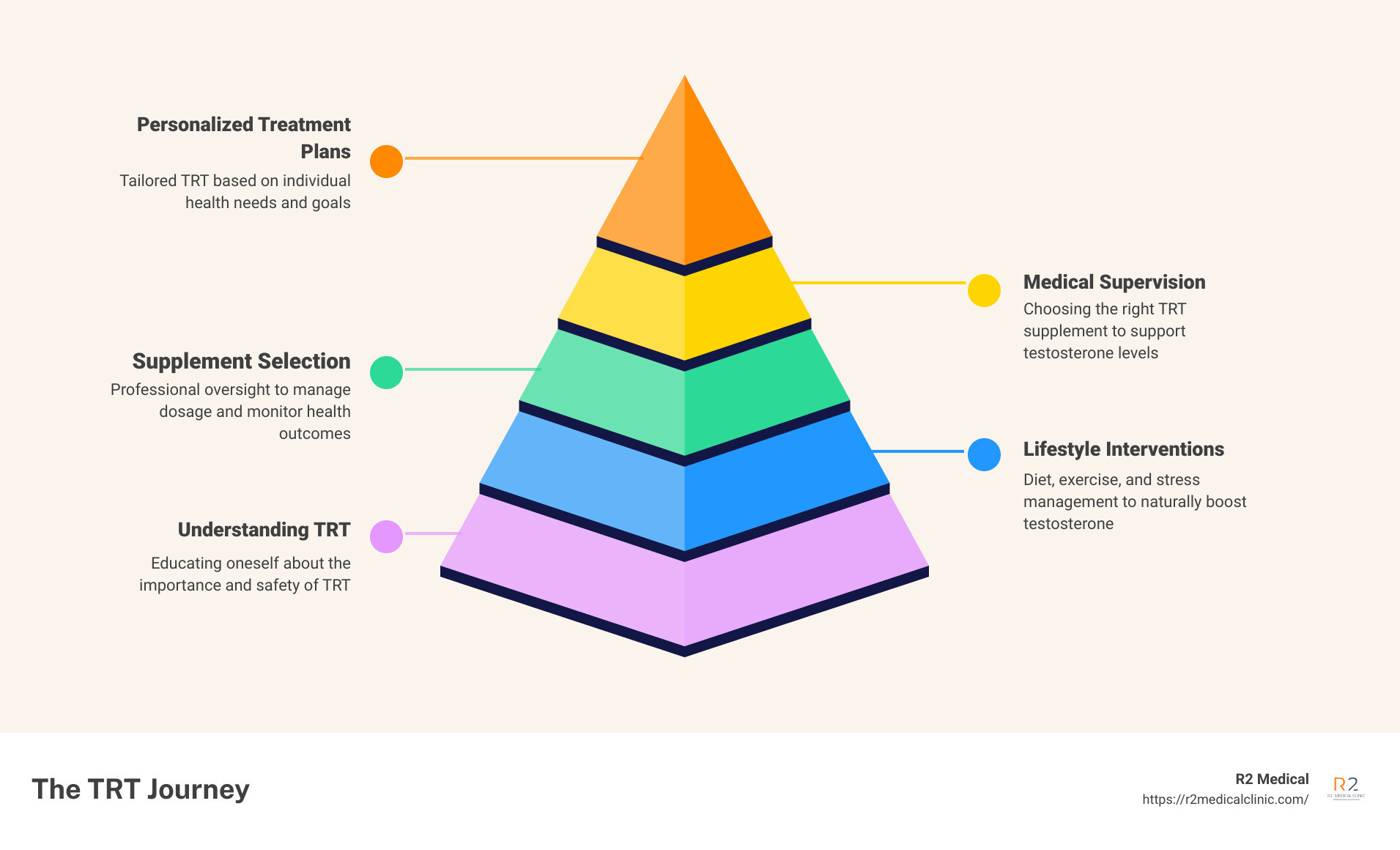
However, like any treatment, TRT is not without risks, including skin issues and potential sleep disorders. It’s critical to make an informed decision, with the guidance of healthcare professionals and reliable sources of information. So, if you're considering this form of therapy, and seeking the best TRT supplements to help combat those pesky aging symptoms, this guide is for you. We, at R2 Medical Clinic, have carefully curated a list of the top 10 TRT supplements, providing detailed reviews and available options to best support your journey to improved health and well-being. Let's dive in!
Detailed Reviews of Top 10 TRT Supplements
Choosing the right TRT supplement is crucial for achieving optimal results and maintaining your overall health. Here are our top 10 picks for the best TRT supplements available today.
Review of TRT Supplement 1: Benefits and Potential Side Effects
Supplement 1 is a potent TRT supplement that boosts testosterone levels while also supporting overall health. It promotes lean muscle mass, improves energy levels, and enhances libido. However, potential side effects include skin reactions and sleep issues.
Review of TRT Supplement 2: Benefits and Potential Side Effects
Supplement 2 is another excellent TRT supplement that targets low testosterone levels. It promotes healthy body composition, improves mood, and enhances cognitive function. Potential side effects may include acne and changes in hair patterns.
Review of TRT Supplement 3: Benefits and Potential Side Effects
Supplement 3 is a specialized TRT supplement that not only boosts testosterone levels but also supports healthy prostate function. Potential side effects may include water retention or edema.
Review of TRT Supplement 4: Benefits and Potential Side Effects
Supplement 4 is a comprehensive TRT supplement that addresses multiple facets of men's health. It supports testosterone production, promotes healthy sleep patterns, and boosts energy. However, potential side effects may include skin reactions.
Review of TRT Supplement 5: Benefits and Potential Side Effects
Supplement 5 is a potent TRT supplement that supports healthy testosterone levels and promotes overall wellbeing. It can help improve mood, boost energy, and enhance sexual health. Potential side effects may include minor skin reactions.
Review of TRT Supplement 6: Benefits and Potential Side Effects
Supplement 6 is a targeted TRT supplement that focuses on boosting testosterone levels and improving sexual health. Potential side effects may include changes in hair patterns and skin reactions.
Review of TRT Supplement 7: Benefits and Potential Side Effects
Supplement 7 is a powerful TRT supplement that supports healthy testosterone levels and promotes overall health. It can help improve mood, boost energy, and enhance sexual health. However, potential side effects may include acne and sleep issues.
Review of TRT Supplement 8: Benefits and Potential Side Effects
Supplement 8 is a well-rounded TRT supplement that aims to boost testosterone levels and promote overall health. It can enhance mood, energy levels, and sexual health. Potential side effects may include skin reactions.
Review of TRT Supplement 9: Benefits and Potential Side Effects
Supplement 9 is a comprehensive TRT supplement that boosts testosterone levels while also supporting overall health. It promotes lean muscle mass, improves energy levels, and enhances libido. However, potential side effects may include skin reactions and changes in sleep patterns.
Review of TRT Supplement 10: Benefits and Potential Side Effects
Supplement 10 is a powerful TRT supplement that supports healthy testosterone levels and promotes overall wellbeing. It can help improve mood, boost energy, and enhance sexual health. Potential side effects may include minor skin reactions and sleep issues.
It's essential to discuss with your healthcare provider before starting any new supplement regimen, especially if you have any underlying health conditions. At R2 Medical Clinic, we offer individualized hormone therapy, ensuring that the treatment plan is safe, suitable, and tailored to your unique needs. We monitor progress and potential adverse effects through periodic check-ups and laboratory tests, allowing for timely interventions and modifications to the treatment plan. Our goal is to provide the most beneficial and safest therapy for our patients.
Alternatives to TRT Supplements
While TRT supplements can be an effective method to boost testosterone levels, they are not the only option available. In fact, there are several lifestyle interventions that can naturally increase testosterone levels and improve your overall health. These interventions include the modification of exercise routines, dietary habits, and stress management techniques.
Lifestyle Interventions for Boosting Testosterone Levels
Exercise. Regular physical activity, especially weightlifting and high-intensity interval training (HIIT), can stimulate your body to produce more testosterone naturally. However, it's important to note that endurance exercises like marathon running or cycling for hours may actually decrease testosterone levels. Therefore, incorporating strength training and HIIT workouts into your routine could be beneficial.
Maintain a healthy weight. Obesity is directly linked to low testosterone levels. In fact, if you're obese, you're four times more likely to benefit from testosterone replacement than non-obese men. Therefore, maintaining a healthy weight can help keep your testosterone levels in check.
The Role of Exercise, Diet, and Stress Management in Testosterone Production
Diet. Certain dietary choices can influence your testosterone levels. For instance, a diet rich in lean proteins, healthy fats, and antioxidant-rich foods like berries and leafy greens can boost testosterone production. Additionally, foods that are high in zinc, such as oysters, beef, and oats, or magnesium, like nuts, seeds, spinach, and beans, can also serve as natural testosterone boosters.
Stress Management. Chronic stress can lead to increased cortisol levels, a hormone that works against testosterone. When cortisol levels rise, testosterone levels fall. Therefore, managing stress effectively, perhaps through mindfulness practices or other relaxation techniques, can have a positive impact on your testosterone levels.
Sleep. Getting enough quality sleep is crucial for testosterone production, as peak production happens after 3 hours of deep sleep. Insufficient sleep can lead to weight gain, which can further reduce your testosterone production.
While TRT supplements can be beneficial, it's important to remember that they are just one part of a comprehensive approach to managing testosterone levels. Implementing these lifestyle interventions can not only help increase testosterone production but also contribute to overall better health. At R2 Medical Clinic, we can provide guidance on these lifestyle changes along with a personalized treatment plan to help you achieve optimal health.
Conclusion
The Importance of Personalized Treatment Plans in TRT
The realm of TRT supplements is not a one-size-fits-all scenario. Different individuals may respond differently to various supplements, thus emphasizing the importance of personalized treatment plans. The right TRT supplement for you should be determined by your individual symptoms, medical history, and current health status.
Choosing the appropriate TRT supplement is a crucial step in managing low testosterone levels and its related symptoms. However, it's important to remember that testosterone therapy has its risks, including worsening sleep apnea, causing acne or other skin reactions, and stimulating noncancerous growth of the prostate. Therefore, constant monitoring and adjustments to the treatment plan are key components of safe and effective TRT.
The Role of R2 Medical Clinic in Providing TRT Solutions
At R2 Medical Clinic, we are committed to providing personalized and comprehensive TRT solutions. Our team of healthcare professionals offers a patient-centric approach, ensuring that each treatment plan is meticulously tailored to the individual's unique needs and health goals.
We offer a broad range of treatment options, including Bioidentical Hormone Therapy, PRP Injections, and Peptide Treatment, among others. Our range of supplements is also designed to support and enhance the benefits of TRT. The trustworthiness and pedigree of our clinic, along with our track record of providing excellent results, make us a reliable choice for your testosterone replacement therapy needs.
Final Thoughts on TRT Supplements and Their Role in Men's Health
TRT supplements play a significant role in managing low testosterone levels, a condition that affects many aging men. However, it's crucial to remember that these supplements are not a magic bullet. Optimal results are often achieved when TRT supplements are part of a comprehensive plan that includes lifestyle changes such as regular exercise, a balanced diet, and stress management.
Understanding the potential benefits and risks associated with TRT, along with the importance of a personalized treatment plan, is crucial. At R2 Medical Clinic, we are here to guide you through this journey, providing expert advice and treatment options tailored to your specific needs.
For more information about our services and how we can help you, visit our Bioidentical Hormone Therapy for Men page.

Your health is a journey, not a destination. And we're here to assist you every step of the way.