Peptides for Muscle Growth: What the Evidence Shows
Which muscle-growth peptides have real evidence behind them, and which don't. A physician-supervised guide from R2 Medical Clinic in Denver.
R2 Medical Clinic • 12 min read
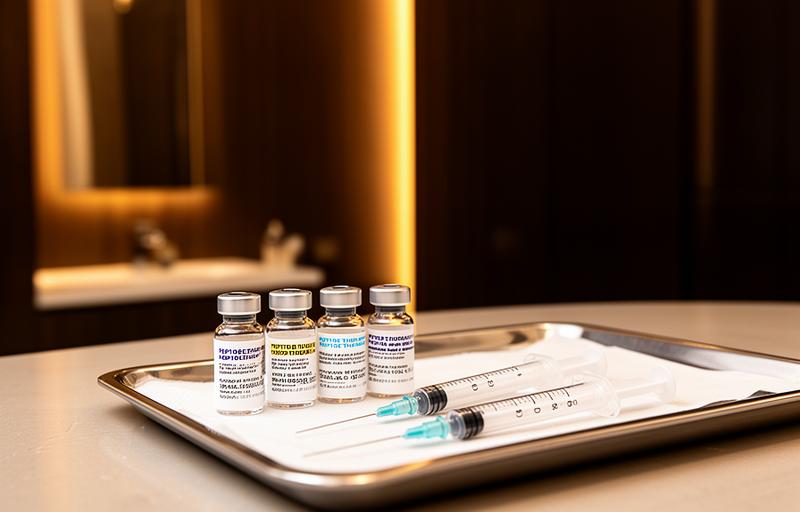
Seeking the best peptides for muscle growth? Whether you're an athlete aiming to improve your performance, or simply an individual yearning to gain some lean muscle mass, you'd know that muscle building is not always the easiest journey. It requires determination, discipline, and the right nutrients - to answer your body's demands. Lately, a significant buzzword has come up in discussions around muscle growth - peptides.
Peptides are essentially short chains of amino acids or mini-proteins, that can stimulate the release of necessary hormones for muscle hypertrophy and overall strength. But navigating peptides might seem daunting given the myriad options out there.
So, let's make it easier for you. If you're in a hurry and looking for a nutshell answer, below is a quick snippet of some of the best peptides for muscle growth:
- Ipamorelin: A selective growth hormone secretagogue
- Sermorelin: A growth hormone-releasing hormone analog
- Tesamorelin: FDA-approved for HIV-associated lipodystrophy — not approved for muscle building
- MK-677 (Ibutamoren): Orally active, and the most studied of this group in humans
- BPC-157: Studied for tissue repair; the evidence to date is preclinical
While peptides can aid in muscle growth, their effectiveness depends on consistent physical training and strategic nutrition. The sections below set out what each compound has been studied for, and how strong that evidence is.

Understanding Peptides: The Building Blocks of Proteins
As we embark on our discussion about the best peptides for muscle growth, it's important to understand what peptides are. Peptides are short chains of amino acids, which are the building blocks of proteins. These proteins are the fundamentals of human life, responsible for various functions within our bodies.
There are two types of amino acids: essential and nonessential. The essential ones — histidine, isoleucine, leucine, lysine, methionine, phenylalanine, threonine, tryptophan, and valine — cannot be produced by the body and must be obtained through our diets. On the other hand, nonessential amino acids like cysteine and glutamine can be synthesized by the body.
Peptides are simpler structures composed of fewer amino acids than proteins, but their role in our body is not any less crucial. They perform various tasks, such as producing hormones, repairing damaged DNA, and building muscle tissue.
It's no surprise, then, that these tiny chains of amino acids have garnered much interest in the field of bodybuilding and athletics. The ability of peptides to strengthen and grow muscle is of particular interest to those seeking to enhance their physical performance and physique.
As we age, absorbing the volume of peptides needed for muscle growth from diet alone becomes increasingly challenging. This is where peptide supplements come into play. These supplements can help your body produce its own hormones and compounds that promote bone and muscle growth.
In the following sections, we'll delve into the specifics of how peptides work to enhance muscle growth and discuss some of the best peptides for muscle growth. The sections below cover what the research shows, and where it stops.
How Peptides Work to Enhance Muscle Growth
Peptides play a significant role in stimulating muscle growth in various ways. Here, we will discuss the mechanisms by which these powerful compounds can help you achieve your fitness goals.
Stimulating the Production of Growth Hormone
One of the primary ways peptides enhance muscle growth is by stimulating the production of growth hormones, particularly insulin-like growth factor 1 (IGF-1). IGF-1 signals your body to increase muscle cell size, leading to hypertrophy, or visible muscle gains. For instance, certain peptides used in bodybuilding, like growth hormone secretagogues (GHS) and growth hormone-releasing (GRHG) agonists, encourage the body to create and release its own natural human growth hormone (HGH), thereby stimulating muscle growth .
Reducing Interfering Hormones
Stress hormones like cortisol can hinder muscle growth and fat loss. However, specific peptides can interfere with excessive cortisol production, effectively lowering its levels and allowing your body to focus its energy on muscle growth. This regulation of hormones allows for better post-exercise recovery, a crucial aspect of muscle growth .
Suppressing Appetite
Some peptides can suppress appetite, which aids in maintaining a calorie deficit necessary for effective fat loss. Less fat means more visible muscle, a significant benefit for bodybuilders and athletes.
Fighting Inflammation
Inflammation can interfere with your ability to work out and make gains. Certain peptides have anti-inflammatory properties, which can help boost your immunity and reduce inflammation . This property not only enhances your ability to train harder but also aids in faster recovery, allowing you to get back to your training routine sooner.
In summary, peptides work at the cellular level to enhance muscle growth by stimulating the production of growth hormones, reducing interfering hormones, suppressing appetite, and fighting inflammation. These mechanisms explain how the compounds in this category are thought to act. At R2 Medical Clinic, peptide therapy is prescribed only where there is a clinical indication, following evaluation and baseline bloodwork. Stay tuned to learn about the best peptides for muscle growth!
The Best Peptides for Muscle Growth
When it comes to using peptides for muscle growth, there are a few key players that stand above the rest. These peptides have been shown to stimulate muscle growth, enhance recovery, and improve overall physical performance. Let's delve into these high-performing peptides.
Ipamorelin
Ipamorelin is a growth hormone secretagogue: it signals the pituitary gland to release the body's own growth hormone rather than introducing growth hormone from an outside source, and it is the most selective compound in its class (Raun et al., European Journal of Endocrinology, 1998). Its published research is preclinical — there are no human trials measuring whether Ipamorelin builds muscle, and it is more useful to say that plainly than to imply otherwise R2 Medical Clinic.
Tesamorelin
Tesamorelin is a growth hormone-releasing hormone analog and one of the few peptides in this category with FDA approval — though it is worth being precise about what for. It is approved to reduce excess abdominal fat in people with HIV-associated lipodystrophy, based on randomised controlled trials (Falutz et al., Journal of Acquired Immune Deficiency Syndromes, 2010). It is not approved as a muscle-building treatment and should not be presented as one.
Sermorelin
Sermorelin, a synthetic peptide analog of Growth Hormone-Releasing Hormone (GHRH), works by increasing the levels of growth hormone, promoting protein synthesis, and leading to muscle growth and development.
MK-677 (Ibutamoren)
MK-677 is an orally active compound that raises growth hormone and IGF-1. It has the strongest human evidence of anything in this group, and that evidence is genuinely mixed. In a two-year randomised, placebo-controlled trial in adults aged 60 to 81, fat-free mass rose by 1.1 kg while the placebo group lost 0.5 kg — but the added lean mass did not produce measurable gains in strength or physical function, and fasting blood glucose rose while insulin sensitivity fell (Nass et al., Annals of Internal Medicine, 2008). That is the honest picture, and it is why this belongs in a clinic with lab work rather than in a supplement stack.
Whether any of these compounds is appropriate depends on your labs, medical history and clinical picture — not on a goal stated in an article. At R2 Medical Clinic, that assessment is made by a licensed provider.
The Benefits of Using Peptides for Muscle Growth
Peptides have become a popular choice among fitness enthusiasts and bodybuilders for a variety of reasons. They offer several benefits that can significantly improve your muscle growth and overall fitness outcomes. Here are the top three benefits of using the best peptides for muscle growth:
Faster Recovery
One of the key benefits of peptides is their ability to speed up the recovery process. Intense workouts often lead to muscle damage, which requires a recovery period to allow the muscles to repair and grow. Peptides, such as the ones mentioned earlier, help in reducing exercise-induced damage, thereby speeding up recovery.
They act as signaling molecules in the body, stimulating the release of growth hormones and improving protein synthesis. This not only allows for faster muscle repair but also helps in reducing muscle soreness post-workout. Recovery time between sessions is one of the outcomes most commonly reported in this area.
Reduced Muscle Fatigue
Fatigue limits training volume and intensity. Sleep quality is one of the mechanisms through which growth hormone pathways are thought to influence recovery, which is why sleep is assessed as part of any evaluation.
Recovery quality affects how consistently a person can train, which is itself a determinant of results.
Increased Muscle Hypertrophy
Lastly, but most importantly, peptides play a crucial role in promoting muscle hypertrophy - the process of growth and increase of the size of muscle cells. Growth hormone secretagogues have been studied for their effect on lean mass and body fat, with results that vary by compound and by individual.
They stimulate the release of growth hormones, which are essential for protein synthesis and muscle growth. Furthermore, peptides like Human Growth Hormone Secretagogues (HGH-S) may increase IGF-1 levels, leading to enhanced protein synthesis and greater muscle growth.
At R2 Medical Clinic, we understand that every individual's body and goals are unique. Therefore, we provide personalized peptide therapy plans tailored to your specific needs and goals. Whether you're looking to enhance muscle growth, increase strength, or improve overall fitness, we've got you covered.
In conclusion, the benefits of using peptides for muscle growth are immense. However, it's important to remember that peptides are not a "quick fix" for muscle growth. A balanced diet, regular exercise, and proper rest are still essential to achieving your fitness goals.
The Safety and Legality of Using Peptides for Muscle Growth
When it comes to using peptides for muscle growth, safety and legality are the two crucial aspects to consider. As with any medical treatment or supplement, the safety of peptides largely depends on the source, proper usage, and dosing.
Safety of Peptides
At R2 Medical Clinic, we prioritize the safety of our patients. When used appropriately and as prescribed by our qualified healthcare professionals, peptides are generally considered safe. Most peptides in this category are prescribed off-label. Only some carry FDA approval, and where they do, that approval is usually for a specific condition rather than for muscle building. We will tell you where the evidence for any given compound begins and ends.
However, misuse or abuse of peptides can lead to potential side effects and health risks. This is why it's crucial to follow dosage guidelines, adhere to recommended usage, and obtain peptides from reputable sources like us to ensure their safety.
Everyone's body responds differently to peptides, just like any other medication or supplement. Therefore, while some individuals may experience significant muscle growth and other benefits, others may not see the same results or may experience side effects.
Legality of Peptides
The legality of peptides for muscle-building purposes varies by country and jurisdiction. Some peptides are legal and approved for medical use, while others may be sold as research chemicals or used off-label. In the United States, for example, the use of certain peptides is not approved by the FDA, and they are considered a gray area in sports and bodybuilding.
For this reason, it's crucial to ensure that you're using legal and regulated peptides for muscle growth. At R2 Medical Clinic, we only use legal, safe, and effective peptides as part of our patient care.
In conclusion, the safety and legality of using peptides for muscle growth largely depend on appropriate usage, following prescribed dosages, and obtaining peptides from a reputable source. Always consult with a healthcare professional before starting any new supplement regimen, including peptides. At R2 Medical Clinic, any peptide protocol follows a medical evaluation and is monitored with ongoing bloodwork.
How to Maximize the Benefits of Peptides for Muscle Growth
As we've discussed, peptides can potentially play a significant role in muscle growth. However, to truly maximize these benefits, it's crucial to combine the intake of the best peptides for muscle growth with proper training and nutrition. Additionally, consultation with a medical professional is key to ensure you're using peptides safely and effectively.
Combining Peptides with Proper Training and Nutrition
Research indicates that peptides primarily work by activating the production of hormones necessary for hypertrophy and performance in the gym. However, peptides are not a magic bullet for muscle growth. They work best when combined with a consistent, challenging workout regimen and an adequate nutrition plan.
Intense resistance training is essential to stimulate muscle growth. Peptides can enhance the body's response to this stimulus, but without the stimulus itself, the muscle-building potential of peptides can't be fully realized.
Nutrition is another critical factor. As highlighted by R2 Medical Clinic, your body needs adequate amounts of protein, complex carbohydrates, and healthy fats to build and maintain muscle mass. In particular, consuming enough protein ensures your body has the necessary building blocks for muscle repair and growth.
Consulting with a Medical Professional
Before starting any supplement regimen, including peptides, it's essential to consult with a healthcare professional. They can provide guidance on the appropriate peptides and dosages for your specific needs and goals. They can also monitor your progress and adjust your plan as necessary.
At R2 Medical Clinic, our team of experts is always ready to provide guidance and support. We focus on personalized care and are committed to helping you achieve your health and fitness goals safely and effectively. Whether you're considering peptides for the first time or looking to optimize your current regimen, we're here to help.
Peptide therapy is not a substitute for training, nutrition and sleep, and the evidence for body-composition change is stronger than the evidence for performance. Anyone considering it should do so with a licensed medical provider, after evaluation and baseline bloodwork.
What the evidence does and does not show
Growth hormone pathways reliably increase lean body mass. In controlled trials they have not reliably increased strength or athletic performance — a systematic review in the Annals of Internal Medicine found that growth hormone raised lean mass without improving strength or performance, while adverse events increased (Liu et al., 2008). Anyone promising both size and strength is going beyond the evidence.
Peptides you will see online that we do not publish protocols for
Searches for muscle-growth peptides surface compounds including CJC-1295, Hexarelin, IGF-1 LR3, GHRP-6 and MGF. None of them is FDA-approved for building muscle, several are prohibited in competitive sport, and products sold online are typically labelled for research use only — meaning nobody has verified what is actually in the vial. A published analysis using NMR found an undeclared constituent in a custom-synthesised peptide (Choules et al., Journal of Pharmaceutical and Biomedical Analysis, 2020).
Conclusion
Researching peptides can feel overwhelming, and much of what is published online is written to sell rather than to inform. Understanding what each compound has actually been studied for is the difference between an informed decision and a purchase.
Peptides such as Ipamorelin, Sermorelin, Tesamorelin, MK-677 and BPC-157 have been studied for effects on growth hormone, body composition and tissue repair, with meaningfully different levels of evidence behind each one. They operate by naturally stimulating your body's processes rather than introducing synthetic substances, which can be overwhelming to your body's biological functions.
The effectiveness of these peptides is not solely dependent on their consumption. For the best results, it's crucial to pair your peptide regimen with proper training, balanced nutrition, and adequate rest. Furthermore, consulting with a healthcare professional or a certified clinic like R2 Medical can ensure that you're using these peptides safely and effectively, and that they're the right fit for your personal health and fitness goals.
At R2 Medical, treatment plans are individualized to your endocrine and metabolic picture, and peptide therapy is included only where there is a clinical indication for it.
Peptides are one part of a much larger picture. Training, nutrition, sleep and underlying hormone health account for far more of the outcome than any prescribed compound does.
For further reading and to learn more about peptides and their benefits, explore our other resources on bodybuilding peptides and peptide therapy.
Take the time to understand your own physiology, talk to a licensed provider, and make decisions based on evidence rather than marketing.
Peptide therapy dosing, delivery method, and treatment duration must be determined by a licensed medical provider based on individual evaluation and lab work.
References
Every source below was verified against PubMed. Links go to the original record.
- Nass R, et al. Effects of an oral ghrelin mimetic on body composition and clinical outcomes in healthy older adults: a randomized trial. Ann Intern Med. 2008. PMID: 18981485
- Chapman IM, et al. Stimulation of the growth hormone (GH)-insulin-like growth factor I axis by daily oral administration of a GH secretogogue (MK-677) in healthy elderly subjects. J Clin Endocrinol Metab. 1996. PMID: 8954023
- Svensson J, et al. Two-month treatment of obese subjects with the oral growth hormone (GH) secretagogue MK-677 increases GH secretion, fat-free mass, and energy expenditure. J Clin Endocrinol Metab. 1998. PMID: 9467542
- Murphy MG, et al. Oral administration of the growth hormone secretagogue MK-677 increases markers of bone turnover in healthy and functionally impaired elderly adults. The MK-677 Study Group. J Bone Miner Res. 1999. PMID: 10404019
- Campbell GA, et al. Oral ghrelin receptor agonist MK-0677 increases serum insulin-like growth factor 1 in hemodialysis patients: a randomized blinded study. Nephrol Dial Transplant. 2018. PMID: 28340044
- Falutz J, et al. Effects of tesamorelin, a growth hormone-releasing factor, in HIV-infected patients with abdominal fat accumulation: a randomized placebo-controlled trial with a safety extension. J Acquir Immune Defic Syndr. 2010. PMID: 20101189
- Stanley TL, et al. Effect of tesamorelin on visceral fat and liver fat in HIV-infected patients with abdominal fat accumulation: a randomized clinical trial. JAMA. 2014. PMID: 25038357
- Badran AS, et al. Body composition, hepatic fat, metabolic, and safety outcomes of Tesamorelin, a GHRH analogue, in HIV-associated lipodystrophy: A meta-analysis of randomized controlled trials. Obes Res Clin Pract. 2026. PMID: 41545261
- Dhillon S, et al. Tesamorelin: a review of its use in the management of HIV-associated lipodystrophy. Drugs. 2011. PMID: 21668043
- Raun K, et al. Ipamorelin, the first selective growth hormone secretagogue. Eur J Endocrinol. 1998. PMID: 9849822
- Ahnfelt-Rønne I, et al. Do growth hormone-releasing peptides act as ghrelin secretagogues?. Endocrine. 2001. PMID: 11322495
- Vasireddi N, et al. Emerging Use of BPC-157 in Orthopaedic Sports Medicine: A Systematic Review. HSS J. 2025. PMID: 40756949
- McGuire FP, et al. Regeneration or Risk? A Narrative Review of BPC-157 for Musculoskeletal Healing. Curr Rev Musculoskelet Med. 2025. PMID: 40789979
- Seiwerth S, et al. Stable Gastric Pentadecapeptide BPC 157 and Wound Healing. Front Pharmacol. 2021. PMID: 34267654
- Liu H, et al. Systematic review: the effects of growth hormone on athletic performance. Ann Intern Med. 2008. PMID: 18347346
- Liu H, et al. Systematic review: the safety and efficacy of growth hormone in the healthy elderly. Ann Intern Med. 2007. PMID: 17227934
- De Spiegeleer A, et al. Pharmacological Interventions to Improve Muscle Mass, Muscle Strength and Physical Performance in Older People: An Umbrella Review of Systematic Reviews and Meta-analyses. Drugs Aging. 2018. PMID: 30047068
- Sigalos JT, et al. The Safety and Efficacy of Growth Hormone Secretagogues. Sex Med Rev. 2018. PMID: 28400207
- Morton RW, et al. A systematic review, meta-analysis and meta-regression of the effect of protein supplementation on resistance training-induced gains in muscle mass and strength in healthy adults. Br J Sports Med. 2018. PMID: 28698222
- Roberts MD, et al. Mechanisms of mechanical overload-induced skeletal muscle hypertrophy: current understanding and future directions. Physiol Rev. 2023. PMID: 37382939