Bioidentical HRT for Women in Denver, Colorado
Reclaim Your Vitality
Physician-Supervised Bio-Identical Hormone Replacement Therapy
Restore declining estrogen, progesterone, and testosterone with a personalized, physician-supervised plan built around your symptoms, lab results, and health goals.
The short version: Bioidentical hormone replacement therapy (BHRT) restores declining estrogen, progesterone, and testosterone in women going through perimenopause and menopause. At R2 Medical Clinic in Denver, treatment is physician-supervised and personalized — addressing hot flashes, fatigue, brain fog, low libido, weight changes, and mood through comprehensive lab work and ongoing monitoring. Response varies by patient, symptom, and treatment approach. Some women notice improvements within the first several weeks, while other benefits may take several months to assess.
Hormones control more than you think — energy, sleep quality, mental clarity, sexual desire, muscle tone, even whether you remember where you put your keys. When hormones decline during perimenopause and menopause, the effects touch every part of your life. The symptoms are real despite “Normal” hormone level—so why do I still have symptoms?, and they deserve real solutions. At R2 Medical Clinic, our medical team led by Dr. Erik Natkin, DO designs treatment plans built around your specific symptoms, lab results, and health goals.
What Are the Symptoms of Hormonal Decline in Women?
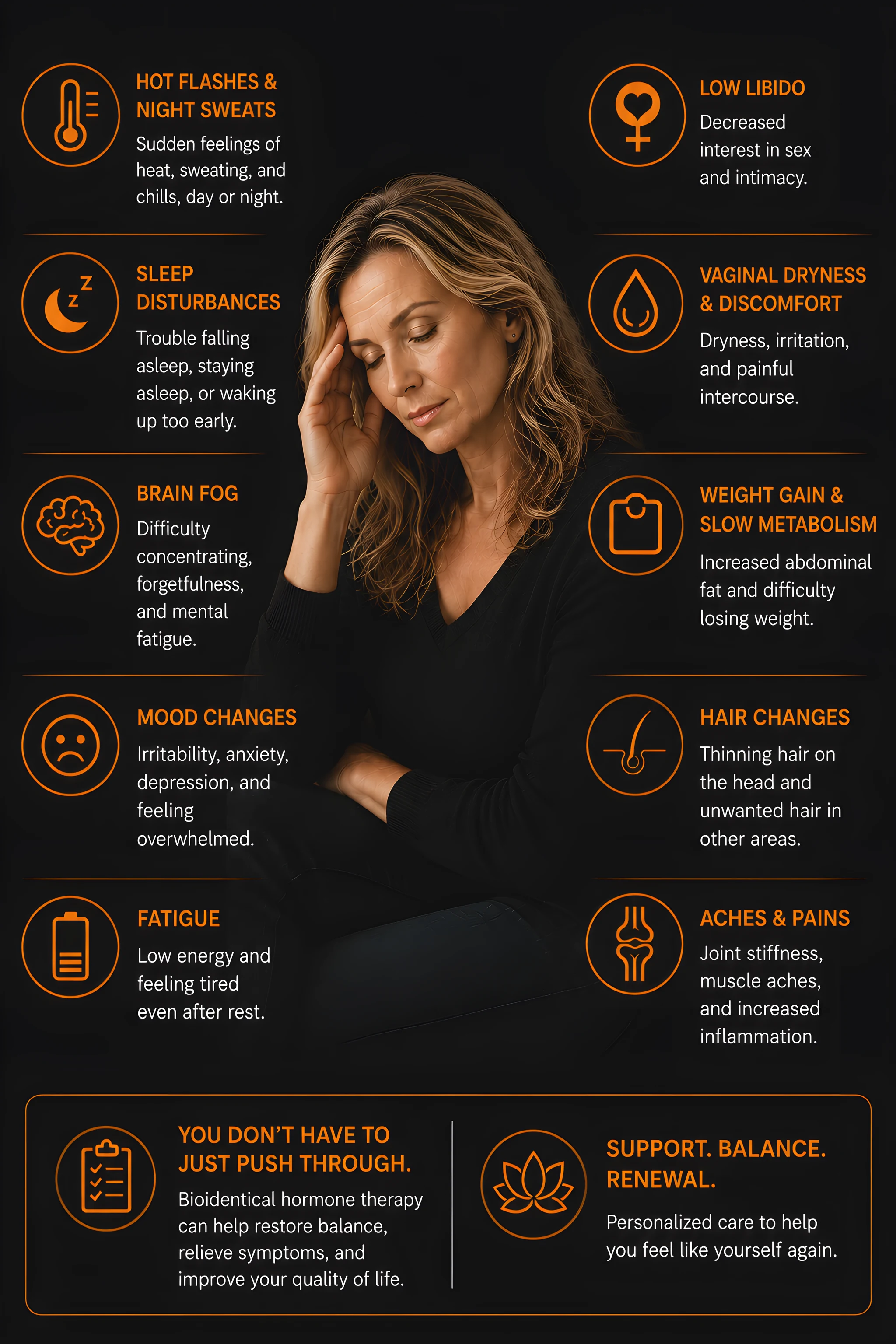
If you are dealing with these symptoms, you are not overreacting and you are not alone. These symptoms are common during periods of hormonal change and deserve appropriate medical evaluation. The most common symptoms we treat include:
- Low energy and chronic fatigue that does not improve with rest
- Hot flashes and night sweats that disrupt sleep and daily routine
- Memory issues and difficulty focusing (that "brain fog" feeling)
- Reduced libido and decreased sexual arousal
- Weight gain, especially around the midsection, despite diet and exercise
…along with hair changes, irregular periods, vaginal dryness, mood changes and other symptoms of hormonal change.
You Are Not Alone
Libido loss and low energy are often dismissed as “just normal aging,” but persistent symptoms deserve evaluation rather than assumption.
What Is Bioidentical Hormone Replacement Therapy?
Bioidentical hormones are chemically identical to hormones produced by the human body. Bioidentical hormone therapy may include FDA-approved medications, such as transdermal estradiol and oral micronized progesterone, as well as compounded preparations when clinically appropriate.
How We Dose It
BHRT replaces the estrogen, progesterone, and sometimes testosterone that decline during perimenopause and menopause. Depending on your needs, we use both FDA-approved formulations (such as transdermal estradiol and micronized progesterone) and customized preparations, with the dose and delivery method tailored to your symptoms, lab results, and health history. The goal is straightforward: restore hormonal balance so you feel like yourself again.
Why Does Testosterone Matter for Women?
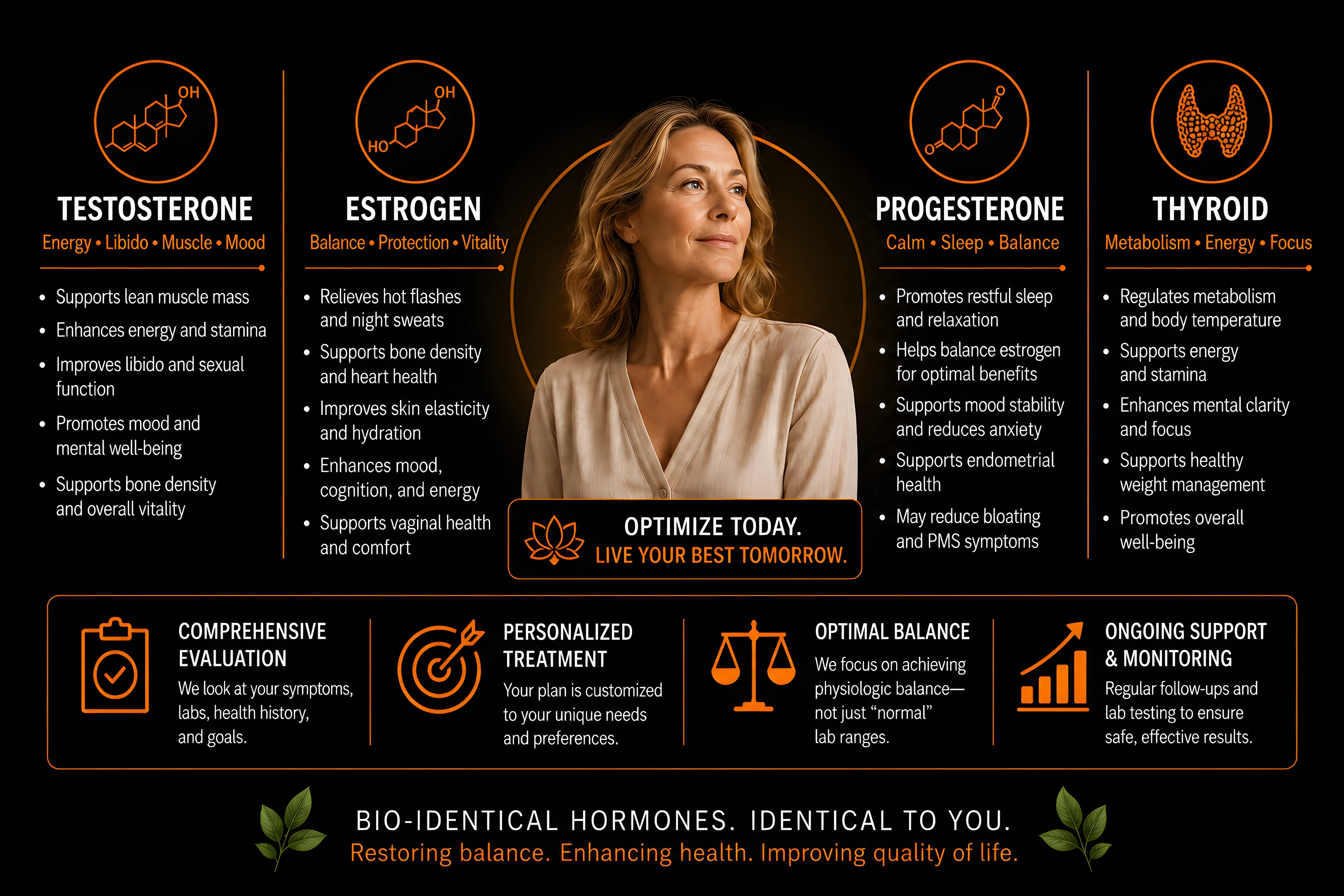
Testosterone is not just for men. Women produce testosterone naturally in smaller amounts, and healthy levels are important for energy, mood, muscle tone, bone strength, and sexual function.
Low testosterone can cause persistent fatigue, decreased motivation, reduced libido, difficulty building muscle, and increased body fat.
Restoring Vitality
When testosterone therapy is clinically appropriate, careful dosing and ongoing monitoring are important to balance potential benefits with the risk of androgenic side effects. Benefits women may experience with optimized testosterone include restored libido and reduced sexual dysfunction and the potential for improved energy, mental focus, better muscle gain and maintenance, improved mood, better sleep, and increased motivation and self-confidence.
What Does Estrogen Optimization Do?
Estrogen is the most effective treatment available for hot flashes and night sweats, and it supports several areas of long-term health. Estrogen deficiency in the menopause and the role of hormone therapy:
- Bone density protection — helps reduce the risk of osteoporosis and fractures
- Hot flash and night sweat relief — often the most dramatic improvement patients experience
- Skin and tissue health — supports collagen production and skin elasticity
- Cognitive support — many women report reduced brain fog and clearer memory
- Vaginal health — relief from dryness and discomfort
How Does Progesterone Support Your Health?
Progesterone plays an important role in hormone therapy for many women and, in women with a uterus using systemic estrogen, helps protect the endometrium from estrogen-related stimulation. It also offers benefits of its own:
- Improved sleep quality — progesterone has natural calming properties, and a randomized trial found women reported significantly better sleep on micronized progesterone
- Menstrual regulation — helps normalize irregular periods during perimenopause
- Mood support — can reduce anxiety and promote emotional balance
- Uterine protection — balances estrogen's stimulating effect on the uterine lining
How Are Your Thyroid and Hormones Connected?
Thyroid function and female hormone balance are closely linked. An underactive thyroid can amplify symptoms of hormonal imbalance — fatigue, weight gain, brain fog, hair thinning, and low mood. Because the two systems interact, they need to be managed together; starting hormone therapy can even change your thyroid medication needs.
Thyroid Markers We Check
We assess thyroid function as part of your comprehensive evaluation, including TSH, Free T3, and Free T4. When thyroid optimization is needed, we integrate it into your plan. For a primer, read our overview of how your thyroid works and why it's crucial to your health.
How Does BHRT Address Sexual Wellness?
Some symptoms are harder to bring up, even with your doctor — reduced desire, vaginal dryness, discomfort during intercourse, difficulty reaching orgasm. These are common during menopause and are directly related to declining estrogen and testosterone. You do not have to accept them as permanent.
Complementary Treatments
BHRT addresses sexual wellness by restoring the hormones that regulate libido, arousal, and vaginal health. We also offer complementary sexual wellness treatments for women, including the O-Shot (PRP therapy), to enhance results. Your sexual health is part of your overall well-being and deserves attention.
Why Does Menopause Cause Brain Fog and Memory Issues?
Memory lapses, difficulty concentrating, and “brain fog” are commonly reported during perimenopause and menopause. Hormonal changes, sleep disruption, mood changes, stress, and other health factors may all contribute. Estrogen plays an important role in cognitive function, and when it drops during perimenopause, many women experience a mix of poor sleep, memory changes, and mood shifts that can hit quality of life and productivity hard. As hormones rebalance, many women report sharper focus and clearer memory. Because cognitive symptoms can have many causes, persistent or concerning changes should be evaluated rather than automatically attributed to hormones.
How Can Hormone Therapy Affect Long-Term Health?
BHRT does more than ease day-to-day symptoms — it supports long-term health:
- Bone density — estrogen is essential for maintaining bone strength. As it declines, osteoporosis risk rises. BHRT helps preserve bone density and reduce fracture risk.
- Cardiovascular health — research suggests that starting hormone therapy around the time of menopause (the "timing hypothesis") may support cardiovascular health, though benefits depend on your age and when treatment begins — something we review individually.
- Metabolic function — hormonal balance supports healthy metabolism, weight management, and insulin sensitivity.
The potential benefits and risks of hormone therapy depend on factors including age, symptoms, medical history, type of hormone therapy, route of administration, and timing relative to menopause.
How Will You Receive Your Hormones?
We offer multiple delivery methods and select the approach that fits your lifestyle and symptom profile:
Topicals (Patches or Creams)
Applied to the skin for steady absorption.
Oral Micronized Progesterone
Taken daily, often before bed.
Pellets
Small implants placed under the skin that release hormones consistently over several months.
Injections
For testosterone or other hormone supplementation as needed.
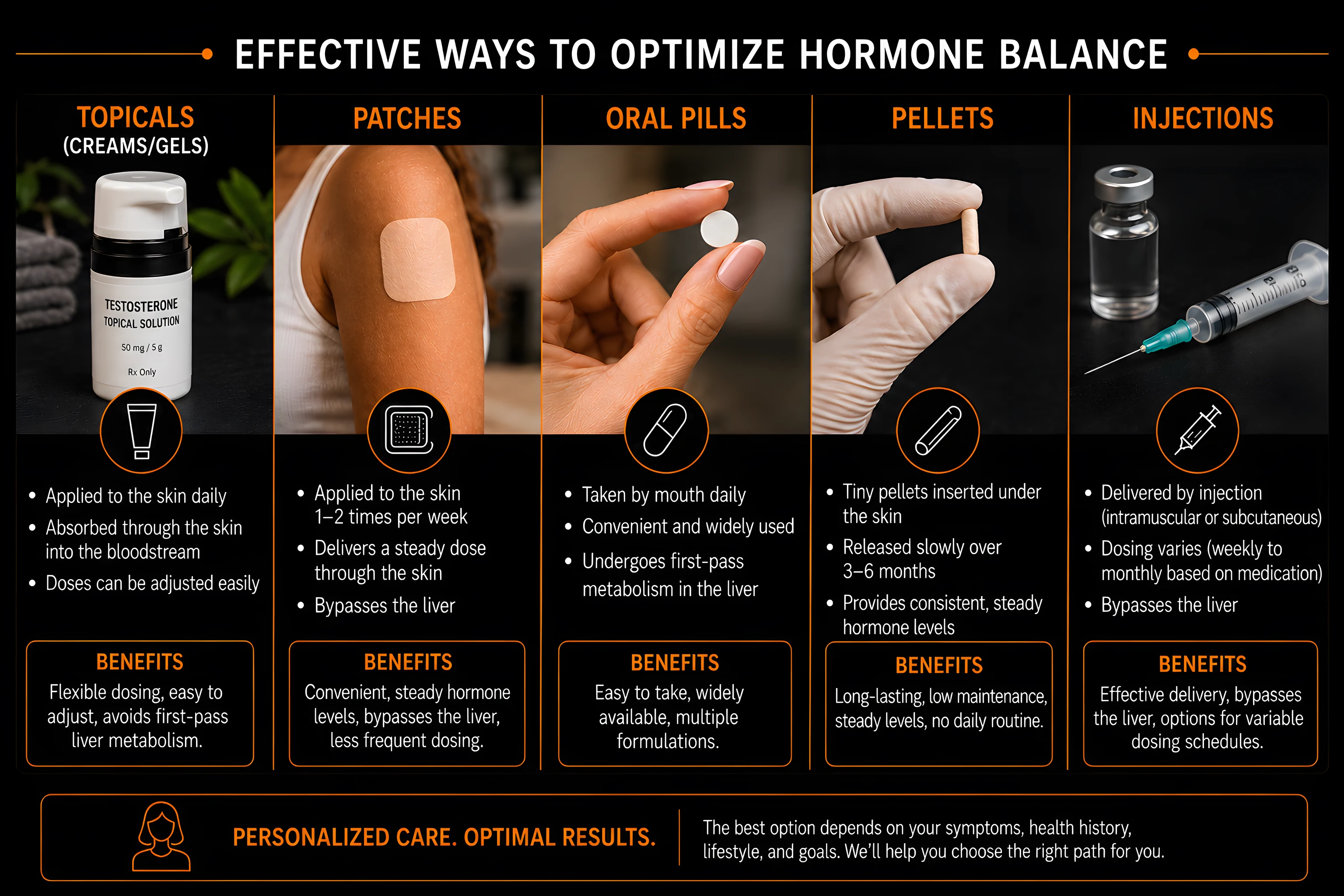
During your first consultation, our team will explain the advantages and disadvantages of each method. You choose the approach that fits your life, not what is easiest for us.
What Does the BHRT Treatment Timeline Look Like?
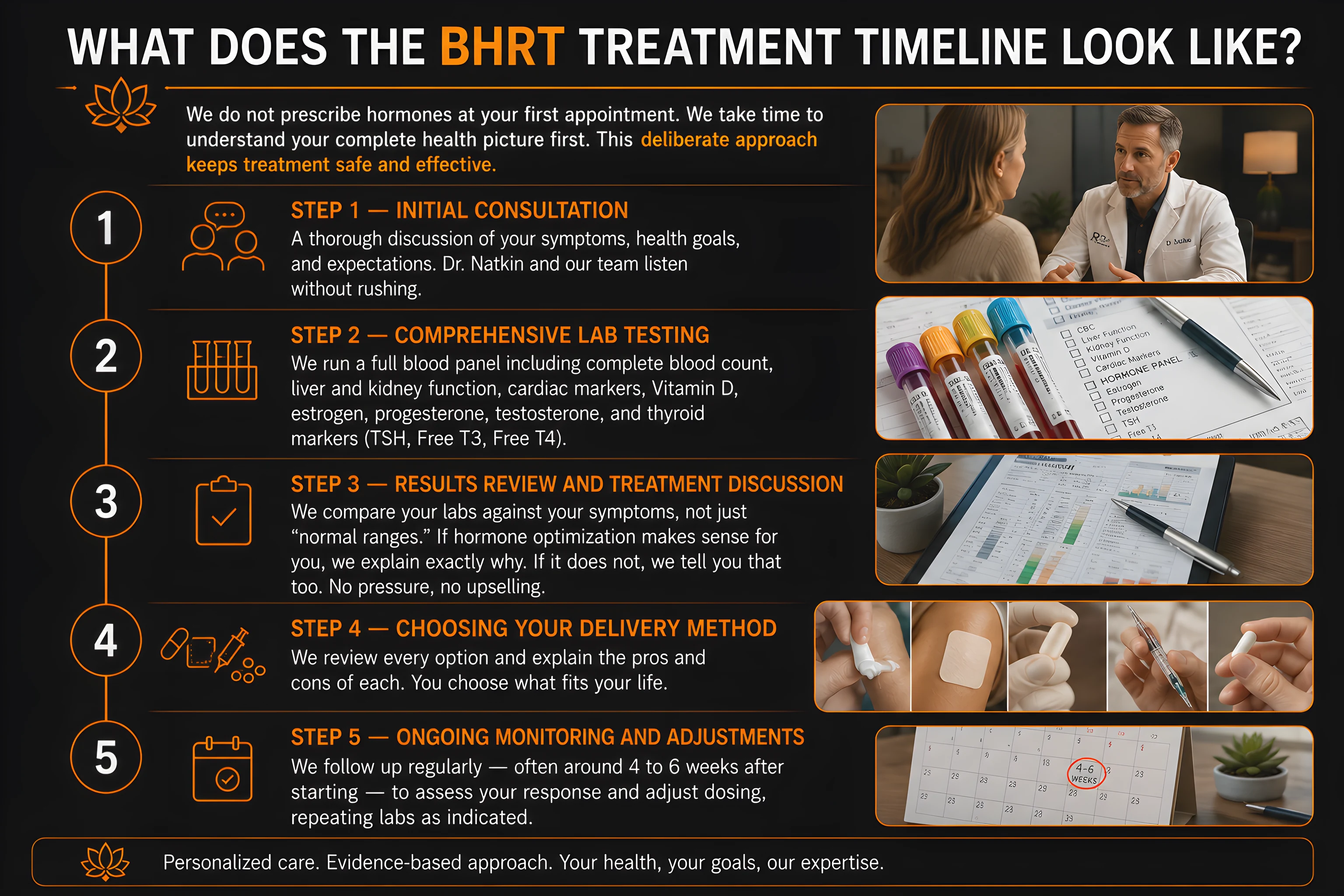
We do not prescribe hormones at your first appointment. We take time to understand your complete health picture first. This deliberate approach keeps treatment safe and effective.
Step 1 — Initial Consultation
A thorough discussion of your symptoms, health goals, and expectations. Dr. Natkin and our team listen without rushing.
Step 2 — Comprehensive Lab Testing
We run a full blood panel including complete blood count, liver and kidney function, cardiac markers, Vitamin D, estrogen, progesterone, testosterone, and thyroid markers (TSH, Free T3, Free T4).
Step 3 — Results Review and Treatment Discussion
We compare your labs against your symptoms, not just "normal ranges." If hormone optimization makes sense for you, we explain exactly why. If it does not, we tell you that too. No pressure, no upselling.
Step 4 — Choosing Your Delivery Method
We review every option and explain the pros and cons of each. You choose what fits your life.
Step 5 — Ongoing Monitoring and Adjustments
We follow up regularly — often around 4 to 6 weeks after starting — to assess your response and adjust dosing, repeating labs as indicated.
Is Bioidentical Hormone Therapy Safe?
You have probably heard conflicting information about hormone therapy. The research has evolved significantly, and much of the old fear is out of date.
Many women worry that hormones cause breast cancer. The picture is more nuanced than the headlines. In a large French study of nearly 80,000 women (the E3N cohort), natural micronized progesterone was not associated with the increased breast cancer risk seen with certain synthetic progestins. The regulatory view has shifted too: in November 2025, the FDA began removing the "black box" warning from menopausal hormone therapy products containing estrogen, after concluding the broad warning was misleading.
Individualized Care
The key to safe treatment is individualized care — we review your medical history, assess your risk factors, and design a plan around your health profile rather than a one-size-fits-all protocol.
FDA announcement on removing HRT black box warnings (Nov 2025) →
FDA-Approved and Compounded Bioidentical Hormone Therapy
The term “bioidentical” describes the molecular structure of a hormone—it does not mean that the medication is necessarily compounded. FDA-approved bioidentical hormone medications are available, including formulations containing estradiol and micronized progesterone.
At R2 Medical Clinic, treatment is individualized based on a patient’s symptoms, medical history, treatment goals, response to therapy, and clinical needs. When an appropriate FDA-approved hormone formulation is available, it may be used as part of the treatment plan.
In certain circumstances, a compounded preparation may be considered when commercially available products do not adequately meet an individual patient’s needs. Compounding can provide flexibility in dosage, formulation, route of administration, or ingredients that may not otherwise be commercially available.
Compounded medications are not FDA-approved and are not reviewed by the FDA for safety, effectiveness, or quality in the same manner as FDA-approved medications. Compounded hormone therapy should therefore not be considered inherently safer, more effective, or more “natural” than FDA-approved hormone therapy.
When compounded hormone therapy is considered, we discuss the reasons for its use as well as the potential benefits, limitations, and alternatives so that treatment decisions can be made on an individualized basis.
Why Choose R2 Medical Clinic for BHRT in Denver?
R2 Medical Clinic offers physician-led hormone therapy focused on personalized care and measurable outcomes.
- Medical oversight. All treatment plans are developed and supervised by Dr. Erik Natkin, DO, Founder, Medical Director, & Physician at R2 Medical Clinic, who has extensive experience in osteopathic and regenerative medicine and has called the Denver area home since 1987.
- Comprehensive approach. When appropriate, we integrate BHRT with complementary services like peptide therapy, PRP, and medical weight loss.
- Personalized attention. We keep our schedule limited so every patient gets proper time — concierge-level care without concierge pricing.
- Ongoing support. Regular check-ins, lab monitoring, and treatment adjustments keep you on track.
- Honest recommendations. If hormones make sense for you, we explain why. If they do not, we tell you that too.
- Convenient locations. We have clinics in Denver, Arvada-Wheat Ridge, and Castle Rock, and we serve patients throughout the Denver metro area, including Aurora and surrounding communities.
Who Is a Good Candidate for BHRT?
Hormone therapy may be appropriate for women experiencing symptoms associated with hormonal changes during perimenopause, menopause, post-menopause, or other clinically appropriate circumstances. Perimenopause can start as early as the late 30s, and you do not need to wait until symptoms become severe. Many women come to us after being told their symptoms are "just part of aging." If you have felt dismissed, you are not alone — your symptoms are real and deserve proper evaluation.
You may be a good candidate if you are:
- Experiencing persistent symptoms that affect your daily life
- Dealing with hot flashes or night sweats that disrupt sleep
- Noticing low energy, brain fog, or memory issues
- Experiencing reduced libido or sexual wellness concerns
- Seeing weight or body-composition changes despite healthy habits
- Living with mood changes, irritability, or anxiety
Individual Evaluation
BHRT can also be appropriate after a hysterectomy or early menopause. It is not right for everyone — that is exactly why we evaluate each person individually. The only way to know for certain is through a comprehensive consultation and full lab panel.
Related Women's Hormone Health Resources
Hormone Optimization for Women: A Physician's Guide to Estrogen, Progesterone, and Testosterone
Testosterone Therapy for Women: Benefits, Evidence, Risks & Appropriate Use
My Hormone Levels Are “Normal”—So Why Do I Still Have Symptoms?
Hormone Therapy Bloodwork for Women: What We Test, What the Results Mean & Why Symptoms Matter
What Does “Anti-Aging” Actually Mean? A Physician's Look at Longevity, Biological Age & Healthspan
Your Health Is More Than a Subscription: Why Quality Medical Care Matters
Frequently Asked Questions About BHRT for Women in Denver
Visit Us Near You — Denver-Metro Locations
BHRT at R2 Medical Clinic is available at three convenient Denver-metro clinics. Find the location nearest you:
- Bioidentical HRT for Women in Denver — 1873 S Bellaire St (flagship, full in-house labs)
- Bioidentical HRT for Women in Arvada-Wheat Ridge — serving the northwest metro
- Bioidentical HRT for Women in Castle Rock — serving the south metro & Douglas County
What Happens Next
If you are tired of living with symptoms that affect your energy, focus, relationships, and well-being, BHRT could be the solution you have been looking for. Your next step is simple: schedule a consultation at R2 Medical Clinic. We'll review your symptoms, run the necessary lab work, and build a treatment plan designed for you. You don't have to accept hormonal decline as inevitable — you have options, and we're here to help you explore them.
Call us at (720) 640-2333 or visit one of our Colorado locations: Denver (flagship), Arvada-Wheat Ridge, and Castle Rock.
This page is for educational purposes and is not medical advice. Treatment decisions are made with your physician based on your individual health profile.
Schedule Your Free Consultation
References & Medical Resources
The following clinical guidelines, professional society statements, and peer-reviewed publications provide additional information regarding perimenopause, menopause, menopausal hormone therapy, estrogen, progesterone, testosterone therapy, treatment benefits, and potential risks.
- The North American Menopause Society (NAMS). The 2022 Hormone Therapy Position Statement of The North American Menopause Society. Menopause. 2022;29(7):767–794.
doi:10.1097/GME.0000000000002028
Comprehensive evidence-based guidance regarding menopausal hormone therapy, including treatment of vasomotor symptoms, genitourinary symptoms, bone health, timing of therapy, routes of administration, and individualized assessment of benefits and risks. - American College of Obstetricians and Gynecologists (ACOG). Hormone Therapy for Menopause.
acog.org
Clinical guidance regarding estrogen therapy, combined estrogen-progestogen therapy, treatment of menopausal symptoms, bone protection, cardiovascular and thromboembolic considerations, vaginal estrogen, contraindications, and individualized treatment decisions. - Stuenkel CA, Davis SR, Gompel A, et al. Treatment of Symptoms of the Menopause: An Endocrine Society Clinical Practice Guideline. Journal of Clinical Endocrinology & Metabolism. 2015;100(11):3975–4011.
doi:10.1210/jc.2015-2236
Evidence-based recommendations addressing evaluation of menopausal symptoms, hormone therapy, treatment selection, cardiovascular and breast cancer risk assessment, route of estrogen administration, monitoring, and treatment of genitourinary syndrome of menopause. - Davis SR, Baber R, Panay N, et al. Global Consensus Position Statement on the Use of Testosterone Therapy for Women. Journal of Clinical Endocrinology & Metabolism. 2019;104(10):4660–4666.
doi:10.1210/jc.2019-01603
International consensus guidance regarding the evidence, appropriate indications, dosing considerations, safety, and monitoring of testosterone therapy in women. - The North American Menopause Society. The 2020 Genitourinary Syndrome of Menopause Position Statement of The North American Menopause Society. Menopause. 2020;27(9):976–992.
doi:10.1097/GME.0000000000001609
Evidence-based guidance regarding vaginal dryness, discomfort with intercourse, urinary and genital symptoms associated with menopause, and available hormonal and nonhormonal treatment options. - Fournier A, Berrino F, Clavel-Chapelon F. Unequal Risks for Breast Cancer Associated With Different Hormone Replacement Therapies: Results From the E3N Cohort Study. Breast Cancer Research and Treatment. 2008;107(1):103–111.
doi:10.1007/s10549-007-9523-x
Large prospective cohort study examining differences in breast cancer risk associated with different estrogen and progestogen formulations. - Canonico M, Plu-Bureau G, Lowe GDO, Scarabin PY. Hormone Replacement Therapy and Risk of Venous Thromboembolism in Postmenopausal Women: Systematic Review and Meta-analysis. BMJ. 2008;336(7655):1227–1231.
doi:10.1136/bmj.39555.441944.BE
Reviews evidence regarding venous thromboembolism risk associated with menopausal hormone therapy, including differences associated with oral and transdermal estrogen. - Hodis HN, Mack WJ, Henderson VW, et al. Vascular Effects of Early versus Late Postmenopausal Treatment with Estradiol. New England Journal of Medicine. 2016;374:1221–1231.
doi:10.1056/NEJMoa1505241
Randomized clinical trial examining cardiovascular effects of estradiol when initiated at different times following menopause and contributing to research surrounding the timing hypothesis of menopausal hormone therapy.
Important Note
Menopausal hormone therapy should be individualized based on a woman’s symptoms, age, time since menopause, medical and family history, cardiovascular and thromboembolic risk factors, breast and endometrial health, whether the uterus is present, treatment goals, and personal preferences.
For women with an intact uterus who receive systemic estrogen, appropriate endometrial protection with a progestogen is generally necessary. Route of administration may also influence risk; for example, transdermal estrogen may have a different thromboembolic risk profile than oral estrogen.
Evidence supporting hormone therapy varies by treatment and clinical indication. Estrogen therapy has strong evidence for the treatment of vasomotor symptoms and genitourinary symptoms and for prevention of menopause-associated bone loss. Testosterone therapy in women requires separate consideration of indication, dosing, potential risks, and appropriate monitoring.
Medical evidence and recommendations continue to evolve. Treatment decisions should be made individually under appropriate medical supervision.
Medically reviewed by Erik Natkin, DO — Founder, Medical Director, & Physician, R2 Medical Clinic. Content last reviewed August 2026.