Women's Sexual Dysfunction Treatment in Denver, CO
Restore Your Confidence
Personalized Treatment Solutions
Low libido, difficulty with arousal or orgasm, and pain during intercourse can have hormonal, vascular, neurological, medication-related and psychological causes. At R2 Medical Clinic, we take a physician-led approach to identifying potential contributors and developing an individualized treatment plan.
Female sexual dysfunction is a common medical condition that can affect women at any stage of life. It can manifest as difficulty with desire, arousal, orgasm, or pain during intercourse, and it often has a significant impact on quality of life, relationships, and self-esteem.
Causes can be multifactorial — including hormonal imbalances (especially during perimenopause and menopause), cardiovascular issues, neurological conditions, medication side effects, psychological factors, and age-related changes. Because of this complexity, a one-size-fits-all approach rarely works.
A comprehensive medical evaluation — including lab work, medical history review, and physical assessment — allows our physicians to identify the specific factors contributing to your symptoms and develop a targeted, personalized treatment plan.
Our goal is to restore your confidence, intimacy, and overall quality of life using the most advanced, evidence-based treatments available today.
Common Types of Female Sexual Dysfunction
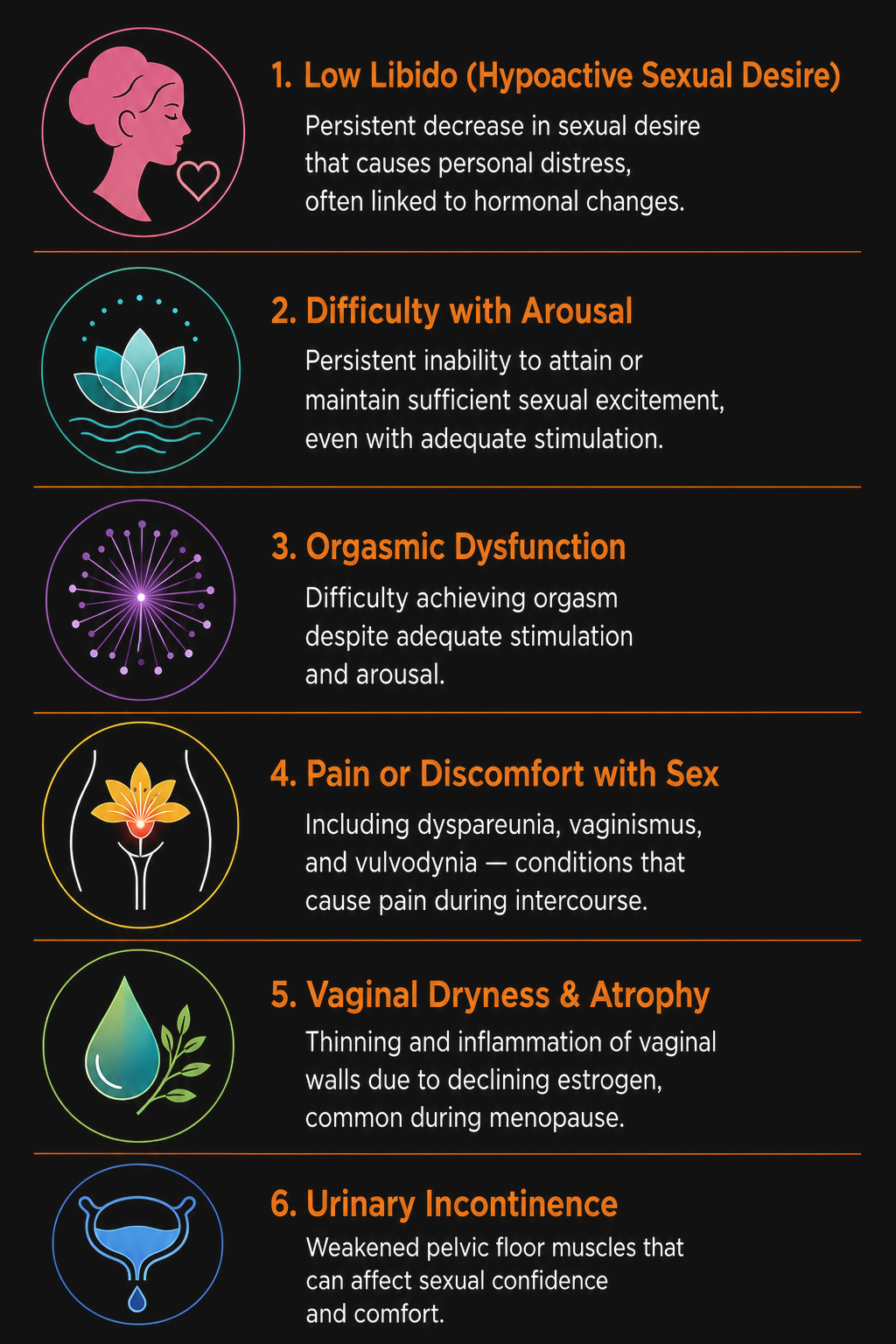
Low Libido (Hypoactive Sexual Desire)
Persistent decrease in sexual desire that causes personal distress, often linked to hormonal changes.
Difficulty with Arousal
Persistent inability to attain or maintain sufficient sexual excitement, even with adequate stimulation.
Orgasmic Dysfunction
Difficulty achieving orgasm despite adequate stimulation and arousal.
Pain or Discomfort with Sex
Including dyspareunia, vaginismus, and vulvodynia — conditions that cause pain during intercourse.
Vaginal Dryness & Atrophy
Thinning and inflammation of vaginal walls due to declining estrogen, common during menopause.
Urinary Incontinence
Weakened pelvic floor muscles that can affect sexual confidence and comfort.
How We Evaluate Female Sexual Dysfunction
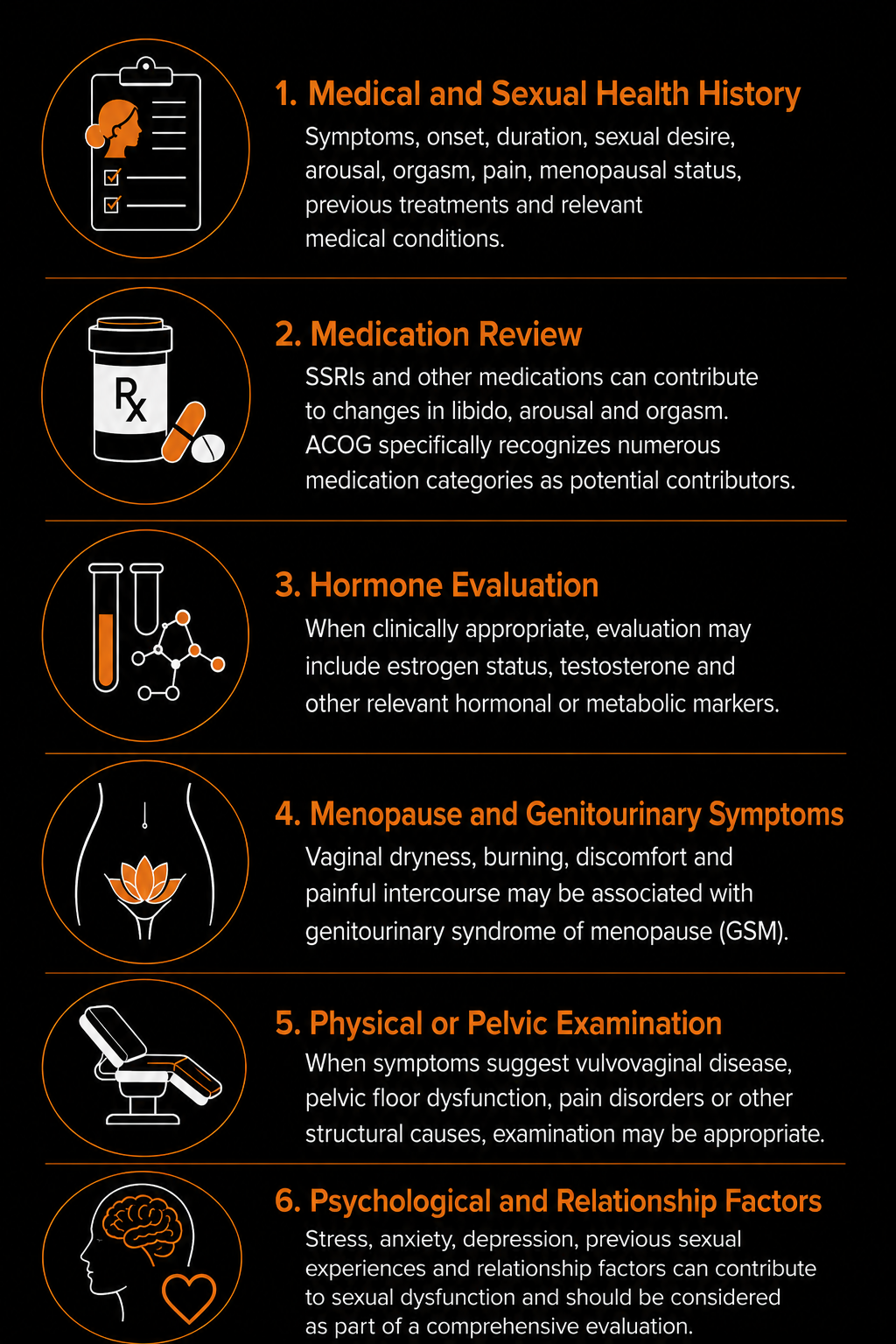
Medical and Sexual Health History
Symptoms, onset, duration, sexual desire, arousal, orgasm, pain, menopausal status, previous treatments and relevant medical conditions.
Medication Review
SSRIs and other medications can contribute to changes in libido, arousal and orgasm. ACOG specifically recognizes numerous medications as potential contributors.
Hormone Evaluation
When clinically appropriate, evaluation may include estrogen status, testosterone and other relevant hormonal or metabolic markers.
Menopause and Genitourinary Symptoms
Vaginal dryness, burning, discomfort and painful intercourse may be associated with genitourinary syndrome of menopause (GSM).
Physical or Pelvic Examination
When symptoms suggest vulvovaginal disease, pelvic floor dysfunction, pain disorders or other structural causes, examination may be appropriate.
Psychological and Relationship Factors
Psychological issues, stress, anxiety, depression, previous sexual experiences and relationship factors can contribute to sexual dysfunction and should be considered as part of a comprehensive evaluation.
Treatment Options
Bioidentical Hormone Replacement Therapy (BHRT)
Hormone optimization may be of vital importance.
Hormonal changes during perimenopause and menopause can contribute to vaginal dryness, discomfort, reduced arousal and changes in sexual desire. When hormonal factors are contributing to symptoms, individualized hormone therapy may be considered based on a woman’s symptoms, medical history, laboratory findings and treatment goals.
Low-dose vaginal estrogen may help improve vaginal dryness, irritation, and painful intercourse associated with genitourinary syndrome of menopause (GSM).
Testosterone may be considered for appropriately selected women with HSDD after a comprehensive evaluation. There is currently no FDA-approved testosterone product specifically indicated for female HSDD in the United States, so treatment for this purpose is off-label.
PT-141 (Bremelanotide)
Bremelanotide is an FDA-approved melanocortin receptor agonist for certain premenopausal women with acquired, generalized hypoactive sexual desire disorder (HSDD). Whether it is appropriate depends on the patient’s diagnosis, medical history and potential contraindications. Use outside the FDA-approved indication is considered off-label.
Oxytocin
Oxytocin has physiological roles in social bonding and sexual response. Its use as a treatment for female sexual dysfunction is not FDA-approved, and clinical evidence supporting therapeutic use for sexual dysfunction remains limited.
Vaginal Rejuvenation Therapies
Non-surgical treatments improve vaginal health, reduce dryness, and restore tissue integrity.
V-Wave
Low-intensity shockwave (percussion) therapy has been investigated as a potential approach to improving genital blood flow and sexual function. Research in women remains limited, and treatment for female sexual dysfunction is investigational.
O-Shot
PRP injections use a concentration of platelets derived from the patient’s own blood and have been investigated for several aspects of female sexual function. Evidence for PRP in female sexual dysfunction remains limited, and it is not an FDA-approved treatment specifically for female sexual dysfunction. Patients should be counseled regarding the available evidence, potential risks, alternatives and uncertainty regarding outcomes.
Other Treatment Options
Treatment for female sexual dysfunction depends on the underlying cause. In addition to the treatments available at R2 Medical Clinic, other approaches may be appropriate based on a woman’s symptoms and individual needs.
Vaginal Moisturizers & Lubricants
Nonhormonal moisturizers and lubricants can help reduce vaginal dryness, friction, and discomfort during sexual activity.
Pelvic Floor Physical Therapy
Pelvic floor dysfunction can contribute to painful intercourse, muscle tightness, and difficulty with penetration. Specialized physical therapy may help improve pelvic floor function and comfort.
Sex Therapy & Counseling
Psychological, interpersonal, and relationship factors can contribute to sexual dysfunction. Counseling or sex therapy may be beneficial when these factors are contributing to symptoms.
Medication Review
Certain medications, including some antidepressants, can affect sexual desire, arousal, and orgasm. When appropriate, medication adjustments or alternatives may be discussed with the prescribing clinician.
Flibanserin
Flibanserin is an FDA-approved, nonhormonal daily medication for women younger than 65 with acquired, generalized hypoactive sexual desire disorder (HSDD) who meet appropriate diagnostic criteria.
What to Expect
1. Comprehensive Consultation
Your provider will review your medical and sexual health history, symptoms, medications, hormonal and menopausal factors, previous treatments, and treatment goals.
2. Evaluation & Testing
When appropriate, laboratory testing or additional evaluation may be recommended to identify hormonal, metabolic, medication-related, or other factors that could be contributing to your symptoms.
3. Personalized Treatment Plan
Based on your evaluation, your provider will discuss appropriate treatment options, potential benefits and risks, alternatives, and limitations before developing an individualized treatment plan.
4. Follow-Up & Monitoring
Follow-up appointments and laboratory testing, when indicated, allow your provider to monitor your response, address concerns, and adjust treatment as appropriate.
Potential Benefits
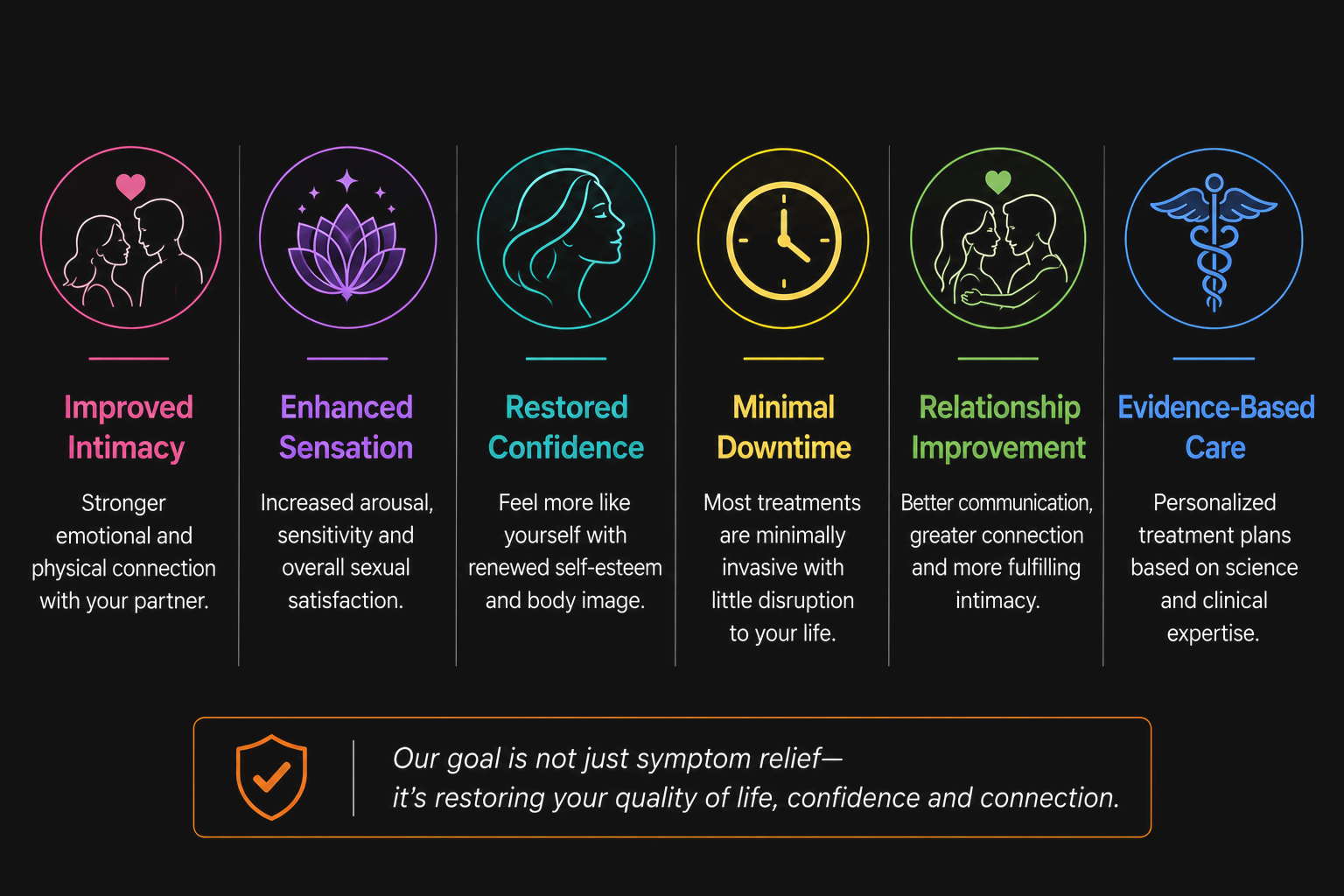
Our comprehensive approach is designed to identify factors contributing to sexual dysfunction and develop an individualized treatment plan.
Frequently Asked Questions
Schedule Your Free Consultation
References & Medical Resources
- American College of Obstetricians and Gynecologists (ACOG). Female Sexual Dysfunction. ACOG Practice Bulletin No. 213. Obstetrics & Gynecology. 2019;134(1):e1–e18. Reaffirmed 2025.
acog.org - American College of Obstetricians and Gynecologists (ACOG). Your Sexual Health.
Patient education guidance addressing sexual dysfunction, sexual pain, vaginal dryness, evaluation, and treatment options.
acog.org - Parish SJ, Simon JA, Davis SR, et al. International Society for the Study of Women’s Sexual Health Clinical Practice Guideline for the Use of Systemic Testosterone for Hypoactive Sexual Desire Disorder in Women. Journal of Sexual Medicine. 2021;18(5):849–867. doi:10.1016/j.jsxm.2020.10.009.
pubmed.ncbi.nlm.nih.gov - International Society for the Study of Women’s Sexual Health (ISSWSH). Clinical Practice Guideline for the Use of Systemic Testosterone for Hypoactive Sexual Desire Disorder in Women.
isswsh.org - U.S. National Library of Medicine, DailyMed. Flibanserin (Addyi) Prescribing Information.
Current FDA labeling for treatment of acquired, generalized hypoactive sexual desire disorder (HSDD) in women younger than 65 years of age.
dailymed.nlm.nih.gov
Medically reviewed by Erik Natkin, DO — Founder, Medical Director, & Physician, R2 Medical Clinic. Content last reviewed August 2026.