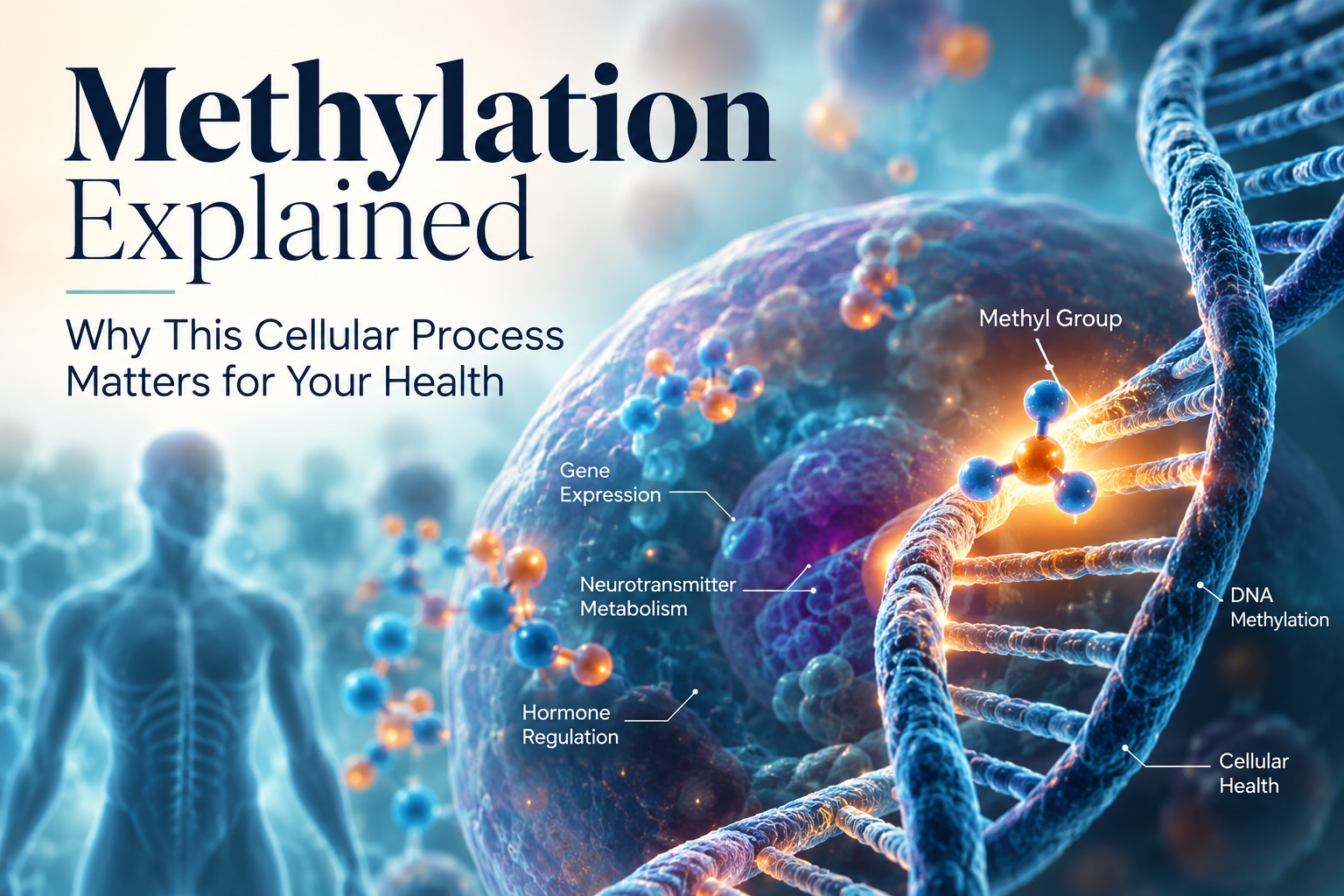
Methylation Explained: Why This Cellular Process Matters for Your Health
A physician's guide to methylation, DNA methylation, MTHFR variants and homocysteine, separating the real biology from supplement-industry hype.
Erik Natkin, DO • 21 min read
Medically reviewed by Erik Natkin, DO — Founder, R2 Medical Clinic, Denver, Colorado
Last medically reviewed: September 2026
The word methylation has become increasingly common in conversations about longevity, genetics, nutrition and personalized medicine.
Unfortunately, methylation is also frequently oversimplified.
You may hear claims that someone needs to “increase methylation,” “fix their methylation pathways” or take specific supplements because they have an MTHFR gene variant.
The biology is considerably more complex.
You may have heard about:
- DNA methylation
- Methylated vitamins
- MTHFR gene variants
- Homocysteine
- “Poor methylation”
- Epigenetic age testing
Methylation is not a disease, a detox program or a single metabolic pathway.
It is a fundamental chemical process occurring throughout the body every second of every day.
Methylation participates in DNA regulation, neurotransmitter metabolism, cell division, protein function and numerous other biological processes.
And when we talk about aging and epigenetics, methylation becomes particularly interesting because patterns of DNA methylation change throughout life.
So what exactly is methylation? Why does your body need it? And can nutrition, lifestyle or supplements improve it?
Let’s separate the biology from the hype.
What Is Methylation?
At its simplest, methylation involves transferring a small chemical structure called a methyl group from one molecule to another.
A methyl group consists of one carbon atom and three hydrogen atoms — CH₃.
That sounds insignificant. But attaching this tiny chemical group to another molecule can change how that molecule behaves.
Methyl groups can be transferred to:
- DNA
- RNA
- Proteins
- Lipids
- Hormones
- Neurotransmitter-related compounds
- Other molecules throughout cellular metabolism
Your body therefore depends on an enormous network of methylation reactions.
One of the major molecules responsible for donating methyl groups is S-adenosylmethionine (SAM or SAMe). SAM acts as a major cellular methyl donor.
After donating its methyl group, SAM becomes S-adenosylhomocysteine, which eventually contributes to the formation of homocysteine. Homocysteine can then be recycled back toward methionine or directed through another metabolic pathway.
This creates an interconnected system involving several nutrients and enzymes.
The Methylation Cycle
The methylation cycle is closely connected with what is often called one-carbon metabolism.
A simplified version looks something like this:
Folate → 5-MTHF → Homocysteine → Methionine → SAM → Methyl Donation
After SAM donates a methyl group, the cycle eventually returns toward homocysteine.
Several nutrients participate in these interconnected pathways, including:
- Folate (Vitamin B9)
- Vitamin B12
- Vitamin B6
- Riboflavin (Vitamin B2)
- Choline
- Betaine
- Methionine
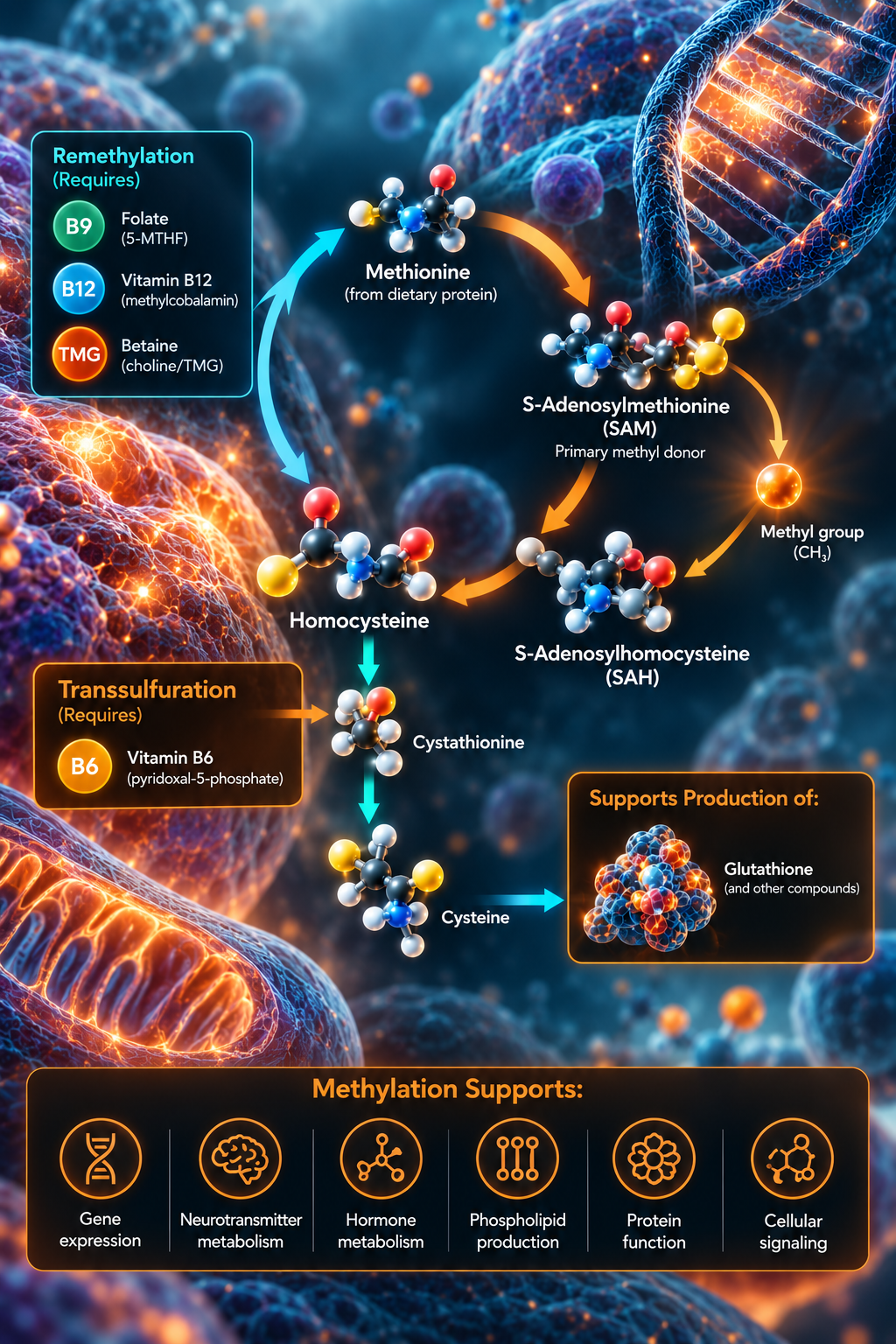
These nutrients do not simply “turn methylation on.” Instead, they participate as substrates or cofactors in biochemical reactions that help maintain normal metabolism.
That distinction is important. Your body needs methylation. But more methylation is not automatically better.
Why Is Methylation Important?
Methylation participates in many different biological processes. Among the most important are:
- DNA regulation. Methylation can influence whether certain regions of DNA are more or less accessible for gene expression.
- DNA synthesis and cell division. Folate-dependent metabolism is essential for nucleotide production and normal DNA synthesis.
- Protein regulation. Proteins can undergo methylation that affects their activity and interactions.
- Neurotransmitter metabolism. Methylation pathways interact with the metabolism of molecules involved in neurological signaling.
- Lipid metabolism. Methyl-group metabolism contributes to pathways involved in phospholipid production and cell membrane biology.
- Homocysteine metabolism. Folate (vitamin B9) and vitamin B12 participate in converting homocysteine back into methionine.
- Epigenetic regulation. DNA methylation is one of the best-studied mechanisms through which cells regulate gene activity without changing the DNA sequence itself.
These processes demonstrate why reducing methylation to a single supplement or laboratory test misses the larger picture.
DNA Methylation: Where Methylation Meets Epigenetics
DNA methylation is one specific form of methylation. This is where methylation intersects with epigenetics.
Epigenetics describes biological mechanisms that influence gene activity without changing the underlying sequence of DNA. One of those mechanisms involves attaching methyl groups to DNA.
DNA methylation frequently occurs at regions containing cytosine and guanine bases known as CpG sites. Depending on where methylation occurs, it can influence gene regulation.
A simplified way to think about it is: DNA provides the instructions. Epigenetic mechanisms help determine how those instructions are used.
But the commonly repeated statement that methylation simply “turns genes off” is an oversimplification. The effect depends on where methylation occurs in the genome, the cell type involved and the surrounding biological environment. Human gene regulation is much more sophisticated than an on/off switch.
Methylation Does Not Change Your Genetic Code
This distinction is extremely important.
DNA methylation does not normally change the letters of your genetic code. Your underlying DNA sequence remains the same. Instead, methylation can influence how cells interact with portions of that DNA.
Think of your genome as an enormous library. Your DNA sequence represents the words printed inside the books. Epigenetic regulation helps determine which books are opened, which pages are read and how frequently certain instructions are used.
The words themselves generally remain unchanged.
Why DNA Methylation Matters in Aging
DNA methylation patterns change as humans age. Some areas of the genome become more methylated. Others become less methylated.
Researchers discovered that certain methylation changes occur predictably enough that mathematical models can estimate age using selected DNA methylation sites. These models became known as epigenetic clocks.
Some clocks primarily estimate chronological age. Newer models attempt to capture biological characteristics associated with aging, disease risk or mortality. This has made DNA methylation one of the most intensively studied biomarkers in longevity research.
However, an important distinction remains: measuring changes associated with aging is not necessarily the same as measuring aging itself. And changing an epigenetic-age result does not automatically prove that someone’s overall biological aging has been reversed.
Methylation Is About Balance, Not “More”
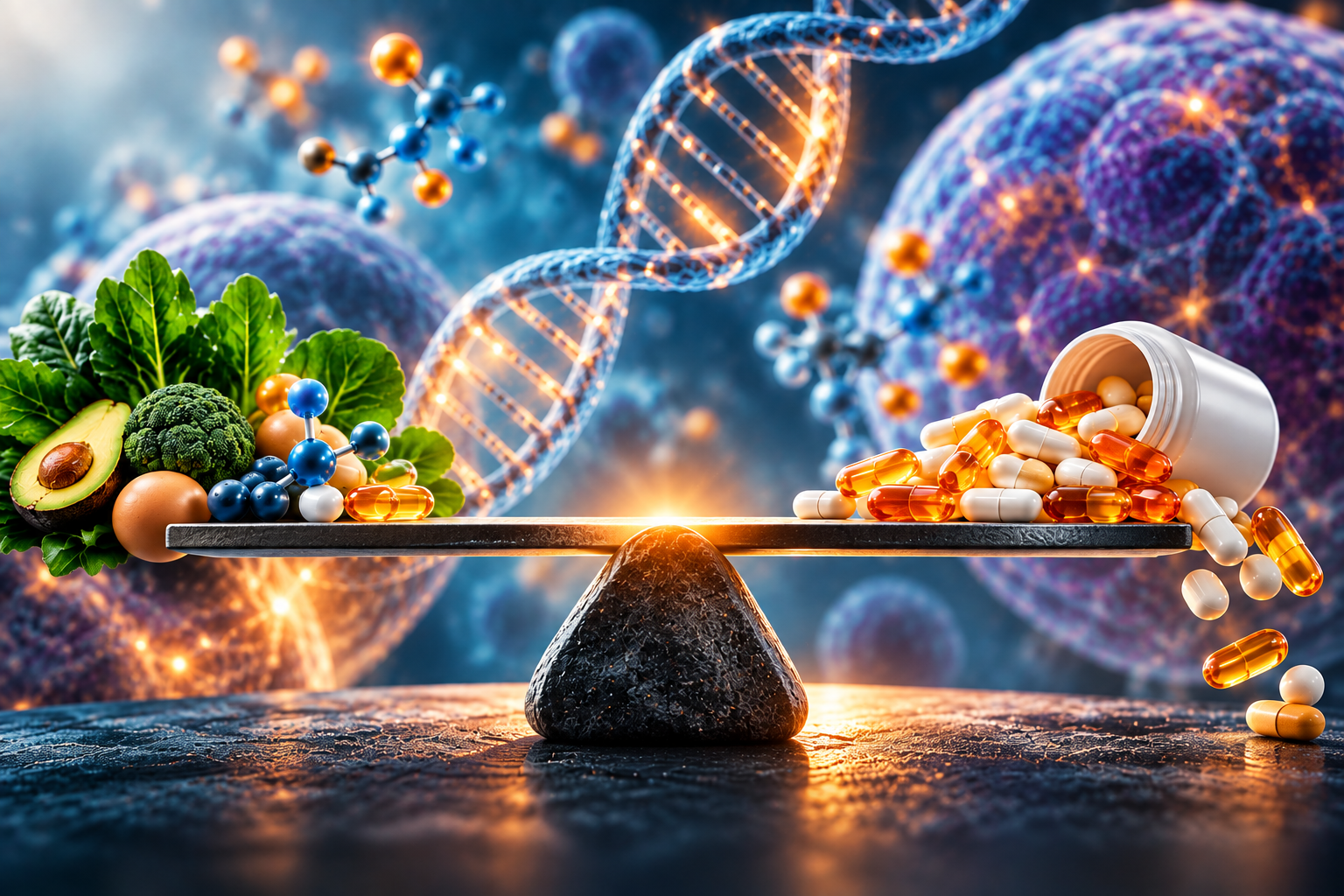
This may be the most important concept in this article.
Methylation is often discussed online as though everyone should be trying to increase it. That is not how biology works.
Different areas of DNA require different methylation patterns. In some circumstances, increased methylation of a particular region may reduce gene activity. In another region, loss of normal methylation may be problematic.
Cancer biology provides an excellent example of why the simplistic idea that “more methylation is better” does not work. Abnormal DNA methylation patterns can contribute to inappropriate gene regulation. Some genes may become abnormally methylated while other regions of the genome lose methylation.
Therefore, the goal is not maximum methylation. The goal is appropriate methylation in the appropriate biological context. Your body normally regulates these processes continuously.
Folate and Methylation
Folate, vitamin B9, is one of the nutrients most closely associated with methylation. Through a series of biochemical reactions, folate participates in one-carbon metabolism.
One important folate-derived molecule is 5-methyltetrahydrofolate (5-MTHF). 5-MTHF helps provide a methyl group used in the conversion of homocysteine to methionine. Methionine can subsequently contribute to production of SAM, the major cellular methyl donor discussed earlier.
Folate is also essential for nucleotide synthesis and normal cell division. This explains why folate deficiency can have significant biological consequences.
But again: if someone already has adequate folate status, taking increasingly large amounts does not necessarily improve methylation or health. Nutrients are necessary for normal physiology. That does not mean unlimited amounts create increasingly better physiology.
Vitamin B12 and Methylation
Vitamin B12 also plays an important role. The enzyme methionine synthase requires vitamin B12 and helps convert homocysteine into methionine. This reaction links folate metabolism, homocysteine metabolism and methylation.
B12 deficiency can therefore disrupt this pathway. Vitamin B12 deficiency can also have important clinical consequences involving:
- Red blood cell production
- Neurological function
- DNA synthesis
In appropriate situations, laboratory evaluation may include serum B12 and sometimes additional markers such as methylmalonic acid.
Correcting a true vitamin B12 deficiency is important. Taking large amounts of B12 when no deficiency exists should not automatically be considered an anti-aging or methylation treatment.
What Is Homocysteine?
Homocysteine is an amino acid produced during methionine metabolism. The metabolism and significance of homocysteine in nutrition and health. It occupies an important intersection in one-carbon metabolism.
Homocysteine can follow different metabolic pathways. It can be remethylated back into methionine, or directed through the transsulfuration pathway, which ultimately contributes to production of other sulfur-containing compounds.
Folate and vitamin B12 participate in remethylation. Vitamin B6 participates in the transsulfuration pathway. This is one reason homocysteine is sometimes measured when evaluating nutritional or metabolic abnormalities.
What Does an Elevated Homocysteine Level Mean?
Elevated homocysteine deserves interpretation rather than an automatic diagnosis of “poor methylation.”
Homocysteine can be influenced by multiple factors, including:
- Folate status
- Vitamin B12 status
- Vitamin B6 status
- Kidney function
- Genetics
- Age
- Certain medications
- Other medical conditions
Therefore, an elevated level should prompt the question: why is it elevated? Not simply: which methylation supplement should I take?
Homocysteine is associated with cardiovascular and other health risks in observational research. However, another important lesson comes from clinical trials: lowering a biomarker does not necessarily produce the expected improvement in clinical outcomes.
For example, B-vitamin supplementation can reduce homocysteine concentrations, but lowering homocysteine with B vitamins has not consistently translated into reduced cardiovascular events in clinical trials.
This is an excellent example of why medicine should focus on outcomes rather than simply optimizing laboratory numbers.
What Is MTHFR?
Few genes have generated as much internet discussion as MTHFR.
MTHFR stands for methylenetetrahydrofolate reductase. The MTHFR gene provides instructions for producing an enzyme involved in folate metabolism. This enzyme helps produce 5-MTHF, which participates in converting homocysteine back into methionine.
There are several MTHFR genetic variants. Two commonly discussed variants are:
- C677T
- A1298C
These variants are common in the population. Having an MTHFR variant does not automatically mean that someone has a disease. It also does not mean that the body’s methylation system is “broken.”
Does an MTHFR Variant Mean You Cannot Process Folic Acid?
This is one of the most persistent misconceptions surrounding methylation.
The answer is: no.
People with common MTHFR variants can still process folate, including folic acid. Certain variants—particularly having two copies of C677T—can reduce MTHFR enzyme activity and can influence folate and homocysteine levels. But this is very different from saying someone cannot use folic acid.
In fact, the Centers for Disease Control and Prevention specifically states that people with common MTHFR variants can process folic acid. This distinction is particularly important for women who may become pregnant because adequate folic acid intake before and during early pregnancy reduces the risk of neural tube defects.
Common MTHFR variants are not a reason to avoid folic acid.
Should Everyone Be Tested for MTHFR?
Generally, no.
Direct-to-consumer genetic testing has made MTHFR variants easy to discover. But finding a genetic variant does not automatically make that information clinically useful.
Professional medical genetics guidance has specifically questioned routine MTHFR polymorphism testing, particularly as part of thrombophilia evaluations.
In many situations, measuring relevant clinical markers—such as folate, vitamin B12 or homocysteine when medically appropriate—provides more actionable information than simply knowing someone’s MTHFR genotype.
Genetic information can be valuable. But a genetic result should answer a clinical question. Testing simply because a gene exists often produces information without a clear treatment implication.
Do You Need Methylfolate If You Have MTHFR?
Not necessarily.
5-MTHF—often called methylfolate—is a biologically active form of folate available in supplements. It may be appropriate in certain circumstances.
But the widespread claim that everyone with an MTHFR variant must take methylfolate instead of folic acid is not supported by current evidence. Common MTHFR variants do not prevent the body from processing folic acid.
Supplement selection should therefore depend on the individual’s nutritional status, medical history, laboratory findings, medications, reproductive considerations and clinical goals—not simply the presence of a common genetic variant.
What About Methylated B12?
Vitamin B12 supplements are available in several forms, including:
- Methylcobalamin
- Cyanocobalamin
- Hydroxocobalamin
- Adenosylcobalamin
Methylcobalamin is frequently marketed as the “active” or superior form because it contains a methyl group. That does not mean everyone needs methylcobalamin.
The body can convert multiple forms of B12 into biologically active cofactors. The most important clinical question is generally whether someone has adequate B12 status and, when deficiency exists, whether the selected replacement strategy adequately corrects it.
The word methylated should not automatically be interpreted as better.
Can You Be an “Under-Methylator” or “Over-Methylator”?
These terms are common in alternative and functional-medicine discussions. They are sometimes used to explain broad combinations of symptoms such as:
- Anxiety
- Depression
- Fatigue
- Insomnia
- Brain fog
- Attention problems
- Food sensitivities
- Hormonal symptoms
The problem is that human methylation cannot reliably be summarized as a single whole-body dial that is simply set too high or too low. Thousands of methylation reactions occur across different tissues and molecules. DNA itself can simultaneously contain regions of increased methylation and decreased methylation.
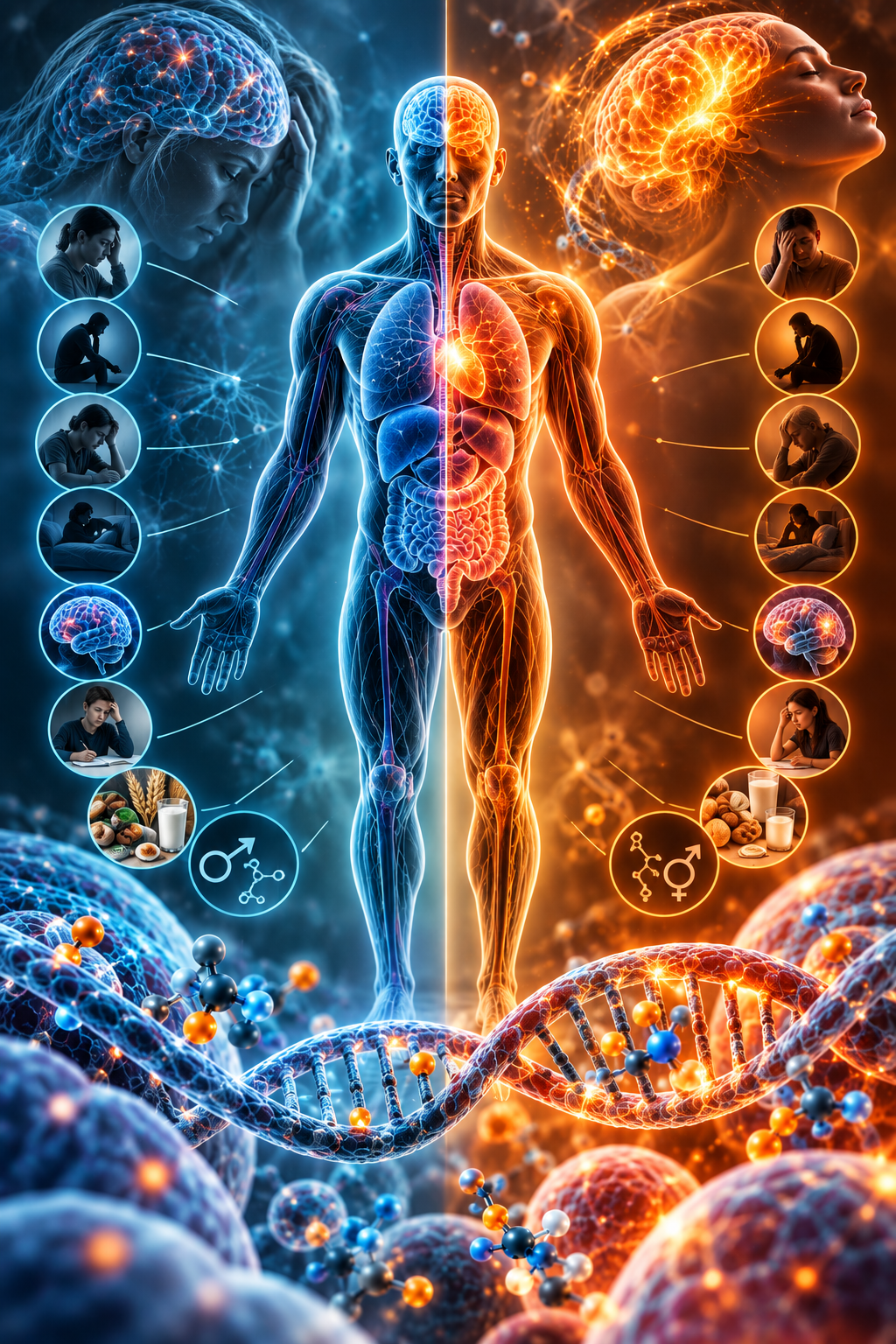
Therefore, broad labels such as “under-methylator” and “over-methylator” should be interpreted cautiously. A patient’s symptoms deserve an appropriate medical evaluation rather than automatically being attributed to a presumed global methylation state.
Is Methylation Part of Detoxification?
Yes—but this requires clarification.
Methylation participates in the metabolism of certain compounds. The liver uses multiple biochemical systems to modify and eliminate substances from the body. But methylation is only one component of an enormously complicated network.
Your body also uses processes including:
- Oxidation
- Reduction
- Hydrolysis
- Glucuronidation
- Sulfation
- Acetylation
- Glutathione conjugation
Calling methylation a “detox pathway” is therefore not entirely wrong. But describing methylation supplements as a way to “detox the body” dramatically oversimplifies human physiology. The liver and kidneys continuously process and eliminate metabolic products and foreign compounds. There is no single supplement that switches detoxification on.
Methylation and Neurotransmitters
Methylation pathways also intersect with brain chemistry. SAM participates in methyl-transfer reactions involving many molecules, and folate and B12 metabolism are important for normal neurological function.
This has sometimes been expanded into claims that a methylation profile can precisely explain someone’s serotonin, dopamine or mental-health symptoms. That interpretation goes beyond what routine clinical testing can establish.
Mood, cognition and neurological function are influenced by many interacting factors. These may include:
- Genetics
- Sleep
- Hormones
- Medications
- Nutrition
- Medical conditions
- Psychological health
- Substance use
- Neurological disease
- Environmental factors
Methylation biology is part of this picture. It is not the entire picture.
Methylation, Hormones and Metabolism
Hormones are also metabolized through complex enzymatic pathways. Methylation participates in several metabolic pathways, including the metabolism of catechol estrogens and catecholamine neurotransmitters through the enzyme catechol-O-methyltransferase (COMT).
But hormone balance cannot be reduced to methylation alone. Hormone production, transport, receptor activity, liver metabolism, kidney function, body composition, medications, age and other physiological factors all matter.
For patients receiving hormone therapy, clinical monitoring should therefore focus on the complete medical picture rather than attempting to manipulate methylation pathways in isolation.
Can Nutrition Support Normal Methylation?
Yes. Normal methylation depends partly on adequate nutrition. Important nutrients include:
- Folate (Vitamin B9). Found in foods such as leafy green vegetables, legumes, asparagus and fortified grains.
- Vitamin B12. Naturally found primarily in animal-derived foods such as meat, fish, eggs and dairy products, as well as fortified foods.
- Vitamin B6. Found in poultry, fish, potatoes, chickpeas and many other foods.
- Riboflavin (Vitamin B2). Found in eggs, dairy products, meats and some vegetables and fortified foods.
- Choline. Found in foods including eggs, meat, fish, soybeans and certain vegetables.
- Methionine. An essential amino acid present in dietary protein.
The goal is not to consume the largest possible amount of every methyl donor. The goal is to maintain adequate nutritional status.
Do You Need a “Methylation Supplement”?
Most people do not need a supplement simply because methylation is important. That would be similar to saying everyone needs iron supplements because iron is essential.
Iron is essential. Iron deficiency is harmful. But excessive iron can also be harmful. The same principle applies broadly to nutrition.
Supplementation makes the most sense when there is:
- A documented deficiency
- Increased physiological need
- Inadequate dietary intake
- Malabsorption
- A medication-related issue
- A specific medical indication
- Another clinically reasonable reason for supplementation
Supplements should solve a problem rather than create a biochemical experiment.
Can Too Much Supplementation Be a Problem?
Yes. More methylation support is not necessarily better. Excessive supplementation can create its own problems—for example:
- High folate (vitamin B9) intake can complicate recognition of vitamin B12 deficiency
- Excessive vitamin B6 can cause peripheral neuropathy
- Vitamin B12 has a wide safety margin and no established upper intake limit, but high-dose supplementation is not necessarily beneficial when deficiency is absent and can occasionally cause adverse effects such as acneiform skin eruptions
- High-dose niacin (vitamin B3) can affect the liver and glucose metabolism
- Supplemental TMG (trimethylglycine) may increase LDL cholesterol in some individuals
Supplements should therefore be selected based on nutritional status, laboratory findings, diet, medications and the patient’s overall clinical picture rather than simply attempting to “increase methylation.”
This is one reason supplementation should be considered in context. If laboratory abnormalities or significant symptoms are present, identifying the underlying problem is usually more useful than simply adding multiple supplements.
How Do You Know If Your Methylation Is Healthy?
There is no single routine blood test that provides a comprehensive score of “methylation health.”
Depending on the clinical situation, useful testing may include:
- Complete blood count
- Vitamin B12
- Folate
- Methylmalonic acid
- Homocysteine
- Kidney function
- Liver function
- Other testing based on symptoms and medical history
Genetic testing may occasionally provide additional information. Epigenetic testing can measure patterns of DNA methylation, but these tests answer a different question. They do not simply tell you whether your body has “enough methylation.”
Methylation Testing vs. Epigenetic Age Testing
These concepts are often confused.
A homocysteine or nutrient evaluation examines aspects of metabolism related to methylation pathways. An epigenetic-age test examines methylation patterns at specific locations on DNA and applies an algorithm to those patterns.
These are not interchangeable tests. An epigenetic clock does not diagnose folate deficiency. A homocysteine level does not measure biological age.
Understanding what a test actually measures is essential before deciding what its result means.
Methylation and Healthy Aging
Methylation is particularly interesting in longevity medicine because DNA methylation patterns change with age. Researchers are studying whether these changes can help measure biological aging and whether lifestyle or medical interventions can influence them.
But the practical lesson should not be: take more methyl donors to slow aging.
The better lesson is that aging involves complex changes in cellular regulation. Healthy aging still depends heavily on established factors such as:
- Maintaining muscle mass
- Regular resistance training
- Cardiovascular exercise
- Healthy body composition
- Adequate nutrition
- Good sleep
- Avoiding tobacco
- Managing blood pressure
- Maintaining metabolic health
- Treating medical conditions appropriately
A supplement should not replace the fundamentals.
The Bigger Picture
Methylation is a remarkable example of how interconnected human biology really is.
Nutrition interacts with metabolism. Metabolism interacts with gene regulation. Gene regulation interacts with cellular function. Cellular function changes throughout aging.
But these relationships are not simple. One nutrient does not control methylation. One gene does not determine methylation. One laboratory test does not measure methylation. And one supplement cannot optimize the thousands of methylation reactions occurring throughout the body.
That complexity should not make methylation less interesting. It makes understanding it correctly even more important.
A Practical Approach to Methylation
Instead of trying to “boost methylation,” a more medically sound approach is:
- Start with nutrition. Consume a varied diet providing adequate folate, B12, B6, riboflavin, choline, protein and other essential nutrients.
- Identify true deficiencies. If deficiency is suspected, appropriate laboratory testing can help determine whether supplementation is necessary.
- Interpret homocysteine in context. An elevated value has multiple potential causes and should not automatically be attributed to MTHFR.
- Do not panic about an MTHFR result. Common MTHFR variants are common genetic differences, not automatically diseases.
- Use supplements for a reason. “Methylated” does not necessarily mean superior.
- Focus on the whole patient. Symptoms, medical history, medications, nutrition, laboratory findings and health goals matter more than any single genetic variant.
- Remember the goal. The goal is not maximum methylation. The goal is healthy cellular function.

The Bottom Line
Methylation is essential to human life. It contributes to:
- DNA regulation
- Cell division
- Protein function
- Neurotransmitter metabolism
- Homocysteine metabolism
- Epigenetic regulation
- Numerous other cellular processes
But methylation should not be viewed as a metabolic switch that simply needs to be turned up. Healthy biology depends on regulation and balance.
Folate, vitamin B12 and other nutrients are important components of methylation pathways. MTHFR variants can influence those pathways. Homocysteine can provide useful clinical information in selected circumstances. DNA methylation can even help researchers study biological aging.
But none of these factors should be interpreted in isolation.
The emerging science of methylation and epigenetics is giving us a fascinating look at how nutrition, genetics, environment and aging interact.
And perhaps the most important lesson is this: your DNA provides the blueprint—but how your cells use that blueprint is a dynamic process influenced by biology, environment and time.
Have questions about your bloodwork, MTHFR results or nutrient status? R2 Medical Clinic offers physician-led evaluation of nutrition, hormone status and metabolic health in Denver, Wheat Ridge/Arvada and Castle Rock.
Schedule a consultation or call (720) 640-2333.
Related Anti-Aging Resources
What Does “Anti-Aging” Actually Mean? A Physician’s Look at Longevity, Biological Age & Healthspan
Frequently Asked Questions
What is methylation?
Methylation is a chemical process in which a methyl group—one carbon atom attached to three hydrogen atoms—is transferred to another molecule. Methylation occurs throughout the body and participates in DNA regulation, protein function, metabolism and many other biological processes.
Is methylation the same as epigenetics?
No. Methylation is a chemical process. DNA methylation is one important epigenetic mechanism, but epigenetics also involves other mechanisms that regulate gene activity.
Is more methylation better?
No. Appropriate methylation depends on the molecule, tissue and location involved. Both excessive and insufficient methylation at specific locations can potentially affect biological function.
What nutrients are important for methylation?
Folate, vitamin B12, vitamin B6, riboflavin, choline, betaine and methionine participate in interconnected metabolic pathways related to methyl-group metabolism.
What is MTHFR?
MTHFR is a gene that provides instructions for an enzyme involved in folate metabolism. Common variants include C677T and A1298C.
Is an MTHFR mutation dangerous?
Common MTHFR variants are extremely common and usually should not be thought of as diseases themselves. Their clinical significance depends on the specific variant and the individual’s overall medical and nutritional context. Rare severe MTHFR deficiency is a different condition from the common polymorphisms discussed online.
Can people with MTHFR variants use folic acid?
Yes. People with common MTHFR variants can process folic acid. Current CDC guidance does not recommend avoiding folic acid simply because someone has a common MTHFR variant.
Do I need methylfolate if I have MTHFR?
Not necessarily. The presence of a common MTHFR variant alone does not establish that methylfolate supplementation is necessary.
What is homocysteine?
Homocysteine is an amino acid produced during methionine metabolism. It can be recycled into methionine or enter other metabolic pathways. Folate, vitamin B12 and vitamin B6 are among the nutrients involved in its metabolism.
Does high homocysteine mean I have poor methylation?
Not necessarily. Elevated homocysteine has several potential causes, including nutritional deficiencies, kidney dysfunction, genetics, medications and other medical factors.
Should everyone have MTHFR genetic testing?
No. Routine MTHFR testing is generally not recommended for the general population, and professional genetics guidance does not recommend it as part of routine thrombophilia evaluation.
Are methylated vitamins better?
Not automatically. Certain forms may be appropriate for particular patients, but the word “methylated” does not by itself make a supplement more effective or medically necessary.
Can methylation affect biological age?
Patterns of DNA methylation change with aging and are used to construct epigenetic clocks. These tests are promising research tools, but they should not be interpreted as precise measurements of the age of every organ or as proof that aging has been reversed.
Can I improve methylation through lifestyle?
Adequate nutrition supports normal one-carbon metabolism, while overall lifestyle can influence health and epigenetic patterns. However, there is currently no validated lifestyle formula that simply “optimizes methylation” throughout the body.
About the Medical Reviewer
Erik Natkin, DO, is the founder of R2 Medical Clinic, a physician-led medical practice serving Denver, Wheat Ridge/Arvada and Castle Rock, Colorado. His clinical practice includes individualized hormone optimization, physician-supervised medical weight management, peptide therapy and other areas of wellness medicine.
This article is intended for educational purposes only and does not constitute medical advice, diagnosis or treatment. Nutritional requirements, laboratory interpretation and the clinical significance of genetic variants differ among individuals. Supplements should not be used to diagnose or treat presumed methylation abnormalities without appropriate medical evaluation. Individuals who are pregnant, may become pregnant, have known nutritional deficiencies, take prescription medications or have significant medical conditions should discuss supplementation and testing with a qualified healthcare professional.
Medical References
- National Institutes of Health, Office of Dietary Supplements. Folate: Fact Sheet for Health Professionals.
- National Institutes of Health, Office of Dietary Supplements. Vitamin B12: Fact Sheet for Health Professionals.
- Centers for Disease Control and Prevention. MTHFR Gene Variant and Folic Acid Facts. Updated 2026.
- National Human Genome Research Institute. Epigenetics. Genetics Glossary.
- Crider KS, Yang TP, Berry RJ, Bailey LB. Folate and DNA methylation: a review of molecular mechanisms and the evidence for folate’s role. Advances in Nutrition. 2012;3(1):21–38.
- Horvath S, Raj K. DNA methylation-based biomarkers and the epigenetic clock theory of ageing. Nature Reviews Genetics. 2018;19:371–384.
- Field AE, Robertson NA, Wang T, Havas A, Ideker T, Adams PD. DNA methylation clocks in aging: categories, causes, and consequences. Molecular Cell. 2018;71(6):882–895.
- Hickey SE, Curry CJ, Toriello HV. ACMG Practice Guideline: lack of evidence for MTHFR polymorphism testing. Genetics in Medicine. 2013;15(2):153–156.
- Froese DS, Fowler B, Baumgartner MR. Vitamin B12, folate, and the methionine remethylation cycle—biochemistry, pathways, and regulation. Journal of Inherited Metabolic Disease. 2019;42:673–685.