What Does "Anti-Aging" Actually Mean? A Physician's Look at Longevity, Biological Age & Healthspan
A physician's look at anti-aging medicine, biological age testing, epigenetic clocks, telomeres and healthspan — what the evidence actually shows and doesn't.
Erik Natkin, DO • 20 min read
Medically reviewed by Erik Natkin, DO — Founder, R2 Medical Clinic, Denver, Colorado
Last medically reviewed: September 2026
Can medicine really make us younger—or are we asking the wrong question?
The term anti-aging is everywhere.
Hormone therapy is described as anti-aging. Weight loss is described as anti-aging. Peptides, supplements, exercise programs, nutritional strategies and countless other treatments are marketed under the same umbrella.
But there is a fundamental question that is often overlooked: what exactly does “anti-aging” mean?
Does it mean living longer?
Does it mean slowing the biological processes associated with aging?
Does it mean preventing diseases that become more common as we get older?
Does it mean maintaining the energy, strength, mobility, sexual health, cognitive function and independence that we associate with being younger?
Or does it simply mean feeling younger?
These are very different goals. And scientifically, the distinction matters.
Can We Actually Stop Aging?
At this point, no.
There is currently no medication or medical treatment that has been proven to stop or reverse the human aging process.
That does not mean aging research is unscientific. Quite the opposite.
An entire field known as geroscience investigates the biological mechanisms associated with aging and whether modifying those mechanisms could eventually delay age-related disease and functional decline.
Researchers are studying processes including cellular senescence, chronic inflammation, epigenetic changes, mitochondrial dysfunction, altered nutrient sensing, changes in cellular communication, loss of proteostasis and other biological processes associated with aging.
But there is an enormous difference between:
“This biological pathway is associated with aging.”
and
“We have proven that modifying this pathway makes humans live longer or reverses aging.”
That second statement requires much stronger evidence. And we are not there yet.
There Are Some Intriguing Clues
The science is not completely negative.
There is evidence suggesting that at least some biological processes associated with aging may be modifiable.
One interesting example comes from the CALERIE randomized clinical trial studying calorie restriction in healthy adults.
Participants assigned to calorie restriction achieved an average reduction in calorie intake of approximately 12%. Researchers subsequently examined several measures intended to estimate biological aging.
One DNA-methylation measure suggested approximately a 2–3% slowing in the measured pace of aging over two years. Other measures of biological age did not demonstrate significant changes.
That’s interesting. But it does not demonstrate that these participants will live longer. It does not demonstrate that aging stopped. And it certainly does not demonstrate that they became younger.
This illustrates one of the biggest challenges in longevity medicine: how do we actually measure aging?
Chronological Age and Biological Age Are Not the Same Thing
Your chronological age is easy to determine. It is simply the amount of time since you were born.
Biological age is much more complicated.
Two people can both be 60 years old and have dramatically different levels of cardiovascular fitness, muscle mass, metabolic health, cognitive function, mobility and chronic disease.
One may remain physically active, independent and relatively free of disease. The other may have obesity, type 2 diabetes, cardiovascular disease, severe deconditioning and significant functional limitations.
Chronologically, they are the same age. Biologically and functionally, however, they may look very different.
Telomeres and the Idea of “Genetic Age”
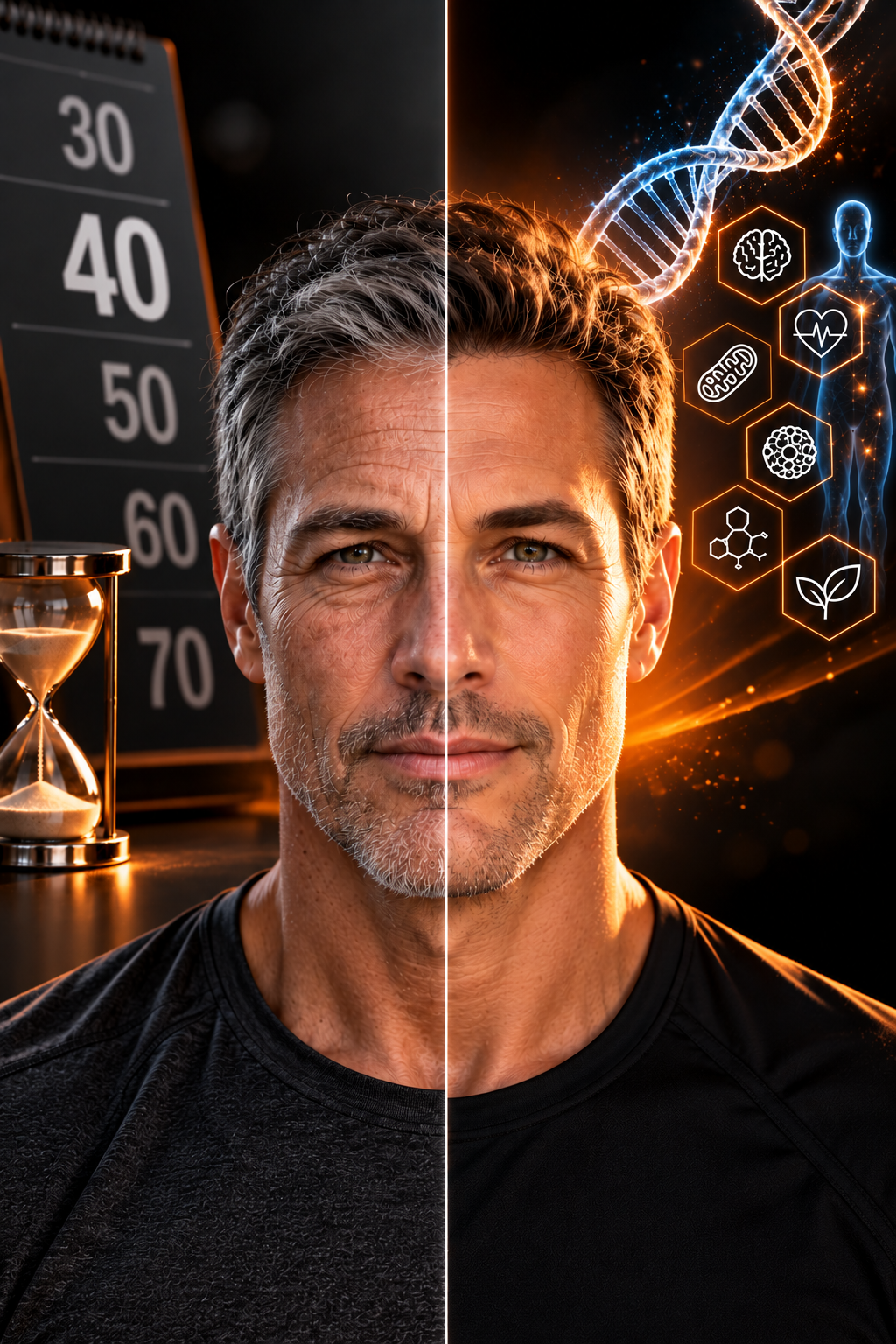
Scientists have spent decades trying to develop objective ways to measure how quickly the body is aging. One area of research involves telomeres.
Telomeres are protective structures located at the ends of chromosomes. They are sometimes compared with the plastic tips on shoelaces because they help protect chromosomes from deterioration and inappropriate fusion with neighboring chromosomes.
Each time many of our cells divide, telomeres generally become shorter. When telomeres become critically short, cells may stop dividing, enter cellular senescence or undergo cell death. For this reason, telomere shortening is considered one of the biological features associated with aging.
At a population level, shorter telomeres have also been associated with aging and a number of age-related diseases. This has contributed to the popular idea that measuring telomeres can reveal someone’s “genetic age.”
The science is considerably more complicated. Telomere length varies substantially between individuals and is influenced by genetics, age, cell type, environmental exposures, lifestyle factors and disease. Different tissues within the same person may also have different telomere dynamics.
Most importantly, knowing someone’s telomere length does not allow us to reliably say: “You are chronologically 55, but genetically you are 43.” That level of individual precision simply isn’t supported by current evidence.
Epigenetic Clocks
Another rapidly developing area of aging research involves epigenetics.
Your DNA sequence itself does not necessarily change as you age. What does change are some of the chemical signals that help regulate how genes are expressed. One of the best studied is DNA methylation.
Researchers have identified predictable patterns of DNA methylation that change with age. Using hundreds or sometimes thousands of these sites, mathematical models known as epigenetic clocks can generate estimates associated with chronological age, biological aging or the pace of aging.
Some newer models attempt to predict more than someone’s birthday. They incorporate methylation patterns associated with mortality risk, physiological decline or the rate at which aging-related changes appear to be occurring.
This science is fascinating and increasingly sophisticated. But there is an important limitation: a biological-age test is not the same thing as measuring how many years someone actually has left—or proving that an intervention made them younger.
Different aging clocks can produce different results in the same individual. Researchers are also still determining which measurements best predict meaningful outcomes such as disease, disability, healthspan and longevity.
This becomes especially important when evaluating anti-aging treatments. If a supplement, medication, diet or other intervention changes a biological-aging biomarker, that is scientifically interesting. But changing a biomarker is not automatically the same as demonstrating that the treatment slowed aging, prevented disease or extended life.
Can You Really Test Your Biological Age?
This naturally leads to another question: can you take a test that tells you how old your body really is?
Not with the precision that many people assume.
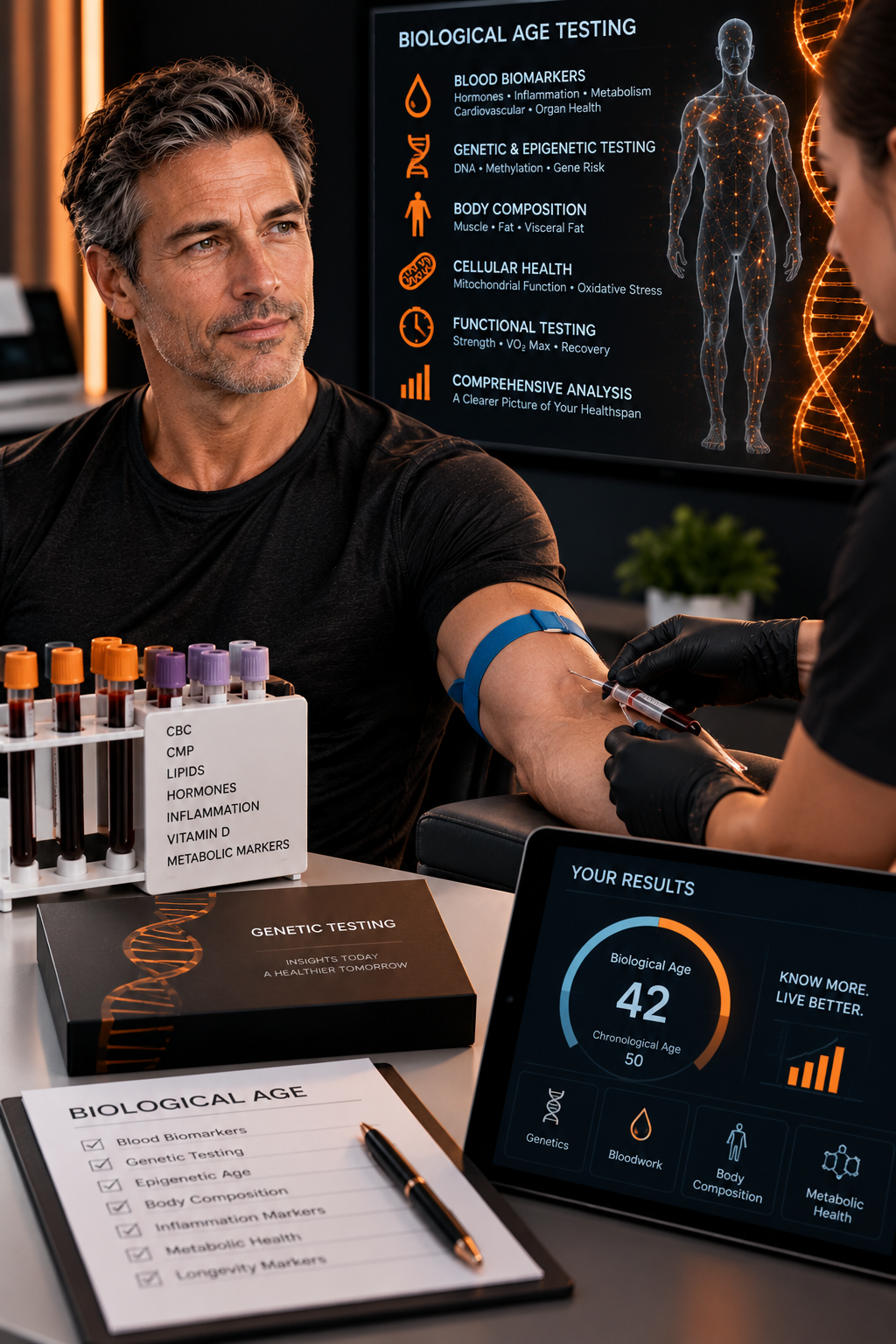
There are now commercial tests that estimate biological age using DNA methylation, telomere length, blood biomarkers or combinations of different measurements. These tests are based on legitimate areas of scientific research.
But an estimate of biological age should not be confused with an exact measurement of how “old” your body is. There is currently no universally accepted clinical test that can definitively tell a patient: “Your body is exactly 7.3 years younger than your chronological age.”
Different approaches measure different aspects of aging.
DNA Methylation and Epigenetic Clocks
Epigenetic clocks are among the most extensively studied approaches. They analyze patterns of DNA methylation and compare them with patterns observed across populations.
Some clocks are very good at estimating chronological age. Others have been designed to correlate with mortality risk, disease or the pace of biological aging.
But different clocks may give the same person different biological-age estimates. A change in an epigenetic clock following an intervention is therefore interesting, but it does not automatically prove that the person will live longer or remain healthier.
Telomere Testing
Telomere length can also be measured. Shorter telomeres are associated with aging and several age-related conditions at the population level.
However, telomere length varies significantly between people, tissues and cell types. That makes telomere testing scientifically interesting but considerably less useful as a stand-alone measurement of an individual’s biological age.
Blood and Metabolic Biomarkers
Other approaches use combinations of familiar clinical measurements such as:
- Glucose and hemoglobin A1C
- Insulin resistance
- Cholesterol and triglycerides
- Inflammatory markers
- Kidney and liver function
- Blood pressure
- Body composition
These measurements may not generate a glamorous “biological age,” but many have something extremely important that some aging clocks do not: we already know that they are associated with meaningful health outcomes.
For a physician, knowing that a patient has hypertension, diabetes, severe insulin resistance or significant visceral obesity may be far more actionable than knowing that an algorithm estimates the patient to be biologically six years older than their chronological age.
Physical Function May Tell Us Something Important Too
Some of the most useful information about healthy aging may not come from a DNA test at all. Measures such as:
- Cardiovascular fitness
- Muscle strength
- Muscle mass
- Body composition
- Walking speed
- Balance
- Mobility
- Grip strength
- Exercise capacity
can provide important information about health and physical function.
VO₂ max, a measure of cardiorespiratory fitness, is particularly interesting because higher cardiorespiratory fitness is strongly associated with better cardiovascular outcomes and lower mortality risk.
Muscle strength and physical function also become increasingly important as we age.
Again, these measurements do not tell us someone’s literal biological age. But they may tell us something more useful: how well is this person functioning—and where are the opportunities for improvement?
There Probably Isn’t One “Biological Age”
Perhaps this is the biggest limitation of the entire concept.
A person could have excellent cardiovascular fitness but poor metabolic health. Another could have favorable blood biomarkers but very little muscle mass. Someone could have a favorable epigenetic-age measurement while simultaneously having hypertension, visceral obesity or poor cardiovascular fitness.
So which measurement represents their true biological age? Probably none of them by itself.
Aging affects virtually every biological system in the body. It is unlikely that such a complicated process can be perfectly summarized by one number.
Biological-age testing may eventually become an important clinical tool. It is already extremely valuable in aging research. But today, these tests should generally be viewed as pieces of information rather than definitive measurements of how old someone truly is.
Instead of focusing exclusively on “What is my biological age?” a more useful clinical question may be: “How healthy and functional am I for my age, what risks can we identify, and which of those risks can we realistically improve?”
That is a question medicine can do something about today.
Maybe We Should Be Talking About Healthspan
This brings us to a much more useful concept: healthspan.
Lifespan is simply how long you live. Healthspan generally refers to the portion of life spent in relatively good health and with preserved function.
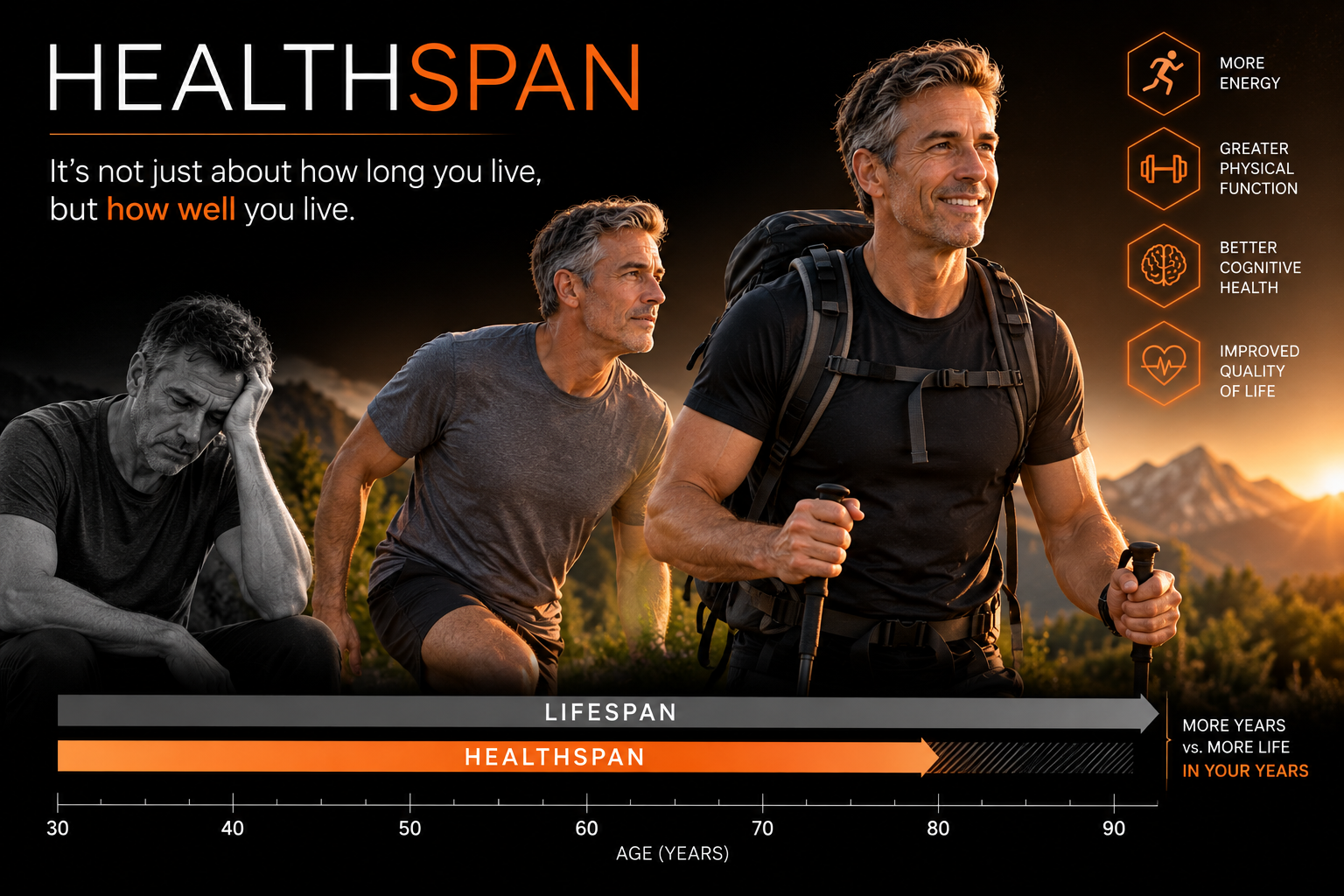
The goal isn’t necessarily to turn an 80-year-old into a 40-year-old. Perhaps the more realistic goal is helping an 80-year-old remain active, independent, cognitively engaged and capable of doing the things that matter to them.
The World Health Organization uses a similar framework. Healthy aging focuses on maintaining the functional ability that enables well-being in older age—including mobility, cognition, independence, relationships and participation in society.
From this perspective, the question changes. Instead of asking “How do I stop getting older?” we might ask “How do I remain healthier and more functional as I get older?”
That is a question medicine can address much more effectively.
If You Feel Younger, Is That Anti-Aging?
This is where the definition becomes partly philosophical.
Imagine a 55-year-old patient who is tired, sedentary, overweight and experiencing poor sleep, decreased strength and reduced sexual function.
After appropriate medical evaluation, lifestyle changes and treatment of identifiable medical problems, that person loses excess body fat, improves cardiovascular fitness, gains muscle, sleeps better and becomes more active.
Perhaps sexual function improves. Perhaps motivation improves. Perhaps everyday activities become easier. Perhaps that person starts hiking, skiing, traveling or exercising again.
Did we reverse their chronological age? Obviously not.
Did we prove that their cellular aging process reversed? Probably not.
But did we restore some of the function and quality of life commonly associated with being younger? Potentially, yes.
Is that “anti-aging”? That depends entirely on how we define the term.
Treating Disease Is Not Necessarily Reversing Aging
Consider obesity and type 2 diabetes.
Obesity is associated with increased risk of type 2 diabetes, cardiovascular disease, multiple other medical complications and premature mortality.
Meaningful weight loss can improve blood glucose, blood pressure, lipid abnormalities and numerous other metabolic risk factors. In some patients, substantial weight loss can even lead to remission of type 2 diabetes.
Suppose a patient loses substantial excess weight, improves their metabolic health, becomes physically active and achieves remission of type 2 diabetes through a medically supervised weight-loss program.
That may substantially alter the person’s future health trajectory. But did we treat aging? Not exactly. We treated diseases and risk factors that could otherwise contribute to illness, disability and potentially premature death.
That distinction matters. Preventing someone from dying prematurely is not necessarily the same thing as extending the maximum human lifespan. Both outcomes are valuable. But scientifically, they are very different.
The Same Problem Exists With Hormone Therapy
Hormones provide another good example.
Hormone levels and endocrine physiology change throughout life. Appropriately prescribed hormone therapy can have important clinical benefits in selected patients.
For women, menopausal hormone therapy can be highly effective for vasomotor symptoms and genitourinary symptoms of menopause, can help prevent bone loss and fractures, and reduce cardiovascular risk in appropriately selected patients. Treatment should be individualized according to symptoms, age, timing, medical history and individual risks.
Testosterone therapy can also provide benefits for appropriately diagnosed men and women with hypogonadism. However, the fact that testosterone levels may decline with age does not mean every older man or woman should receive testosterone. Diagnosis requires appropriate clinical evaluation, compatible symptoms and appropriate laboratory testing.
Most importantly: hormone therapy should not be presented as a proven method of reversing aging. Treating a documented hormonal problem and improving symptoms is legitimate medicine. Calling that treatment proof that we have reversed aging is something entirely different.
A patient receiving appropriate treatment may experience improved sexual function, body composition, menopausal symptoms or other specific outcomes depending on the therapy and clinical circumstances. They may even say, “I feel younger.” That experience can be meaningful without requiring us to claim that their biological age has actually reversed.
Feeling Younger and Becoming Younger Are Not the Same Thing
This may be one of the most important distinctions in the entire anti-aging conversation.
Medicine and lifestyle interventions may help someone:
- Improve strength and preserve muscle
- Improve cardiovascular fitness
- Reduce excess body fat
- Improve metabolic health
- Treat appropriate hormonal deficiencies or menopausal symptoms
- Improve sexual function
- Improve sleep
- Improve mobility
- Improve symptoms that interfere with daily life
- Reduce certain risks for chronic disease
Those improvements can be enormously meaningful. A person may genuinely say, “I feel ten years younger.” That experience shouldn’t be dismissed.
But medically, feeling younger does not mean that we have literally reversed ten years of biological aging.
Perhaps that distinction provides a better way to think about anti-aging medicine. The goal does not have to be making an unrealistic promise about turning back someone’s biological clock. The goal can be helping someone regain or preserve some of the health, function and quality of life that they associate with being younger.
Exercise May Be the Perfect Example
Few people would call exercise a revolutionary anti-aging drug.
Yet regular physical activity is one of the most consistently supported strategies for maintaining health and function as we age.
Resistance training helps preserve strength, muscle mass and physical function. Aerobic exercise improves cardiovascular fitness and metabolic health. Exercise can improve physical capacity at almost any adult age.
Does exercise stop aging? No. But it can help prevent or reduce some of the physical decline and chronic disease that we commonly associate with aging.
Again, the distinction is subtle but important. Perhaps the goal isn’t to stop age. Perhaps it is to reduce avoidable decline with age.
Longevity Is Not Just About Adding Years
There is another important question in longevity medicine: would simply living longer be enough if those additional years were spent sick, frail and dependent on others?
For many people, longevity isn’t simply about maximizing the number of birthdays. It is about maintaining the ability to live. To travel. To exercise. To work if you choose. To maintain relationships. To remain sexually active if that is important to you. To think clearly. To maintain muscle, mobility and independence. To participate in the activities that give your life meaning.
This is why healthspan may ultimately be more meaningful than lifespan.
Living to 100 sounds appealing. Being healthy, functional and independent at 90 may be the more meaningful objective.
So Is “Anti-Aging Medicine” Real?
That depends entirely on what we mean by anti-aging.
If anti-aging means stopping the biological aging process or reliably making humans biologically younger, we do not currently have convincing clinical evidence that medicine can accomplish that.
If anti-aging means treating disease, improving metabolic health, maintaining muscle and cardiovascular fitness, addressing appropriate hormonal problems, reducing modifiable health risks and preserving physical and mental function as we grow older, then there is a great deal that modern medicine can do.
Perhaps “healthy aging,” “healthspan medicine” or “longevity medicine” is a more scientifically accurate description.
But even the term longevity deserves some caution. Improving health and reducing the risk of premature disease is not necessarily the same thing as extending the fundamental limits of human lifespan.
The distinction isn’t merely semantics. It changes what patients should expect from treatment.
The Goal Shouldn’t Be Immortality
The goal of medicine should not be to sell the fantasy that aging can be eliminated. Aging is part of human biology.
The more realistic goal is to identify the factors that are accelerating disease and functional decline—and address the ones we can actually change. That may mean:
- Treating obesity
- Managing diabetes, hypertension or abnormal cholesterol
- Maintaining muscle and strength
- Improving cardiovascular fitness
- Treating sleep disorders
- Addressing appropriate hormonal deficiencies
- Treating menopausal symptoms when indicated
- Improving nutrition
- Stopping smoking
- Addressing sexual health
- Maintaining mobility
- Protecting bone health
- Periodically reassessing health as physiology changes
- Hormone optimization
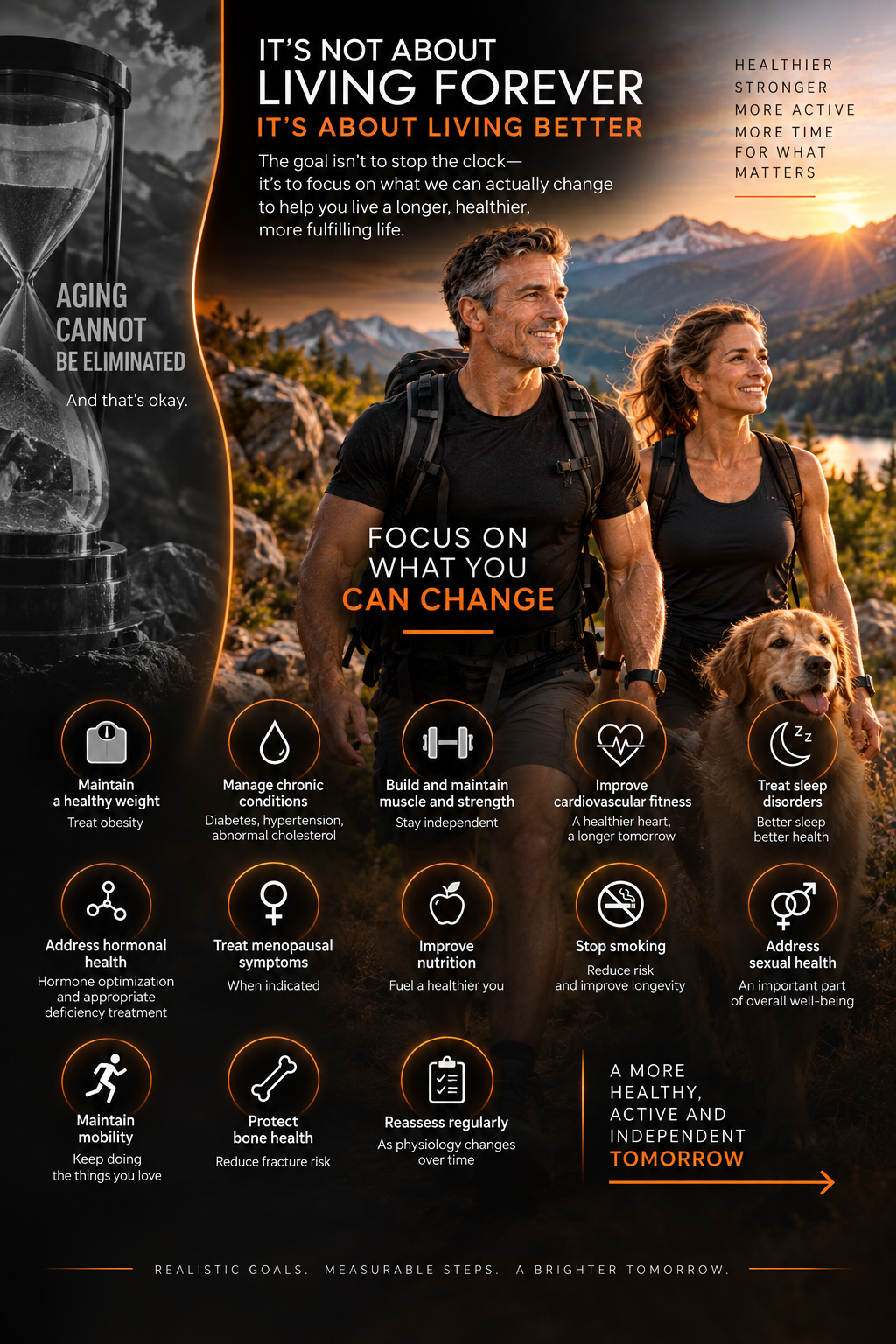
None of these interventions makes someone immortal. None stops the passage of time. But collectively, they may help someone spend more of their life healthy, active and independent. And that is something medicine has considerably more evidence for.
Maybe “Anti-Aging” Is a Philosophy
Perhaps anti-aging is ultimately less about fighting birthdays and more about refusing to assume that every decline in health or function is simply something we must accept because we’re getting older.
Not every symptom is aging. Not every decline is inevitable. And not every intervention marketed as anti-aging actually changes aging.
Those three ideas can coexist.
We should remain scientifically skeptical of claims that a medication, peptide, supplement or procedure can reverse human aging. At the same time, we should recognize that there is tremendous value in identifying treatable problems and helping people maintain their health and function for as long as possible.
Perhaps the best definition of anti-aging isn’t becoming younger. Perhaps it is aging as well as we realistically can.
You cannot stop the clock. But you may be able to influence what your health looks like as that clock continues to move. And perhaps that is a more meaningful definition of anti-aging.
Interested in a healthspan-focused evaluation? R2 Medical Clinic offers physician-led assessment of metabolic health, hormone status, body composition and modifiable risk factors in Denver, Wheat Ridge/Arvada and Castle Rock.
Schedule a consultation or call (720) 640-2333.
Related Anti-Aging Resources
Methylation Explained: Why This Cellular Process Matters for Your Health
Frequently Asked Questions
Can doctors actually reverse aging?
There is currently no medication or medical treatment proven to reverse the human aging process. Researchers are actively studying biological aging and interventions that might influence it, but evidence demonstrating meaningful reversal of human aging or extension of maximum human lifespan is not currently available.
What is biological age?
Biological age is an attempt to describe how the body’s cells, organs and physiological systems are functioning relative to chronological age. Researchers use several different biomarkers and aging clocks, but there is currently no single universally accepted clinical measurement of biological age.
Can a blood or DNA test tell me my biological age?
Several tests can estimate aspects of biological aging using DNA methylation, telomere length or combinations of biomarkers. These are legitimate areas of scientific research, but they should not be interpreted as precise measurements of how old someone’s body actually is.
Are telomeres a measure of biological age?
Telomeres generally shorten with cellular replication and are associated with aging, but telomere length varies considerably among individuals and tissues. Telomere testing alone cannot reliably determine an individual’s biological age.
What is an epigenetic clock?
Epigenetic clocks use patterns of chemical modifications to DNA—particularly DNA methylation—to estimate age-related biological changes. Different clocks measure different aspects of aging and may produce different results in the same individual.
What is healthspan?
Healthspan generally refers to the portion of a person’s life spent in good health and with preserved function. Increasing healthspan focuses on remaining healthy and independent rather than simply increasing total years of life.
Does losing weight reverse aging?
Weight loss does not necessarily reverse biological aging. However, in people with overweight or obesity, clinically meaningful weight loss can improve metabolic health and reduce or improve several obesity-associated diseases and risk factors.
Is hormone therapy anti-aging?
Hormone therapy should not be considered a proven treatment for reversing aging. Hormone therapy can be medically appropriate for specific patients and conditions, including appropriately diagnosed testosterone deficiency and certain symptoms associated with menopause. The goal should be treating the patient and the clinical condition—not claiming to reverse the aging process.
Can exercise slow aging?
Exercise provides substantial health benefits and can help preserve cardiovascular fitness, muscle strength, metabolic health and physical function as people age. Whether that should be called “slowing aging” depends on how aging is defined. Exercise clearly helps reduce some of the disease and functional decline associated with aging.
Are peptides proven to reverse aging?
No peptide therapy has been established as a treatment that reverses human aging. Some peptides and biological pathways are being investigated in aging research, but mechanistic or animal evidence should not be confused with demonstrated improvements in human lifespan or healthspan.
What is the goal of longevity medicine?
A scientifically conservative goal is to maximize healthspan: identify and manage disease, reduce modifiable risk factors, preserve physical and cognitive function, and help patients remain healthy and independent as they grow older.
About the Medical Reviewer
Erik Natkin, DO, is the founder of R2 Medical Clinic, a physician-led medical practice serving Denver, Wheat Ridge/Arvada and Castle Rock, Colorado. His clinical practice includes individualized hormone optimization, physician-supervised medical weight management, peptide therapy and other areas of wellness medicine.
This article is intended for educational purposes and does not constitute individualized medical advice. Treatment decisions should be individualized between a patient and a qualified healthcare professional.
Medical References
- U.S. Food and Drug Administration. Medication Health Fraud for Specific Diseases and Conditions: Anti-Aging Medication Health Fraud.
- Waziry R, et al. Effect of long-term caloric restriction on DNA methylation measures of biological aging in healthy adults from the CALERIE trial. Nature Aging. 2023.
- National Institute on Aging. Research in Context: Can We Slow Aging?
- López-Otín C, et al. Hallmarks of Aging: An Expanding Universe. Cell. 2023.
- Horvath S. DNA methylation age of human tissues and cell types. Genome Biology. 2013.
- Lu AT, et al. DNA methylation GrimAge strongly predicts lifespan and healthspan. Aging. 2019.
- Vaiserman A, Krasnienkov D. Telomere length as a marker of biological age: state-of-the-art, open issues, and future perspectives. Frontiers in Genetics. 2021.
- World Health Organization. Healthy Ageing and Functional Ability.
- American Diabetes Association. Standards of Care in Diabetes—2026.
- The North American Menopause Society. The 2022 Hormone Therapy Position Statement.
- Endocrine Society. Testosterone Therapy in Men With Hypogonadism: Clinical Practice Guideline.
- Endocrine Society. Hormones and Aging: Scientific Statement.
- Momma H, et al. Muscle-strengthening activities and mortality risk: systematic review and meta-analysis. British Journal of Sports Medicine. 2022.
- Mandsager K, et al. Association of cardiorespiratory fitness with long-term mortality among adults undergoing exercise treadmill testing. JAMA Network Open. 2018.