Can You Really Measure Your Biological Age?
What can epigenetic clocks and biological-age tests really tell you? A physician explains the science, the limits, and how to interpret your result.
Erik Natkin, DO • 14 min read
Medically reviewed by Erik Natkin, DO — Founder, Medical Director & Physician, R2 Medical Clinic, Denver, Colorado
Content last reviewed: September 2026
What epigenetic clocks, blood tests and other aging biomarkers can—and cannot—tell you.
You know your chronological age. It is simply the number of years that have passed since you were born.
But are all 50-year-olds biologically 50?
Clearly not.
Two people born on the same day can have dramatically different cardiovascular health, muscle mass, metabolic health, physical fitness, cognitive function and risk of chronic disease. One may remain active and metabolically healthy while another has already developed several age-related medical conditions.
This observation has led to growing interest in biological age—the idea that the condition and function of the body may provide information about aging that chronological age alone cannot.
Today, companies can analyze DNA methylation, blood biomarkers and other biological data and return a remarkably specific result:
“Your biological age is 43.7 years.”
It sounds precise.
But is it really?
The answer is more complicated.
Biological-age testing is a rapidly developing and scientifically interesting field. Some aging clocks have demonstrated meaningful associations with disease, functional decline and mortality. But there is currently no universally accepted test that can determine a person’s “true biological age.”
What these tests provide is an estimate based on a particular set of biomarkers and a particular mathematical model.
Understanding that distinction is essential before deciding what your biological-age result actually means.
What Is Biological Age?
Chronological age measures time.
Biological age attempts to describe how aging is affecting the body.
Aging is not one single biological process. It involves changes across multiple interconnected systems, including at the very least:
- DNA and gene regulation
- Cellular repair
- Mitochondrial function
- Metabolism
- Inflammation
- Immune function
- Cardiovascular health
- Hormonal signaling
- Muscle and physical function
- Brain health
- Kidney and liver function
Researchers have identified numerous measurable changes associated with these processes.
By combining some of those measurements mathematically, scientists can create what are often called biological aging clocks.
Importantly, however, different clocks measure different biological signals.
There is no single biological-age molecule circulating in your bloodstream waiting to be measured.
Chronological Age vs. Biological Age
Chronological age is remarkably simple.
If you were born 50 years ago, you are 50 years old.
Biological age is different because it is a constructed estimate.
Researchers select biomarkers associated with aging and use statistical or machine-learning models to determine how patterns in those biomarkers relate to chronological age, health outcomes, disease or mortality.
That does not literally mean the person’s body is the same as that of an average 44-year-old.
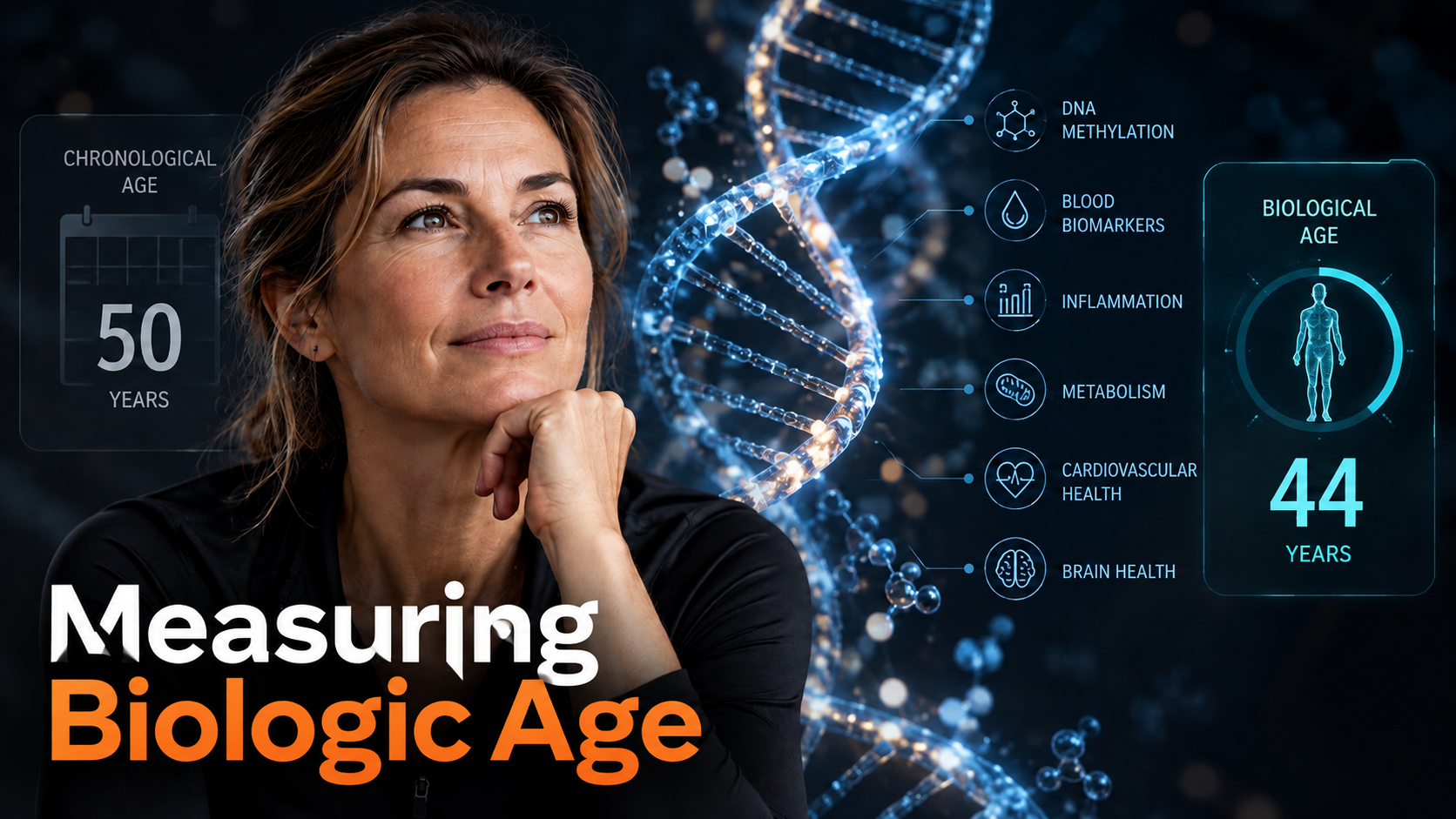
Chronological age: 50
Estimated biological age: 44
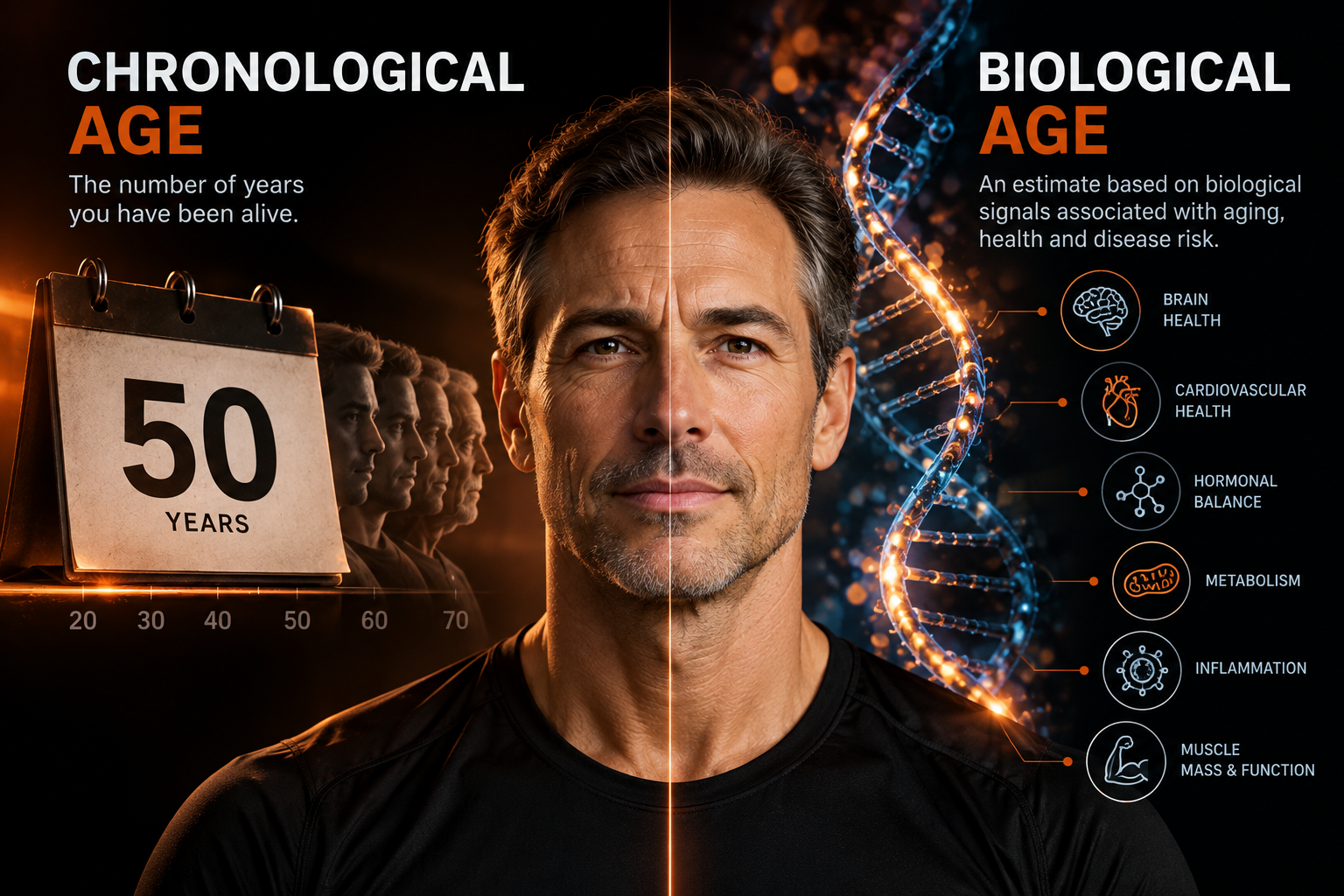
It means that according to that particular algorithm and the biological variables it measures, the person’s profile resembles the reference pattern associated with a younger age or lower aging-related risk.
Another biological-age test could potentially produce a different result.
That is one of the most important limitations to understand.
How Is Biological Age Measured?
There is no single biological-age test.
Several different approaches are being studied.
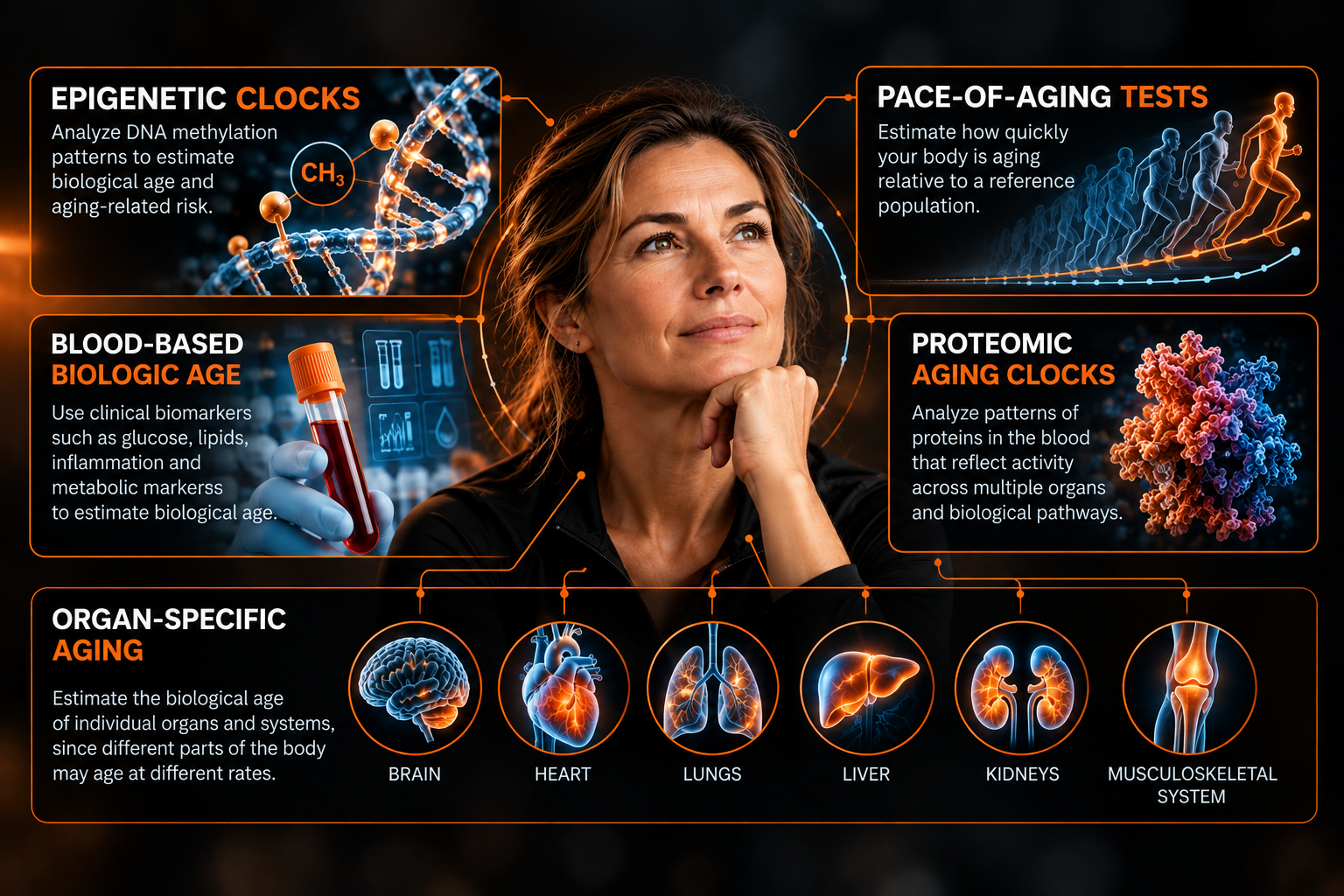
1. Epigenetic Clocks
Epigenetic clocks are probably the most widely discussed biological-age tests.
They typically examine DNA methylation.
DNA methylation involves chemical modifications to DNA that can influence how genes are regulated without changing the underlying DNA sequence itself.
Certain DNA methylation patterns change predictably with age.
Researchers discovered that by measuring methylation at selected locations throughout the genome, mathematical models could estimate chronological age surprisingly well.
These models became known as epigenetic clocks.
The field has evolved considerably since the earliest clocks were developed.
Early clocks were primarily designed to answer:
How accurately can DNA methylation predict chronological age?
These clocks demonstrated that patterns in the epigenome contain a strong aging-related signal.
But accurately predicting someone’s birthday is not necessarily the same thing as measuring their health.
That distinction led to the development of newer models.
Later clocks were designed to incorporate or predict health-related outcomes rather than simply chronological age.
Examples include models such as:
These models may incorporate relationships between DNA methylation and biomarkers associated with physiological function, disease risk or mortality.
Research suggests that some newer-generation clocks correlate more strongly with aging-related health outcomes than clocks designed primarily to predict chronological age.
That potentially makes them more interesting from a health perspective.
But correlation with health outcomes still does not mean the clock directly measures the underlying mechanisms causing aging.
2. Pace-of-Aging Tests
Another approach asks a somewhat different question.
Instead of asking:
“How biologically old are you?”
researchers may ask:
“How quickly are you aging?”
Measures such as DunedinPACE were developed to estimate the pace of biological aging.
Conceptually, this may sometimes be more useful than assigning the body an age.
A result might suggest that physiological aging is occurring faster or slower relative to a reference population.
Again, this is an estimate—not a stopwatch measuring aging inside the body.
3. Blood-Based Biological Age
Biological age can also be estimated using common clinical biomarkers.
Depending on the model, these may include measurements related to:
- Blood glucose
- Hemoglobin A1c
- Lipids
- Kidney function
- Liver function
- Inflammation
- Blood-cell characteristics
- Albumin
- Creatinine
- Metabolic health
- Hormone levels
Algorithms can combine multiple biomarkers to generate a phenotypic age or similar aging estimate.
One advantage of these approaches is that many of the underlying biomarkers are already familiar in clinical medicine.
More importantly, individual abnormalities may themselves be medically actionable.
An elevated hemoglobin A1c may warrant attention regardless of whether an algorithm says your biological age is 42 or 47.
4. Proteomic Aging Clocks
Researchers are also studying patterns involving proteins circulating in the blood.
Because proteins reflect activity across numerous organs and biological pathways, large-scale proteomic datasets may reveal patterns associated with aging.
Proteomic clocks are an active area of research and may eventually provide additional insight into aging across different organ systems.
5. Organ-Specific Aging
One of the most interesting developments in aging research is the recognition that the entire body may not age at the same rate.
Your:
- Heart
- Brain
- Immune system
- Kidneys
- Liver
- Musculoskeletal system
may show different patterns of aging.
Emerging biological clocks are therefore attempting to estimate organ-specific aging rather than assigning one age to the entire body.
This highlights an important problem with the phrase “your biological age.”
There may not actually be one biological age.
So, Can We Really Measure Biological Age?
We can measure biological characteristics associated with aging.
That is scientifically well established.
The harder question is whether those measurements can be combined into one number representing someone’s actual biological age.
At this point, that interpretation goes too far.
An estimate produced by a specific model using specific biomarkers associated with aging or aging-related outcomes.
It is not the biological equivalent of checking your temperature or measuring your blood pressure.
There is currently no universally accepted gold-standard biological-age test.
Why Can Different Tests Give Different Biological Ages?
Imagine sending samples from the same person to several biological-age testing companies.
One might report: Biological age: 44
Another: Biological age: 49
Another: Biological age: 41
Which one is correct?
Possibly none of them—or each may be measuring a somewhat different aspect of aging.
- Measure different biomarkers
- Analyze different DNA methylation sites
- Use different tissues
- Use different algorithms
- Have different reference populations
- Be trained to predict different outcomes
- Respond differently to lifestyle or disease
Research has demonstrated that aging clocks are not interchangeable.
That is why the number should not be interpreted in isolation.
Is a Younger Biological Age Always Better?
Generally, having biomarkers associated with better health and lower disease risk is desirable.
But the interpretation of a biological-age number itself requires caution.
Suppose your chronological age is 55 and a test reports that your biological age is 46.
That sounds encouraging.
But it does not override established medical information.
Conversely, a biological-age result older than your chronological age does not automatically mean something is medically wrong.
- Hypertension
- Diabetes
- Severe obesity
- Abnormal cholesterol
- Poor cardiovascular fitness
those conditions remain clinically important regardless of what the biological-age test reports.
The test may be capturing one dimension of aging while missing others.
Can You Reverse Your Biological Age?
This is where biological-age testing becomes particularly vulnerable to exaggerated claims.
Some studies have demonstrated changes in aging-clock measurements following lifestyle changes or other interventions.
That is scientifically interesting.
But:
Changing an aging biomarker is not necessarily the same thing as reversing human aging.
Those are very different claims.
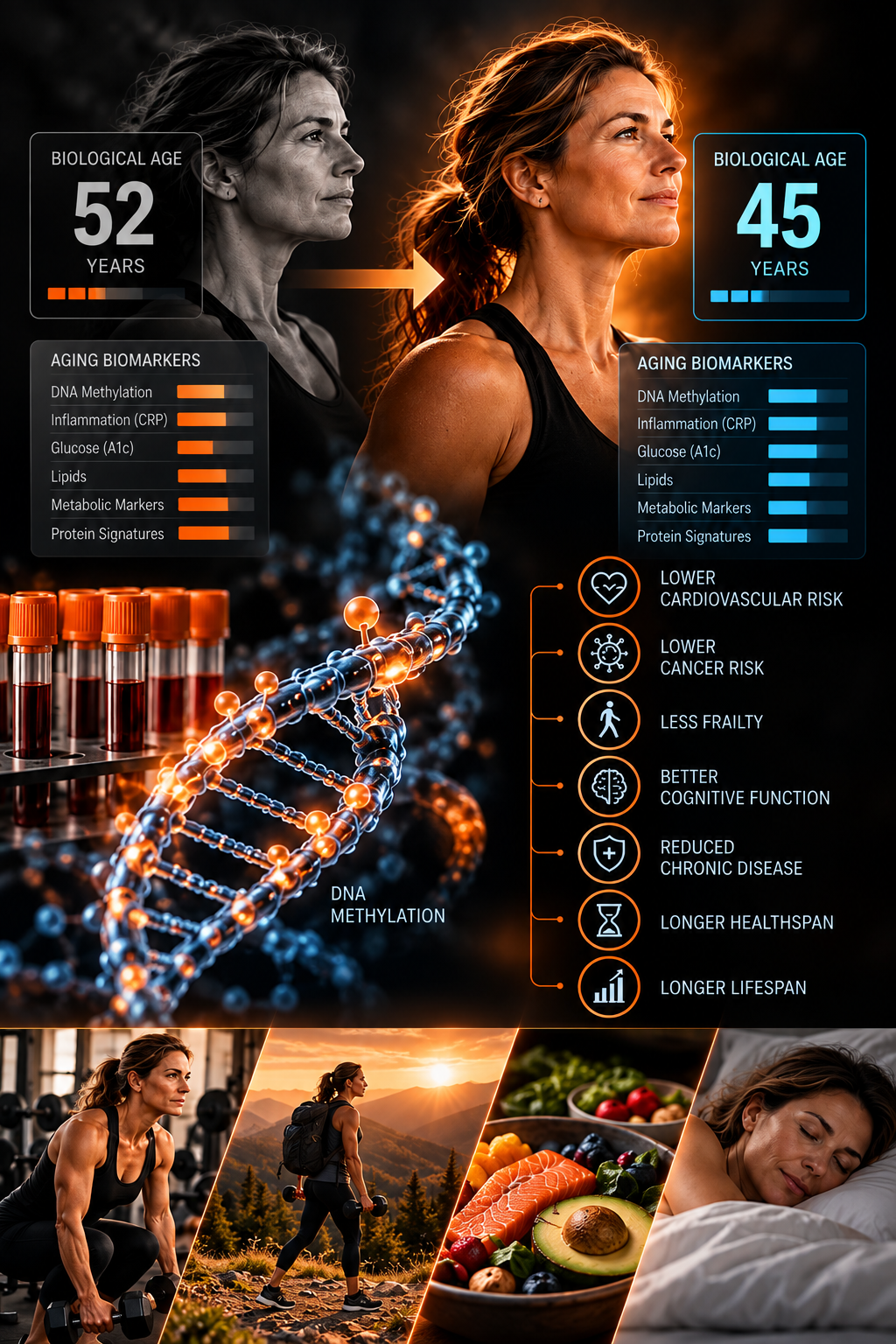
If an intervention changes an epigenetic clock by three years, researchers still need to determine whether that change translates into meaningful improvements such as:
- Lower cardiovascular risk
- Lower cancer risk
- Less frailty
- Better cognitive function
- Reduced chronic disease
- Longer healthspan
- Longer lifespan
This distinction is extremely important.
A laboratory measurement can improve without proving that the underlying aging process has been reversed.
What About Repeat Testing?
Repeat testing may eventually become one of the more useful applications of aging biomarkers.
Rather than focusing entirely on:
“What is my biological age?”
a more interesting question may be:
“Are my aging-related biomarkers improving or worsening over time?”
Longitudinal measurements can potentially reveal changes that a single snapshot cannot.
However, repeat testing introduces another important consideration:
How much of the change is biological, and how much is measurement variability?
Before interpreting a small change as meaningful, the reliability and reproducibility of the specific test must be understood.
A change from biological age 47.2 to 45.8 does not necessarily prove that someone reversed 1.4 years of aging.
Precision in the reported number does not automatically equal biological certainty.
What Factors Influence Biological Aging?
Although biological-age testing remains imperfect, many factors associated with healthier aging are already well established.
These include:
Exercise
Both cardiovascular exercise and resistance training support cardiovascular health, metabolic function, mobility and physical independence.
Muscle Mass and Strength
Maintaining muscle becomes increasingly important with age. Resistance training and adequate nutrition can help preserve strength and function.
Metabolic Health
Insulin resistance, obesity, diabetes and other metabolic abnormalities are strongly associated with chronic disease.
Cardiovascular Risk
Blood pressure, cholesterol, smoking status, physical activity and glucose control remain extremely important.
Nutrition
Adequate protein, micronutrients and an overall nutrient-dense diet support health across multiple physiological systems.
Sleep
Sleep affects metabolic health, immune function, cognition and hormonal regulation.
Smoking and Alcohol
Tobacco exposure remains one of the clearest modifiable contributors to disease and premature mortality. Excessive alcohol consumption also carries significant health risks.
Hormonal Health
Hormonal changes occur throughout adulthood and may influence symptoms, body composition, bone health, sexual function and metabolic health.
Hormone evaluation may be appropriate when symptoms, medical history or clinical findings justify it. Hormone therapy should not, however, be viewed as a proven method for “reversing biological age.”
Preventive Medical Care
Blood pressure screening, appropriate laboratory testing, cancer screening, vaccinations and management of established medical conditions remain fundamental components of healthy aging.
The Number May Be Less Important Than What Is Behind It
This may ultimately be the most important point.
Suppose a test tells you:
Your biological age is 58.
The next question should not simply be:
“How do I make the number lower?”
A better question is:
“What potentially modifiable factors are contributing to my health risk?”
- Insulin resistance
- Elevated blood pressure
- Poor lipid control
- Low muscle mass
- Physical inactivity
- Poor cardiovascular fitness
- Nutritional deficiencies
- Smoking
- Excessive alcohol use
- Poor sleep
- Chronic disease
- Hormonal imbalances
Those factors can often be evaluated directly.
Treating a person should take priority over treating an algorithm.
A Practical Approach to Biological-Age Testing
If you are interested in biological-age testing, consider it one additional piece of information rather than a definitive health score.
A reasonable approach is to:
- Start with established medical measurements. Blood pressure, glucose, cholesterol, body composition, physical fitness and appropriate laboratory testing already provide valuable information.
- Understand what the test actually measures. Ask whether it is based on DNA methylation, clinical biomarkers, proteins or another biological signal.
- Know which clock is being used. “Biological age test” is not enough information. Different algorithms measure different things.
- Avoid overinterpreting small changes. A precise-looking number may have biological and analytical variability.
- Look for actionable information. Testing is most useful when the results can help identify meaningful opportunities to improve health.

- Follow trends carefully. Longitudinal measurements may eventually prove more informative than a single biological-age estimate.
- Do not substitute biological age for medical care. A favorable aging score does not replace appropriate screening, examination or treatment of known medical conditions.
Biological Age Is a Tool—Not a Diagnosis
The science behind biological aging clocks is exciting.
Researchers are increasingly able to identify molecular and physiological patterns associated with aging, disease and mortality. Newer clocks are becoming more sophisticated, and future tests may help physicians better understand how individuals age and whether certain interventions meaningfully influence those processes.
But we are not yet at the point where a single blood or saliva test can definitively tell someone:
“This is exactly how old your body really is.”
The better interpretation is:
Biological-age tests measure selected signals associated with aging and use those signals to estimate aspects of the aging process.
That may be useful.
It is simply not the same thing as measuring aging itself.
The Bottom Line
Can you measure biological age?
Not in the same way that you can measure blood pressure, glucose or chronological age.
But researchers can measure increasingly sophisticated biomarkers associated with biological aging and use them to estimate aging-related risk or pace of aging.
Epigenetic clocks, phenotypic-age algorithms, proteomic clocks and emerging organ-specific aging measures are promising research tools.
Some may eventually become valuable components of personalized preventive medicine.
For now, however, biological age should be viewed as an evolving biomarker—not a definitive medical diagnosis and not a precise expiration date.
And perhaps most importantly:
The goal of healthy aging should not simply be to make an algorithm say that you are younger.
The goal is to preserve function, reduce preventable disease, maintain physical and cognitive independence and maximize healthspan—the years of life spent in good health.
Interested in a healthspan-focused evaluation? R2 Medical Clinic offers physician-led assessment of metabolic health, hormone status, body composition and modifiable risk factors in Denver, Wheat Ridge/Arvada and Castle Rock.
Schedule a consultation or call (720) 640-2333.
Related Anti-Aging Resources
What Does “Anti-Aging” Actually Mean? A Physician’s Look at Longevity, Biological Age & Healthspan
Methylation Explained: Why This Cellular Process Matters for Your Health
Frequently Asked Questions
What is the difference between chronological age and biological age?
Chronological age is the number of years since you were born. Biological age is an estimate based on biological characteristics associated with aging, health or disease risk.
Are biological-age tests accurate?
Some biological aging clocks have demonstrated meaningful associations with chronological age, disease outcomes and mortality in research populations. However, there is no universally accepted gold-standard test for an individual’s “true biological age.”
What is an epigenetic clock?
An epigenetic clock uses patterns of DNA methylation at selected locations in the genome to estimate age or aging-related characteristics.
Can two biological-age tests give me different results?
Yes. Different tests may measure different biomarkers and use different algorithms, reference populations and outcomes. Two clocks can therefore produce different estimates for the same individual.
Is DNA methylation the same thing as a genetic mutation?
No. DNA methylation is an epigenetic modification that can affect gene regulation without changing the underlying DNA sequence.
Can lifestyle affect biological-age measurements?
Research suggests that lifestyle, environmental exposures, disease and other factors can be associated with epigenetic and other aging biomarkers. Whether changing a particular aging-clock score directly translates into longer lifespan or healthspan is still being investigated.
Can I reverse my biological age?
Some studies have reported changes in biological-age biomarkers following interventions. That should not automatically be interpreted as reversing the human aging process. More research is needed to determine what changes in these clocks mean clinically.
Is biological-age testing useful?
It can provide interesting information, particularly in research and potentially when followed over time. Its clinical usefulness depends heavily on the specific test, what it measures and whether the result leads to meaningful medical decisions.
Should biological-age testing replace routine bloodwork?
No. Established measurements such as blood pressure, glucose, hemoglobin A1c, cholesterol, kidney function and other clinically appropriate tests remain important regardless of a biological-age score.
What is more important: lifespan or healthspan?
Both matter, but healthspan focuses specifically on the years of life spent with good physical function, cognitive function and independence. Many longevity strategies therefore focus not merely on living longer, but on remaining healthier for more of those years.
About the Medical Reviewer
Erik Natkin, DO, is the founder, medical director and a physician at R2 Medical Clinic, a physician-led medical practice serving Denver, Wheat Ridge/Arvada and Castle Rock, Colorado. His clinical practice includes individualized hormone evaluation and optimization for women and men, medical weight management, longevity-focused preventive care and other areas of wellness medicine.
Medical Disclaimer: This article is intended for educational and informational purposes only and does not constitute medical advice, diagnosis or treatment. Biological-age and epigenetic testing are evolving areas of research, and their clinical significance depends on the specific test, methodology and individual circumstances. Laboratory and biological-age results should be interpreted in the context of a patient’s medical history, symptoms, physical examination and other appropriate clinical information. Always discuss personal medical decisions with a qualified healthcare professional.
Medical References
- Wyss-Coray T, Topol EJ. Biological aging clocks in health and disease. Nature Medicine. 2026.
- Teschendorff AE, Horvath S. Epigenetic ageing clocks: statistical methods and emerging computational challenges. Nature Reviews Genetics. 2025;26:350–368.
- Horvath S, et al. Quantification of Epigenetic Aging in Public Health. Annual Review of Public Health. 2025.
- Moqri M, Poganik JR, Horvath S, et al. What makes biological age epigenetic clocks tick. Nature Aging. 2025.
- A systematic review of phenotypic and epigenetic clocks used for aging and mortality quantification in humans. 2024.
- Xiao H, Lau CHE, Dehghan A, et al. Proteomic aging clocks in epidemiological studies: advances, applications and prospects. Nature Aging. 2026.
- Belsky DW, et al. Research on DunedinPACE and longitudinal pace-of-aging measurement.
- Horvath S. Putting epigenetic aging clocks on trial. Nature Medicine. 2026.