TRT Bloodwork Explained: Testosterone, Free Testosterone, SHBG, Estradiol, Hematocrit, PSA & More
A physician's guide to TRT bloodwork — what total and free testosterone, SHBG, estradiol, hematocrit, PSA, LH, FSH and prolactin mean and why they matter together.
Erik Natkin, DO • 16 min read
Medically reviewed by Erik Natkin, DO — Founder, R2 Medical Clinic, Denver, Colorado
Last medically reviewed: September 2026
In short: testosterone replacement therapy (TRT) should involve more than checking a testosterone level, prescribing testosterone and repeating the same test a few months later. Appropriate hormone management requires understanding how a patient feels, what the laboratory results mean together, how the patient responds to treatment and whether treatment is producing unwanted effects.
At R2 Medical Clinic, we approach men's hormone health through individualized hormone evaluation and optimization. Laboratory testing is an important part of that process—but we do not treat laboratory numbers in isolation.
Two men can have the same total testosterone level and have very different free testosterone levels, symptoms and clinical responses. A testosterone result also tells us very little about hematocrit, prostate health, estradiol or why testosterone may have been low in the first place.
That is why TRT bloodwork should answer several different questions: What is the patient's hormonal status? Could another condition be contributing to the symptoms? How is the patient responding to treatment? Is treatment remaining safe?
This guide explains some of the laboratory tests that may be considered before and during testosterone therapy and, more importantly, why they matter.
Total Testosterone
Total testosterone is usually the starting point of a testosterone evaluation. It measures testosterone circulating in the bloodstream in several forms:
- Testosterone tightly bound to sex hormone-binding globulin (SHBG)
- Testosterone more loosely bound to albumin
- Unbound, or free, testosterone
Total testosterone is important, but it should not always be viewed as the entire hormonal picture.
Laboratory reference ranges vary. The American Urological Association uses a total testosterone level below approximately 300 ng/dL as a reasonable cutoff supporting the diagnosis of testosterone deficiency when compatible symptoms or signs are present and low levels are appropriately confirmed.
That number is a diagnostic threshold, not an ideal testosterone target for every man.
At R2 Medical Clinic, we distinguish between the guideline-defined diagnosis of testosterone deficiency and a broader evaluation of hormone-related symptoms. A man can have a testosterone result within a laboratory reference range and still have symptoms that deserve evaluation. That does not automatically mean he needs testosterone. It means the evaluation should not necessarily end simply because the laboratory report says "normal."
Why Is Testosterone Usually Checked in the Morning?
Testosterone levels have a daily rhythm and are generally highest earlier in the day, particularly in younger men. For the diagnosis of testosterone deficiency, major clinical guidelines recommend obtaining early-morning testosterone measurements and confirming a low result on a separate occasion.
Testing conditions matter. Acute illness, sleep disruption, calorie restriction, certain medications and other factors can temporarily affect testosterone concentrations. One isolated result therefore should not always determine a diagnosis or long-term treatment decision.
Free Testosterone
Free testosterone is one of the most misunderstood laboratory values in men's hormone medicine. Only a small portion of circulating testosterone is unbound. That fraction is referred to as free testosterone.
Total and free testosterone are related, but they are not interchangeable. A man can have a total testosterone result that appears reasonable while having a lower free testosterone level. The opposite can also occur. One of the reasons is SHBG.
Free testosterone may provide useful additional information when total testosterone is near the lower end of the reference range, symptoms and total testosterone do not appear to correspond, SHBG is unusually high or low, or a medical condition affecting SHBG is present.
Free testosterone testing also has limitations. Different laboratory methods can produce different results, and not every free testosterone assay has the same accuracy. Results should be interpreted using an appropriate testing method and within the overall clinical context.
SHBG: Why It Matters
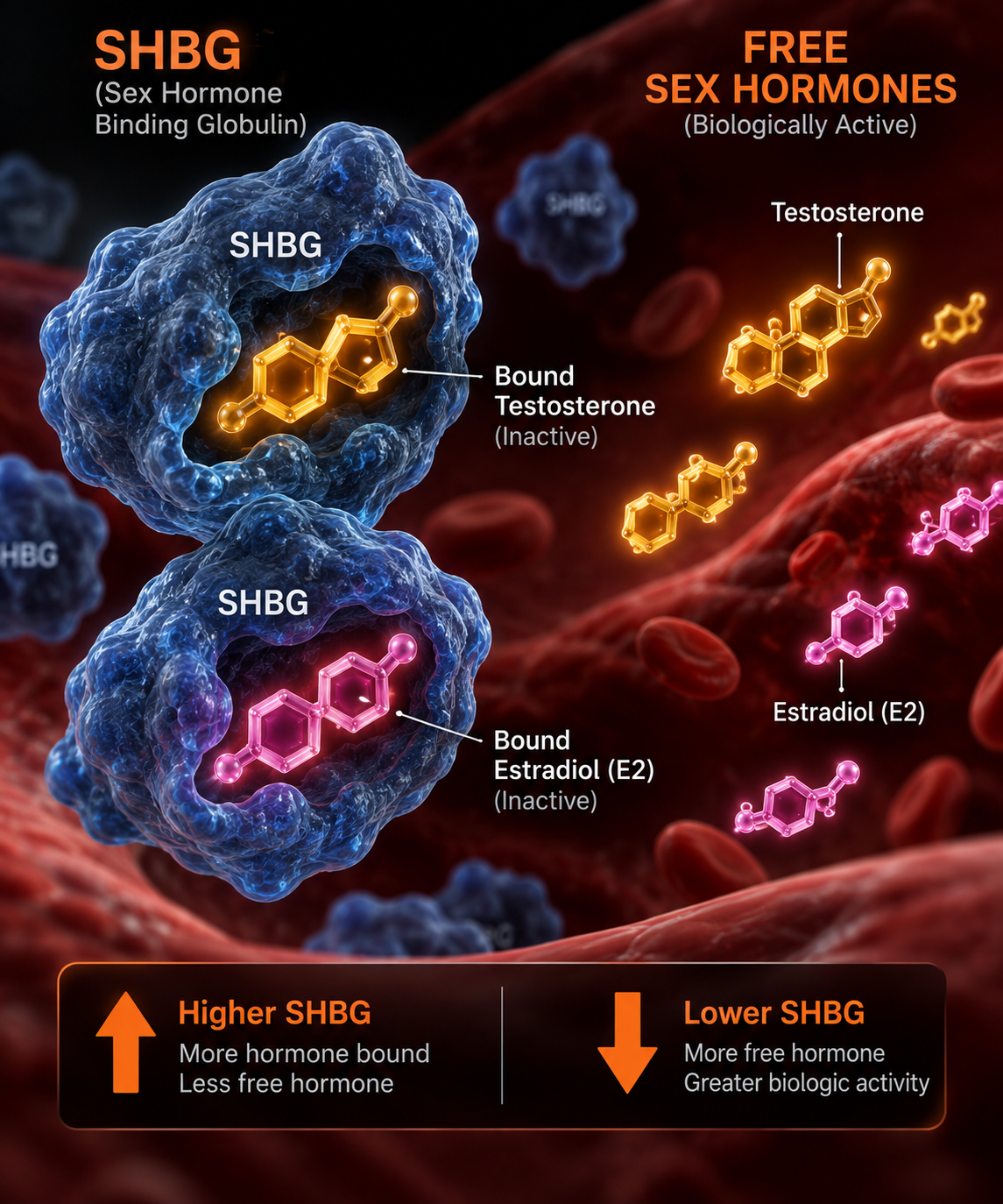
Sex hormone-binding globulin (SHBG) is a protein produced primarily by the liver. It binds testosterone and other sex hormones in the bloodstream. Changes in SHBG can significantly affect how total testosterone should be interpreted.
Higher SHBG. When SHBG is relatively high, more testosterone is tightly bound. A man may therefore have a total testosterone level that appears relatively good while free testosterone is lower.
Lower SHBG. When SHBG is low, total testosterone can appear relatively low even though free testosterone is more adequate.
SHBG can be affected by numerous factors, including:
- Age
- Obesity
- Insulin resistance
- Thyroid function
- Liver disease
- Certain medications
- Other hormonal and metabolic conditions
This is why looking only at total testosterone can sometimes provide an incomplete picture.
Estradiol
Men need estrogen. That statement surprises many patients. Estradiol is often thought of exclusively as a female hormone, but it plays important physiologic roles in men.
A portion of testosterone is naturally converted to estradiol through an enzyme called aromatase. Estradiol contributes to bone health, sexual function and other aspects of normal male physiology. During testosterone therapy, increasing testosterone availability may also increase conversion to estradiol. This does not automatically mean there is a problem.
No. A laboratory value should not be treated simply because it is marked high. Estradiol should be interpreted alongside symptoms, testosterone levels, body composition, testosterone dose and formulation, other medications and the overall clinical picture.
Likewise, automatically suppressing estradiol can create problems. Excessive estrogen suppression may adversely affect bone and sexual health and can produce other unwanted symptoms. At R2 Medical Clinic, the objective is not to drive estradiol as low as possible—it is hormonal balance appropriate to the individual patient.
Not all men on TRT need estradiol testing. Testing should have a clinical purpose. Estradiol testing may be particularly useful when symptoms suggest abnormal estrogen activity, when certain breast symptoms develop or when the patient's clinical response raises questions about estrogen balance. The appropriate testing strategy should be individualized.
Hemoglobin and Hematocrit
A complete blood count is one of the most important safety assessments associated with testosterone therapy. Testosterone stimulates red blood cell production. Hemoglobin is the oxygen-carrying protein inside red blood cells. Hematocrit represents the proportion of blood volume made up of red blood cells. TRT can increase both. In some men, the increase can become clinically significant.
Why does hematocrit matter during TRT? An excessive increase in red blood cell concentration is called erythrocytosis. This is a well-recognized potential adverse effect of testosterone therapy. The risk may vary according to testosterone formulation, dose and individual patient factors. Monitoring hematocrit helps identify an excessive increase before simply continuing or escalating treatment.
If hematocrit rises significantly, the appropriate response may include evaluating testosterone dose, formulation and treatment frequency, as well as smoking, sleep apnea, hypoxia or pulmonary disease, dehydration and other potential contributors. A rising hematocrit should not automatically be managed without asking why it is rising.
Clinical guidelines commonly identify a hematocrit around 54–55% during testosterone therapy as a level requiring intervention. That does not mean every value below 54–55% should simply be ignored.
Baseline hematocrit, the rate of change, medical history and other risk factors also matter. Safety monitoring should look at trends rather than waiting for every laboratory value to cross a predetermined line.
PSA
Prostate-specific antigen (PSA) is a protein produced by prostate tissue. PSA testing may be appropriate before and during testosterone therapy depending on a man's age, risk factors and clinical circumstances. A PSA result is not a prostate cancer diagnosis. PSA can be influenced by several factors. However, a significant or unexpected change may require additional evaluation.
Does testosterone cause prostate cancer? The relationship between testosterone and prostate cancer is considerably more nuanced than was historically believed. Current evidence does not support the simplistic conclusion that appropriately prescribed testosterone therapy causes prostate cancer. However, that does not mean prostate health should be ignored. Men should undergo appropriate prostate risk assessment and screening based on age, medical history, family history and shared decision-making. TRT monitoring should complement appropriate prostate care rather than replace it.
Wondering what your own labs mean? R2 Medical Clinic offers physician-led hormone evaluation and TRT in Denver, Wheat Ridge/Arvada and Castle Rock, built around a full baseline panel and ongoing monitoring.
Schedule a consultation or call (720) 640-2333.
LH: Luteinizing Hormone
Luteinizing hormone, or LH, is produced by the pituitary gland. LH signals the testes to produce testosterone. Measuring LH can be particularly useful before testosterone therapy begins because it can help determine why testosterone is low.
Low testosterone + elevated LH. This pattern may suggest that the testes are not responding appropriately to stimulation. This is generally referred to as primary hypogonadism.
Low testosterone + low or inappropriately normal LH. This may suggest a problem involving the hypothalamus or pituitary signaling system. This is generally referred to as secondary hypogonadism.
Understanding the cause of low testosterone can sometimes identify an underlying medical problem requiring additional evaluation.
FSH: Follicle-Stimulating Hormone
Follicle-stimulating hormone, or FSH, is another pituitary hormone. In men, FSH plays an important role in sperm production. FSH can provide useful information about testicular and pituitary function, particularly when fertility is a concern.
Men interested in future fertility should discuss this before beginning exogenous testosterone, because TRT can significantly suppress sperm production.
Prolactin
Prolactin is produced by the pituitary gland. Elevated prolactin can interfere with normal reproductive hormonal signaling and may contribute to reduced testosterone, decreased libido, erectile dysfunction, infertility and other symptoms.
Prolactin testing may be particularly important when testosterone is low and LH is low or inappropriately normal. Significantly elevated prolactin may warrant further evaluation of the pituitary gland and other potential causes.
Thyroid Testing
Fatigue, weight changes, difficulty concentrating, changes in mood and sexual symptoms are frequently attributed to testosterone. But thyroid disorders can produce many of the same complaints. Depending on symptoms and medical history, thyroid testing may therefore be appropriate during a broader hormone evaluation.
This reinforces an important principle: not every symptom experienced by a man with a testosterone concern is caused by testosterone.
Metabolic Health
Men with testosterone concerns may also benefit from evaluation of metabolic health depending on their medical history. This can include assessment of blood glucose, hemoglobin A1c, lipids, liver function and other metabolic markers.
Obesity, insulin resistance, metabolic disease and testosterone physiology can interact. Improving metabolic health may sometimes improve both testosterone levels and symptoms. Hormone optimization should therefore consider the entire patient rather than treating the reproductive hormonal system in isolation.
Should DHT Be Tested?
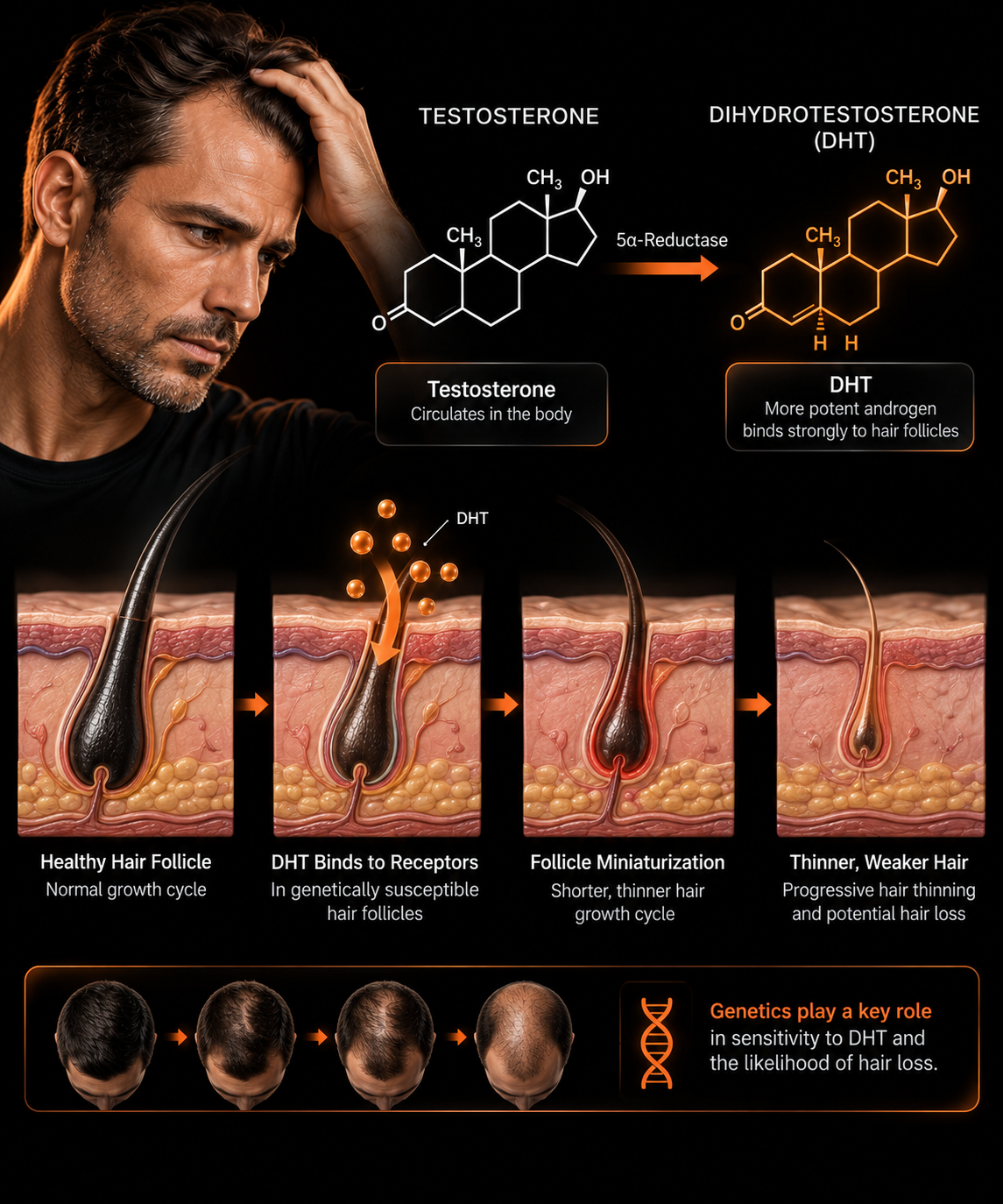
Dihydrotestosterone (DHT) is a potent androgen produced from testosterone through the enzyme 5-alpha-reductase. DHT plays roles in tissues including the prostate, skin and hair follicles. Routine DHT testing is not required for every man receiving TRT. However, it may occasionally provide additional information in selected clinical circumstances.
As with other hormone testing, the question should always be: what clinical decision will this test help us make?
What About DHEA-S?
DHEA-S is produced primarily by the adrenal glands and serves as a precursor to other steroid hormones. Routine measurement isn't necessary for every man undergoing TRT evaluation. It may be useful in selected patients when the broader clinical picture suggests a reason to assess adrenal androgen production. More laboratory testing does not automatically mean better medicine.
What Should Be Checked Before Starting TRT?
There is no single laboratory panel that is appropriate for every patient. Depending on symptoms, age, medical history and fertility goals, a pre-treatment evaluation may include:
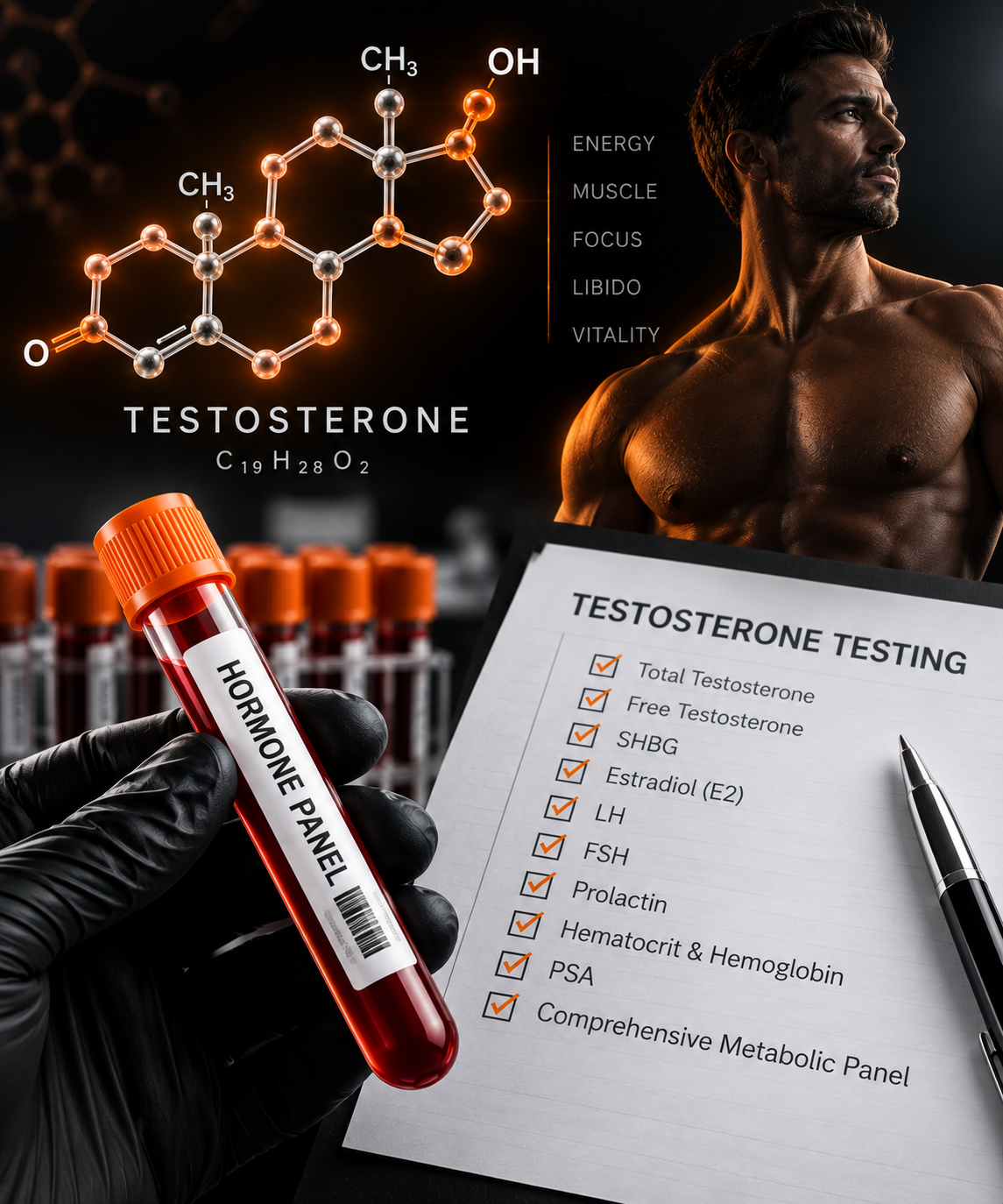
- Total testosterone
- Free testosterone
- Estradiol
- SHBG
- LH in selected patients
- FSH in selected patients
- Prolactin when indicated
- Complete blood count (hemoglobin and hematocrit)
- PSA
- Thyroid testing when indicated
- Complete metabolic panel (kidney and liver)
- Additional testing based on medical history
The purpose is to establish an appropriate baseline, identify potential causes of symptoms and determine whether treatment can be initiated safely.
What Bloodwork Is Checked After Starting TRT?
Monitoring should be individualized according to the patient and treatment. Follow-up commonly includes assessment of total testosterone, free testosterone, hemoglobin and hematocrit, PSA, estradiol and other testing based on the patient's medical history and response.
But laboratory monitoring is only one component. Follow-up should also ask: Have the symptoms improved? Has sexual function changed? How is energy? Are there treatment-related side effects? Has blood pressure changed? Has fertility become a concern? Is the treatment achieving something clinically meaningful?
When Should TRT Bloodwork Be Checked?
There is no single schedule appropriate for every patient or every testosterone formulation. Testing depends on the type of testosterone therapy, dosing schedule, whether treatment was recently initiated, recent dose changes, previous laboratory findings, age, medical history and clinical response.
Bloodwork is typically checked more closely when therapy is initiated or adjusted and periodically once treatment is stable. The timing of the blood draw relative to the testosterone dose also matters. A result obtained at one point in an injection cycle may look very different from a result obtained at another point. Without knowing when the sample was collected, a testosterone result can be misleading.
Why Trends Matter More Than One Result
One of the most useful principles in hormone monitoring is to look at trends. Suppose hematocrit increases from 43% to 47% to 51%. Every result may still be interpreted differently depending on the laboratory range, but the trend itself provides useful clinical information.
The same concept applies to testosterone, PSA, estradiol, hemoglobin and other relevant laboratory values. A single laboratory value is a snapshot. Repeated measurements show a pattern.
Should TRT Be Adjusted Based Only on Bloodwork?
Generally, no. Laboratory values are essential for evaluating safety and hormone exposure, but they do not tell us whether the patient actually feels better. At R2 Medical Clinic, our approach considers both objective laboratory findings and subjective clinical response.
Suppose a patient's testosterone increases substantially, but the fatigue, sexual symptoms or other concerns that prompted treatment do not improve. The answer is not necessarily to continue increasing testosterone—another cause may be responsible for the symptoms. Likewise, a patient who feels substantially better should not simply receive progressively higher doses if laboratory or safety parameters indicate excessive exposure.
The Goal Is Not the Highest Testosterone Number
Hormone optimization should not mean testosterone maximization. There is no scientifically established testosterone number that represents the perfect level for every man. The objective is to identify an individualized treatment strategy that produces meaningful clinical benefit while maintaining appropriate safety parameters.
That requires looking at more than testosterone. It requires understanding how testosterone, free testosterone, SHBG, estradiol, hematocrit, PSA and the patient's symptoms fit together.
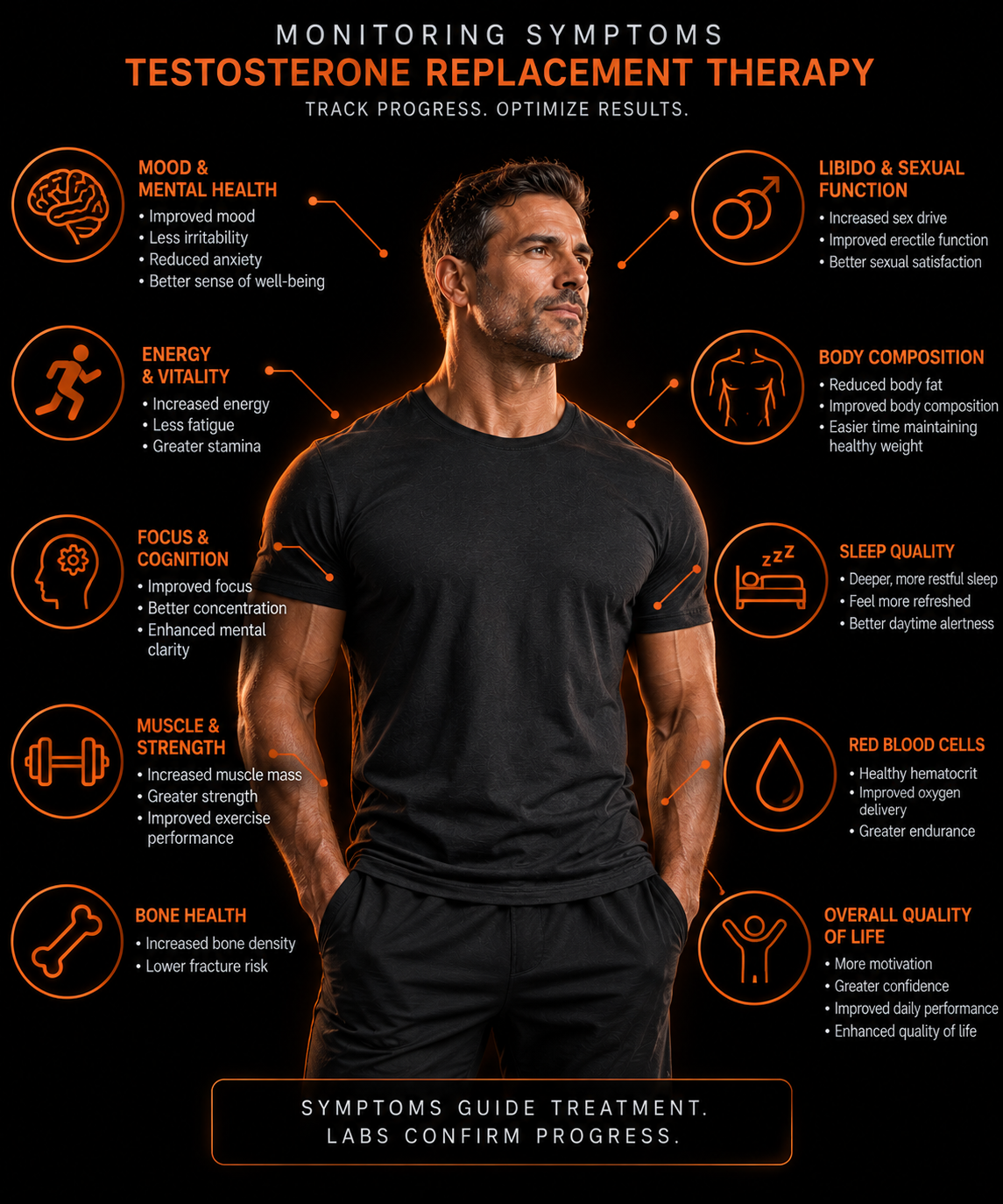
TRT Bloodwork Should Answer Questions—Not Just Generate Numbers
A comprehensive testosterone program should not consist of: check testosterone → prescribe testosterone → check testosterone again.
Laboratory monitoring should help answer meaningful clinical questions: Does the patient actually have testosterone deficiency or another hormonal issue? Why might testosterone be low? Could SHBG be affecting interpretation? Is free testosterone useful in this patient? How is estradiol responding? Is hematocrit rising? Does prostate health require additional evaluation? Could thyroid or metabolic disease be contributing to the symptoms? Most importantly: is the patient actually improving?
At R2 Medical Clinic, our approach to men's hormone optimization combines: symptoms → comprehensive evaluation → appropriate laboratory testing → individualized treatment → monitoring of clinical response → ongoing safety assessment. The laboratory numbers matter. But they only become useful when interpreted in the context of the individual patient. If you would like an evaluation, schedule a consultation at any of our three Denver-metro locations.
Related Men’s Hormone Health Resources
Testosterone & Hormone Optimization for Men: A Physician’s Guide
My Testosterone Is Normal—So Why Do I Still Have Symptoms?
TRT & Estradiol: Why Men Need Estrogen and When Levels Matter
Hormone Therapy Bloodwork for Women: What We Test and What the Results Mean
Your Health Is More Than a Subscription: Why Quality Medical Care Matters
Frequently Asked Questions About TRT Bloodwork
Is total testosterone or free testosterone more important?
Can my total testosterone be normal but free testosterone be low?
What does SHBG do?
Should estradiol be checked during TRT?
Does high estradiol automatically require an estrogen blocker?
Why does TRT increase hematocrit?
What hematocrit is too high on TRT?
Does TRT increase PSA?
Why check LH before TRT?
Why would prolactin be checked?
How often should TRT labs be checked?
Should I stop TRT if one laboratory result is abnormal?
About the Medical Reviewer
Erik Natkin, DO, is the founder of R2 Medical Clinic, a physician-led medical practice serving Denver, Wheat Ridge/Arvada and Castle Rock, Colorado. His clinical practice includes individualized hormone evaluation and optimization for men and women, testosterone therapy, medical weight management and other areas of wellness medicine.
This article is intended for educational purposes and does not constitute individualized medical advice. Testosterone therapy has potential benefits, risks and contraindications and is not appropriate for every patient. Laboratory testing and treatment decisions should be individualized by a qualified healthcare professional.
Medical References
- American Urological Association. Evaluation and Management of Testosterone Deficiency: AUA Guideline.
- Bhasin S, et al. Testosterone Therapy in Men With Hypogonadism: An Endocrine Society Clinical Practice Guideline. Journal of Clinical Endocrinology & Metabolism.
- Endocrine Society. Testosterone Therapy for Hypogonadism Guideline Resources.
- U.S. Food and Drug Administration. Testosterone Information.
- Lincoff AM, et al. Cardiovascular Safety of Testosterone-Replacement Therapy. New England Journal of Medicine. 2023.