Hormone Therapy Bloodwork for Women: What We Test, What the Results Mean & Why Symptoms Matter
What estradiol, FSH, progesterone, testosterone, SHBG and thyroid testing show in women — and why a "normal" result can still miss your symptoms.
Erik Natkin, DO • 17 min read

Medically reviewed by Erik Natkin, DO — Founder, R2 Medical Clinic, Denver, Colorado
Last medically reviewed: September 2026
In short: when women begin exploring hormone therapy, one of the first questions they often ask is, "What should my hormone levels be?" It sounds like a straightforward question. In reality, women's hormone testing is considerably more complicated. Estradiol, progesterone, follicle-stimulating hormone (FSH), testosterone and other hormones can provide valuable information—but laboratory values should not be interpreted in isolation.
This is particularly important during perimenopause, when hormone concentrations can fluctuate substantially from one day or week to another. A woman can have significant symptoms while a blood test obtained on a particular day appears "normal." Conversely, an abnormal hormone result does not automatically mean that hormone therapy is necessary.
At R2 Medical Clinic, our approach to women's hormone optimization considers symptoms, age, menstrual history, stage of hormonal transition, medical history, laboratory information when useful, treatment response and safety.
The objective is not to make every hormone number fit into a predetermined "optimal" range. The objective is to understand the individual woman and determine whether treatment is appropriate, effective and safe.
Do Women Need Bloodwork Before Starting Hormone Therapy?
Usually—but not every woman needs the same laboratory evaluation. For women over approximately age 45 with typical symptoms of perimenopause or menopause, the diagnosis can frequently be made from symptoms and menstrual history without extensive hormone testing. That is because hormone levels can fluctuate substantially during the menopausal transition.
Bloodwork can be useful when symptoms are atypical, menopause appears to be occurring unusually early, menstrual patterns are difficult to interpret, another hormonal or medical condition is suspected, testosterone therapy is being considered, baseline health information is needed, or treatment response raises additional questions.
The appropriate testing strategy should therefore be individualized. More testing does not automatically mean better hormone care.
Estradiol: What Your Estrogen Level Actually Shows
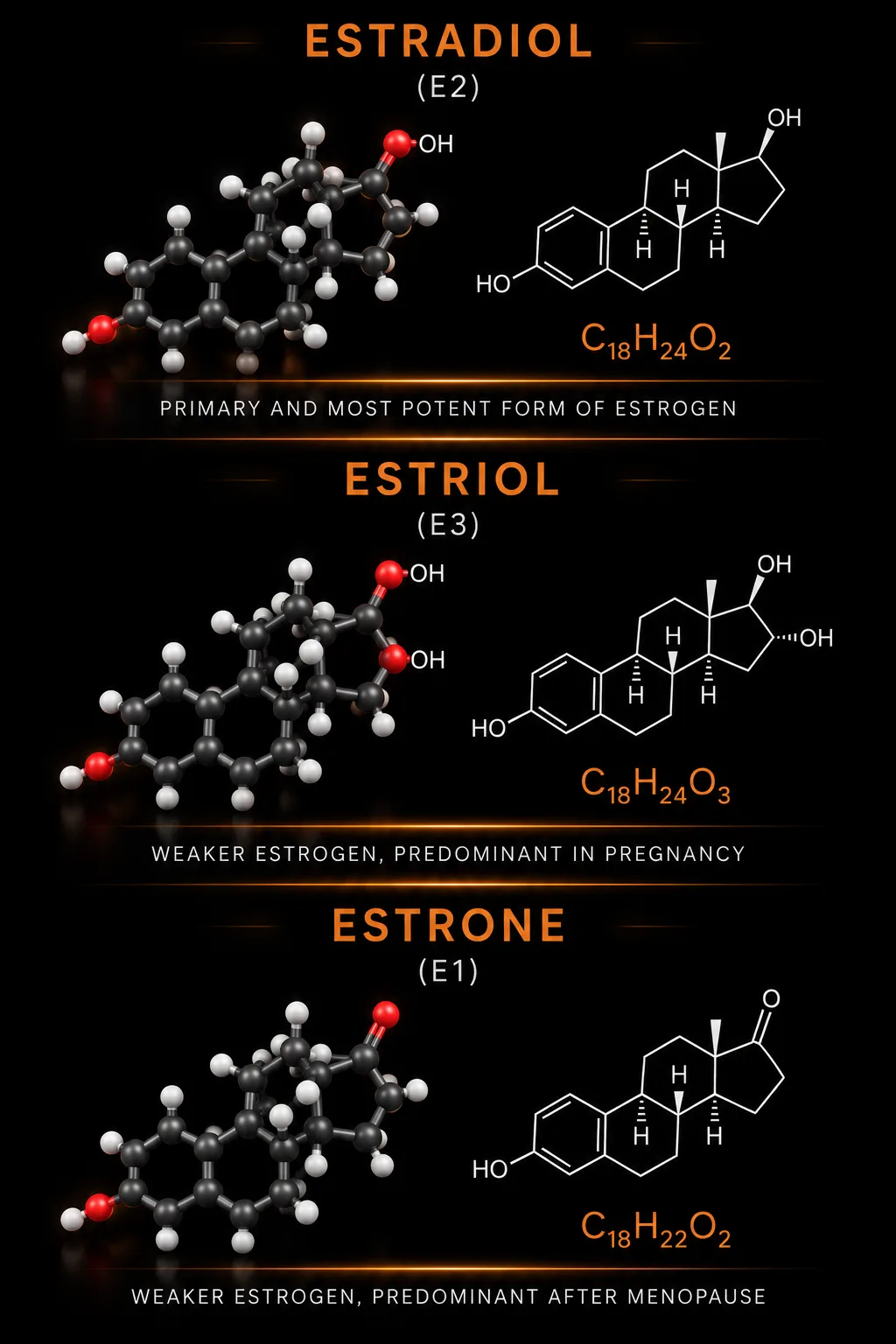
Estradiol is the predominant form of estrogen during a woman's reproductive years and is one of the hormones most commonly associated with menopause. There are four forms of estrogen: women produce three: estrone (E1), estradiol (E2) and estriol (E3) and a fourth, estetrol (E4), is produced by the fetal liver in pregnant women.
Estrogen influences numerous tissues throughout the body, including the brain, bone, breast, reproductive tissues, vaginal and urinary tissues, the cardiovascular system, skin and other organ systems. As ovarian function changes during perimenopause, estradiol production becomes increasingly variable. After menopause, estradiol levels generally decline substantially.
Why Can Estradiol Be “Normal” During Perimenopause?
Because perimenopause is a transition—not an on/off switch. Ovarian function becomes less predictable, and estrogen levels can rise and fall. A blood test obtained today tells us what the estradiol concentration was when that blood sample was collected. It does not necessarily tell us what the level was last week or what it will be next week.
This is why a woman can experience hot flashes, night sweats, sleep disruption, menstrual changes, breast tenderness or mood changes while having an estradiol measurement that falls within a laboratory reference range. The laboratory result isn't necessarily wrong. It simply represents one point in a fluctuating hormonal process.
Is There an Optimal Estradiol Level?
There is no single estradiol concentration that has been scientifically established as the ideal level for every woman receiving menopausal hormone therapy. This is an important distinction. Laboratory testing can provide useful information, particularly in selected circumstances, but hormone therapy should not automatically be escalated simply to achieve a predetermined estradiol target.
Treatment should consider symptoms, clinical indication, route of estrogen, dose, side effects, medical history, risk factors and treatment response. The patient matters more than an arbitrary laboratory target.
FSH: Follicle-Stimulating Hormone
FSH is produced by the pituitary gland. It signals the ovaries as part of the normal reproductive hormonal system. As ovarian function declines, the pituitary gland may produce more FSH in an attempt to stimulate the ovaries. For this reason, FSH generally increases after menopause. But during perimenopause, FSH can fluctuate considerably.
Does a normal FSH mean I'm not in perimenopause? No. A normal FSH result on a particular day does not necessarily exclude perimenopause. Likewise, an elevated FSH result by itself does not tell us everything about a woman's symptoms or whether hormone therapy is appropriate.
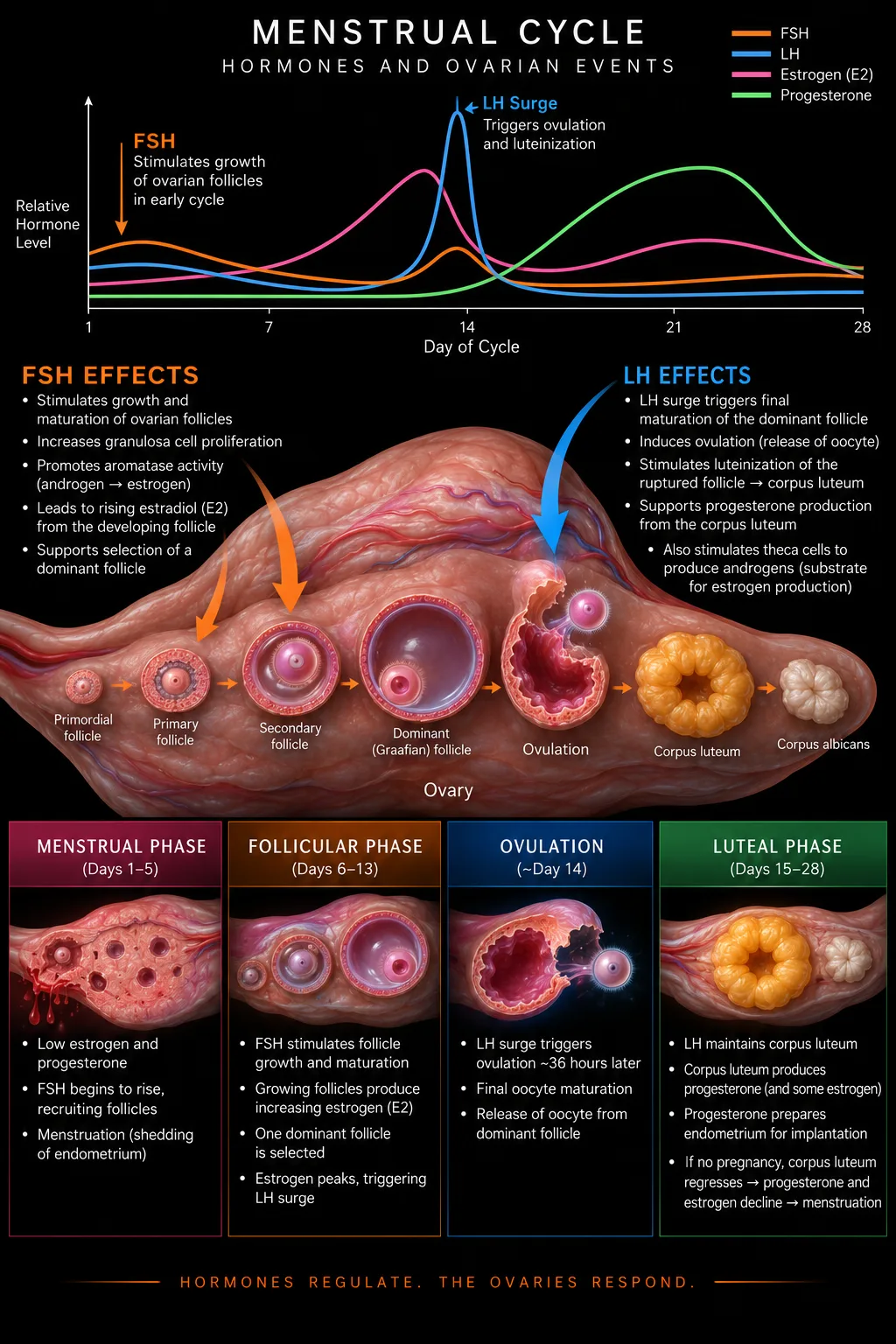
For women over approximately age 45 with typical symptoms and menstrual changes, perimenopause is often primarily a clinical diagnosis. FSH testing becomes more useful in selected circumstances, particularly when menopause occurs earlier than expected or when the diagnosis is uncertain.
Progesterone: Why It Matters Beyond the Lab Number
Progesterone is produced primarily after ovulation during the reproductive years. As ovulation becomes less predictable during perimenopause, progesterone production also becomes less consistent. This can contribute to changes in menstrual patterns. But progesterone has another extremely important role in hormone therapy.
Why Does Progesterone Matter When Taking Estrogen?
For a woman with an intact uterus, systemic estrogen stimulates the endometrium—the lining of the uterus. Prolonged estrogen exposure without adequate endometrial protection can increase the risk of endometrial hyperplasia and endometrial cancer. For this reason, women with an intact uterus who receive systemic estrogen generally require adequate progesterone or another progestogen.
In this situation, progesterone isn't being prescribed simply because a progesterone laboratory result is "low." It has an important protective role.
Not necessarily. Routine serum progesterone measurements are generally not used to determine whether standard menopausal hormone therapy is appropriately protecting the endometrium. The formulation, dose, schedule, estrogen exposure and clinical situation are more important.
This is another example of why hormone therapy cannot be managed simply by trying to make every laboratory value fall within a particular target range.
Total Testosterone in Women
Women naturally produce testosterone. Although circulating concentrations are substantially lower than in men, androgens still play important physiologic roles in women. Testosterone can be evaluated in selected women, particularly when androgen therapy is being considered.
However, interpreting testosterone in women requires care. There is no established testosterone concentration that identifies every woman who might have sexual symptoms, and there is no universally accepted blood level that defines an "optimal" testosterone level for women.
Free Testosterone in Women
As in men, much of a woman's circulating testosterone is bound to proteins. Only a small fraction circulates as free testosterone. SHBG plays an important role in determining this relationship. Free testosterone or calculations involving total testosterone and SHBG may sometimes provide additional information, but laboratory testing in women can be technically challenging because testosterone concentrations are much lower than those typically seen in men. This makes the quality of the assay particularly important.
SHBG: Why It Changes Your Testosterone Reading
Sex hormone-binding globulin (SHBG) binds sex hormones in the bloodstream. Changes in SHBG can affect the relationship between total and free testosterone. SHBG can be influenced by estrogen exposure, thyroid function, liver function, insulin resistance, body composition, certain medications, age and other medical conditions.
Oral estrogen can also increase hepatic production of SHBG more than transdermal estrogen because of its first-pass effect through the liver. That can be clinically relevant when interpreting testosterone values and sexual symptoms.
Testosterone Therapy in Women
Testosterone treatment in women deserves special consideration. The strongest evidence for testosterone therapy is for appropriately selected postmenopausal women with hypoactive sexual desire disorder (HSDD) after other potential contributors have been evaluated.
A testosterone result alone should not determine whether treatment is prescribed. Likewise, treatment should not be used simply to push testosterone to the upper end of—or beyond—a laboratory reference range. When testosterone is used, laboratory monitoring can help prevent excessive androgen exposure.
Unlike estrogen therapy for typical menopausal symptoms, testosterone therapy often involves laboratory monitoring partly because excessive testosterone exposure can cause androgenic adverse effects. These can include acne, increased facial or body hair, scalp hair changes, oily skin and other androgen-related effects.
Laboratory results should therefore be considered together with clinical response and side effects. The objective isn't "how high can we make testosterone?" The objective is: is the patient experiencing meaningful clinical benefit without excessive androgen exposure?
Wondering what your own labs mean? R2 Medical Clinic offers physician-led hormone evaluation and therapy for women in Denver, Wheat Ridge/Arvada and Castle Rock, built around an individualized evaluation and appropriate laboratory testing.
Schedule a consultation or call (720) 640-2333.
Thyroid Testing: When Menopause Symptoms Are Not Menopause
Thyroid disorders can produce symptoms that overlap substantially with perimenopause and menopause. These may include fatigue, weight changes, difficulty concentrating, mood changes, changes in menstrual cycles, temperature sensitivity, hair changes and sleep disturbances. For this reason, thyroid testing may be appropriate when symptoms or medical history suggest a potential thyroid problem. Not every symptom in a woman approaching menopause should automatically be attributed to estrogen.
TSH
Thyroid-stimulating hormone (TSH) is commonly used as an initial test of thyroid function. An abnormal, high-normal TSH and/or symptoms of low thyroid may prompt additional thyroid testing depending on the result and clinical situation. These include free T3, free T4 and rT3 for complete thyroid function evaluation. Thyroid testing is particularly valuable when symptoms could plausibly be explained by either hormonal transition or thyroid dysfunction.
Complete Blood Count (CBC)
A complete blood count (CBC) is not a reproductive hormone test, but it can provide important information. For example, women experiencing heavy or prolonged menstrual bleeding during perimenopause may develop anemia. Anemia can cause fatigue, weakness, reduced exercise tolerance, shortness of breath and difficulty concentrating.
Those symptoms could easily be blamed on menopause. Sometimes the more important issue is blood loss and iron deficiency. This illustrates why women's hormone evaluation should look beyond reproductive hormones.
Iron and Ferritin: An Overlooked Cause of Fatigue
When heavy menstrual bleeding or symptoms suggest iron deficiency, iron studies and ferritin may be appropriate. Ferritin reflects stored iron. Iron deficiency can sometimes occur before significant anemia develops. A woman experiencing fatigue, hair changes or reduced exercise tolerance may therefore require a broader evaluation rather than simply increasing hormone therapy.
Metabolic Testing in Midlife
Midlife is often accompanied by changes in metabolic health and body composition. Depending on the patient, evaluation may include fasting glucose, hemoglobin A1c, a lipid profile, liver function and other metabolic markers.
Insulin resistance and metabolic disease can contribute to weight gain, increased abdominal fat, fatigue, cardiovascular risk and other health concerns. Hormone therapy should not be expected to correct every metabolic issue. Weight and metabolic health deserve their own appropriate evaluation.
Liver Function and Hormone Metabolism
The liver plays an important role in hormone metabolism. Certain hormone formulations—particularly oral medications—also interact with hepatic metabolism differently than transdermal treatments. Liver testing may therefore be relevant depending on the patient's medical history, medications and treatment. Significant liver disease can also affect whether certain forms of hormone therapy are appropriate.
Lipid Profile and Cardiovascular Risk
Cholesterol and triglycerides provide information about cardiovascular and metabolic health. Hormone therapy can affect lipid parameters differently depending on the hormone and route of administration. However, hormone therapy should not be prescribed solely to improve cholesterol. Cardiovascular risk should be evaluated and managed comprehensively.
Blood Glucose and Hemoglobin A1c
Glucose and hemoglobin A1c can help evaluate diabetes and longer-term glucose regulation. These tests may be particularly useful for women experiencing weight gain, increased abdominal fat, a strong family history of diabetes, previous gestational diabetes or other metabolic risk factors. Again, not every change occurring around menopause is caused directly by reproductive hormones.
DHEA-S: When Adrenal Testing Is Worthwhile
DHEA-S is an androgen produced primarily by the adrenal glands. It can serve as a precursor to other steroid hormones. Routine DHEA-S testing is not required for every woman undergoing hormone evaluation. It may provide useful information in selected circumstances when symptoms or clinical findings suggest an androgen or adrenal issue. The principle remains the same: order a laboratory test because it can help answer a clinical question—not simply because the test exists.
Prolactin
Prolactin is produced by the pituitary gland. Elevated prolactin can affect menstrual function and reproductive hormone signaling. Testing may be appropriate in women with certain menstrual abnormalities, unexpected breast milk production, fertility concerns or other findings suggesting a pituitary or hormonal disorder. Routine prolactin testing is not necessary for every woman seeking menopausal hormone therapy.
What About Cortisol?
Patients frequently ask whether fatigue, weight gain or difficulty sleeping means their cortisol is abnormal. True disorders involving excessive or inadequate cortisol production can cause significant health problems. However, routine cortisol testing is not generally necessary simply because a patient feels stressed, tired or has gained weight. Testing should be based on symptoms and clinical findings that suggest a specific adrenal disorder.
What Bloodwork Should Be Checked Before Hormone Therapy?

There is no universal hormone panel appropriate for every woman. Depending on age, symptoms, menstrual status, medical history and proposed treatment, evaluation might include:
- Estradiol when clinically useful
- FSH and LH
- Testosterone
- SHBG
- Thyroid testing
- Complete blood count
- Iron studies when indicated
- Metabolic testing
- Liver function
- Lipid profile
- Additional testing based on medical history
Some women may need only limited testing. Others may require a much broader evaluation. The testing should fit the patient.
What Bloodwork Is Needed After Starting Hormone Therapy?
This depends heavily on the therapy being used. For standard menopausal estrogen and progesterone therapy, routine repeated measurements of serum estradiol and progesterone are not necessarily required simply to chase target hormone concentrations.
Follow-up should focus substantially on symptom response, side effects, vaginal bleeding, blood pressure, breast health, appropriate cancer screening, cardiovascular risk, bone health when appropriate and changes in medical history.
Laboratory testing can then be added when it answers a useful clinical question. Testosterone therapy may require more specific laboratory monitoring to help avoid excessive androgen exposure.
When Can Estradiol Testing Be Helpful During Treatment?
Although routine estradiol targets aren't required for every woman, testing may sometimes be useful. Examples can include unexpected treatment response, questions about medication absorption, persistent symptoms despite therapy, certain nonstandard formulations, concern about excessive hormone exposure, or situations in which the clinical picture and expected medication effect do not correspond. The key distinction is that the laboratory result is being used to answer a question rather than simply being checked because a calendar says it is time.
Why Symptoms Matter So Much
Suppose a woman begins hormone therapy because she is experiencing severe hot flashes and night sweats. Several months later, her estradiol concentration is higher. But she still has exactly the same hot flashes. Has treatment succeeded? Not simply because the laboratory value changed.
Now consider another patient whose hot flashes have resolved, sleep has improved and quality of life is substantially better. Her treatment may be clinically successful even though her estradiol isn't sitting at someone's predetermined "optimal" target. This is why hormone therapy needs to consider both objective medical information and subjective clinical response.
What If My Hormone Levels Look Good but I Still Feel Bad?
Then we should ask another question: are hormones actually responsible for the remaining symptoms? Persistent symptoms may require evaluation of thyroid function, sleep, anemia, iron deficiency, metabolic health, nutrition, medications, depression or anxiety, stress, sexual health and other medical conditions. The answer should not automatically be to increase hormone doses. Sometimes the correct treatment is to address something entirely different.
What If I Feel Great but My Hormone Number Isn't “Optimal”?
This is another reason predetermined hormone targets can be misleading. If treatment is clinically appropriate, symptoms are well controlled, the patient is tolerating treatment and safety considerations are satisfactory, changing therapy solely to chase an arbitrary laboratory target may not improve the patient's outcome. Laboratory information matters. But it must have a purpose.
Why Trends Can Still Matter
Although individual hormone values can fluctuate, trends in certain laboratory measurements can still provide useful information. This is particularly true when monitoring testosterone during androgen therapy, metabolic markers, lipids, glucose, liver function when relevant, blood counts and other patient-specific safety parameters. The value of a trend depends on what is being measured and why.

Hormone Therapy Monitoring Is More Than Bloodwork
One of the most important misconceptions about hormone optimization is that monitoring simply means repeating laboratory tests. It doesn't. Appropriate follow-up may be even more concerned with whether the hot flashes are better, whether she is sleeping, and whether vaginal dryness and libido have improved.
Follow-up should also ask whether there are new side effects, whether unexpected vaginal bleeding has developed, whether her medical history has changed, whether the treatment is still necessary, and whether the benefits continue to outweigh the risks. Bloodwork is one part of monitoring. The patient is the other part.
Hormone Testing for Women in Denver, Wheat Ridge and Castle Rock
R2 Medical Clinic provides physician-led hormone evaluation and therapy for women at three Colorado locations: Denver (1873 South Bellaire Street, Suite 1215), Wheat Ridge, serving Arvada and the west Denver metro (4891 Independence Street, Suite 230), and Castle Rock (509 Wilcox Street, Suite 107). Every visit is with a physician, and testing is ordered because it answers a specific clinical question — not as a fixed panel every woman receives.
A first appointment reviews your symptoms, menstrual history, medical history and medications, determines where you are in the hormonal transition, considers whether something other than reproductive hormones could explain what you are feeling, and uses laboratory testing where it adds useful information. If treatment is appropriate, it is individualized and monitored for both response and safety.
To arrange an evaluation, schedule a consultation or call (720) 640-2333.
Treat the Woman, Not the Laboratory Report
Laboratory testing can provide valuable information. But women's hormone optimization cannot be reduced to: check estrogen → prescribe estrogen → increase estrogen until a target number is reached.
A more thoughtful approach asks: what symptoms is this woman experiencing? Where is she in the menopausal transition? Could another medical condition be responsible? Which laboratory tests would actually provide useful information? Is hormone therapy appropriate? Is treatment improving the symptoms we intended to treat? Are we monitoring treatment appropriately for safety?
At R2 Medical Clinic, our approach is: listen to symptoms → understand the hormonal transition → evaluate potential alternative causes → use laboratory testing when it adds useful information → individualize treatment → monitor clinical response and safety → adjust when appropriate. Hormone levels matter. But the goal isn't to optimize a laboratory report. The goal is to optimize the care of the individual woman. If you would like an evaluation, schedule a consultation at any of our three Denver-metro locations.
Related Women’s Hormone Health Resources
Hormone Optimization for Women: A Physician's Guide to Estrogen, Progesterone & Testosterone
My Hormone Levels Are “Normal”—So Why Do I Still Have Symptoms?
Your Health Is More Than a Subscription: Why Quality Medical Care Matters
Frequently Asked Questions About Women’s Hormone Bloodwork
Can my estrogen be normal and I still be in perimenopause?
Does a normal FSH mean I'm not in perimenopause?
What estradiol level is optimal on hormone therapy?
Do progesterone levels need to be checked during hormone therapy?
Should testosterone be checked in women?
Is there an optimal testosterone level for women?
Should my thyroid be checked if I'm having menopause symptoms?
Why would my doctor check ferritin?
Do I need cortisol testing because I'm tired and gaining weight?
Should hormone levels be checked every few months?
What matters more—my symptoms or my bloodwork?
About the Medical Reviewer
Erik Natkin, DO, is the founder of R2 Medical Clinic, a physician-led medical practice serving Denver, Wheat Ridge/Arvada and Castle Rock, Colorado. His clinical practice includes individualized hormone evaluation and optimization for women and men, testosterone therapy, medical weight management and other areas of wellness medicine.
This article is intended for educational purposes and does not constitute individualized medical advice. Hormone therapy has potential benefits, risks and contraindications and is not appropriate for every patient. Laboratory testing and treatment decisions should be individualized by a qualified healthcare professional.
Medical References
- The Menopause Society. The 2022 Hormone Therapy Position Statement of The North American Menopause Society. Menopause. 2022.
- American College of Obstetricians and Gynecologists. Hormone Therapy for Menopause.
- National Institute for Health and Care Excellence. Menopause: Identification and Management. NICE Guideline NG23.
- Davis SR, et al. Global Consensus Position Statement on the Use of Testosterone Therapy for Women. Journal of Clinical Endocrinology & Metabolism. 2019.
- U.S. Food and Drug Administration. Menopausal Hormone Therapies with Updated Prescribing Information.
- The Menopause Society. Clinical Resources Regarding Perimenopause and Menopause.