Hormone Optimization for Women: A Physician's Guide to Estrogen, Progesterone & Testosterone
A physician's guide to evaluating and treating estrogen, progesterone and testosterone in women — symptoms, lab testing, delivery options and individualized treatment.
Erik Natkin, DO • 17 min read

Medically reviewed by Erik Natkin, DO — Founder, R2 Medical Clinic, Denver, Colorado
Last medically reviewed: August 2026
Hormonal changes can affect women long before menstruation stops.
Changes in energy, sleep, mood, sexual function, body composition, hot flashes, night sweats and vaginal symptoms may begin during perimenopause and continue into menopause. Yet women’s hormone health is often reduced to a simple question:
“Are my hormone levels normal?”
At R2 Medical Clinic, we take a broader approach.
Our approach to women’s hormone optimization considers symptoms, hormone levels, age, menstrual history, medical history, medications, metabolic health, treatment goals and individual risk factors rather than treating a laboratory number in isolation.
A laboratory value within a reference range does not necessarily explain why a woman is experiencing symptoms. At the same time, symptoms do not automatically mean hormone therapy is necessary.
The first objective is to understand what is changing, why symptoms may be occurring, and whether hormone therapy is appropriate for the individual patient.
What Is Hormone Optimization for Women?
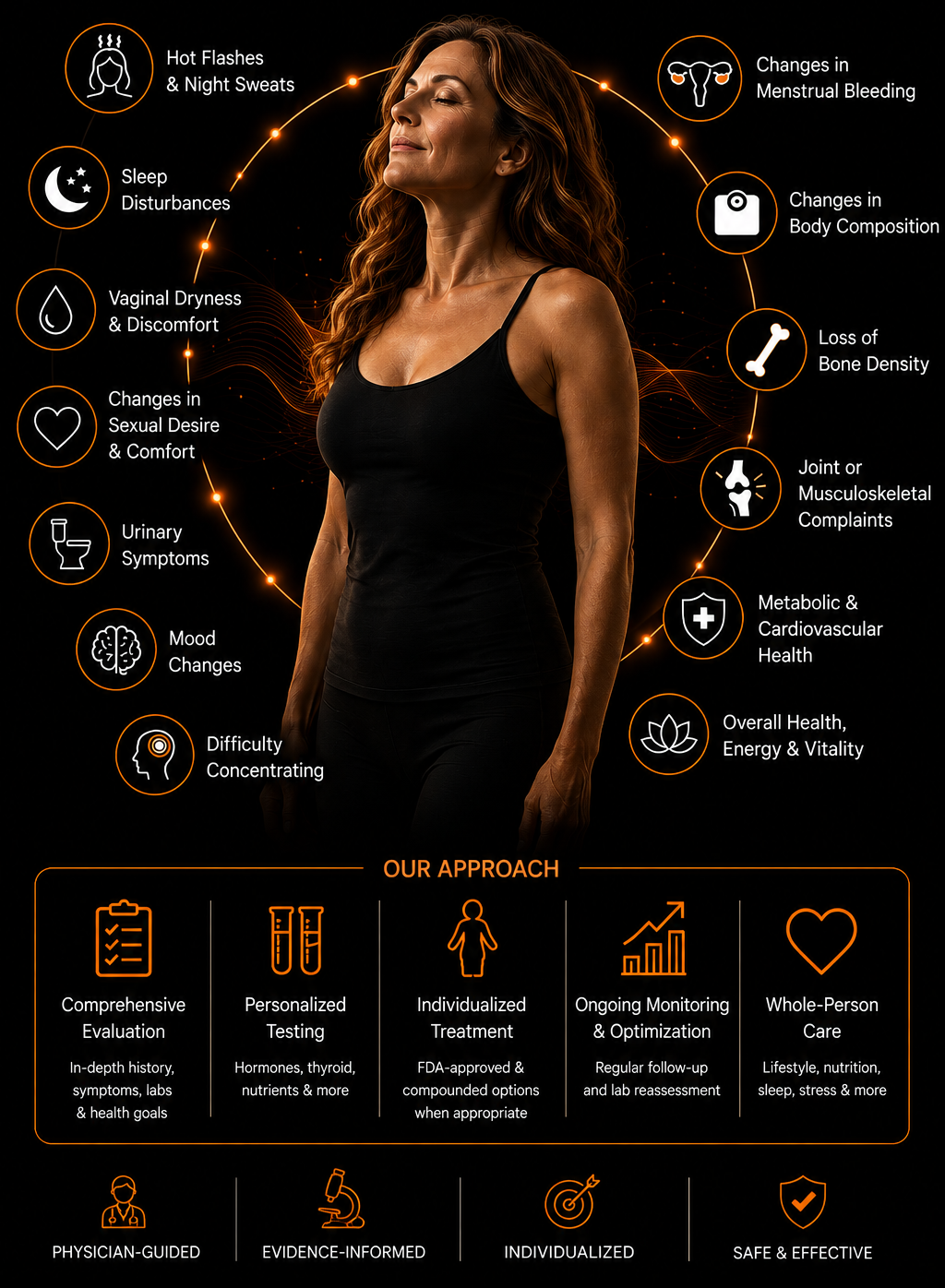
Instead, we look at the complete clinical picture:
Symptoms + menstrual and reproductive history + laboratory information when appropriate + medical history + risk factors + treatment goals.
When hormone therapy is appropriate, treatment can then be individualized according to the woman’s symptoms, stage of life and response.
The objective isn’t simply to produce a particular laboratory number. The objective is meaningful improvement in symptoms and quality of life while maintaining appropriate medical safety.
Hormone optimization is an individualized approach to evaluating and managing symptoms that may be associated with hormonal changes.
It does not mean attempting to maximize estrogen, progesterone or testosterone levels.
It also does not mean that every woman experiencing fatigue, weight gain, decreased libido or mood changes needs hormone therapy.
Perimenopause vs. Menopause
Understanding where a woman is in the menopausal transition is an important part of hormone evaluation.
Perimenopause
Perimenopause is the transition leading to menopause. During this period, ovarian hormone production can fluctuate considerably. Women may experience:
- Irregular menstrual cycles
- Hot flashes
- Night sweats
- Sleep disturbances
- Changes in mood
- Changes in sexual desire
- Vaginal symptoms
- Breast tenderness
- Changes in body composition
- Difficulty concentrating
Importantly, hormone levels during perimenopause can fluctuate significantly. A single laboratory result therefore may not accurately represent what a woman is experiencing over time.
Menopause
Menopause is clinically recognized after 12 consecutive months without menstruation when another cause is not responsible.
After menopause, ovarian production of estrogen and progesterone declines substantially. These hormonal changes can affect symptoms as well as longer-term health considerations such as bone density.
Do “Normal” Hormone Levels Mean Everything Is Fine?
Not necessarily.
Laboratory reference ranges are useful, but they should be interpreted within the clinical context. This is particularly important during perimenopause because hormone levels can fluctuate significantly.
A woman may have a hormone measurement that falls within a laboratory’s reference range on the day it is tested and still experience significant symptoms during other portions of her cycle.
Likewise, a laboratory result outside a reference range does not automatically mean treatment is required.
Hormone levels provide information. They do not replace the patient’s clinical history.
What Symptoms May Be Related to Hormonal Changes?
Symptoms associated with perimenopause and menopause can include:
- Hot flashes
- Night sweats
- Sleep disturbances
- Vaginal dryness
- Painful intercourse
- Changes in sexual desire
- Urinary symptoms
- Mood changes
- Difficulty concentrating
- Changes in menstrual bleeding
- Changes in body composition
- Loss of bone density
- Joint or musculoskeletal complaints
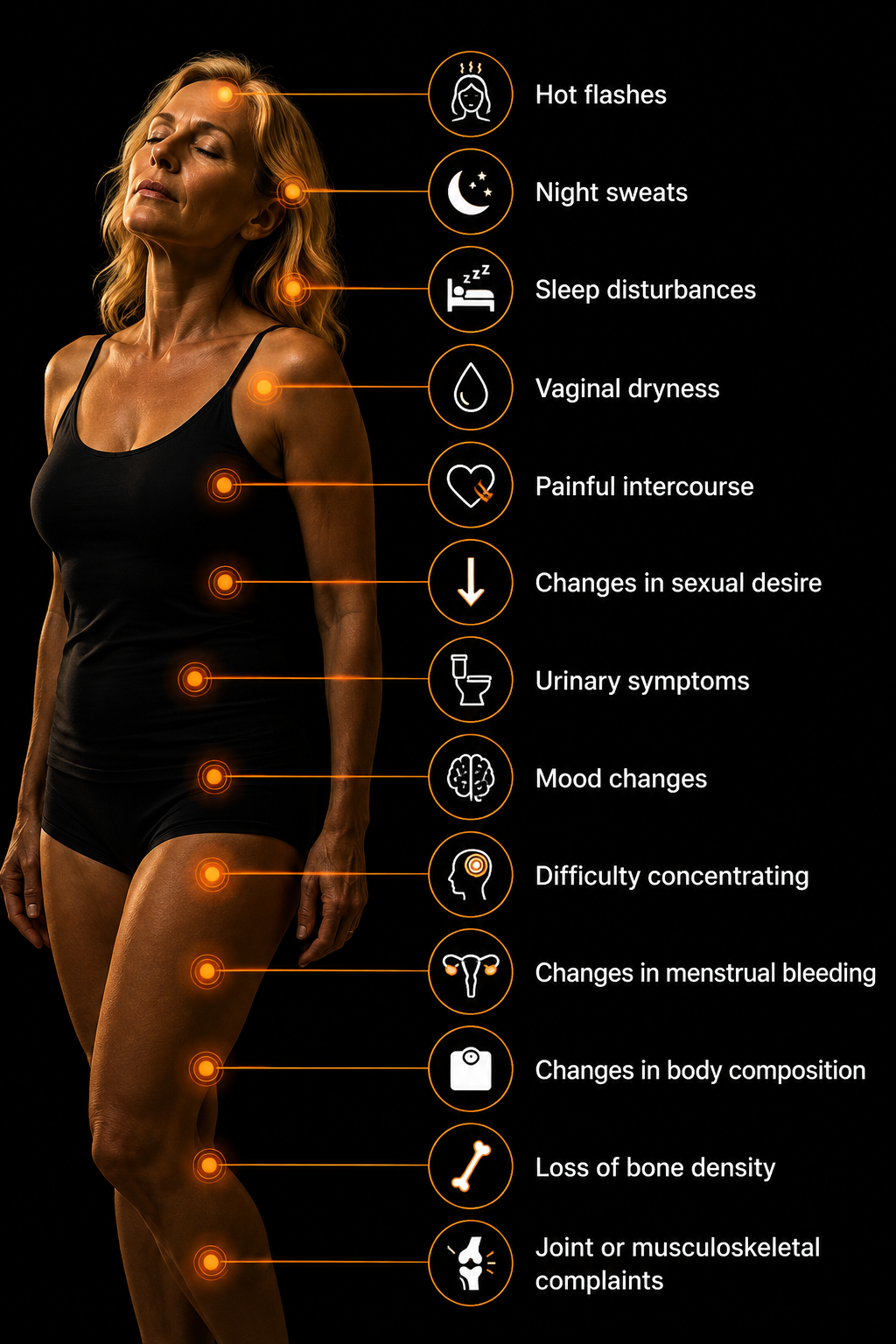
However, many of these symptoms are nonspecific.
Fatigue, difficulty concentrating, sleep problems and changes in weight can also be associated with thyroid disorders, anemia, sleep disorders, medications, metabolic disease, depression, stress and other medical conditions.
That is why appropriate hormone care should begin with an evaluation rather than assuming every symptom is hormonal.
Is Hormone Testing Necessary?
Not every woman requires extensive hormone testing.
In women over approximately age 45 with typical menopausal symptoms, menopause can often be diagnosed clinically. Laboratory testing may nevertheless provide useful information in selected patients, particularly when:
- Symptoms are atypical
- Menopause appears to be occurring unusually early
- The diagnosis is uncertain
- Menstrual patterns are difficult to interpret
- Another endocrine condition is suspected
- Testosterone therapy is being considered or monitored
- Treatment response requires additional evaluation
At R2 Medical Clinic, laboratory testing is interpreted alongside symptoms rather than used as the sole determinant of treatment.
Estrogen: More Than a Menopause Hormone

Estrogen affects numerous tissues throughout a woman’s body. It plays important roles in:
- Temperature regulation
- Vaginal and urinary health
- Bone density
- Sexual function
- Reproductive physiology
- Numerous other physiologic processes
Declining and fluctuating estrogen levels during the menopausal transition contribute to many classic symptoms, particularly hot flashes and night sweats.
For appropriate patients, estrogen therapy is the most effective treatment for menopausal vasomotor symptoms.
Types of Estrogen Therapy
Estrogen can be delivered in several ways.
Oral Estrogen
Traditional oral estrogen is absorbed through the gastrointestinal tract and undergoes first-pass metabolism through the liver. This affects hepatic protein synthesis and produces metabolic effects that differ from nonoral routes, including an increase in clotting-factor production that can, although rarely, lead to blood clots and potentially serious complications.
At R2 Medical Clinic, when oral estradiol is an appropriate option, we may use a compounded, proprietary formulation we call a Bio-Lymphatic Absorption (BLA) tablet. This formulation is designed to be absorbed primarily through the lymphatic system rather than the traditional gastrointestinal/hepatic pathway, with the goal of reducing first-pass liver metabolism. Because compounded formulations are not FDA-approved and are not studied in the controlled clinical trials used to evaluate FDA-approved products, the clinical risk profile of the BLA tablet—including any effect on clotting factors—has not been independently established. Patients considering this option should discuss the rationale, the compounding process and its unknowns with their physician.
Transdermal Estrogen
Transdermal estrogen is delivered through the skin, commonly using a patch, gel or spray.
Because transdermal estrogen largely avoids first-pass hepatic metabolism, it has different effects on certain hepatic and coagulation pathways than oral estrogen. The route of administration can therefore matter when treatment is individualized according to a woman’s medical history and risk factors.
Vaginal Estrogen
Low-dose vaginal estrogen is used primarily for genitourinary symptoms of menopause, including vaginal dryness, discomfort with intercourse and certain urinary symptoms.
Women whose symptoms are primarily vaginal or urinary may not require systemic estrogen therapy.
Other Estrogen Formulations
Other formulations and delivery systems may be available, including compounded preparations and implanted hormone pellets. Each approach has potential advantages and limitations.
Wondering whether your symptoms warrant a hormone evaluation? R2 Medical Clinic offers physician-led women’s hormone evaluation in Denver, Wheat Ridge/Arvada and Castle Rock, starting with bloodwork and a consultation.
Schedule a consultation or call (720) 640-2333.
Why Is Progesterone Important?
Progesterone has a particularly important role for women who have an intact uterus and use systemic estrogen.
Estrogen stimulates the endometrium—the lining of the uterus. Using systemic estrogen without adequate endometrial protection can increase the risk of endometrial hyperplasia and endometrial cancer.
For this reason, women with a uterus who receive systemic estrogen generally require adequate progesterone or another progestogen.
Women who have undergone hysterectomy typically do not require progesterone for endometrial protection, although individual circumstances may differ.
Progesterone and Symptoms
Progesterone may also affect sleep, mood and other symptoms in some women. However, these effects vary between individuals.
As with other hormones, treatment should not be based solely on attempting to reach a predetermined progesterone laboratory value. The indication for treatment, formulation, dose, clinical response and potential adverse effects all matter.
Testosterone in Women
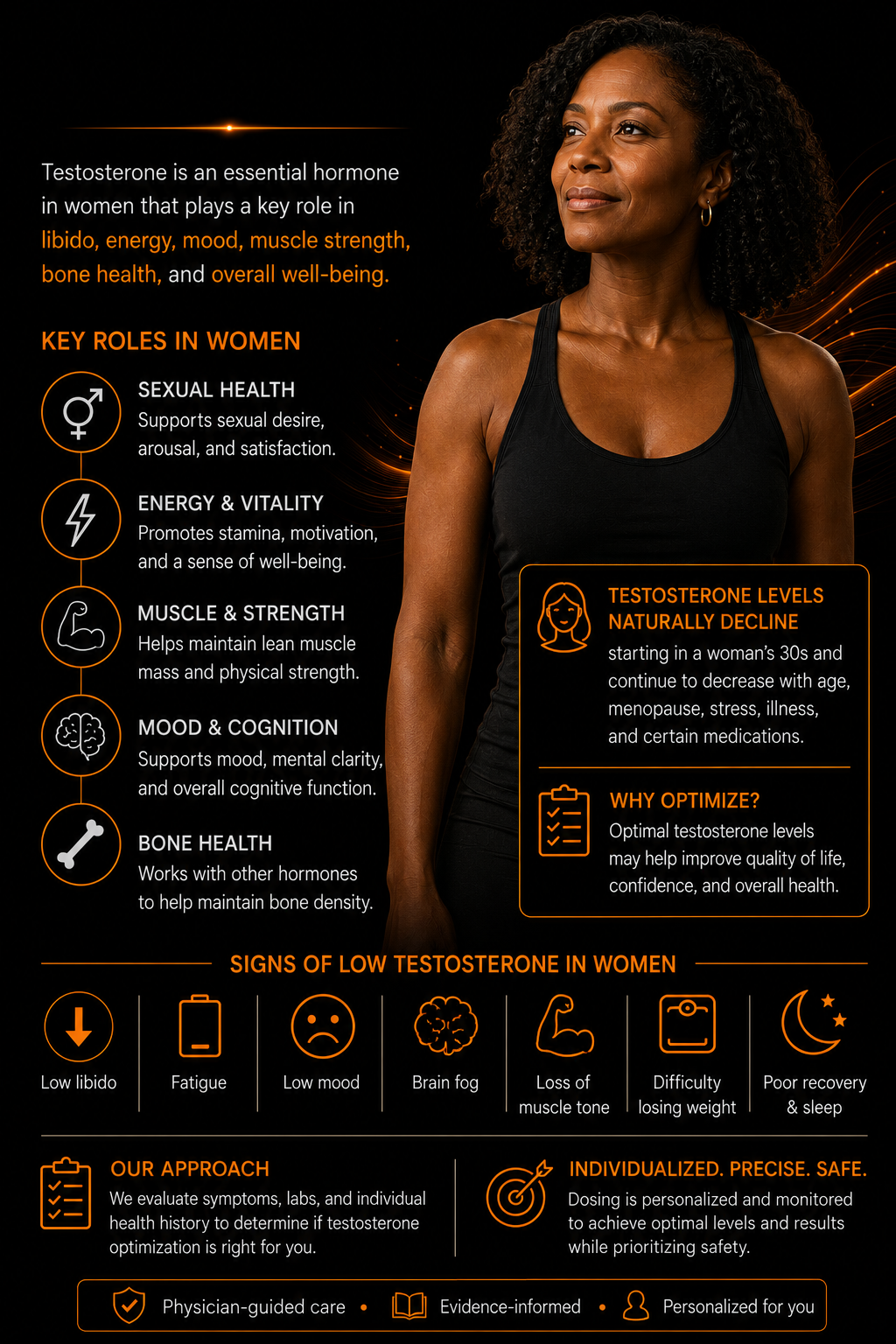
Testosterone is frequently thought of as a male hormone, but women naturally produce testosterone as well. Androgens contribute to female physiology and sexual function.
However, testosterone treatment for women should be approached differently from testosterone replacement therapy in men.
The strongest evidence for testosterone therapy in women is for appropriately selected postmenopausal women
with hypoactive sexual desire disorder (HSDD) after other potential contributing factors have been evaluated.
Testosterone should not automatically be prescribed to every woman experiencing fatigue, decreased motivation, weight gain or reduced libido. At the same time, a woman’s symptoms deserve evaluation rather than being dismissed simply because a testosterone result falls within a laboratory reference range.
What About Testosterone Optimization in Women?
There is no scientifically established testosterone level that represents an ideal or “optimal” number for every woman.
This is particularly important because excessive testosterone exposure can cause androgenic adverse effects.
When testosterone is used, treatment should be individualized and monitored with the goal of avoiding excessive exposure. The objective should be clinical benefit—not maximizing the testosterone number.
- Acne
- Increased facial or body hair
- Scalp hair changes
- Changes in skin oil production
- Other androgen-related effects
Hormone Optimization Is More Than Estrogen and Testosterone
Women’s symptoms can be influenced by numerous hormonal and nonhormonal factors. Depending on the individual patient, evaluation may include consideration of:
- Estrogen
- Progesterone
- Testosterone
- Thyroid function
- Metabolic health
- Sleep
- Medications
- Stress
- Nutrition
- Exercise
- Other medical conditions
A comprehensive approach can be particularly important when hormone treatment improves some symptoms but others persist.
Hormone Therapy and Body Composition
Many women notice changes in body composition during midlife. These may include increased abdominal fat, loss of lean muscle and changes in weight.
Hormonal changes can contribute to changes in fat distribution and body composition, but menopause is not the only factor involved. Aging, activity level, nutrition, sleep, insulin resistance and loss of muscle mass also contribute.
Hormone therapy should not be presented as a weight-loss treatment. When weight or body composition is a significant concern, medical weight management, nutrition, resistance exercise and other metabolic factors should be addressed separately.
Hormone Therapy and Bone Health
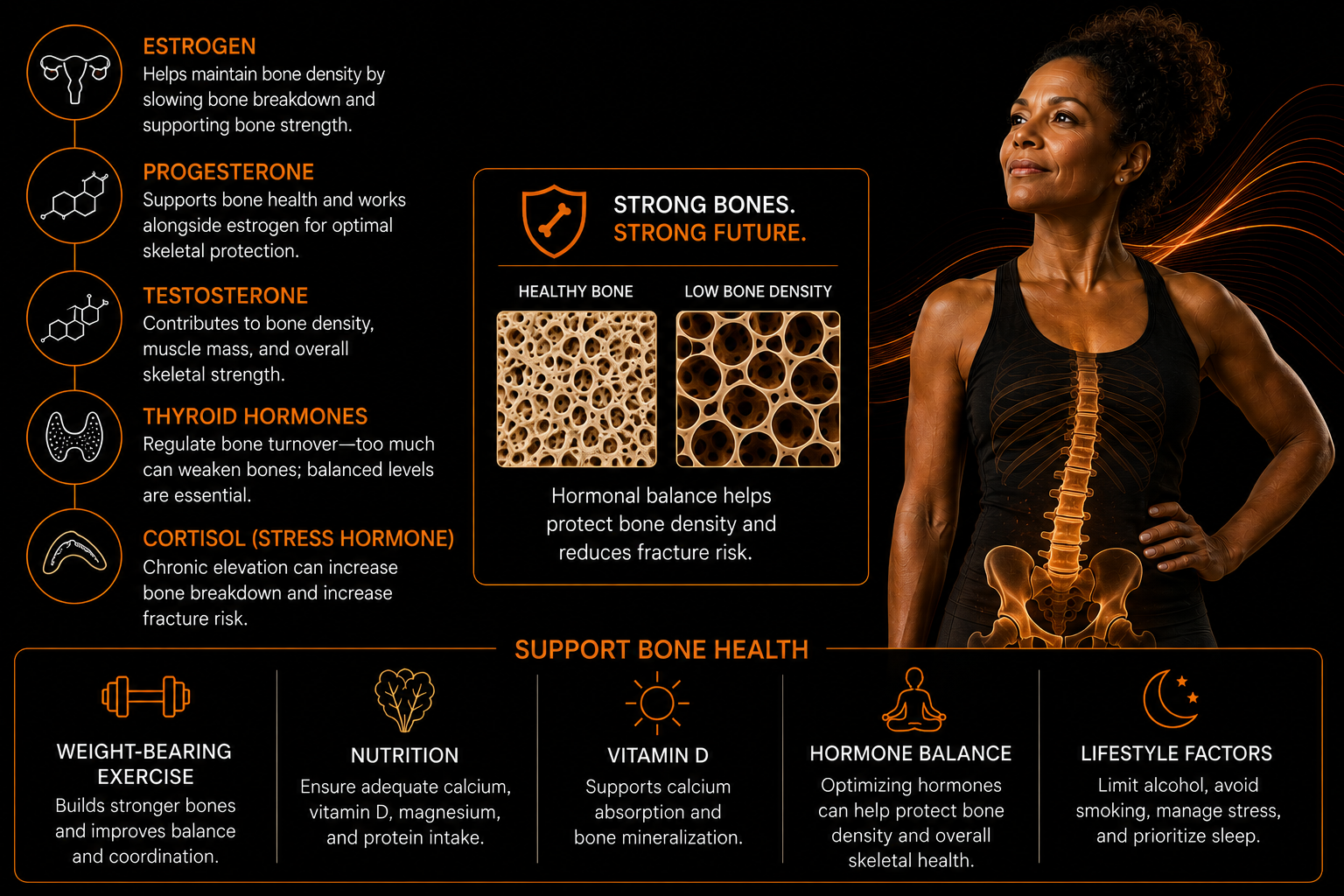
Multiple hormones—including estrogen, testosterone, progesterone, thyroid hormones, cortisol and others—play a role in bone health.
Estrogen plays a particularly important role in maintaining bone density. Declining estrogen levels during menopause accelerate bone loss and contribute to osteoporosis and fracture risk.
Systemic menopausal hormone therapy can prevent bone loss while treatment is being used.
Bone health should therefore be considered as part of the overall evaluation, particularly in women with additional risk factors for osteoporosis.
Hormone Therapy and Sexual Health
Female sexual function is complex. Hormones may contribute, but sexual function can also be affected by:
- Vaginal dryness or pain
- Relationship factors
- Medications
- Stress
- Sleep
- Mood
- Medical conditions
- Pelvic floor disorders
- Other physiologic factors
Treatment should address the underlying cause rather than assuming every sexual symptom requires more estrogen or testosterone.
Hormone Therapy and Breast Cancer
The relationship between menopausal hormone therapy and breast cancer cannot accurately be reduced to either “hormones cause breast cancer” or “hormones have no breast cancer risk.”
Risk depends on multiple factors, including the type of hormone therapy, duration of treatment and individual patient characteristics.
Estrogen-alone therapy and combined estrogen-progestogen therapy do not have identical risk profiles.
A woman’s personal history, family history, age and appropriate breast screening should be considered when discussing treatment.
Hormone Therapy and Blood Clots
Systemic estrogen can affect thrombotic risk. The route of estrogen administration matters.
Traditional oral estrogen undergoes first-pass hepatic metabolism and has greater effects on certain liver-produced proteins involved in coagulation.
Transdermal estrogen largely avoids first-pass hepatic metabolism, and observational evidence suggests it may have a more favorable thrombotic profile than oral estrogen.
Compounded formulations built around a similar mechanistic rationale—such as R2 Medical Clinic’s BLA tablet—are also designed to reduce first-pass metabolism, but because they are compounded rather than FDA-approved, they have not been independently studied for thrombotic risk the way transdermal products have.
This does not mean any nonoral estrogen route is risk-free or appropriate for every patient. Individual risk factors still matter.
Hormone Therapy and Cardiovascular Health
Hormone therapy should not be prescribed solely to prevent cardiovascular disease.
However, cardiovascular risk associated with menopausal hormone therapy is influenced by the patient’s age, medical history and timing of treatment.
Initiating treatment near the menopausal transition in an otherwise healthy symptomatic woman is different from initiating systemic hormone therapy many years after menopause in a woman with established cardiovascular disease. This is sometimes referred to as the timing hypothesis.
The decision should therefore be individualized rather than based on the assumption that hormone therapy is universally beneficial or universally dangerous.
Bioidentical Hormones: What Does That Actually Mean?
The term bioidentical describes a hormone that is chemically identical to a hormone produced by the human body.
Importantly: bioidentical does not mean compounded.
FDA-approved bioidentical hormone products exist. Examples include FDA-approved estradiol and micronized progesterone preparations.
Compounded bioidentical hormones are a separate category.
FDA-Approved vs. Compounded Hormones
FDA-approved medications undergo FDA review for safety, effectiveness, manufacturing quality and labeling for their approved indications.
Compounded medications do not undergo the same FDA premarket approval process.
Compounding can have an appropriate role when a clinician determines that an FDA-approved medication does not meet an individual patient’s medical needs—for example, when a particular dose or formulation is not commercially available.
Patients should understand whether the medication they receive is FDA-approved or compounded and why a particular formulation is being recommended.
What About Hormone Pellets?
Hormone pellets are implanted beneath the skin and release hormone over an extended period. Some women appreciate the convenience of infrequent administration.
Pellets also have an important limitation: once implanted, the dose cannot be quickly reduced or discontinued.
With oral, topical or transdermal therapy, a medication can generally be adjusted or stopped relatively quickly. Pellet dosing therefore requires careful patient selection, dosing and follow-up.
Who May Be a Candidate for Hormone Therapy?
Hormone therapy may be considered for appropriately selected women experiencing clinically meaningful symptoms associated with perimenopause or menopause.
Potential indications include:
- Moderate to severe hot flashes
- Night sweats
- Menopause-related sleep disturbance
- Genitourinary symptoms
- Prevention of bone loss in appropriately selected patients
- Certain sexual symptoms depending on the therapy being considered
For many healthy symptomatic women younger than 60 or within approximately 10 years of menopause onset, the benefit-risk profile of menopausal hormone therapy is generally considered favorable when contraindications are absent.
Treatment should nevertheless remain individualized.
Who Requires Additional Evaluation Before Hormone Therapy?
Certain medical histories require careful evaluation before systemic hormone therapy. These may include:
- Certain estrogen-sensitive cancers
- Unexplained vaginal bleeding
- Previous venous thromboembolism
- Stroke
- Certain cardiovascular conditions
- Significant liver disease
- Other medical conditions affected by hormone exposure
A history of one of these conditions does not necessarily answer every treatment question by itself, but it changes the risk-benefit discussion and may require specialist involvement or alternative treatment.
How Is Hormone Optimization Monitored?
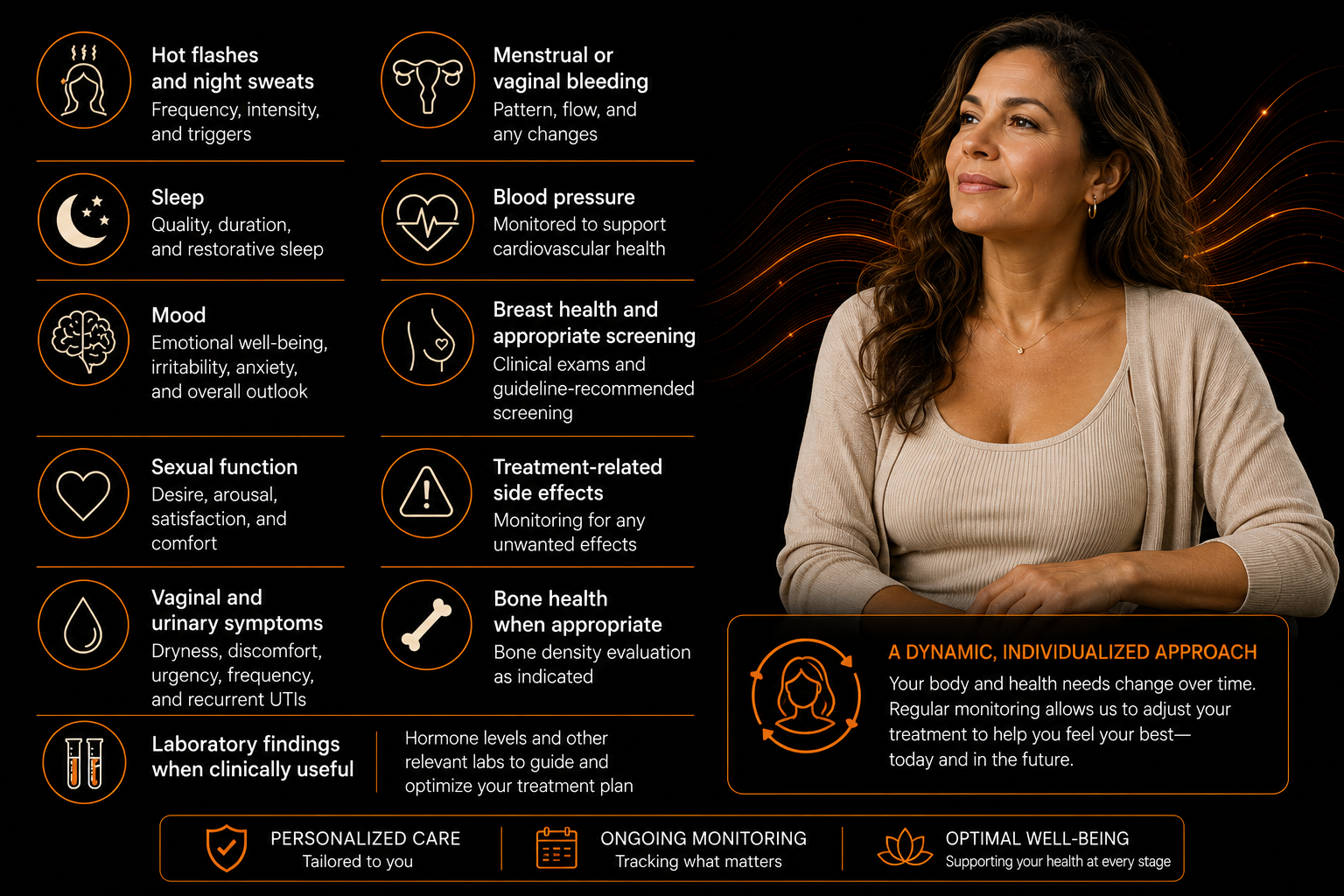
Starting hormone therapy is not the end of the process.
Monitoring should assess whether treatment is actually improving the symptoms it was intended to treat while also evaluating safety. Depending on the individual patient and treatment, follow-up may consider:
- Hot flashes and night sweats
- Sleep
- Mood
- Sexual function
- Vaginal and urinary symptoms
- Menstrual or vaginal bleeding
- Blood pressure
- Breast health and appropriate screening
- Treatment-related side effects
- Bone health when appropriate
- Laboratory findings when clinically useful
Unexpected or persistent vaginal bleeding requires appropriate medical evaluation.
What If My Hormone Levels Improve but I Don’t Feel Better?
This is one of the most important principles of hormone optimization.
A better laboratory number does not necessarily equal successful treatment.
If hormone levels change but the symptoms that prompted treatment remain unchanged, the treatment strategy should be reconsidered.
The answer should not automatically be “increase the hormone dose.”
Instead, we need to ask whether another factor may be responsible for the symptoms.
The objective is improvement in the patient—not improvement in the laboratory report.
How Long Can Women Stay on Hormone Therapy?
There is no universal rule requiring every woman to discontinue hormone therapy at a particular age.
Duration should be individualized according to symptoms, benefits, treatment goals and changing medical risk.
Some women use hormone therapy for several years around the menopausal transition. Others may continue treatment longer after an individualized discussion with their healthcare provider.
The decision should be periodically reassessed.
Related Women’s Hormone Health Resources
Your Health Is More Than a Subscription: Why Quality Medical Care Matters
My Hormone Levels Are “Normal”—So Why Do I Still Have Symptoms?
Hormone Therapy Bloodwork for Women: What We Test, What the Results Mean & Why Symptoms Matter
Frequently Asked Questions About Women’s Hormone Optimization
Can my hormone levels be normal and I still have symptoms?
Do I need hormone testing to diagnose menopause?
What is the best estrogen level for a woman?
Is estrogen safer through a patch than by mouth?
Do I need progesterone if I take estrogen?
Does every woman need testosterone?
Can testosterone improve libido in women?
Are bioidentical hormones safer?
Are compounded hormones FDA-approved?
Does hormone therapy help with weight loss?
Do women have to stop hormone therapy at age 65?
Treat the Woman, Not Just the Hormone Number
Women’s hormone health is complex.
A woman cannot be reduced to an estradiol, progesterone or testosterone result. Two women of the same age can have similar laboratory values and completely different symptoms, health histories and treatment needs. Likewise, two women with similar symptoms may have entirely different underlying causes.
At R2 Medical Clinic, our approach begins with a different question. Rather than asking only “are your hormone levels normal?” we ask:
“What are you experiencing, what may be contributing to it, and what treatment—if any—is appropriate for you?”
Our approach to women’s hormone optimization is:
Listen to symptoms → understand the stage of hormonal transition → evaluate other potential causes → use laboratory information when appropriate → individualize treatment → monitor clinical response and safety → adjust when necessary.
The goal is not the highest estrogen or testosterone level. The goal is not to make every laboratory number look perfect.
The goal is to help each woman feel and function better through an individualized, medically supervised approach to hormone health. If you would like an evaluation, schedule a consultation at any of our Denver-metro locations.
About the Medical Reviewer
Erik Natkin, DO, is the founder of R2 Medical Clinic, a physician-led medical practice serving Denver, Wheat Ridge/Arvada and Castle Rock, Colorado. His clinical practice includes individualized hormone evaluation and optimization for women and men, testosterone therapy, medical weight management and other areas of wellness medicine.
This article is intended for educational purposes and does not constitute individualized medical advice. Hormone therapy has potential benefits and risks and is not appropriate for every patient. Diagnosis and treatment decisions should be made between a patient and a qualified healthcare professional.
Medical References
- The Menopause Society. The 2022 Hormone Therapy Position Statement of The North American Menopause Society. Menopause. 2022.
- American College of Obstetricians and Gynecologists. Hormone Therapy for Menopause. acog.org
- U.S. Food and Drug Administration. Menopause and Hormones: Common Questions. fda.gov
- U.S. Food and Drug Administration. Compounding and the FDA: Questions and Answers. fda.gov
- Davis SR, et al. Global Consensus Position Statement on the Use of Testosterone Therapy for Women. Journal of Clinical Endocrinology & Metabolism. 2019.
- The Menopause Society. The 2020 Genitourinary Syndrome of Menopause Position Statement.