My Hormone Levels Are “Normal”—So Why Do I Still Have Symptoms?
A "normal" hormone level doesn't always explain perimenopause symptoms. Learn why lab timing, symptoms, and your full clinical picture all matter.
Erik Natkin, DO • 15 min read

Medically reviewed by Erik Natkin, DO — Founder, R2 Medical Clinic, Denver, Colorado
Last medically reviewed: August 2026
You aren’t sleeping well. Your energy has changed. Maybe you’re experiencing hot flashes, night sweats, changes in your menstrual cycle, decreased libido, vaginal dryness, difficulty concentrating, mood changes or changes in your body composition.
You have your hormones tested.
Your results come back “normal”.
So why don’t you feel normal?
This is a common source of frustration for women, particularly during perimenopause. Hormone levels can fluctuate considerably during the menopausal transition, and a single blood test represents what was happening at one particular moment.
At R2 Medical Clinic, we don’t evaluate women’s hormone health based on a laboratory number alone.
We consider symptoms, menstrual history, age, stage of the menopausal transition, hormone levels when clinically useful, medical history, medications, metabolic health and other potential causes of symptoms.
A “normal” laboratory result does not mean your symptoms aren’t real or don’t deserve further evaluation.
It also doesn’t automatically mean hormone therapy is the answer.
The important question is:
Why are you experiencing these symptoms, and could changing hormones be contributing?
What Does a “Normal” Hormone Level Actually Mean?
Laboratory reference ranges are useful tools, but they have limitations.
A laboratory compares your result with a reference range established for that particular test.
If your result falls within that range, it will usually be reported as normal.
But normal range and optimal clinical function are not necessarily the same question.
This becomes particularly complicated for women because reproductive hormone levels naturally change throughout the menstrual cycle and can fluctuate considerably during perimenopause.
A blood test provides a snapshot. Your symptoms occur over days, weeks and months. The two need to be interpreted together.
Why Perimenopause Makes Hormone Testing Complicated
Perimenopause is the transition leading to menopause.
It often begins years before the final menstrual period.
During this time, ovarian function becomes increasingly variable. Estrogen and progesterone production can fluctuate, sometimes substantially.
A woman can therefore experience significant hormonal symptoms while still having menstrual periods.
She may also have an estradiol measurement that appears perfectly reasonable on the particular day it was tested.
That doesn’t necessarily tell us what her estrogen was doing the previous week—or what it will be doing next week.
This is one reason major medical organizations do not recommend relying on a single hormone measurement to diagnose typical perimenopause in women over approximately age 45. The clinical history is extremely important.
What Are Common Symptoms of Perimenopause?
Perimenopause doesn’t look the same in every woman.
Symptoms may include:
- Changes in menstrual cycle length
- Heavier or lighter periods
- Missed periods
- Hot flashes
- Night sweats
- Difficulty sleeping
- Changes in mood
- Irritability
- Difficulty concentrating
- Vaginal dryness
- Pain during intercourse
- Changes in sexual desire
- Breast tenderness
- Headaches
- Changes in body composition
- Joint or musculoskeletal symptoms
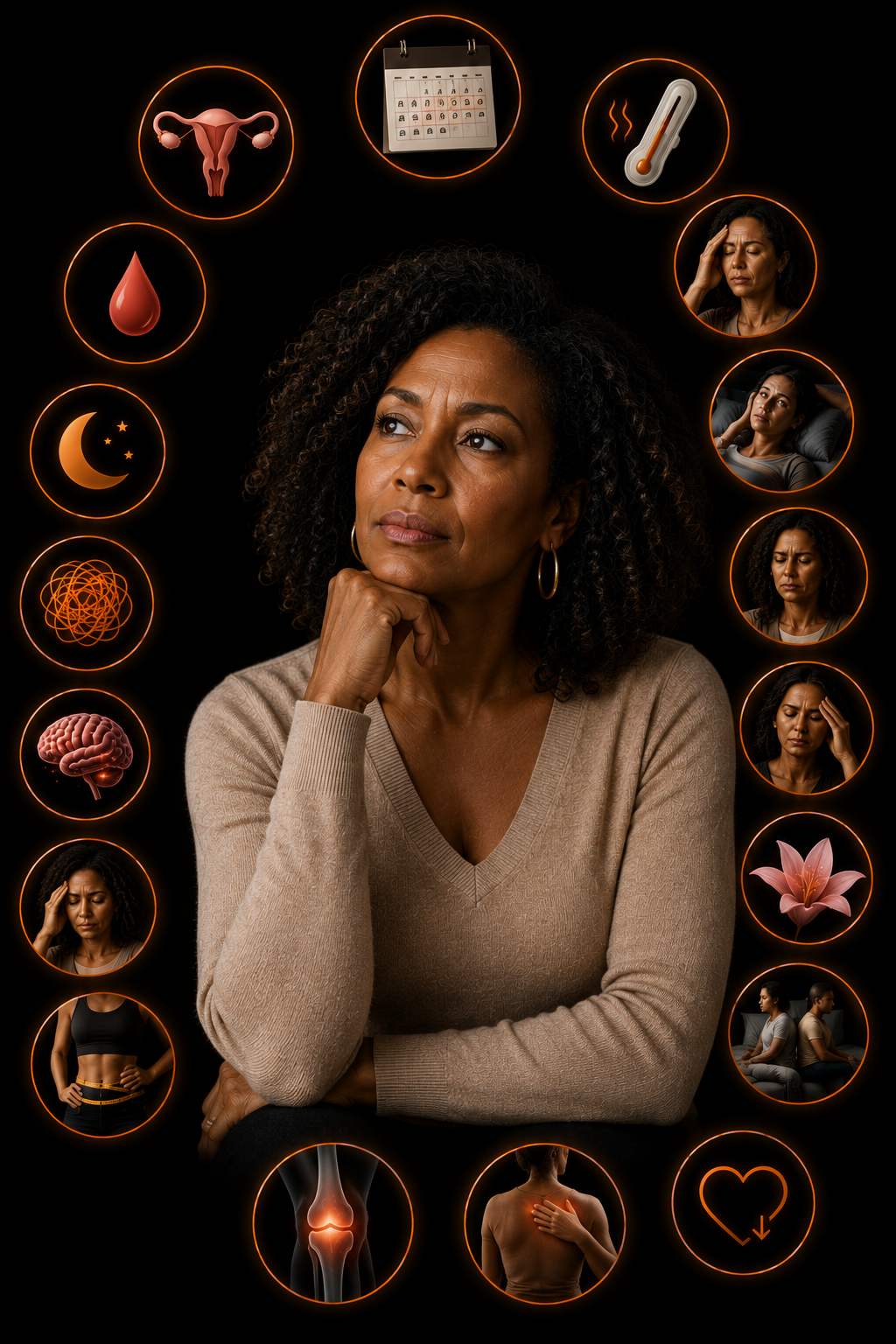
Some women experience only a few symptoms. Others experience symptoms that significantly affect sleep, relationships, work, exercise and quality of life.
Can I Be in Perimenopause If I’m Still Having Periods?
Yes.
This is an important misconception.
Perimenopause occurs before menopause, and menstrual periods frequently continue during much of the transition.
They may initially remain relatively regular. Over time, cycle length and bleeding patterns commonly become less predictable.
You do not need to wait until your periods completely stop before discussing symptoms with a healthcare provider.
What Is Menopause?
Menopause is generally recognized after 12 consecutive months without a menstrual period, assuming another medical cause is not responsible.
The average age of natural menopause in the United States is approximately 51, but there is considerable individual variation.
The hormonal transition begins before that point and symptoms may continue afterward.
That is why women’s hormone health cannot be understood by looking only at whether a woman is officially “menopausal.”
Why Can Estrogen Be “Normal” When I’m Having Symptoms?
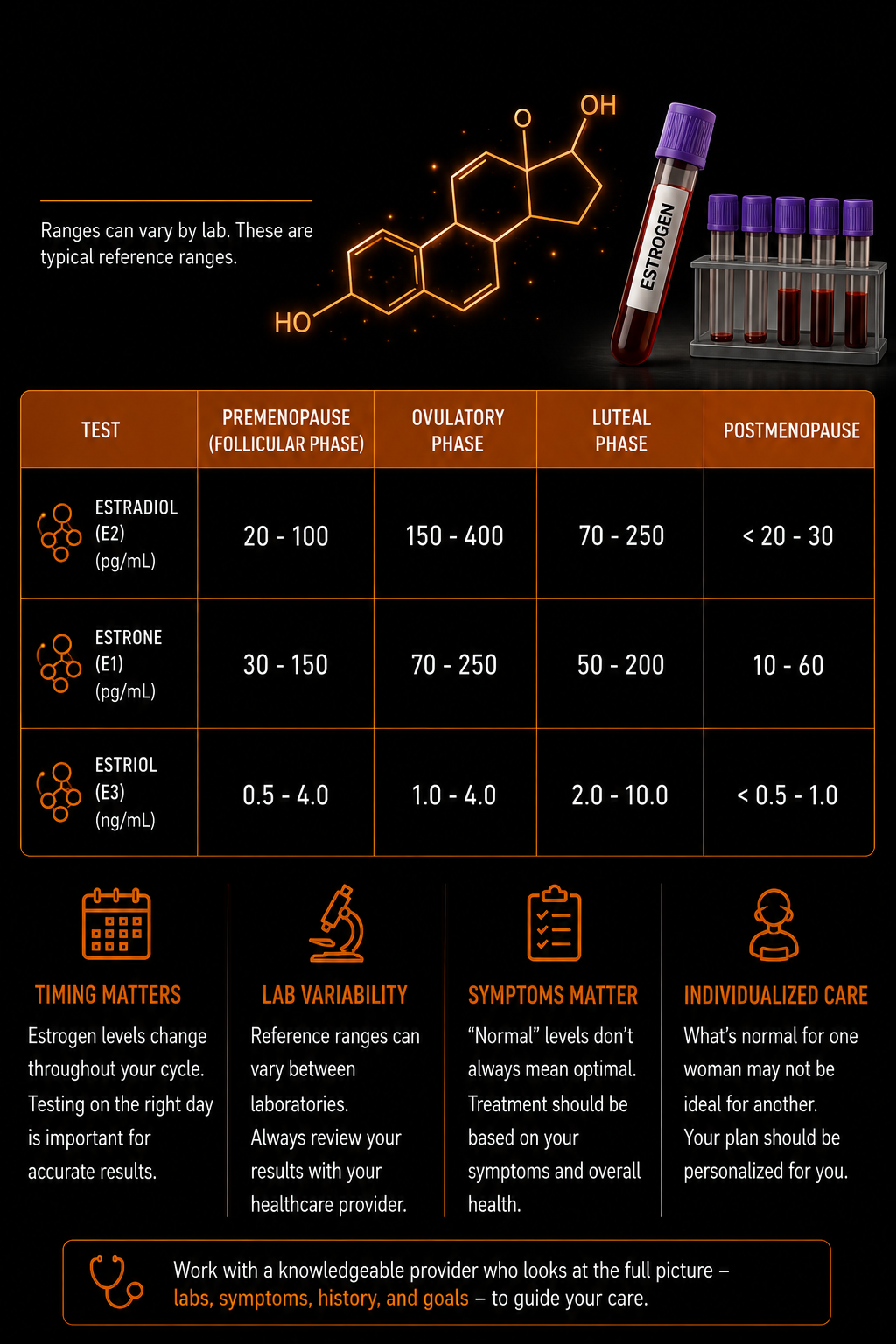
Estradiol levels can fluctuate considerably during perimenopause.
Hormone testing can have a similar limitation during a fluctuating hormonal transition.
An estradiol result may therefore be within the laboratory reference range even though estrogen levels have been changing significantly over time.
This doesn’t make laboratory testing useless. It means the result needs context.
Imagine checking the temperature outside once during an entire month.
That measurement accurately tells you the temperature at that moment, but it doesn’t tell you what the temperature was every other day.
What About Progesterone?
Progesterone production is closely associated with ovulation.
As ovulation becomes less consistent during the menopausal transition, progesterone exposure can also change.
This can contribute to changes in menstrual patterns and may be relevant to the overall clinical picture.
As with estrogen, a progesterone measurement should not automatically determine whether a woman does or doesn’t have hormonally related symptoms. The timing of the test and the clinical circumstances matter.
Could Testosterone Be Involved?
Possibly—but testosterone should not become the automatic explanation for nonspecific symptoms.
Women naturally produce testosterone and other androgens. Androgen levels change across the lifespan and may be relevant in selected patients, particularly when evaluating sexual concerns.
There is no universally accepted testosterone concentration that defines an “optimal” level for every woman.
The strongest evidence for testosterone therapy in women is for appropriately selected postmenopausal women with hypoactive sexual desire disorder (HSDD) after other potential contributing causes have been evaluated.
Fatigue, weight gain or reduced motivation alone do not establish testosterone deficiency.
If My Labs Are Normal, Could Something Else Be Causing My Symptoms?
Absolutely. This is why a comprehensive evaluation is important.
Many conditions can produce symptoms similar to those associated with perimenopause and menopause.
Thyroid Disorders
Changes in thyroid function can affect energy, weight, mood, temperature regulation, menstrual patterns and concentration.
Sleep Disorders
Poor sleep can cause fatigue, difficulty concentrating, mood changes, weight changes and reduced libido.
Sometimes hormonal symptoms such as night sweats initiate the sleep problem. In other cases, a separate sleep disorder may be present.
Anemia and Nutritional Issues
Anemia and certain nutritional deficiencies can contribute to fatigue, weakness and reduced exercise tolerance.
Metabolic Health
Insulin resistance and other metabolic changes can influence energy, weight and body composition.
Medications
Certain medications can affect sexual function, sleep, mood, weight and energy.
Stress, Anxiety and Depression
Psychological and physiologic stress can affect sleep, concentration, libido, appetite and overall well-being.
These factors can also occur at the same time as perimenopause.
The answer doesn’t always have to be hormones or something else. Sometimes several factors contribute simultaneously.
Why Am I Gaining Weight Even Though My Hormone Tests Are Normal?
Weight and body composition changes during midlife are complicated.
Women may notice increased abdominal fat, decreased muscle mass or greater difficulty maintaining their previous weight.
Hormonal changes may contribute to changes in fat distribution and body composition, but estrogen is not the only factor involved.
Other contributors can include:
- Aging
- Reduced muscle mass
- Insulin resistance
- Changes in physical activity
- Nutrition
- Sleep
- Stress
- Medications
- Genetics
Hormone therapy is not a weight-loss medication.
When weight is a significant concern, it deserves its own evaluation rather than simply increasing hormone doses in an attempt to produce weight loss.
Why Has My Libido Changed?
Female sexual desire is influenced by much more than one hormone level.
Potential contributors include:
- Estrogen changes
- Vaginal dryness
- Pain during intercourse
- Testosterone and androgen physiology
- Sleep
- Stress
- Relationship factors
- Medications
- Depression or anxiety
- Other medical conditions
A low libido should therefore be evaluated rather than automatically treated with testosterone.
Sometimes treating vaginal discomfort or sleep disruption can significantly improve sexual well-being without directly treating testosterone.
What About Brain Fog and Difficulty Concentrating?
Many women describe changes in memory or concentration during the menopausal transition.
Sleep disruption can contribute significantly. Hot flashes and night sweats can repeatedly interrupt sleep, which can then affect energy, concentration and mood the following day.
Hormonal changes may also play a role.
However, persistent or significant cognitive symptoms should not automatically be attributed to menopause without considering other potential causes.
Should Hormones Be Tested During Perimenopause?
Sometimes—but testing should answer a clinical question.
For a woman over approximately age 45 with typical symptoms and menstrual changes, extensive hormone testing is often unnecessary to identify perimenopause.
Testing may be more useful when:
- Symptoms are atypical
- Menopause appears unusually early
- Menstrual history is unclear
- Another endocrine condition is suspected
- Pregnancy needs to be excluded
- Testosterone therapy is being considered or monitored
- The clinical situation doesn’t fit the expected pattern
Testing should be individualized. The objective shouldn’t be to order every available hormone simply because symptoms exist.
If My Labs Are Normal, Can Hormone Therapy Still Be Considered?
Potentially.
For menopausal hormone therapy, treatment decisions are often based substantially on symptoms and the woman’s clinical situation, rather than requiring an estradiol level below a particular cutoff.
For example, an otherwise appropriate woman experiencing significant hot flashes during perimenopause does not necessarily need to demonstrate a specific “low estrogen” laboratory value before treatment can be considered.
However, hormone therapy is not appropriate for every woman.
Age, menstrual history, whether the uterus is present, medical history, breast cancer risk, cardiovascular and thrombotic risk, medications and treatment goals all matter.
This is why individualized medical evaluation is important.
What Is Hormone Optimization?
At R2 Medical Clinic, hormone optimization doesn’t mean maximizing hormone levels.
It means looking at the individual woman rather than a laboratory number in isolation.
We consider:
- What symptoms is she experiencing?
- Where is she in the menopausal transition?
- Could another medical condition be contributing?
- What do laboratory results tell us when testing is appropriate?
- What are her treatment goals?
- What are her individual risks?
- If treatment is started, does she actually feel better?
Hormone optimization should be based on clinical response and safety, not simply achieving a predetermined estradiol, progesterone or testosterone level.

Have “normal” hormone levels but still don’t feel like yourself? R2 Medical Clinic offers physician-led women’s hormone evaluation in Denver, Wheat Ridge/Arvada and Castle Rock, starting with a full clinical picture—not just one lab value.
Schedule a consultation or call (720) 640-2333.
What If My Hormone Levels Improve but My Symptoms Don’t?
Then the treatment strategy needs to be reconsidered.
This is one of the most important principles of individualized hormone care.
If laboratory numbers change but the patient doesn’t experience meaningful improvement in the symptoms being treated, simply increasing hormone doses may not be appropriate. Another cause may be contributing.
Treatment success should therefore be measured primarily by meaningful clinical improvement while maintaining appropriate safety, rather than by producing an impressive laboratory result.
Is More Hormone Better?
No.
Hormone optimization should never mean hormone maximization.
Higher hormone exposure can increase adverse effects without necessarily improving symptoms.
The objective is to identify an appropriate treatment for the individual woman using the appropriate hormone, route, formulation and dose when therapy is indicated.
How Is Hormone Therapy Monitored?
Monitoring depends on the individual patient and treatment.
Follow-up may include assessment of:
- Hot flashes
- Night sweats
- Sleep
- Mood
- Sexual function
- Vaginal and urinary symptoms
- Menstrual or vaginal bleeding
- Blood pressure
- Breast health and appropriate screening
- Treatment-related side effects
- Bone health when appropriate
- Laboratory testing when clinically useful
Unexpected or persistent vaginal bleeding should be medically evaluated.
Treatment should also be periodically reassessed as symptoms, health and treatment goals change.
Your Symptoms Matter More Than the Word “Normal”
A laboratory report can provide valuable information.
But it cannot tell the entire story of what a woman experiences during perimenopause and menopause.
A hormone result that falls within a reference range doesn’t automatically explain persistent hot flashes, sleep disruption, sexual changes or other symptoms.
At the same time, symptoms don’t automatically mean more hormones are the solution.
The better approach is:
Listen to the symptoms.
Understand the stage of hormonal transition.
Evaluate other potential causes.
Use laboratory testing when it adds useful information.
Individualize treatment when appropriate.
Monitor whether the patient actually improves.
At R2 Medical Clinic, that is the foundation of our approach to women’s hormone optimization.
The goal isn’t to make a laboratory report look perfect. The goal is to understand the individual woman and determine an appropriate path toward helping her feel and function better.
Related Women’s Hormone Health Resources
Hormone Optimization for Women: A Physician’s Guide to Estrogen, Progesterone & Testosterone
Hormone Therapy Bloodwork for Women: What We Test, What the Results Mean & Why Symptoms Matter
Your Health Is More Than a Subscription: Why Quality Medical Care Matters
Frequently Asked Questions
Can I have perimenopause symptoms with normal estrogen levels?
Can I be in perimenopause if my FSH is normal?
Can I be in perimenopause while still having regular periods?
Do I need low estrogen to qualify for hormone therapy?
Why am I exhausted if my hormones are normal?
Can hormone therapy help with brain fog?
Can hormone therapy help me lose weight?
Is testosterone part of women’s hormone optimization?
Do hormone levels need to be checked repeatedly?
What should I do if I’ve been told everything is normal but I still don’t feel right?
About the Medical Reviewer
Erik Natkin, DO, is the founder of R2 Medical Clinic, a physician-led medical practice serving Denver, Wheat Ridge/Arvada and Castle Rock, Colorado. His clinical practice includes individualized hormone evaluation and optimization for women and men, testosterone therapy, medical weight management and other areas of wellness medicine.
This article is intended for educational purposes and does not constitute individualized medical advice. Hormone therapy has potential benefits and risks and is not appropriate for every patient. Diagnosis and treatment decisions should be made between a patient and a qualified healthcare professional.
Medical References
- The Menopause Society. The 2022 Hormone Therapy Position Statement of The North American Menopause Society. Menopause. 2022. journals.lww.com
- The Menopause Society. Menopause Topics: Perimenopause. menopause.org
- American College of Obstetricians and Gynecologists. The Menopause Years. acog.org
- American College of Obstetricians and Gynecologists. Hormone Therapy for Menopause. acog.org
- National Institute for Health and Care Excellence. Menopause: Identification and Management. NICE guideline NG23. nice.org.uk
- Davis SR, et al. Global Consensus Position Statement on the Use of Testosterone Therapy for Women. Journal of Clinical Endocrinology & Metabolism. 2019. PMID: 31498871