What Is an Epigenetic Clock?
A physician's guide to epigenetic clocks and DNA methylation-based biological age testing — what the science shows, what lifestyle factors may influence it, and why healthspan matters more.
Erik Natkin, DO • 15 min read

Medically reviewed by Erik Natkin, DO — Founder, R2 Medical Clinic, Denver, Colorado
Last medically reviewed: September 2026
An epigenetic clock uses patterns of DNA methylation at selected locations across the genome to estimate characteristics associated with aging.
One of the best-known early models was developed by researcher Steve Horvath.
Since then, numerous generations of epigenetic clocks have been developed.
Some primarily estimate chronological age, while newer models attempt to measure characteristics associated with:
- Biological aging
- Disease risk
- Mortality risk
- Physiological decline
- The rate or “pace” of aging
Examples encountered in scientific literature include:
These tests have become increasingly sophisticated.
But there is an important distinction between scientific usefulness and individual clinical interpretation.
An epigenetic clock is a biomarker or statistical model.
It is not a literal stopwatch inside your cells.
A test reporting that someone has an “epigenetic age” of 44 when their chronological age is 50 does not necessarily mean that every organ in that person’s body is biologically six years younger.
Different clocks measure different biological signals, different tissues can age differently, and test results can be influenced by methodology and the underlying cell populations being analyzed.
Epigenetic clocks are promising research tools, but scientists continue to investigate exactly what each clock measures and how results should be interpreted clinically.
Chronological Age vs. Biological Age
Chronological age is simple. It is the number of years since you were born.
Biological aging is much more complicated.
Two people can both be 55 years old yet have very different levels of:
- Cardiovascular fitness
- Muscle mass
- Metabolic health
- Insulin sensitivity
- Bone density
- Cognitive function
- Inflammation
- Frailty
- Cardiovascular disease risk
This is why longevity researchers increasingly distinguish between lifespan and healthspan.
Lifespan describes how long someone lives. Healthspan describes how long someone remains healthy and functional.
Epigenetic aging is one potential way researchers are attempting to quantify aspects of biological aging, but it is only one piece of a much larger biological puzzle.
Why Does Epigenetics Matter for Aging?
Aging is associated with widespread changes in gene regulation.
Over time, cells accumulate alterations involving DNA methylation, chromatin organization, histone modifications and other regulatory systems.
Some of these changes may simply be markers of aging. Others may contribute to biological dysfunction.
Researchers are therefore asking several important questions:
Do epigenetic changes cause aging? Are they consequences of aging? Or are they some combination of both?
The answer is still being investigated.
That distinction matters because changing a biomarker associated with aging does not automatically mean that aging itself has been reversed.
For example, lowering a biological-age measurement would be scientifically interesting. But ultimately, the more meaningful question is whether an intervention improves actual health outcomes such as physical function, metabolic health, cardiovascular disease, cognitive function, disability or mortality.
Can Lifestyle Affect Your Epigenetics?
This is where the research becomes particularly interesting.
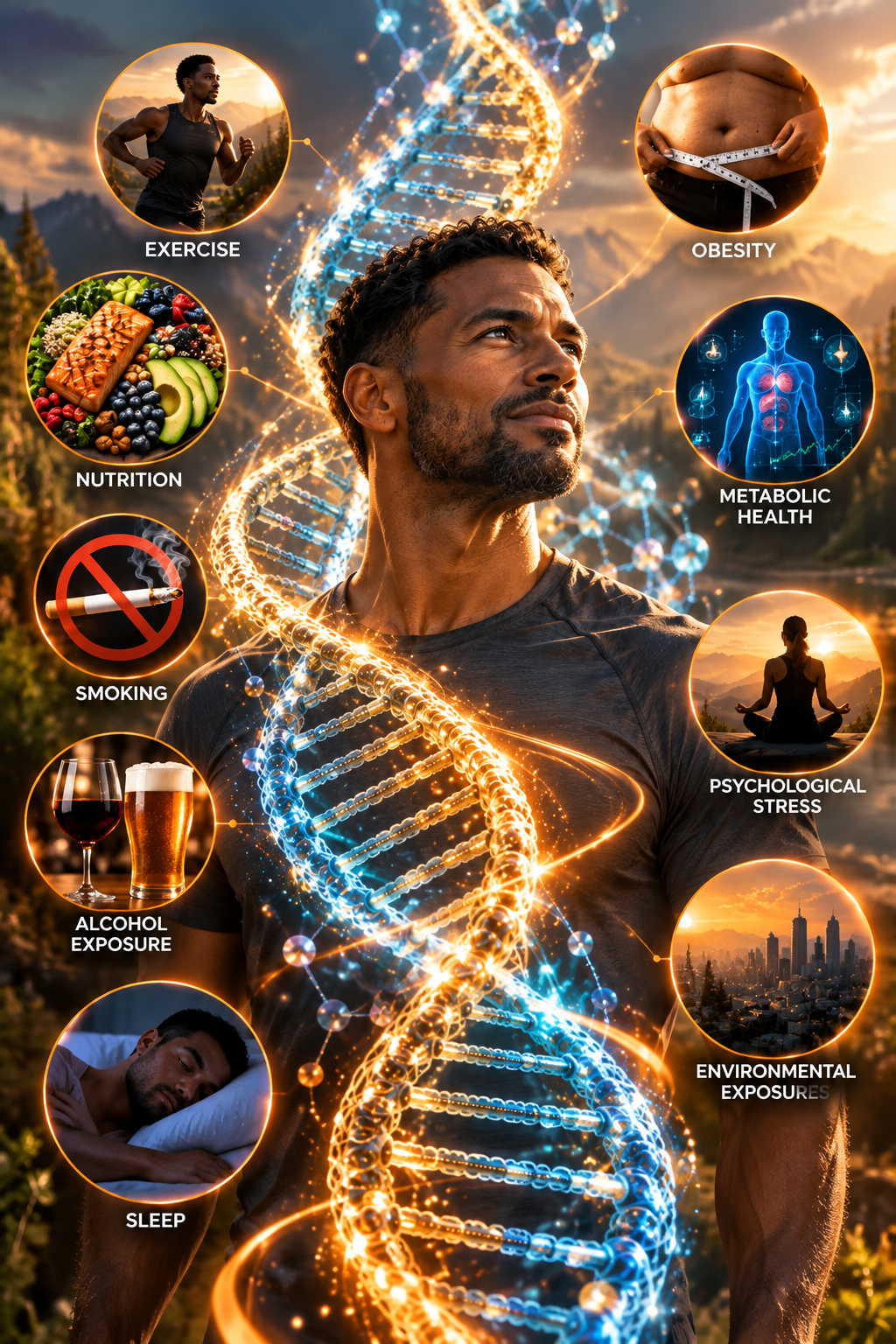
Epigenetic regulation appears to respond, at least in part, to environmental and lifestyle signals. Research has investigated relationships involving:
- Exercise
- Nutrition
- Smoking
- Alcohol exposure
- Obesity
- Metabolic health
- Sleep
- Psychological stress
- Environmental exposures
The National Institute on Aging notes that lifestyle and behavioral factors including diet, sleep, exercise, smoking and alcohol consumption may influence epigenetic patterns.
But this does not mean that scientists can currently prescribe a precise lifestyle formula guaranteed to make someone’s epigenetic clock younger.
Much of the research remains observational, and different epigenetic clocks sometimes respond differently to the same exposures.
Still, several lifestyle factors deserve particular attention.
Exercise and Epigenetic Aging
Exercise is one of the most interesting areas of epigenetic research.
Physical activity creates powerful biological signals throughout the body. Exercise influences:
- Glucose metabolism
- Insulin sensitivity
- Mitochondrial function
- Muscle protein synthesis
- Cardiovascular function
- Inflammation
- Hormonal signaling
- Body composition
Researchers are now studying how these adaptations interact with epigenetic regulation.
Recent scientific reviews suggest that exercise can influence DNA methylation, histone modifications and other epigenetic mechanisms associated with cellular function and aging. Some population studies also find associations between physical activity and more favorable measures on certain epigenetic aging clocks.
This does not prove that exercise literally “reverses aging.” But it adds another potential biological mechanism to an already extensive body of evidence supporting regular physical activity for long-term health.
For most adults, a comprehensive fitness program should generally include both resistance training to preserve strength and lean muscle mass, and aerobic exercise to support cardiovascular and metabolic health.
Maintaining muscle and cardiovascular fitness becomes increasingly important with age.
Nutrition and Epigenetics
Nutrition also provides biochemical signals that influence cellular metabolism.
Nutrients involved in one-carbon metabolism—including folate, vitamin B12, choline and methionine—participate in biochemical pathways related to methylation.
But this does not mean that taking large quantities of “methylation supplements” will make someone biologically younger. Human metabolism is considerably more complicated.
The broader evidence continues to favor dietary patterns built primarily around:
- Vegetables
- Fruits
- Adequate protein
- High-fiber foods
- Minimally processed foods
- Healthy fats
- Appropriate caloric intake
The goal should not simply be to manipulate an epigenetic test. The goal is to support metabolic health, cardiovascular health, muscle preservation and long-term physical function.
Body Composition and Metabolic Health
Excess adiposity—particularly visceral fat—is associated with metabolic dysfunction and chronic disease. Obesity is associated with:
- Insulin resistance
- Type 2 diabetes
- Cardiovascular disease
- Fatty liver disease
- Sleep apnea
- Chronic inflammation
- Certain cancers
- Depression
Research has also found associations between higher body mass index and accelerated aging on some DNA-methylation clocks.
That does not mean BMI alone determines biological age. BMI cannot distinguish muscle from fat and does not directly measure visceral adiposity.
Body composition, waist circumference, metabolic laboratory values, blood pressure and physical fitness can provide important additional information.
For individuals with obesity or metabolic disease, improving body composition may therefore influence multiple pathways associated with healthier aging.
Smoking and Epigenetic Changes
Smoking provides one of the clearest examples of environmental exposure leaving measurable molecular signatures.
Tobacco exposure has been associated with distinct DNA methylation patterns. Some modern epigenetic aging models are particularly sensitive to smoking-related biological signals.
Importantly, the significance extends far beyond epigenetics. Smoking increases the risk of cardiovascular disease, pulmonary disease, cancer and premature mortality.
An improved epigenetic biomarker is not the primary reason to stop smoking. Reducing disease risk is.
What About Sleep?
Sleep is increasingly recognized as an important component of metabolic and neurological health. Chronic sleep deprivation can affect:
- Insulin sensitivity
- Appetite regulation
- Blood pressure
- Cognitive performance
- Hormonal signaling
- Immune function
Researchers are also investigating relationships between sleep patterns and epigenetic aging.
The science is still developing, but adequate sleep remains one of the fundamental components of a healthy lifestyle regardless of whether it ultimately produces measurable changes on a particular epigenetic clock.
Stress and Epigenetics
Chronic psychological stress has also attracted significant attention in epigenetic research.
Stress activates biological systems involving cortisol, sympathetic nervous system activity, inflammation and immune regulation.
Researchers have identified associations between chronic stress exposure and certain epigenetic patterns. But stress biology is extremely complicated.
It would be inappropriate to tell someone that simply reducing stress will “reverse their biological age.”
Still, strategies that improve stress management, psychological well-being and sleep may contribute to overall health.
Alcohol and Epigenetic Aging
Alcohol represents another environmental exposure capable of influencing cellular biology.
Higher alcohol intake has been associated with numerous health risks, including liver disease, hypertension, certain cancers and neurological effects. Alcohol exposure has also been associated with epigenetic changes.
From a longevity perspective, alcohol should therefore not be viewed as an anti-aging intervention simply because older observational studies occasionally reported associations between moderate drinking and cardiovascular outcomes.
The potential health effects depend on dose, individual risk factors and drinking patterns.
Can You Actually Reverse Your Epigenetic Age?
This is one of the most common questions in longevity medicine.
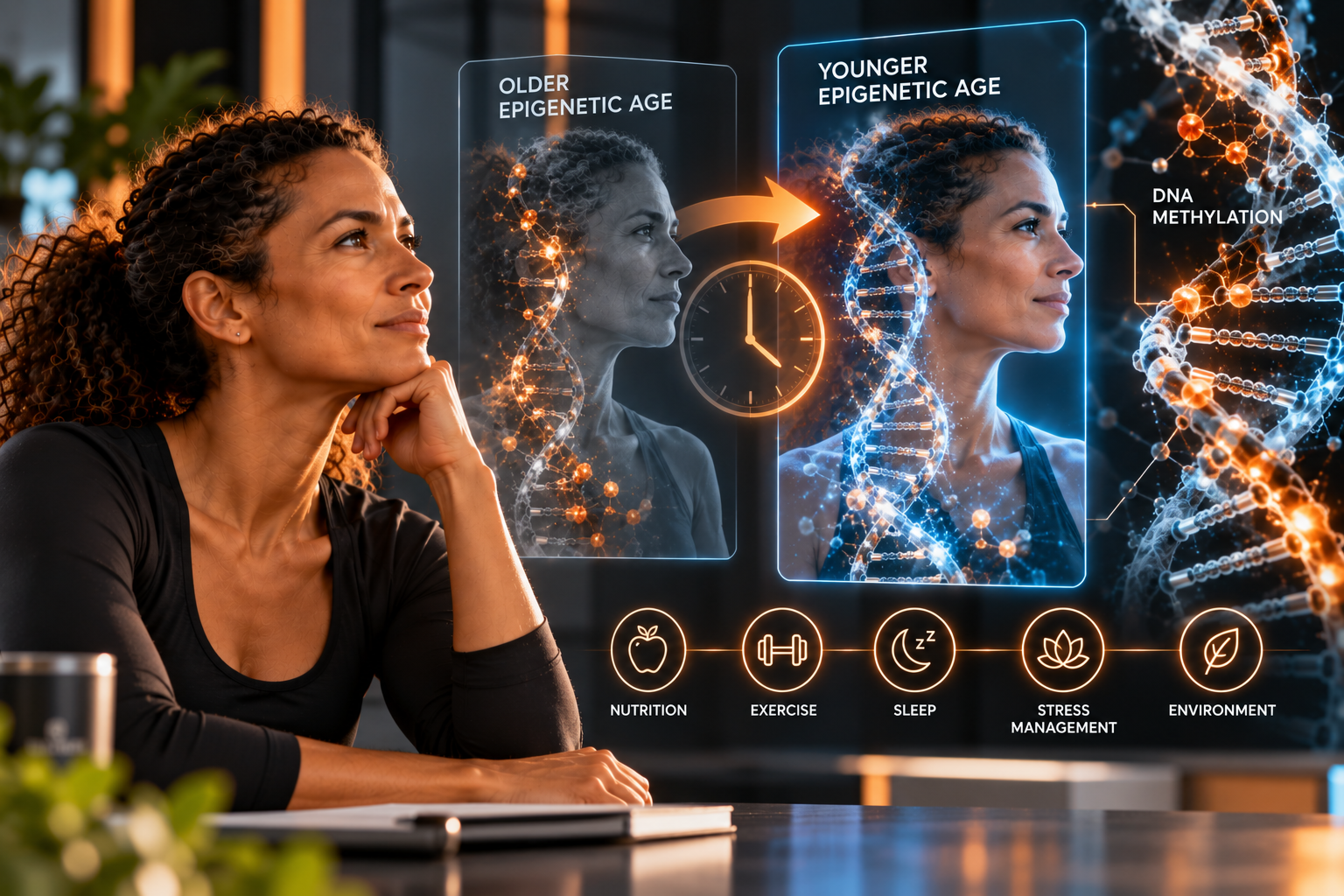
The most scientifically accurate answer is: possibly—but we do not yet know exactly what that means clinically.
Some intervention studies have demonstrated changes in DNA-methylation-based aging biomarkers after lifestyle interventions. For example, randomized research involving diet and physical activity has reported changes in certain DNA methylation biomarkers associated with aging.
That is scientifically fascinating. But there is an important distinction:
Changing an aging biomarker is not necessarily the same thing as reversing human aging.
To demonstrate true age reversal, researchers would ideally need to show meaningful improvements in outcomes such as:
- Disease incidence
- Physical function
- Cognitive function
- Frailty
- Disability
- Healthspan
- Mortality
Those studies require large populations and many years of follow-up. We are not there yet.
What About Commercial Biological-Age Tests?
Consumers can now purchase tests claiming to estimate biological or epigenetic age from blood or saliva.
These tests can be interesting. But results should be interpreted cautiously. Different companies may use:
- Different methylation sites
- Different algorithms
- Different biological samples
- Different reference populations
- Different definitions of biological age
Two tests may therefore provide different results for the same person. Even the same type of test can potentially vary over time.
For this reason, an epigenetic-age result should not be interpreted in isolation. It should certainly not replace established clinical measurements such as:
- Blood pressure
- Lipid levels
- Glucose and hemoglobin A1C
- Body composition
- Cardiovascular fitness
- Strength
- Kidney and liver function
- Appropriate cancer screening
- Bone health
- Sleep evaluation
- Overall medical history
A sophisticated biological-age test does not automatically become more clinically important than these proven health measurements simply because it measures something at the molecular level.
Should You Test Your Biological Age?
For someone interested in longevity science, epigenetic testing can be fascinating. It may provide another piece of information about biological aging.
But the test should be viewed as one data point rather than a diagnosis or definitive measurement of health.
A result should not create false reassurance. Someone whose epigenetic age appears younger than their chronological age can still have hypertension, diabetes, coronary artery disease or other medical problems.
Likewise, an unfavorable epigenetic-age result does not mean someone is destined to develop disease.
The most useful application may eventually be longitudinal measurement—following biological changes over time—but researchers are still determining how much change represents a true biological signal rather than normal testing variability.
Genetics Are Not Destiny—but They Still Matter
The growing field of epigenetics sometimes leads to another misleading statement: “Your genes don’t determine your health.”
That goes too far.
Genetics can substantially influence disease risk. Some inherited genetic variants dramatically increase the likelihood of particular diseases. Epigenetics does not eliminate those risks.
A better way to think about the relationship is: your genetics establish part of your biological framework. Your environment, behaviors, medical conditions and other exposures interact with that framework throughout life.
Health is rarely determined by genetics or lifestyle alone. It is usually the result of complex interactions among both.
The Bigger Picture: Healthspan Matters More Than a Number
Longevity medicine can easily become overly focused on numbers.
Biological age. Epigenetic age. Telomere length. VO₂ max. Body-fat percentage. Glucose. Hormone levels.
Each can provide useful information. But none represents health by itself.
A successful longevity strategy should ultimately help someone remain:
- Strong
- Mobile
- Metabolically healthy
- Cognitively functional
- Cardiovascularly fit
- Independent
- Engaged in life
That is the difference between simply chasing biomarkers and actually improving healthspan.
A Practical Approach to Healthy Aging
You do not need an epigenetic test to begin improving your health. The foundations remain remarkably familiar:
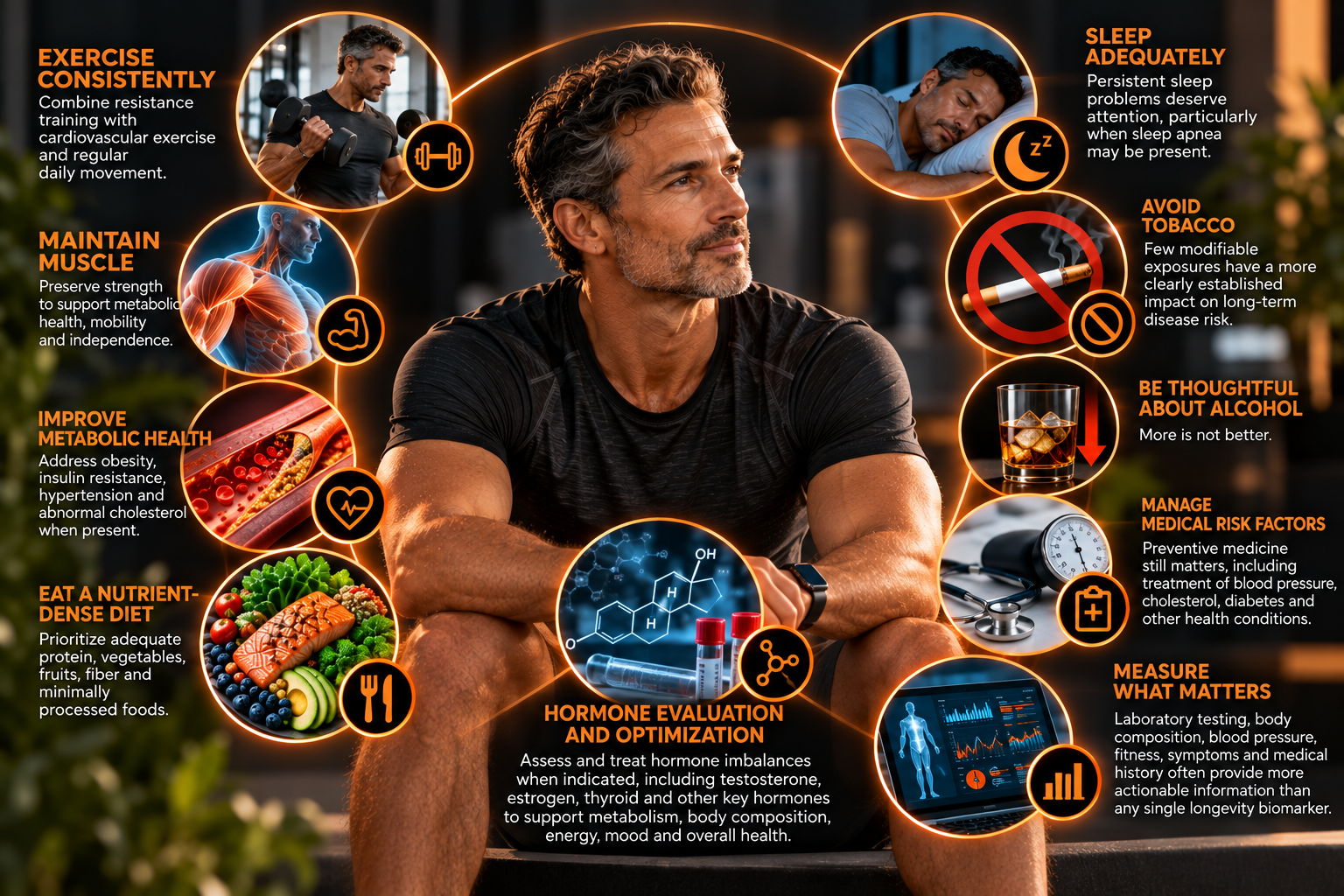
- Exercise consistently. Combine resistance training with cardiovascular exercise and regular daily movement.
- Maintain muscle. Age-related loss of muscle and strength can have major consequences for metabolic health, mobility and independence.
- Improve metabolic health. Address obesity, insulin resistance, hypertension and abnormal cholesterol when present.
- Eat a nutrient-dense diet. Prioritize adequate protein, vegetables, fruits, fiber and minimally processed foods.
- Sleep adequately. Persistent sleep problems deserve attention, particularly when sleep apnea may be present.
- Avoid tobacco. Few modifiable exposures have a more clearly established impact on long-term disease risk.
- Be thoughtful about alcohol. More is not better.
- Manage medical risk factors. Preventive medicine still matters in longevity medicine, including hormone evaluation and possible treatment.
- Measure what matters. Laboratory testing, body composition, blood pressure, fitness, symptoms and medical history often provide more actionable information than any single longevity biomarker.
The Future of Epigenetics and Longevity Medicine
Epigenetics may ultimately become an important component of personalized longevity medicine.
Researchers are investigating whether epigenetic biomarkers can help:
- Identify accelerated biological aging
- Estimate disease risk
- Measure responses to interventions
- Track biological changes over time
- Identify potential therapeutic targets
- Better understand why individuals age differently
The science is moving quickly. But the responsible approach is to separate what is promising from what is already proven.
Epigenetic clocks are powerful research tools. They may eventually become valuable clinical tools. But we should not confuse the ability to measure an aging-associated biomarker with the ability to completely understand—or reverse—the aging process.
The Bottom Line
You cannot change the DNA sequence you inherited simply by changing your lifestyle. But your genes do not operate in isolation.
Nutrition, exercise, smoking, metabolic health, environmental exposures and other factors can interact with biological systems that regulate gene activity. That is one reason epigenetics has become such an exciting area of aging research.
The emerging science reinforces an important principle: the genes you inherit matter, but how your body ages is influenced by much more than genetics alone.
We may eventually be able to measure and modify biological aging with much greater precision. For now, however, the most effective longevity strategy remains less glamorous—and much better supported by evidence:
Improve metabolic health. Preserve muscle. Exercise. Sleep. Avoid harmful exposures. Manage disease risk. And focus on maintaining health and function throughout life.
Because the ultimate goal should not simply be to produce a younger number on a biological-age test.
The goal is to remain healthier for longer.
Interested in a healthspan-focused evaluation? R2 Medical Clinic offers physician-led assessment of metabolic health, hormone status, body composition and modifiable risk factors in Denver, Wheat Ridge/Arvada and Castle Rock.
Schedule a consultation or call (720) 640-2333.
Related Anti-Aging Resources
What Does “Anti-Aging” Actually Mean? A Physician’s Look at Longevity, Biological Age & Healthspan
Methylation Explained: Why This Cellular Process Matters for Your Health
Frequently Asked Questions
What is epigenetics?
Epigenetics refers to biological mechanisms that regulate gene activity without changing the underlying DNA sequence. These mechanisms include DNA methylation, histone modifications and other systems that influence when and how genes are expressed.
Can lifestyle change my genes?
Lifestyle generally does not change the DNA sequence you inherited. However, exercise, nutrition, smoking, environmental exposures and other factors may influence epigenetic mechanisms that regulate gene expression.
What is epigenetic age?
Epigenetic age is an estimate generated using patterns of DNA methylation and a statistical algorithm known as an epigenetic clock. Depending on the clock, the measurement may estimate chronological age or biological characteristics associated with aging, disease or mortality risk.
Is biological age the same as chronological age?
No. Chronological age is simply the number of years since birth. Biological age attempts to describe how the body is functioning or aging physiologically. There is currently no single universally accepted measurement of biological age.
Can an epigenetic test tell me exactly how old my body is?
No. Epigenetic tests measure specific molecular patterns and use algorithms to interpret them. They do not directly measure the age of every organ or tissue in the body.
Can exercise make my epigenetic age younger?
Physical activity has been associated with favorable epigenetic patterns, and research suggests exercise can influence several epigenetic mechanisms. However, scientists have not established that exercise literally reverses human aging simply because an epigenetic-age measurement changes.
Can diet change DNA methylation?
Diet can influence metabolic pathways involved in methylation, and nutritional patterns have been associated with epigenetic differences. The relationship is complex, however, and no single food or supplement has been proven to reliably reverse biological aging.
Are biological-age tests worth doing?
They can be interesting, particularly for people interested in longevity science, but results should be interpreted cautiously and alongside established measures of health. They should not replace routine medical evaluation or validated disease-risk assessments.
Can biological aging be reversed?
Certain biomarkers associated with aging can change in response to interventions. Whether those changes represent true reversal of the overall human aging process remains an active area of research.
What is more important: lifespan or healthspan?
Both matter, but healthspan focuses on the number of years a person remains healthy, functional and independent. Extending life without preserving physical and cognitive function is very different from extending healthy life.
About the Medical Reviewer
Erik Natkin, DO, is the founder of R2 Medical Clinic, a physician-led medical practice serving Denver, Wheat Ridge/Arvada and Castle Rock, Colorado. His clinical practice includes individualized hormone optimization, physician-supervised medical weight management, peptide therapy and other areas of wellness medicine.
This article is intended for educational purposes only and does not constitute medical advice, diagnosis or treatment. Epigenetic and biological-age testing is an evolving area of research, and the clinical significance of individual results may not be fully established. Medical decisions should be based on an individual’s history, examination, appropriate laboratory testing and consultation with a qualified healthcare professional.
Medical References
- Horvath S, Raj K. DNA methylation-based biomarkers and the epigenetic clock theory of ageing. Nature Reviews Genetics. 2018;19:371–384.
- Teschendorff AE, Horvath S. Epigenetic ageing clocks: statistical methods and emerging computational challenges. Nature Reviews Genetics. 2025;26:350–368.
- National Institute on Aging. The Epigenetics of Aging: What the Body’s Hands of Time Tell Us. National Institutes of Health.
- Quach A, Levine ME, Tanaka T, et al. Epigenetic clock analysis of diet, exercise, education, and lifestyle factors. Aging. 2017.
- Fiorito G, et al. DNA methylation-based biomarkers of aging were slowed down in a two-year diet and physical activity intervention trial: The DAMA study. Aging Cell. 2021.
- Ryan J, Wrigglesworth J, Loong J, Fransquet PD, Woods RL. A systematic review and meta-analysis of environmental, lifestyle, and health factors associated with DNA methylation age. Journals of Gerontology: Series A. 2020.
- Recent research continues to examine associations between physical activity, smoking, metabolic health and DNA-methylation-based aging measures, while emphasizing the need for larger prospective and interventional studies to determine their clinical significance.