Telomeres & Aging: Do Longer Telomeres Mean You’re Younger?
What telomeres are, why they shorten, what telomere tests can and can’t tell you about biological age, and what the evidence on lifestyle and Epitalon shows.
Erik Natkin, DO • 16 min read
Medically reviewed by Erik Natkin, DO — Founder, R2 Medical Clinic, Denver, Colorado
Last medically reviewed: October 2026
When people talk about biological aging, one term frequently comes up: telomeres.
Telomeres are often described as the protective caps at the ends of our chromosomes. Because they generally become shorter as we age, telomere length has attracted considerable attention as a potential marker of biological aging.
This has also created a growing market for tests claiming to measure your “cellular age” by measuring the length of your telomeres.
But does having longer telomeres actually mean that you are younger?
The answer is more complicated.
Telomeres are an important part of aging biology, and telomere attrition is recognized as one of the biological processes associated with aging. But telomere length is influenced by genetics, age, environmental exposures, health conditions, lifestyle and even how the measurement itself is performed.
So while telomeres can provide interesting information about cellular biology, a single telomere measurement should not be interpreted as a definitive measurement of how quickly—or how well—you are aging.
What Are Telomeres?
Our DNA is organized into structures called chromosomes.
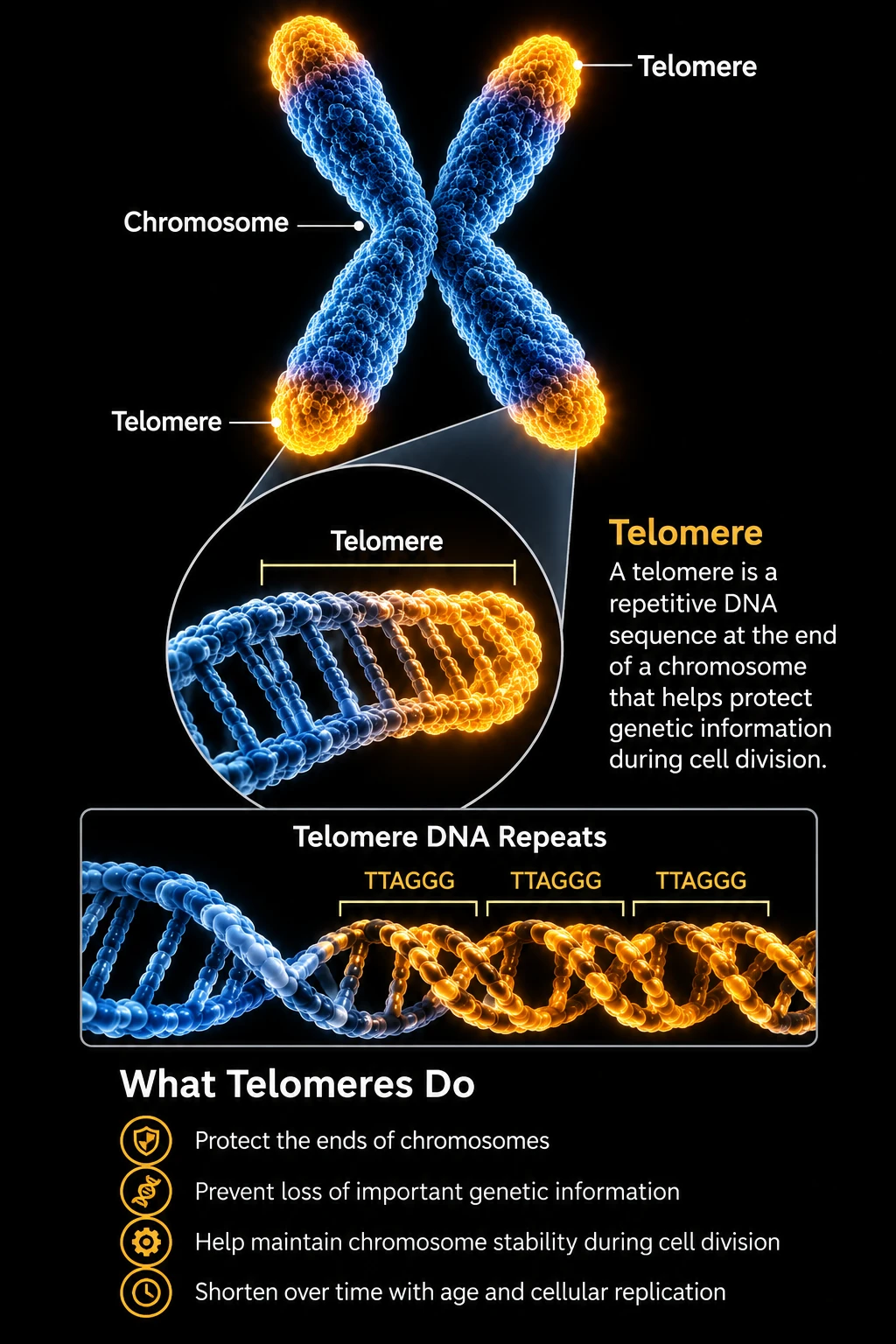
At the ends of those chromosomes are repetitive sequences of DNA called telomeres. One common analogy is to think of telomeres as the plastic tips on shoelaces that help prevent the laces from fraying.
Telomeres serve a similar protective function.
Each time many of our cells divide, the DNA must be copied. Because of the way DNA replication works, a small portion of the chromosome’s end cannot be completely copied during each cycle.
When telomeres become critically short, cells may stop dividing, enter a state called cellular senescence, or undergo programmed cell death—a process scientifically known as apoptosis.
This connection between telomere shortening and cellular aging is one reason telomeres have become such an important area of aging research.
Telomeres provide a buffer.
Instead of losing important genetic information every time the cell divides, portions of the telomere can be lost.
Over many cell divisions, telomeres may progressively become shorter.
What Is Cellular Senescence?
Cellular senescence is a state in which a cell remains alive but permanently stops dividing, often in response to cellular stress, DNA damage, or critically shortened telomeres.
Senescence itself is not inherently harmful. In fact, it is an important protective biological process. By preventing damaged or potentially abnormal cells from continuing to replicate, cellular senescence helps protect against uncontrolled cell growth and cancer. It also plays beneficial roles in wound healing, tissue remodeling, and development.
The problem arises when senescent cells are not effectively cleared and progressively accumulate in tissues as we age.
Although these cells no longer divide, they remain metabolically active and can release inflammatory cytokines, growth factors, proteases, and other signaling molecules collectively known as the senescence-associated secretory phenotype (SASP). These signals can affect neighboring cells and alter the surrounding tissue environment.
The process of cellular senescence can be protective and beneficial.
The chronic accumulation of senescent cells, however, is predominantly associated with detrimental effects on tissue health and aging.
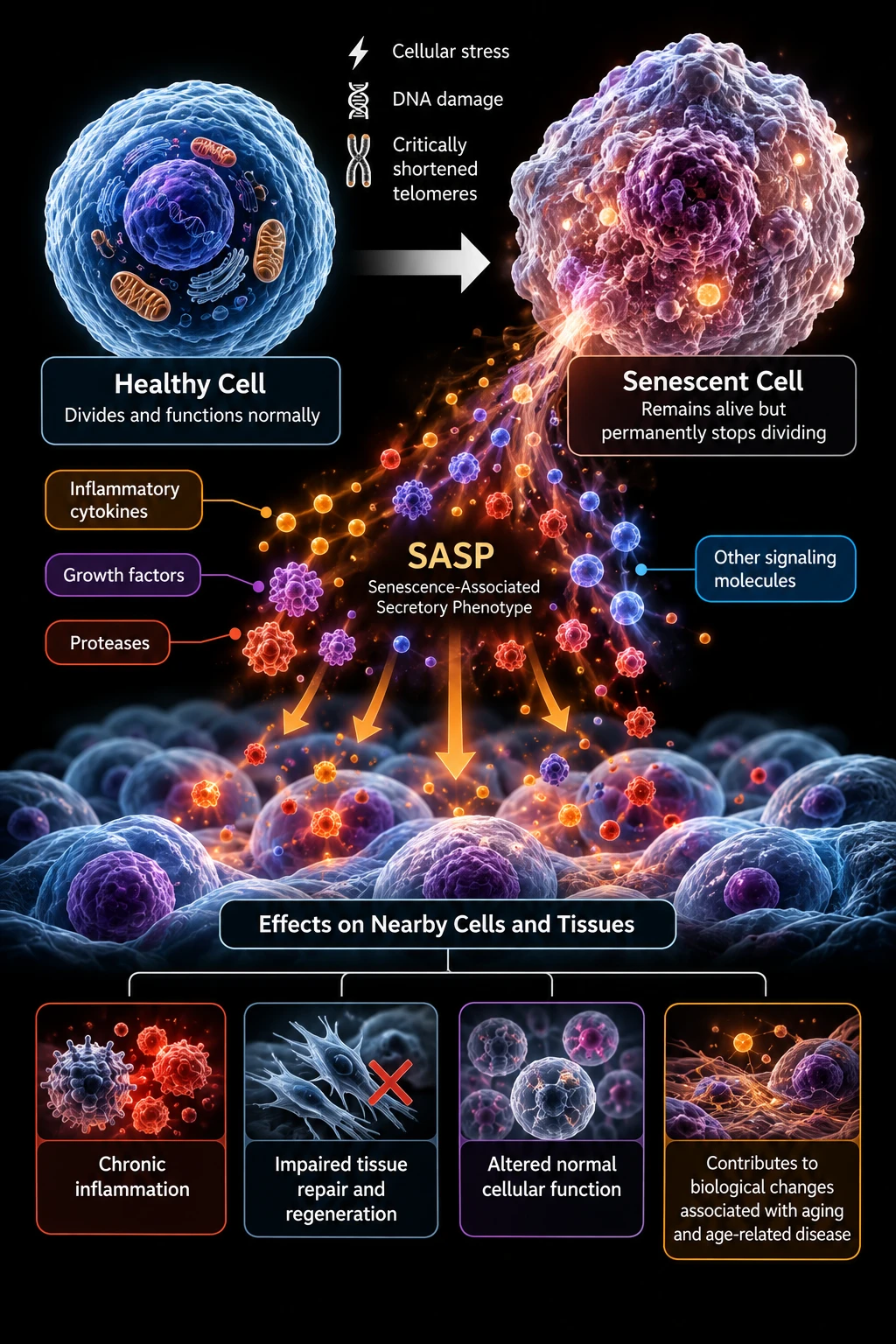
Over time, the accumulation of senescent cells and persistent SASP signaling can promote chronic inflammation, impair tissue repair and regeneration, disrupt normal cellular function, and contribute to biological changes associated with aging and age-related disease.
What Is Telomerase?
Our bodies also have a mechanism capable of maintaining or rebuilding telomeres. An enzyme called telomerase can add DNA sequences back onto telomeres.
Telomerase activity is relatively high in certain cells that need continued capacity for replication, including some stem cells, reproductive cells and immune cells. Most mature somatic cells, however, have relatively limited telomerase activity.
This is important because telomerase is not simply an “anti-aging enzyme.”
Cancer cells frequently activate mechanisms that maintain their telomeres, including telomerase activation. Maintaining telomeres can allow abnormal cells to continue dividing when they otherwise might have stopped.
This illustrates an important principle in longevity medicine: more is not always better. The goal of healthy aging is not simply to maximize every biomarker associated with youth.
Why Do Telomeres Shorten?
Chronological aging is one important contributor to telomere shortening, but it is not the only one. Telomere biology appears to reflect a combination of genetics, cellular replication, oxidative stress, inflammation, environmental exposures and lifestyle.
- Age
- Genetics
- Smoking
- Physical activity
- Sleep
- Metabolic health
- Obesity
- Chronic inflammation
- Oxidative stress
- Psychological and environmental stressors
Importantly, many of these relationships are associations.
For example, if people who exercise regularly have longer telomeres on average, that does not necessarily mean exercise directly lengthened their telomeres or that telomere length explains all of the health benefits associated with exercise.
The relationship between lifestyle, disease and telomere biology is considerably more complicated.
Do Longer Telomeres Mean You Are Younger?
Not necessarily.
Across populations, telomere length generally decreases with increasing age. This makes telomere length useful in aging research. But there is substantial variation between individuals.
Two people who are both 55 years old may have different measured telomere lengths. That does not necessarily mean the person with longer telomeres is biologically younger in every meaningful sense.
Biological aging occurs across multiple systems.
Telomere length represents one component of this much larger biological picture.
That is why I would be cautious about interpreting a telomere test as your definitive “biological age.”
- DNA regulation
- Mitochondrial function
- Cellular senescence
- Metabolism
- Inflammation
- Immune function
- Protein regulation
- Stem-cell function
- Cardiovascular health
- Muscle mass and physical function
- Brain health
Can Telomeres Tell You Your Biological Age?
This is where marketing can sometimes get ahead of the science.
Commercial telomere tests may compare your measured telomere length with values observed in other people of similar or different ages. A report may then provide an estimated “cellular age.” That number can look impressively precise. But precision on a report does not necessarily mean biological certainty.
Different methods can be used to measure telomeres, and results can be affected by the type of cells tested, sample collection, laboratory processing, DNA extraction and analytical technique.
One commonly used technique is quantitative polymerase chain reaction, or qPCR. It is useful for population research because it can process large numbers of samples efficiently, but methodological studies have identified meaningful variability between assays and laboratories.
Telomeres also vary between tissues. A blood measurement does not necessarily tell us the exact telomere length of cells in your heart, brain, muscles or other organs.
For these reasons, telomere testing is much more useful as a research tool and potentially as one piece of biological information than as a definitive clock telling you exactly how old your body is.
Telomere Testing vs. Epigenetic Age Testing
Telomere testing and epigenetic age testing are sometimes grouped together, but they measure very different things.
Examines the length of protective DNA sequences at chromosome ends — a relatively narrow biological measurement.
Generally examines patterns of DNA methylation at many locations across the genome and uses mathematical algorithms—often called epigenetic clocks—to estimate aspects of biological aging.
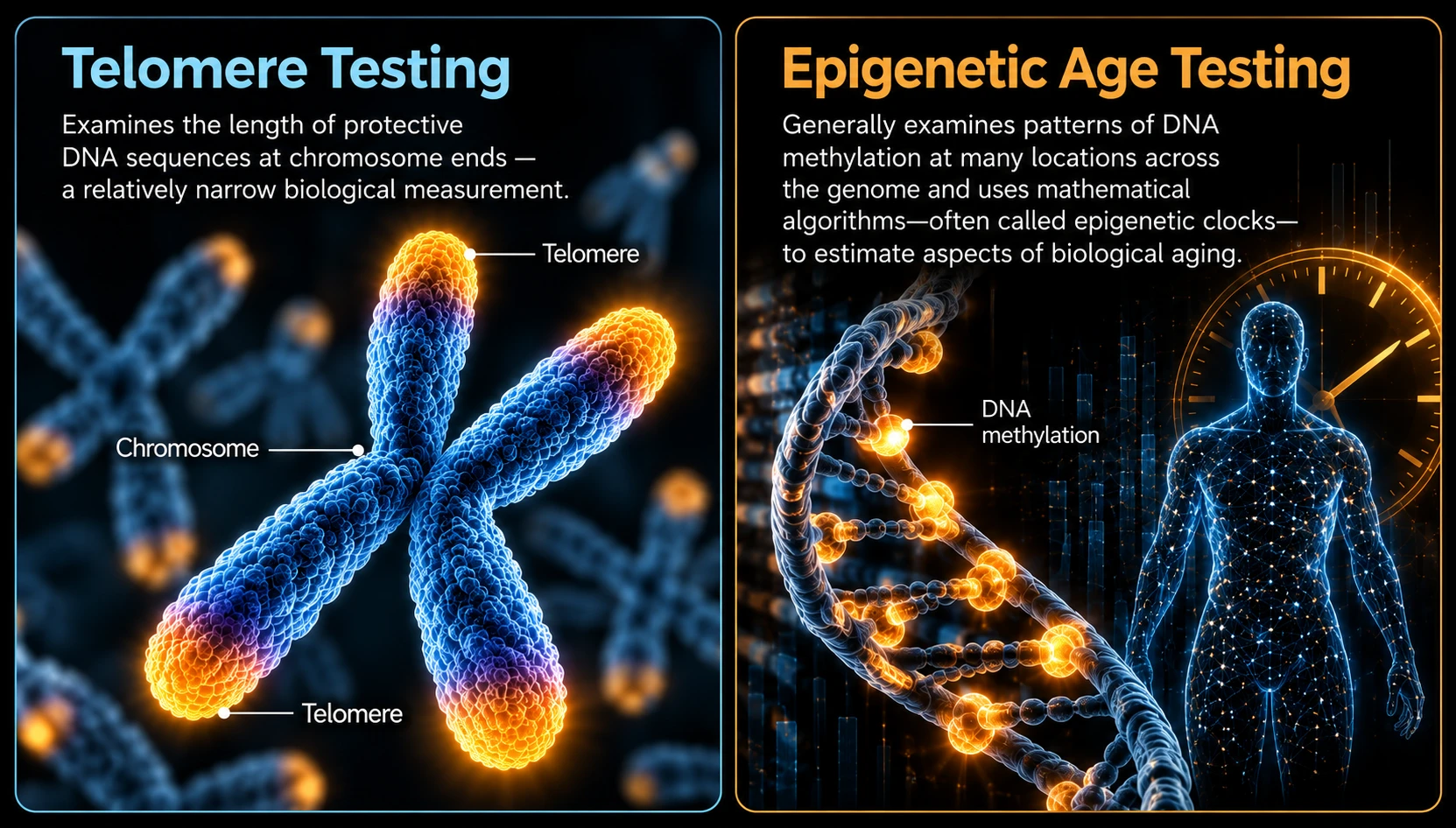
Neither approach provides a perfect measurement of biological age. However, modern epigenetic clocks can incorporate information across hundreds or thousands of genomic sites, while telomere length represents a much narrower biological measurement.
This does not make telomeres unimportant. It simply means that asking “How long are my telomeres?” and asking “How quickly am I biologically aging?” are not the same question.
Can Lifestyle Affect Telomere Length?
Possibly—and this is one of the more interesting areas of telomere research.
Studies have examined relationships between telomere length and exercise, diet, smoking, sleep, stress and metabolic health.
Regular physical activity is among the most studied lifestyle factors. Some observational studies have found longer telomeres among physically active individuals, while intervention studies have produced mixed results.
Smoking has generally been associated with shorter telomere length. Sleep and other lifestyle factors have also been associated with telomere biology, although results across studies are not always consistent.
The important point is that these lifestyle interventions already have substantial health benefits independent of what happens to your telomeres.
You do not need a telomere test to know that regular exercise, avoiding tobacco, maintaining metabolic health, sleeping adequately and eating a nutrient-dense diet are beneficial.
Can You Lengthen Your Telomeres?
This question deserves some caution.
Some studies have reported changes in telomere length or telomerase activity following exercise, dietary changes, stress reduction, or broader lifestyle interventions. These findings are scientifically interesting and suggest that telomere biology may be influenced by factors beyond chronological aging.
However, an association between a lifestyle intervention and telomere length does not necessarily mean that the intervention directly lengthened telomeres. Telomere measurements can fluctuate, laboratory methods have inherent variability, and changes observed across populations do not necessarily translate into meaningful changes in an individual’s health or lifespan.
More importantly, this research does not mean that we currently have a clinically established treatment capable of reliably “reversing aging” by lengthening telomeres.
What About Epitalon?
One experimental compound that has attracted attention in telomere and longevity research is Epitalon (also called Epithalon), a synthetic tetrapeptide composed of four amino acids: alanine, glutamic acid, aspartic acid, and glycine.
Epitalon is particularly interesting because laboratory studies have suggested that it may influence telomerase, the enzyme involved in maintaining and extending telomeres. A frequently cited 2003 laboratory study found that Epitalon increased telomerase activity and lengthened telomeres in cultured human fibroblasts. More recent laboratory research has also reported increased telomerase activity and telomere length in normal human cell lines.
It is important to emphasize that these were studies of human cells in a laboratory—not clinical trials demonstrating telomere lengthening in people.
There are older human studies and reports originating primarily from Russia and Eastern Europe involving pineal peptide preparations, and some human research involving Epitalon has been reported. However, this literature has significant limitations. Some frequently cited human studies actually evaluated Epithalamin, a complex pineal-gland extract from which the synthetic Epitalon peptide was developed, rather than Epitalon itself. Much of the available research also comes from a relatively small number of related investigators, and the findings have not been adequately replicated in large, independent, modern randomized controlled clinical trials.
Some of the older human research involving Epithalamin has nevertheless produced interesting findings beyond telomere biology. Russian and Eastern European investigators reported potential improvements in cardiovascular measures, including blood pressure, lipid metabolism, physical endurance, and left-ventricular diastolic function. Longer-term studies in older patients with cardiovascular disease also reported reductions in cardiovascular events and mortality. These findings are intriguing, but the studies were generally small, much of the research originated from a relatively limited group of investigators, and the results have not been adequately replicated in large, independent, modern clinical trials. Most importantly, Epithalamin is a complex pineal peptide extract and is not the same substance as synthetic Epitalon. These cardiovascular findings therefore should not be presented as evidence that Epitalon has been proven to improve cardiovascular disease or heart failure.
For this reason, results involving Epithalamin should not automatically be attributed to synthetic Epitalon, and laboratory findings showing telomerase activation should not be interpreted as evidence that Epitalon has been proven to lengthen telomeres, reverse biological aging, prevent age-related disease, or extend lifespan in humans.
At present, Epitalon should be considered an experimental peptide. It is not an FDA-approved treatment for aging, longevity, or telomere lengthening, and its long-term safety and clinical effectiveness in humans have not been established.
The ability of Epitalon to influence telomerase and telomere biology in cultured human cells provides a potential mechanism worthy of further investigation. But a plausible biological mechanism is very different from demonstrating a meaningful clinical benefit in humans.
Is Lengthening Telomeres Necessarily Better?
Even if we could reliably lengthen telomeres, another important question remains: would longer telomeres necessarily make us healthier or help us live longer?
Not necessarily.
Longer telomeres can allow cells to maintain their ability to divide for longer periods. That may sound desirable in the context of aging, but prolonged cellular replication also has potential consequences.
Telomerase and other telomere-maintenance mechanisms are used by many cancer cells to maintain their ability to continue dividing. Research using genetic approaches has also found that genetically predicted longer telomeres may be associated with an increased risk of certain cancers.
This does not mean that longer telomeres cause cancer in a simple or direct way, nor does it establish that an intervention such as Epitalon causes cancer. It does demonstrate why manipulating telomere biology is considerably more complicated than simply trying to make telomeres longer.
Long telomeres = good. Short telomeres = bad.
Telomere shortening may contribute to cellular aging and senescence, while telomere maintenance permits continued cellular replication. Both processes can be beneficial or detrimental depending upon the cell, tissue, timing, and biological circumstances.
The goal of longevity medicine therefore should not be to simply maximize telomere length. A more meaningful goal is to understand the biological processes associated with aging and determine whether interventions ultimately improve health, function, disease risk, and healthspan.
For now, Epitalon represents an intriguing area of experimental longevity research rather than an established anti-aging or telomere-lengthening therapy. Better-designed human studies are needed to determine whether its laboratory effects translate into meaningful improvements in telomere biology, healthspan, disease risk, or longevity in people.
What About Telomere Supplements and “Telomerase Activators”?
This is another area where marketing deserves scrutiny.
Supplements and other interventions are sometimes promoted as ways to activate telomerase, lengthen telomeres or reverse cellular aging. These claims should be interpreted cautiously.
Changing a laboratory biomarker is not the same thing as demonstrating that an intervention prevents disease, improves healthspan or extends human lifespan.
And because telomerase participates in the biology that allows many cancer cells to maintain their ability to divide, indiscriminately stimulating telomerase should not automatically be viewed as beneficial.
A supplement should not be considered an effective anti-aging treatment simply because it is marketed as supporting telomeres.
Telomeres, Epigenetics and the Hallmarks of Aging
One reason longevity science is so interesting is that aging does not appear to result from one single process. Telomere attrition is only one part of a much larger network of biological changes.
- Epigenetic alterations
- Mitochondrial dysfunction
- Cellular senescence
- Genomic instability
- Loss of protein regulation
- Altered nutrient sensing
- Chronic inflammation
- Changes in cellular communication
- Stem-cell exhaustion
These systems interact with one another.
That is why no single laboratory measurement—whether telomere length, DNA methylation, inflammatory markers, hormone levels or another biomarker—should be viewed as a complete measurement of aging.
The more useful question is not simply: “How old are my cells?”
It is: “What aspects of my health and physiology can I identify and meaningfully improve?”
A Practical Approach to Telomere Testing
If you are interested in telomere testing, consider the result as one piece of biological information rather than a definitive health score. A reasonable approach is to:
- Start with established health measurements. Blood pressure, glucose regulation, cholesterol, body composition, physical fitness and appropriate laboratory testing provide information with well-established clinical value.
- Understand what the test measures. Ask whether telomere length is being measured from blood, saliva or another tissue and which laboratory method is being used.
- Do not overinterpret a “cellular age.” An estimated age derived from telomere length is not equivalent to your actual biological age.
- Be cautious about small changes. Measurement variability can make small differences difficult to interpret.
- Avoid chasing telomere length itself. There is currently no reason to assume that maximizing telomere length will maximize health or longevity.
- Focus on modifiable health factors. Exercise, nutrition, sleep, metabolic health, avoiding tobacco, maintaining muscle and addressing appropriate medical risk factors remain far more actionable.
- Look at aging from multiple perspectives. Telomeres may eventually contribute to broader biological-age assessments, but they should not be interpreted in isolation.
So, Do Longer Telomeres Mean You’re Younger?
At a population level, younger people generally have longer telomeres than older people. At the individual level, however, the answer is much less straightforward.
Telomere length is influenced by genetics, age, environmental exposures, lifestyle, health conditions, cell type and measurement methodology.
Having relatively long telomeres does not automatically mean that your cardiovascular system, metabolism, muscles, brain or other organs are biologically younger. Likewise, relatively short telomeres do not provide a complete picture of your health.
Telomeres are an important part of the biology of aging. They are not a biological-age scorecard.
The most useful approach to longevity remains evaluating the whole person: metabolic health, cardiovascular risk, body composition, physical fitness, sleep, nutrition, hormone health when clinically appropriate, lifestyle, family history and established medical risk factors.
As our understanding of biological aging improves, telomeres may become one component of increasingly sophisticated assessments. For now, they are best understood as an interesting and important biomarker—not a standalone measurement of how young or old you really are.
The Bottom Line
Telomeres provide a fascinating window into cellular aging, but longer telomeres do not automatically mean that you are younger.
Telomere length is one biomarker within a complex network of biological processes that influence aging and healthspan.
Rather than trying to maximize a single aging biomarker, a more practical approach is to identify modifiable factors that affect long-term health—including cardiovascular and metabolic health, exercise capacity, muscle mass, nutrition, sleep, hormone health when appropriate, and other individualized risk factors.
At R2 Medical Clinic, our approach to longevity and healthy aging focuses on understanding the whole patient rather than chasing a single number.
Interested in a healthspan-focused evaluation? R2 Medical Clinic offers physician-led assessment of metabolic health, hormone status, body composition and modifiable risk factors in Denver, Wheat Ridge/Arvada and Castle Rock.
Schedule a consultation or call (720) 640-2333.
Related Anti-Aging Resources
What Does “Anti-Aging” Actually Mean? A Physician’s Look at Longevity, Biological Age & Healthspan
Methylation Explained: Why This Cellular Process Matters for Your Health
Frequently Asked Questions
What are telomeres?
Telomeres are repetitive DNA sequences and associated proteins located at the ends of chromosomes. They help protect chromosomes during cellular replication.
Do telomeres get shorter as we age?
Generally, yes. Telomeres tend to shorten with increasing age, although there is considerable variation between individuals and tissues.
Does having longer telomeres mean I will live longer?
Not necessarily. Telomere length is associated with aging and several health outcomes at the population level, but it cannot reliably predict an individual person’s lifespan.
Can a telomere test tell me my biological age?
Not precisely. Telomere testing can provide information about one aspect of cellular aging, but biological aging involves many different biological systems.
Can exercise lengthen telomeres?
Some studies and meta-analyses suggest that regular physical activity may be associated with telomere maintenance or longer telomeres, but results are heterogeneous and causality remains difficult to establish.
Can supplements lengthen telomeres?
Some products are marketed for telomere or telomerase support, but evidence that supplements can reliably lengthen telomeres in a way that improves human healthspan or lifespan is currently insufficient.
Are longer telomeres always better?
No. Telomere biology involves tradeoffs. Longer telomeres may support continued cellular replication, but genetically longer telomeres have also been associated with increased risk of certain cancers. The goal should not simply be to maximize telomere length.
How is telomere testing different from epigenetic age testing?
Telomere testing measures chromosome-end length. Epigenetic age testing analyzes patterns of DNA methylation across many genomic locations. They examine different aspects of aging biology, and neither should be interpreted as a perfect measurement of biological age.
About the Medical Reviewer
Erik Natkin, DO, is the founder of R2 Medical Clinic, a physician-led medical practice serving Denver, Wheat Ridge/Arvada and Castle Rock, Colorado. His clinical practice includes individualized hormone evaluation and optimization for men and women, longevity and healthspan-focused care, medical weight management and other areas of wellness medicine.
This article is for educational purposes and is not intended to diagnose, treat, cure, or prevent any disease. Individual medical decisions should be made in consultation with an appropriately qualified healthcare professional.
Medical References
- López-Otín C, Blasco MA, Partridge L, Serrano M, Kroemer G. Hallmarks of aging: An expanding universe. Cell. 2023;186(2):243-278.
- Müezzinler A, Zaineddin AK, Brenner H. A systematic review of leukocyte telomere length and age in adults. Ageing Research Reviews. 2013;12(2):509-519.
- Lin J, Smith DL, Esteves K, Drury S. Telomere length measurement by qPCR – Summary of critical factors and recommendations for assay design. Psychoneuroendocrinology. 2019;99:271-278.
- Lindrose AR, McLester-Davis LWY, Tristano RI, et al. Method comparison studies of telomere length measurement using qPCR approaches: A critical appraisal of the literature. PLoS One. 2021;16(1):e0245582.
- Valente C, Andrade R, Alvarez L, et al. Effect of physical activity and exercise on telomere length: Systematic review with meta-analysis. Journal of the American Geriatrics Society. 2021;69(11):3285-3300.
- Buttet M, Bagheri R, Ugbolue UC, et al. Effect of a lifestyle intervention on telomere length: A systematic review and meta-analysis. Mechanisms of Ageing and Development. 2022;206:111694.
- Barragán R, Ortega-Azorín C, Sorlí JV, et al. Effect of Physical Activity, Smoking, and Sleep on Telomere Length: A Systematic Review of Observational and Intervention Studies. Journal of Clinical Medicine. 2022;11(1):76.
- Telomeres Mendelian Randomization Collaboration; Haycock PC, Burgess S, et al. Association Between Telomere Length and Risk of Cancer and Non-Neoplastic Diseases: A Mendelian Randomization Study. JAMA Oncology. 2017;3(5):636-651.