Visceral Fat: Why Where You Carry Fat Matters
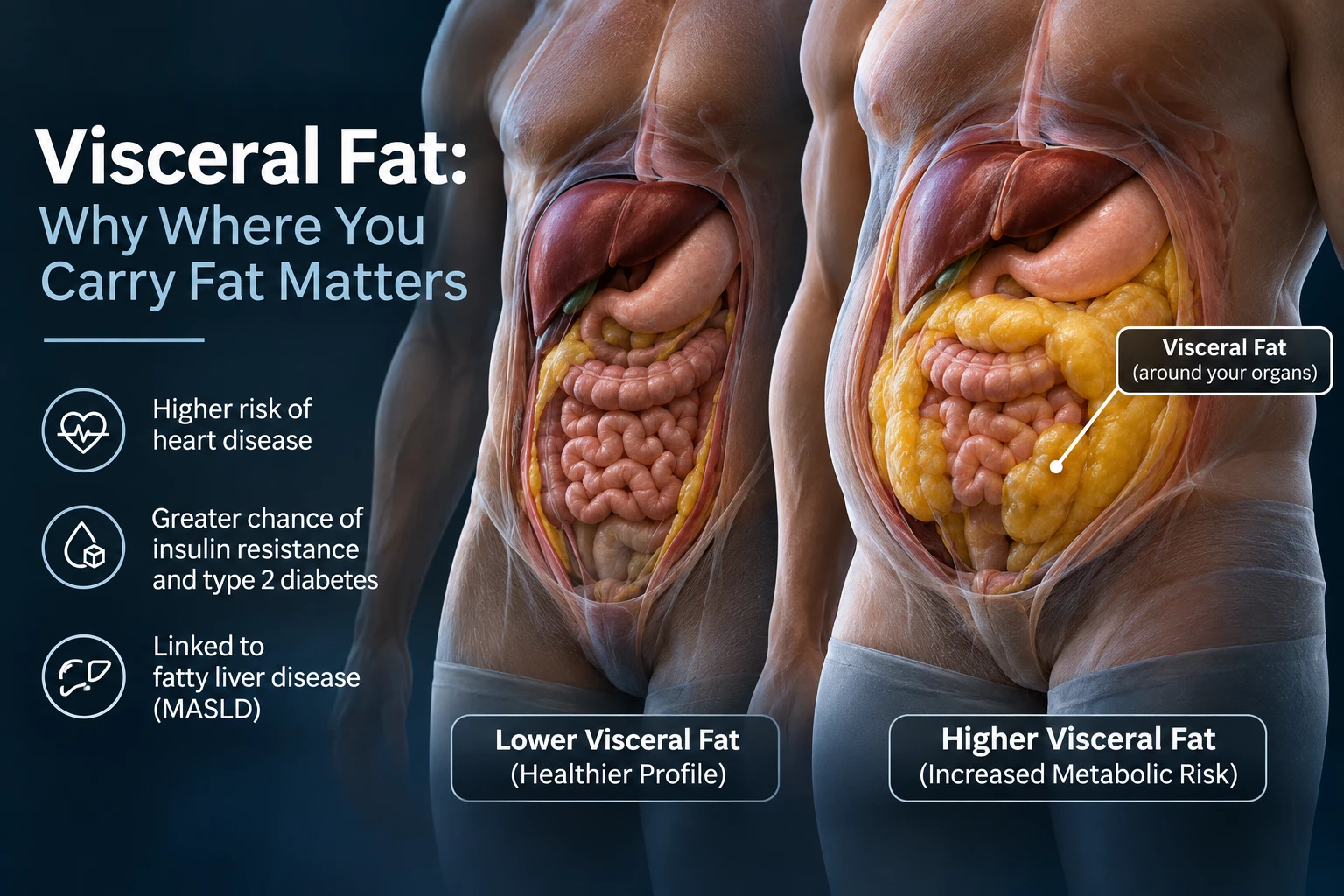
Two people can have the same body weight, similar body mass indexes (BMI), and even comparable percentages of body fat, yet have substantially different risks
R2 Medical Clinic • 24 min read
Medically reviewed by Erik Natkin, DO — Founder, R2 Medical Clinic, Denver, Colorado
Last medically reviewed: November 2026
Introduction
When most people think about body fat, they focus on how much they weigh or how their body looks in the mirror.
But when it comes to long-term health, where your body stores fat may be just as important as how much fat you carry.
Two people can have the same body weight, similar body mass indexes (BMI), and even comparable percentages of body fat, yet have substantially different risks for cardiovascular disease, type 2 diabetes, and metabolic dysfunction.
One of the primary reasons is visceral fat.
Unlike the fat stored directly beneath the skin, visceral fat accumulates deep within the abdominal cavity, surrounding internal organs such as the liver, pancreas, and intestines.
This fat is not simply an inactive energy reserve. It is metabolically active tissue that can influence inflammation, insulin sensitivity, lipid metabolism, and hormonal signaling.
Excess visceral fat has been associated with an increased risk of several chronic diseases, even in individuals who do not appear significantly overweight.
Understanding visceral fat helps explain why traditional measures such as body weight and BMI do not always provide a complete picture of metabolic health.
Not All Body Fat Is the Same
The human body stores fat in several different locations, and these fat deposits do not all behave the same way.
The two primary categories are subcutaneous fat and visceral fat.
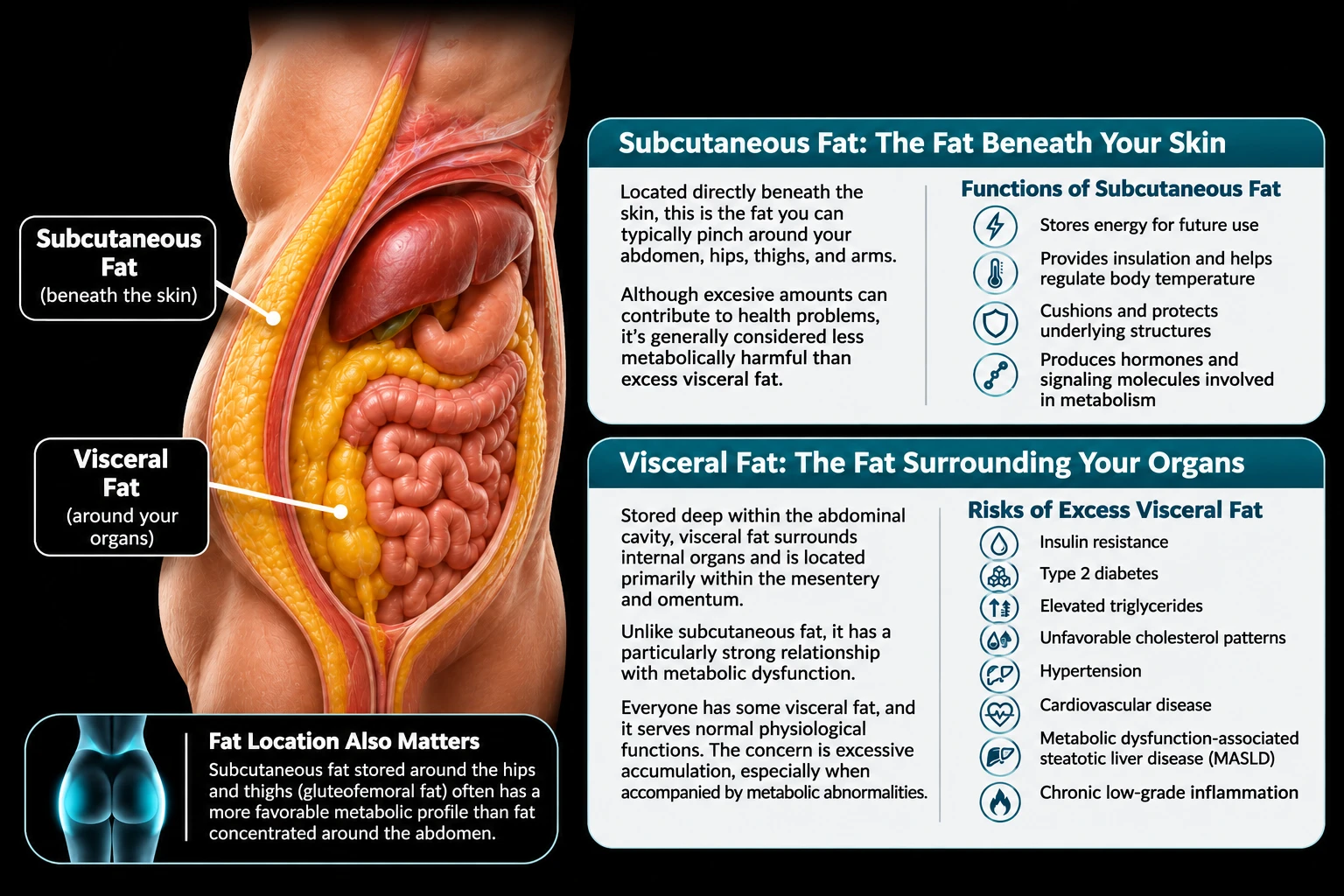
Subcutaneous Fat: The Fat Beneath Your Skin
Subcutaneous fat is located directly beneath the skin.
It is the fat you can typically pinch around your abdomen, hips, thighs, and arms.
Although excessive amounts of subcutaneous fat can contribute to health problems, it is generally considered less metabolically harmful than excess visceral fat.
Interestingly, the location of subcutaneous fat also matters.
This type of fat serves several important physiological functions:
- Stores energy for future use
- Provides insulation and helps regulate body temperature
- Cushions and protects underlying structures
- Produces hormones and signaling molecules involved in metabolism
Fat stored around the hips and thighs, often called gluteofemoral fat, may have a more favorable metabolic profile than fat concentrated around the abdomen.
This helps explain why individuals with similar total body fat percentages can have very different metabolic risk profiles.
Visceral Fat: The Fat Surrounding Your Organs
Visceral adipose tissue is stored deep within the abdominal cavity.
It surrounds internal organs and is located primarily within the mesentery and omentum, structures associated with the intestines and abdominal organs.
Unlike subcutaneous fat, visceral fat has a particularly strong relationship with metabolic dysfunction.
Importantly, visceral fat is not inherently abnormal.
Everyone has some visceral fat, and it serves normal physiological functions.
The concern is excessive accumulation, particularly when accompanied by metabolic abnormalities.
Excess visceral fat is associated with:
- Insulin resistance
- Type 2 diabetes
- Elevated triglycerides
- Unfavorable cholesterol patterns
- Hypertension
- Cardiovascular disease
- Metabolic dysfunction-associated steatotic liver disease (MASLD)
- Chronic low-grade inflammation
Why Visceral Fat Is More Metabolically Dangerous
Visceral fat behaves differently from other fat deposits.
To understand why, it helps to recognize that adipose tissue is not simply a storage compartment for calories.
It is an active endocrine and metabolic organ.
Fat cells communicate with the rest of the body through hormones, inflammatory mediators, and other signaling molecules.
As visceral fat expands, these signals can become increasingly unfavorable.
1. Visceral Fat Promotes Insulin Resistance
Insulin is a hormone produced by the pancreas that helps regulate blood glucose levels.
After eating, insulin signals tissues such as skeletal muscle and the liver to absorb or store nutrients.
When tissues become resistant to insulin, the pancreas must produce greater amounts of the hormone to maintain normal blood glucose levels.
Over time, this compensatory response may become insufficient, contributing to elevated blood glucose and eventually type 2 diabetes.
Excess visceral fat is strongly associated with this process.
One proposed mechanism involves the increased release of free fatty acids from visceral fat into the portal circulation.
The portal vein transports blood from abdominal organs to the liver.
Because much of the venous drainage from visceral fat enters this system, the liver may be exposed to increased concentrations of fatty acids and inflammatory signaling molecules.
These changes can interfere with normal hepatic insulin signaling and contribute to increased glucose production and abnormal lipid metabolism.
However, visceral fat is not the only contributor to insulin resistance. Genetics, skeletal muscle metabolism, liver fat, physical activity, and overall energy balance also play important roles.
The important point is that excess visceral fat is both a marker of metabolic dysfunction and a potential contributor to it.
2. Visceral Fat Contributes to Chronic Inflammation
Inflammation is a normal and necessary component of the immune system.
It helps the body respond to infection, injury, and tissue damage.
Problems arise when inflammatory signaling remains persistently elevated.
As fat cells enlarge, adipose tissue can undergo changes in oxygen availability, immune cell activity, and cellular stress.
Macrophages and other immune cells may accumulate within the tissue, contributing to the production of inflammatory mediators.
These include:
- Interleukin-6 (IL-6)
- Tumor necrosis factor-alpha (TNF-α)
- Other cytokines and chemokines involved in inflammatory signaling
This persistent, low-grade inflammatory environment is associated with insulin resistance, endothelial dysfunction, and cardiovascular risk.
Visceral fat also produces adipokines, signaling molecules that influence appetite, glucose metabolism, inflammation, and vascular function.
For example, adiponectin is generally associated with improved insulin sensitivity and favorable metabolic effects.
Circulating adiponectin levels are often lower in individuals with excess visceral adiposity.
The result is a complex interaction between fat tissue, immune signaling, and metabolic regulation.
3. Visceral Fat Is Closely Connected to Fatty Liver Disease
One of the strongest relationships involving visceral fat is its association with fat accumulation in the liver.
Today, this condition is commonly referred to as metabolic dysfunction-associated steatotic liver disease (MASLD).
Previously, many patients knew it as nonalcoholic fatty liver disease, or NAFLD.
MASLD occurs when excess fat accumulates in the liver in association with cardiometabolic risk factors.
Visceral fat and liver fat frequently occur together, although they are distinct fat deposits.
Increased fatty acid delivery, insulin resistance, and altered lipid metabolism can contribute to the accumulation of triglycerides within liver cells.
Over time, some individuals develop liver inflammation and progressive fibrosis.
Importantly, fatty liver disease can develop even in people whose BMI falls within the conventional normal range.
This is one reason evaluating metabolic health requires more than simply looking at body weight.
Why Some People Carry More Visceral Fat Than Others
Visceral fat accumulation is influenced by multiple factors.
Total calorie intake and physical activity matter, but they do not fully explain why two individuals may store fat differently.
Genetics, age, sex hormones, sleep, stress, and individual differences in fat storage capacity all contribute.
Aging and Changes in Fat Distribution
As we age, body composition often changes.
Skeletal muscle mass may gradually decline, while total body fat increases.
Even when body weight remains relatively stable, fat distribution may shift toward the abdominal region.
Research has demonstrated that visceral adipose tissue tends to increase with age.
This helps explain why an individual can weigh approximately the same at age 55 as they did at age 30 but have a substantially different metabolic profile.
A stable number on the scale does not necessarily mean body composition has remained unchanged.
Testosterone and Visceral Fat in Men
Testosterone plays an important role in male body composition.
It influences skeletal muscle mass, fat distribution, and several aspects of metabolic function.
Men with low testosterone frequently have increased fat mass, including greater abdominal adiposity.
The relationship is also bidirectional.
Excess adiposity, particularly visceral adiposity, can contribute to lower circulating testosterone concentrations.
Several mechanisms may be involved, including insulin resistance, inflammatory signaling, changes in sex hormone-binding globulin (SHBG), and suppression of the hypothalamic-pituitary-gonadal axis.
This can create a reinforcing cycle:
Increased visceral fat → metabolic dysfunction → lower testosterone → unfavorable changes in body composition.
However, this relationship requires careful interpretation.
Low testosterone does not always cause visceral fat accumulation, and excess visceral fat does not always indicate testosterone deficiency.
Although testosterone replacement therapy can improve body composition in appropriately selected men with confirmed hypogonadism, it is not an established treatment specifically for visceral fat reduction.
Lifestyle interventions remain foundational.
Estrogen and Visceral Fat in Women
Estrogen also plays an important role in regulating fat distribution.
Before menopause, women generally store a greater proportion of body fat in subcutaneous depots, particularly around the hips and thighs.
During the menopausal transition, declining estrogen levels are associated with a redistribution of fat toward the abdominal region.
This shift can occur even without dramatic changes in total body weight.
As visceral fat increases, the risk of insulin resistance, abnormal lipid metabolism, and cardiovascular disease may also rise.
However, menopause-related changes in fat distribution are multifactorial.
Aging, changes in physical activity, sleep disturbances, and declining muscle mass may contribute.
Menopausal hormone therapy may influence fat distribution, but it should not be prescribed solely for weight loss or visceral fat reduction.
Treatment decisions should be based on established indications, individual risk factors, and shared decision-making.
Can You Have Too Much Visceral Fat Even If You Are Thin?
Absolutely.
One of the most important limitations of BMI is that it does not distinguish between muscle, subcutaneous fat, visceral fat, and other tissues.
An individual may have a normal BMI but still carry excess visceral fat.
This is sometimes described as normal-weight obesity or a metabolically unfavorable normal-weight phenotype, depending on the criteria used.
For example, consider two individuals who are both 5 feet 10 inches tall and weigh 175 pounds.
Their BMI is identical.
However, one may have relatively high skeletal muscle mass and low visceral fat, while the other has lower muscle mass and substantially greater abdominal fat.
Despite identical body weights, their insulin sensitivity, lipid profiles, and overall metabolic health may differ considerably.
This is why body composition and metabolic health should not be evaluated using BMI alone.
Being thin does not automatically mean being metabolically healthy.
Similarly, having a higher BMI does not necessarily mean someone has poor metabolic health.
BMI remains useful as a population-level screening tool, but it has important limitations when applied to individuals.
How Do You Measure Visceral Fat?
Visceral fat cannot be accurately assessed simply by looking in the mirror or stepping on a traditional bathroom scale.
Several methods can help estimate or directly quantify abdominal fat.
Waist Circumference
Waist circumference is one of the simplest clinical screening tools.
A larger waist circumference is associated with increased abdominal adiposity and cardiometabolic risk.
However, these thresholds are not appropriate for every population.
Some ethnic groups experience increased metabolic risk at lower waist circumferences.
Waist circumference also cannot distinguish visceral fat from abdominal subcutaneous fat.
Nevertheless, it provides useful information when interpreted alongside other clinical findings.
Commonly used U.S. screening thresholds include:
- Men: Greater than 40 inches (102 cm)
- Women: Greater than 35 inches (88 cm)
Waist-to-Height Ratio
Waist-to-height ratio is another useful screening measure.
It compares waist circumference with height.
A commonly used guideline is to maintain a waist circumference below half of one’s height.
For example, someone who is 70 inches tall would aim for a waist circumference below approximately 35 inches.
A ratio of 0.5 or greater may indicate increased central adiposity and cardiometabolic risk.
Although this measure does not directly quantify visceral fat, it can provide additional information beyond BMI.
DEXA Scanning
Dual-energy X-ray absorptiometry, commonly known as DEXA or DXA, is frequently used to assess body composition.
Some modern DEXA systems also estimate visceral adipose tissue within the abdominal region.
This can be useful for monitoring changes in body composition over time.
However, not every DEXA scanner provides a validated visceral fat estimate, and results can vary between devices and software versions.
It can estimate:
- Total body fat
- Lean tissue mass
- Regional fat distribution
- Bone mineral density
CT and MRI
Computed tomography and magnetic resonance imaging can directly quantify visceral adipose tissue.
These methods are frequently used in research and specialized clinical settings.
MRI avoids ionizing radiation, while CT exposes patients to radiation.
Neither is generally necessary solely to screen for visceral fat in otherwise healthy individuals.
For most patients, waist measurements, metabolic laboratory testing, and appropriate body composition assessment provide sufficient information to guide clinical decisions.
What Is the Best Way to Reduce Visceral Fat?
The encouraging news is that visceral fat is responsive to lifestyle changes and, when appropriate, medical treatment.
In many individuals, visceral fat can decrease substantially with weight loss and regular exercise.
Importantly, some interventions can improve visceral fat and metabolic health even before dramatic changes appear on the scale.
1. Resistance Training
Resistance training is particularly important for preserving skeletal muscle during fat loss.
Skeletal muscle is a major site of glucose disposal and plays an important role in insulin sensitivity.
Maintaining muscle mass supports metabolic health and helps reduce the loss of lean tissue during weight reduction.
Resistance training may also reduce visceral adiposity, although its effects vary across studies.
For most adults, training major muscle groups at least twice weekly is a reasonable starting point.
The goal is not simply to lose weight.
It is to reduce excess fat while preserving as much functional muscle as possible.
2. Aerobic Exercise
Aerobic exercise has strong evidence supporting its ability to reduce visceral fat.
Activities such as brisk walking, cycling, swimming, and running can improve cardiovascular fitness and insulin sensitivity.
Research suggests that aerobic exercise can reduce visceral adipose tissue even when total body weight changes relatively little.
A practical starting target is at least 150 minutes of moderate-intensity aerobic activity per week.
Additional benefits may occur with greater activity volumes, depending on individual fitness and medical status.
Higher-intensity exercise can also be effective, but it is not required to achieve meaningful improvements.
Consistency is more important than choosing one supposedly superior exercise intensity.
3. Nutrition and Energy Balance
No single food or dietary pattern selectively eliminates visceral fat.
However, sustained improvements in dietary quality and energy balance can reduce visceral adiposity.
Mediterranean-style dietary patterns have substantial evidence supporting cardiometabolic health.
The most effective nutrition strategy is generally one that produces sustainable improvements in body composition and metabolic risk factors.
Extreme diets and short-term weight loss programs are rarely necessary.
Useful strategies include:
- Maintaining an appropriate calorie intake
- Consuming sufficient dietary protein
- Increasing fiber-rich foods
- Prioritizing minimally processed foods
- Limiting sugar-sweetened beverages
- Reducing excessive alcohol consumption
- Choosing a sustainable dietary pattern
4. Sleep and Stress Management
Insufficient sleep is associated with increased appetite, impaired glucose regulation, and unfavorable changes in body composition.
Experimental research has also demonstrated that sleep restriction can increase abdominal visceral fat accumulation under certain conditions.
Chronic psychological stress may influence eating behavior, sleep quality, and hormonal signaling.
Cortisol is frequently discussed in relation to abdominal fat, but the relationship is more complicated than simply having a high cortisol level.
Normal daily fluctuations in cortisol do not necessarily indicate a hormonal disorder.
Nevertheless, improving sleep quality and addressing chronic stress are reasonable components of a comprehensive metabolic health strategy.
Medical Treatments for Reducing Visceral Fat
Lifestyle modifications remain the foundation of reducing visceral fat, but medical treatments may provide additional benefits for appropriately selected patients.
Several medications have demonstrated the ability to reduce abdominal fat, improve insulin sensitivity, or influence the hormonal pathways involved in fat distribution.
However, not all treatments work through the same mechanisms.
Some medications reduce overall body fat, including visceral fat. Others influence specific hormonal pathways and may change body composition without producing significant weight loss.
Understanding these differences is important when developing an individualized treatment strategy.
GLP-1 Medications (incretins)
GLP-1-based medications have transformed medical weight management.
These medications influence appetite regulation, satiety, glucose metabolism, and energy intake.
Clinical studies have demonstrated substantial reductions in total body weight and fat mass.
Importantly, imaging studies have also demonstrated reductions in visceral adipose tissue.
Although these medications do not specifically target visceral fat, they can substantially reduce abdominal adiposity as overall body fat decreases.
Their benefits may extend beyond weight reduction.
However, GLP-1-based medications also reduce some lean tissue during weight loss.
For this reason, adequate protein intake and resistance training should be important components of treatment.
GLP-1-based medications are among the most effective established pharmacological options for reducing overall adiposity, including visceral fat, in patients who meet treatment criteria.
Tesamorelin: A Different Approach to Visceral Fat
Tesamorelin is particularly interesting because its mechanism differs substantially from traditional weight-loss medications.
Tesamorelin is a synthetic growth hormone-releasing hormone analog.
Rather than primarily suppressing appetite, it stimulates the pituitary gland to release growth hormone, increasing downstream insulin-like growth factor-1 (IGF-1) signaling.
Growth hormone influences fat metabolism, including lipolysis and the regulation of abdominal adipose tissue.
Tesamorelin has demonstrated reductions in visceral adipose tissue in randomized clinical trials involving adults with HIV-associated lipodystrophy.
In these studies, visceral fat reductions of approximately 15% were observed over 26 weeks, although individual responses varied.
Interestingly, these changes occurred without substantial reductions in overall body weight.
This distinction is important.
A patient may experience meaningful changes in visceral fat while seeing relatively little movement on the scale.
However, tesamorelin has a very specific FDA-approved indication.
It is approved to reduce excess abdominal fat in adults with HIV-associated lipodystrophy.
It is not FDA-approved for general obesity treatment, weight management, or visceral fat reduction in individuals without HIV-associated lipodystrophy.
Although its physiological effects have generated interest in other populations, evidence is insufficient to establish its long-term safety and clinical benefit for routine visceral fat treatment outside its approved indication.
Potential concerns include elevated IGF-1, fluid retention, glucose intolerance, and contraindications involving active malignancy and certain pituitary disorders.
Its long-term cardiovascular safety has not been established.
Tesamorelin demonstrates that visceral fat can be influenced through hormonal pathways independently of substantial weight loss. However, its approved clinical use is limited, and it should not be considered an established treatment for visceral obesity in the general population.
Other Prescription Weight-Loss Medications
Although GLP-1-based medications receive much of the attention, several other FDA-approved medications can support weight reduction.
These medications can reduce overall body weight and fat mass, potentially including visceral fat.
However, their effects on visceral adipose tissue are generally less extensively characterized than those of newer incretin-based treatments.
They also differ in effectiveness, tolerability, contraindications, and suitability for individual patients.
Medication selection should consider metabolic risk factors, cardiovascular history, other medical conditions, and treatment goals.
These include:
- Phentermine/topiramate: Influences appetite and energy intake.
- Naltrexone/bupropion: Acts on central pathways involved in appetite and food cravings.
- Orlistat: Reduces intestinal absorption of dietary fat.
Metformin and Insulin Resistance
Metformin is commonly prescribed for type 2 diabetes and is sometimes used in selected patients with prediabetes or other insulin-resistant conditions.
Its primary effects include reducing hepatic glucose production and improving glucose regulation.
Metformin may produce modest weight loss and favorable changes in certain measures of abdominal adiposity.
However, its ability to consistently produce clinically meaningful reductions in visceral fat is less established than that of more effective weight-loss therapies.
Metformin is not FDA-approved specifically for obesity or visceral fat reduction.
Its greatest value is generally in addressing glucose regulation and appropriate metabolic indications rather than selectively targeting abdominal fat.
SGLT2 Inhibitors: Another Metabolic Approach
Sodium-glucose cotransporter-2 (SGLT2) inhibitors are medications primarily used in the management of type 2 diabetes, heart failure, and chronic kidney disease.
These medications work by reducing glucose reabsorption in the kidneys, allowing excess glucose to be eliminated through the urine.
This creates a modest loss of calories and can contribute to reductions in body weight and fat mass.
Some imaging studies have also demonstrated reductions in visceral adipose tissue.
However, the degree of visceral fat reduction is generally modest, and these medications are not FDA-approved specifically for obesity or visceral fat reduction.
Their greatest clinical importance lies in their established cardiovascular, kidney, and metabolic benefits in appropriately selected patients.
Examples include:
- Empagliflozin
- Dapagliflozin
SGLT2 inhibitors may modestly reduce visceral fat, but they should primarily be prescribed for their established medical indications rather than as dedicated fat-loss treatments.
Hormone Optimization and Body Composition
Sex hormones influence where the body stores fat.
In men, testosterone deficiency is associated with increased fat mass, reduced muscle mass, and unfavorable metabolic changes.
Testosterone replacement therapy in appropriately diagnosed hypogonadal men can improve body composition by increasing lean mass and reducing fat mass.
Some studies have demonstrated reductions in abdominal adiposity, although findings specifically involving visceral fat are inconsistent.
Testosterone should not be prescribed solely to reduce visceral fat in men with normal testosterone levels.
In women, declining estrogen during menopause contributes to changes in fat distribution, including increased abdominal adiposity.
Menopausal hormone therapy may attenuate some of these changes.
However, hormone therapy is not recommended solely for weight loss or visceral fat reduction.
Correcting a clinically significant hormone deficiency may improve body composition, but hormone optimization should not be confused with a primary treatment for obesity.
Bariatric and Metabolic Surgery
For patients with severe obesity or appropriate obesity-related complications, metabolic and bariatric surgery can produce substantial and sustained reductions in body weight.
Procedures such as sleeve gastrectomy and Roux-en-Y gastric bypass also reduce visceral adipose tissue.
Beyond weight loss, these procedures can substantially improve glucose regulation, insulin resistance, and several obesity-related health conditions.
Metabolic surgery has some of the strongest long-term evidence for improving important clinical outcomes in appropriately selected patients.
However, it is an invasive intervention that requires careful patient selection and lifelong nutritional and medical follow-up.
What About Other Peptides?
Several peptides that influence growth hormone secretion, including sermorelin, ipamorelin, and CJC-1295, are sometimes discussed in relation to body composition.
These compounds act through different components of the growth hormone signaling pathway.
However, they should not be considered interchangeable with tesamorelin.
The existence of a plausible physiological mechanism does not establish clinical effectiveness.
Unlike tesamorelin’s evidence in HIV-associated lipodystrophy, high-quality clinical evidence demonstrating meaningful and sustained visceral fat reduction with these other peptides is limited or absent.
Many of these compounds are not FDA-approved for this purpose, and their long-term safety remains inadequately characterized.
They should therefore be distinguished from established obesity treatments.
Which Treatment Is Best for Visceral Fat?
There is no single treatment that is appropriate for everyone.
For individuals with excess visceral fat and obesity, sustained weight reduction through nutrition, exercise, and, when appropriate, anti-obesity medications can produce meaningful improvements.
For individuals with normal body weight but unfavorable fat distribution, the approach may differ.
Resistance training, aerobic exercise, improved insulin sensitivity, and evaluation of underlying metabolic abnormalities may be particularly important.
When a clinically significant hormonal deficiency is present, addressing that condition may also support improvements in body composition.
Ultimately, treatment should focus on more than reducing a single fat measurement.
The objective is to improve insulin sensitivity, reduce cardiometabolic risk, preserve skeletal muscle, and support long-term health.
Reducing visceral fat is valuable, but improving the health of the entire metabolic system is the ultimate goal.
Why Losing Weight Is Not Always the Same as Improving Body Composition
Imagine two individuals who each lose 20 pounds.
The first loses predominantly fat while preserving most of their skeletal muscle.
The second loses a substantial amount of muscle along with fat.
Although the scale shows the same result, the physiological consequences may be quite different.
Preserving muscle during weight loss supports physical function, strength, and metabolic health.
This is particularly important as people age.
Weight loss interventions that produce large reductions in total body mass without adequate attention to muscle preservation may leave patients with less favorable functional outcomes.
This is one reason a comprehensive approach should evaluate more than body weight.
Changes in waist circumference, strength, physical performance, metabolic markers, and body composition may provide a more meaningful assessment of progress.
The goal is not simply to become lighter. It is to become metabolically healthier while maintaining strength and function.
What Laboratory Tests Can Help Evaluate Metabolic Risk?
No routine blood test directly measures visceral fat.
However, laboratory testing can identify metabolic abnormalities frequently associated with excess abdominal adiposity.
Depending on the individual’s medical history and clinical findings, useful tests may include:
Provides an estimate of average blood glucose over approximately two to three months and helps identify prediabetes and diabetes.
Assesses blood glucose after a period without food and may help identify impaired glucose regulation.
Evaluates cholesterol and triglycerides.
Elevated triglycerides and low HDL cholesterol are common features of insulin-resistant metabolic states.
ALT and AST may provide clues about liver injury, although normal values do not exclude MASLD.
Additional Testing When Indicated
Depending on clinical circumstances, further evaluation may include fasting insulin, thyroid function, or hormone testing.
Fasting insulin can provide additional information in selected cases, but it is not routinely required to diagnose insulin resistance and lacks universally standardized clinical thresholds.
Hormonal testing should be guided by symptoms and clinical findings rather than visceral fat measurements alone.
No single laboratory value should be interpreted in isolation.
Visceral Fat, Cardiovascular Disease, and Longevity
Excess visceral fat is strongly associated with cardiovascular and metabolic disease.
Large observational studies have demonstrated that abdominal adiposity provides important information about cardiovascular risk beyond BMI alone.
Together, these abnormalities can increase the likelihood of developing cardiovascular disease and type 2 diabetes.
From a longevity perspective, this relationship is important.
This is particularly relevant because visceral fat frequently accompanies several interconnected abnormalities:
- Elevated blood pressure
- Insulin resistance
- Increased triglycerides
- Reduced HDL cholesterol
- Fat accumulation in the liver
- Chronic low-grade inflammation
Living longer is not simply about avoiding death.
It is also about preserving physical function, metabolic health, and independence as we age.
Reducing excess visceral fat may contribute to this goal, particularly when combined with regular exercise, adequate nutrition, and preservation of skeletal muscle.
However, visceral fat reduction itself should not be viewed as a proven stand-alone method for extending lifespan.
The strongest evidence supports interventions that improve established health outcomes and cardiovascular risk factors.
Related Metabolic Health Resources
Hormonal Belly: Understanding, Identifying, and Overcoming Stubborn Abdominal Weight Gain
Preserving Muscle During Medical Weight Loss: Why the Scale Is Only Part of the Story
Frequently Asked Questions
Is visceral fat more dangerous than belly fat?
Visceral fat is one type of abdominal fat.
The fat you can pinch beneath the skin is primarily subcutaneous fat, while visceral fat is located deeper inside the abdominal cavity.
Excess visceral fat generally has a stronger association with insulin resistance, fatty liver disease, and cardiovascular risk than abdominal subcutaneous fat.
However, both total fat mass and fat distribution matter.
Can you have visceral fat without a large stomach?
Yes.
Individuals with a normal BMI or relatively small waist circumference may still have elevated visceral fat.
This is why appearance alone cannot reliably determine metabolic health.
Does visceral fat cause low testosterone?
Excess visceral adiposity is associated with lower testosterone concentrations in men.
The relationship is bidirectional and involves several physiological mechanisms.
However, visceral fat does not automatically cause testosterone deficiency, and low testosterone should be diagnosed using appropriate symptoms and laboratory evaluation.
Does menopause increase visceral fat?
The menopausal transition is associated with a shift toward greater abdominal and visceral fat accumulation.
Declining estrogen levels contribute to this process, although aging and lifestyle factors also play important roles.
Can exercise reduce visceral fat without weight loss?
Yes.
Studies have demonstrated that exercise can reduce visceral adipose tissue even when overall body weight changes only modestly.
This is one reason improvements in fitness and waist circumference can be meaningful even when the scale does not change dramatically.
Do abdominal exercises burn visceral fat?
Not specifically.
Exercises such as crunches and sit-ups strengthen abdominal muscles but do not selectively eliminate fat from the abdominal region.
This concept, commonly called spot reduction, is not supported as a reliable fat-loss strategy.
Reducing visceral fat generally requires improvements in overall energy balance, physical activity, and metabolic health.
Do GLP-1 medications reduce visceral fat?
Yes.
Clinical studies using imaging have demonstrated reductions in visceral adipose tissue during treatment with certain GLP-1-based medications.
These changes generally occur alongside reductions in total body weight and overall fat mass.
Can tesamorelin reduce visceral fat without significant weight loss?
Yes, in the population in which it has been studied most extensively.
Clinical trials involving adults with HIV-associated lipodystrophy have demonstrated meaningful reductions in visceral adipose tissue without substantial overall weight loss.
However, tesamorelin is not FDA-approved for general obesity or visceral fat reduction outside HIV-associated lipodystrophy.
How quickly can visceral fat decrease?
Measurable reductions may occur over several weeks to months with consistent lifestyle changes.
The rate varies depending on baseline adiposity, exercise, nutrition, genetics, and the degree of weight loss.
Long-term consistency is more important than rapid short-term changes.
Is there a healthy amount of visceral fat?
Some visceral fat is normal and necessary.
However, there is no single universally accepted visceral fat measurement that defines optimal health for every individual.
Risk depends on factors including age, sex, ethnicity, measurement method, and overall metabolic health.
Commercial body composition devices may provide visceral fat ratings, but their thresholds are not interchangeable across manufacturers.
The Bottom Line
Body weight alone does not tell the whole story.
Where fat accumulates, how much skeletal muscle a person maintains, and how well the body regulates glucose and lipids all contribute to metabolic health.
Visceral fat is particularly important because of its relationship with insulin resistance, chronic inflammation, fatty liver disease, and cardiovascular risk.
However, visceral fat should not be evaluated in isolation.
A comprehensive approach considers body composition, waist circumference, laboratory findings, physical fitness, and individual medical history.
For many people, the most effective strategies remain regular resistance training, aerobic exercise, appropriate nutrition, adequate sleep, and sustainable weight management.
Medical treatment may provide additional benefits when clinically indicated.
GLP-1-based medications can substantially reduce overall body fat, including visceral fat, while tesamorelin demonstrates that visceral fat can also be influenced through specific hormonal pathways in its approved patient population.
Other treatments, including metformin, SGLT2 inhibitors, hormone replacement in appropriately selected patients, and metabolic surgery, may provide benefits depending on the underlying medical circumstances.
Ultimately, improving metabolic health is not simply about losing weight. It is about reducing harmful fat accumulation, preserving muscle, and maintaining physiological function as we age.
Take Control of Your Metabolic Health
At R2 Medical Clinic, we believe that optimizing health requires looking beyond the number on the scale.
Understanding body composition, metabolic health, hormone function, and the factors that influence fat distribution can help identify opportunities for meaningful, sustainable improvements.
Our approach emphasizes individualized medical evaluation, evidence-based treatment, and long-term health rather than short-term weight loss alone.
Whether your goal is improving body composition, addressing metabolic risk factors, or maintaining strength and vitality as you age, understanding your body’s physiology is an important first step.
R2 Medical Clinic
Denver | Castle Rock | Wheat Ridge, Colorado
References
- Neeland IJ, Ross R, Després JP, et al. Visceral and ectopic fat, atherosclerosis, and cardiometabolic disease: A position statement. Lancet Diabetes & Endocrinology. 2019;7(9):715–725. DOI: 10.1016/S2213-8587(19)30084-1.
- Després JP. Body fat distribution and risk of cardiovascular disease: An update. Circulation. 2012;126(10):1301–1313. DOI: 10.1161/CIRCULATIONAHA.111.067264.
- Powell-Wiley TM, Poirier P, Burke LE, et al. Obesity and cardiovascular disease: A scientific statement from the American Heart Association. Circulation. 2021;143(21):e984–e1010. DOI: 10.1161/CIR.0000000000000973.
- Ross R, Soni S, Houle SA. Negative energy balance induced by exercise or diet: Effects on visceral adipose tissue and liver fat. Nutrients. 2020;12(4):891. DOI: 10.3390/nu12040891.
- Verheggen RJHM, Maessen MFH, Green DJ, Hermus ARMM, Hopman MTE, Thijssen DHJ. A systematic review and meta-analysis on the effects of exercise training versus hypocaloric diet: Distinct effects on body weight and visceral adipose tissue. Obesity Reviews. 2016;17(8):664–690. DOI: 10.1111/obr.12406.
- Karastergiou K, Smith SR, Greenberg AS, Fried SK. Sex differences in human adipose tissues: The biology of pear shape. Biology of Sex Differences. 2012;3:13. DOI: 10.1186/2042-6410-3-13.
- Palmer BF, Clegg DJ. The sexual dimorphism of obesity. Molecular and Cellular Endocrinology. 2015;402:113–119. DOI: 10.1016/j.mce.2014.11.029.
- Stefan N. Causes, consequences, and treatment of metabolically unhealthy fat distribution. Lancet Diabetes & Endocrinology. 2020;8(7):616–627. DOI: 10.1016/S2213-8587(20)30110-8.
- Rinella ME, Lazarus JV, Ratziu V, et al. A multisociety Delphi consensus statement on new fatty liver disease nomenclature. Hepatology. 2023;78(6):1966–1986. DOI: 10.1097/HEP.0000000000000520.
- Falutz J, Allas S, Blot K, et al. Metabolic effects of a growth hormone-releasing factor in patients with HIV. New England Journal of Medicine. 2007;357:2359–2370. DOI: 10.1056/NEJMoa072375.
- U.S. Food and Drug Administration. Tesamorelin prescribing information. 2025.
Medical Disclaimer: This article is intended for educational purposes only and does not constitute individualized medical advice. Visceral fat measurements, laboratory findings, and treatment decisions should be interpreted in the context of a comprehensive medical evaluation. Some medications and peptides discussed are not FDA-approved for general visceral fat reduction, and their inclusion does not constitute an endorsement of off-label or investigational use. Consult a qualified healthcare professional before beginning a new exercise program, medication, or weight-management treatment.