Medical Weight Loss: A Physician’s Guide to Medications, Nutrition, Exercise & Long-Term Success
A physician's guide to medical weight loss — medications, nutrition, resistance training and long-term strategies for sustainable, muscle-preserving results.
Erik Natkin, DO • 14 min read

Medically reviewed by Erik Natkin, DO — Founder, R2 Medical Clinic, Denver, Colorado
Last medically reviewed: September 2026
In short: body weight is influenced by a complex interaction of appetite, metabolism, hormones, genetics, sleep, medications, medical conditions, nutrition, physical activity, muscle mass, age and behavior. Modern medical weight management recognizes overweight and obesity as medical conditions that may require long-term treatment. This guide explains how R2 Medical Clinic approaches medications, nutrition, exercise and long-term maintenance together.
Losing weight is often described as a simple equation: eat less and exercise more. For many people, it isn’t that simple. This is why two people following similar diets can experience very different results—and why someone who has successfully lost weight may find maintaining that loss difficult.
For appropriate patients, treatment may include nutrition, exercise, behavioral changes, injectable or oral prescription medications, management of contributing medical conditions, and ongoing medical monitoring.
At R2 Medical Clinic, our approach is not simply about producing a lower number on the scale. The objective is to improve body composition, metabolic health and long-term weight control while preserving muscle and creating a strategy the patient can realistically maintain.
What Is Medical Weight Loss?
Medical weight loss is physician-supervised treatment designed to help patients achieve and maintain a healthier weight. Unlike a commercial diet program, medical weight management begins by evaluating the individual patient, including current weight and weight history, body composition, previous weight-loss attempts, nutrition, physical activity, muscle mass, medications, hormonal and metabolic health, sleep, medical conditions, family history and treatment goals.
Treatment can then be individualized. For some patients, nutrition and exercise interventions may be sufficient. Others may benefit from prescription medication. For many patients, the most effective approach combines several strategies.
Obesity Is More Than a Willpower Problem
One of the most important changes in modern weight-management medicine is recognizing that obesity cannot be adequately explained by a lack of willpower. When weight decreases, the body can respond with biological adaptations that favor weight regain. Appetite may increase, energy expenditure may change, and hormonal signals involved in hunger and satiety may change. These responses can make maintaining substantial weight loss difficult even when someone remains highly motivated.
Understanding this physiology changes the conversation. Instead of asking “Why can’t you just eat less?” a better question is “What biological, behavioral and environmental factors are making weight loss or maintenance difficult, and which of those can we address?”
BMI Is Useful—but It Doesn’t Tell the Whole Story
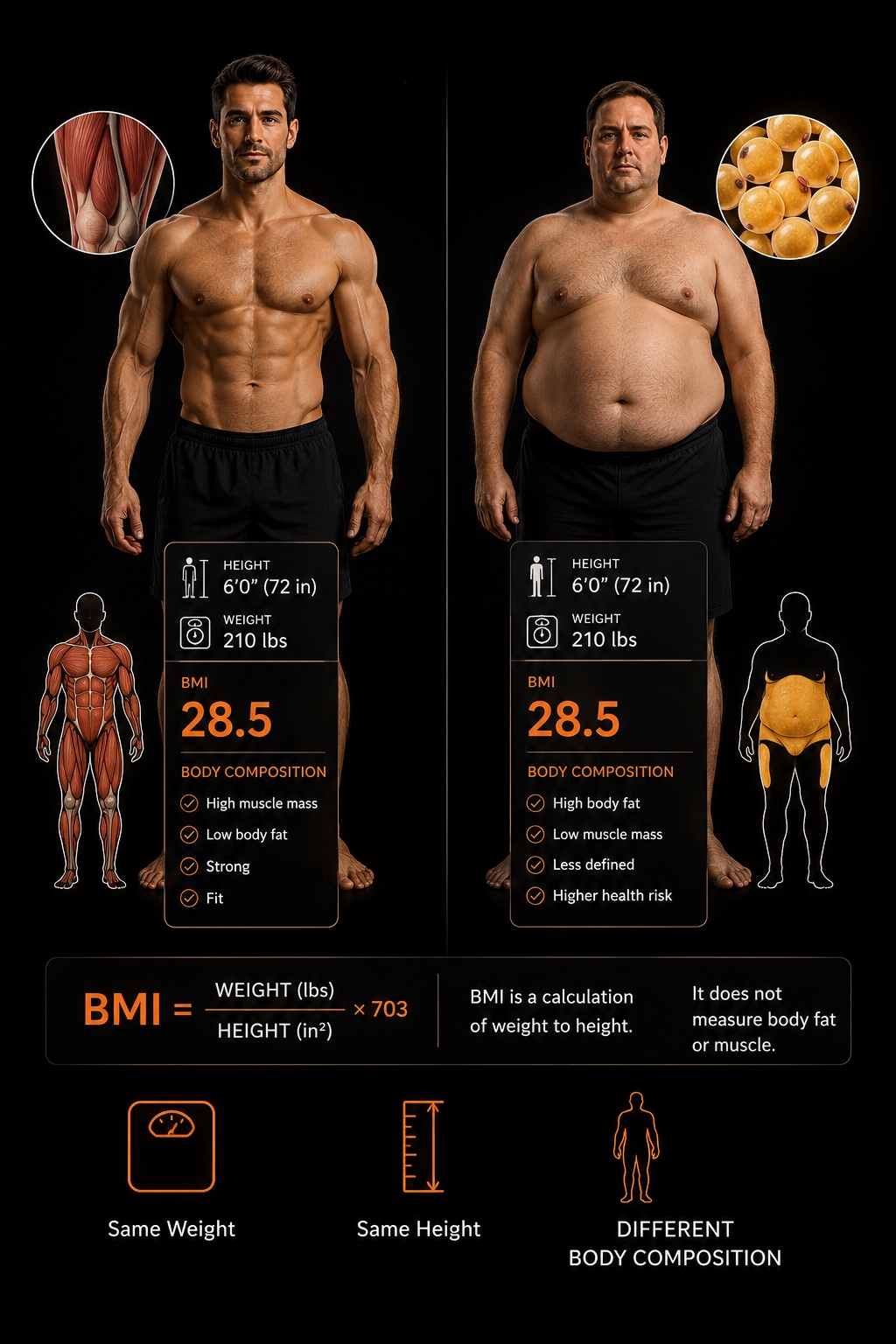
Body mass index, or BMI, is widely used to categorize weight relative to height. It can be useful for screening, but BMI has important limitations. It does not directly measure body fat percentage, visceral fat, muscle mass, fat distribution, metabolic health or physical fitness.
A muscular person and a person with relatively low muscle mass can have the same BMI despite very different body compositions. This is why weight management should not focus exclusively on BMI or the scale.
Imagine two patients each lose 25 pounds. One loses primarily body fat while preserving most muscle. The other loses substantial muscle along with fat. The scale shows the same result—the physiologic result is not the same.
Lean muscle contributes to strength, mobility, physical function and metabolic health. Preserving muscle becomes particularly important during significant or rapid weight loss and as patients get older. An effective program should ask not just “how many pounds did you lose,” but “what did you lose?”
What Causes Weight Gain or Difficulty Losing Weight?
There is rarely one explanation that applies to everyone. Potential contributors can include:
- Genetics
- Appetite regulation
- Insulin resistance
- Metabolic disease
- Menopause and other hormonal changes
- Loss of muscle mass
- Poor sleep
- Sleep apnea
- Certain medications
- Reduced physical activity
- Nutrition
- Chronic stress
- Previous repeated dieting
- Medical conditions
- Aging
Some of these factors can be modified. Others cannot. The purpose of medical evaluation is to identify factors that may be relevant to the individual patient rather than applying the same weight-loss plan to everyone.
What Should Be Evaluated Before Starting a Medical Weight-Loss Program?
Evaluation should begin with a medical and weight history. Important questions may include when the weight gain began, what the patient has tried previously and what happened afterward, whether medications are contributing to weight gain, whether sleep is adequate, the patient’s current nutrition pattern and physical activity, how much lean muscle the patient has, and whether there are symptoms suggesting an underlying medical or hormonal problem.
Depending on the individual patient, laboratory testing may also be appropriate. The purpose of testing is not simply to order a large laboratory panel—it is to identify medical factors that could influence treatment or require attention.
Wondering whether medical weight loss is right for you? R2 Medical Clinic offers physician-led medical weight loss in Denver, Wheat Ridge/Arvada and Castle Rock, starting with a full evaluation and consultation.
Schedule a consultation or call (720) 640-2333.
Medical Weight Loss Is More Than Medication
Prescription medications have dramatically changed obesity treatment. But medication should not replace the fundamentals of health. A comprehensive medical weight-management strategy may include four major components: medication when appropriate, nutrition, physical activity and resistance exercise, and long-term behavioral and medical support. The relative importance of each component will vary from patient to patient.

How Do Weight-Loss Medications Work?
There are several categories of prescription medications used for weight management, and they do not all work the same way. Depending on the medication, effects may involve appetite, satiety or fullness, food intake, cravings, gastrointestinal signaling, central nervous system pathways or metabolic pathways.
Some modern injectable medications act on hormone receptors involved in appetite, satiety, and cravings. Oral medications may work through different mechanisms and may be appropriate for certain patients based on medical history, preferences, treatment goals and potential contraindications. There is no single medication that is best for everyone.
Injectable Weight-Loss Medications
Injectable medications have become an important tool in modern obesity medicine. Certain medications mimic or influence naturally occurring gastrointestinal hormone pathways involved in appetite, satiety and food intake. For appropriately selected patients, these medications can produce substantial weight loss when combined with appropriate medical and lifestyle management.
Injectable medication is not the entire treatment plan. Patients still need adequate nutrition, sufficient protein, physical activity, resistance training when appropriate, and ongoing monitoring. Medication can make weight loss more achievable—the long-term objective is to use that opportunity to improve overall health and establish habits that support weight maintenance.
What About Oral Weight-Loss Medications?
Injectables are not the only pharmacologic option. Several oral approaches to weight management exist, and oral therapy may be appropriate for selected patients. Potential advantages can include no injections, different mechanisms of action, different side-effect profiles, different costs and greater convenience for some patients.
The appropriate medication depends on the individual’s medical history, other medications, cardiovascular risk, treatment goals, tolerability and preferences. The question should not be “What is the strongest weight-loss medication?” It should be “Which treatment makes the most sense for this patient?”
Does Everyone Need Medication to Lose Weight?
No. Some patients can achieve meaningful and sustainable weight loss through nutrition, exercise and behavioral changes without medication. Others have repeatedly attempted those approaches but struggle to achieve or maintain sufficient weight loss.
Prescription medication may be considered for appropriate patients based on factors such as BMI, weight-related medical conditions, previous attempts at weight management and the risks and benefits of treatment. Medication should be individualized rather than automatically prescribed to everyone seeking weight loss.
Nutrition Still Matters When Using Weight-Loss Medication
Reduced appetite can make it much easier to consume fewer calories. But eating less does not automatically mean eating well. A patient can lose weight while consuming inadequate protein, fiber, vitamins, minerals, fluids and overall nutrition. This becomes particularly important when appetite is substantially reduced. Nutrition during medical weight loss should therefore focus on nutritional quality as well as calorie reduction.
Protein and Muscle Preservation
One of the most important nutritional considerations during weight loss is adequate protein intake. Weight loss usually involves some loss of lean mass in addition to body fat, and the objective should be to minimize unnecessary muscle loss.
Adequate protein intake, combined with resistance exercise when medically appropriate, can help preserve lean mass during weight reduction. Protein needs vary according to body size, age, medical conditions, physical activity and other factors—there is no single protein prescription appropriate for everyone. Muscle preservation should be part of the weight-loss conversation from the beginning, not after substantial muscle has already been lost.
Why Resistance Training Matters
Cardiovascular exercise has important health benefits, but during weight loss, resistance exercise deserves particular attention. Strength training provides a stimulus to maintain muscle. This becomes especially important during:
- Significant calorie restriction
- Rapid weight loss
- Medication-assisted weight loss
- Middle age and later life
- Menopause
- Age-related loss of muscle mass
A medical weight-management program should therefore encourage appropriate resistance exercise based on the patient’s ability, health and physical limitations. The objective is not simply to become lighter. It is to become healthier.

What About Cardiovascular Exercise?
Aerobic exercise remains important. Regular physical activity can improve cardiovascular fitness, insulin sensitivity, blood pressure, mood, sleep, physical function and weight maintenance. Exercise may not produce dramatic weight loss by itself for every patient, but its health benefits extend far beyond the number of calories burned during a workout. Both cardiovascular activity and resistance exercise can play important roles in comprehensive weight management.
Sleep and Weight Management
Sleep is frequently overlooked. Insufficient or poor-quality sleep can affect appetite, food choices, energy, exercise, mood and metabolic health. Sleep apnea is particularly important because it is common among people with overweight or obesity and may remain undiagnosed. Improving sleep may therefore be an important component of a comprehensive weight-management strategy.
Hormones and Weight Gain
Hormones can influence body composition and metabolism. Examples include thyroid hormones, insulin, cortisol and sex hormones (such as testosterone). Menopause can also contribute to changes in body-fat distribution and body composition.
However, weight gain should not automatically be blamed on a hormone imbalance. Likewise, hormone therapy should not be used as a substitute for appropriate weight-management treatment. When symptoms or medical history suggest a hormonal condition may be contributing, appropriate evaluation can be incorporated into the overall treatment plan.
What Is a Realistic Weight-Loss Goal?
Success should not be defined exclusively by reaching a specific ideal body weight. Even moderate weight reduction can produce meaningful health benefits. Depending on the individual patient, improvements may occur in blood pressure, blood glucose, insulin resistance, lipids, mobility, sleep apnea, physical function and quality of life. Treatment goals should consider health, body composition and sustainability—not simply the lowest possible scale weight.
Why Do Weight-Loss Plateaus Happen?
Weight loss is rarely perfectly linear. As body weight decreases, energy requirements change. Appetite, physical activity, medication response and adherence may all change. A plateau does not automatically mean treatment has failed—it is an opportunity to reassess nutrition, calorie intake, protein, exercise, sleep, medication, body composition and treatment goals.
Sometimes the appropriate response is a medication adjustment. Sometimes it is a nutritional or exercise change. And sometimes maintaining a substantial previous weight loss is itself a successful outcome.
What Happens When Weight-Loss Medication Is Stopped?
This is an important conversation to have before treatment begins. For many people, obesity behaves like a chronic condition. Stopping effective pharmacologic treatment can result in increased appetite and weight regain. This should not necessarily be interpreted as a personal failure—it may reflect the return of the biological processes the medication was helping control.
For some patients, long-term pharmacologic treatment may therefore be appropriate. Others may choose or need to discontinue medication. In either situation, a maintenance strategy should be discussed rather than assuming the weight will automatically remain off.
Weight Maintenance Should Begin During Weight Loss
Many weight-loss programs focus almost entirely on losing weight. That is only half of the problem. Keeping weight off is often harder than losing it. A long-term strategy may include:
- Sustainable nutrition
- Adequate protein
- Resistance training
- Regular physical activity
- Sleep
- Self-monitoring
- Continued medical follow-up
- Medication when appropriate
- Early intervention if weight begins to return
Maintenance should not begin after the patient reaches a goal weight. It should be built into treatment from the beginning.
Treat the Patient, Not Just the Scale
Successful weight management is not simply about making a number smaller. A patient who loses weight while losing excessive muscle, eating poorly and developing a plan that cannot be maintained has not necessarily achieved an optimal result.
Medical weight management should instead ask: Why is this patient struggling with weight? What medical or metabolic factors may be contributing? Would medication be appropriate? How can we improve nutrition? How can we preserve muscle? What physical activity is realistic? How will we maintain the results?
At R2 Medical Clinic, our approach is: evaluate the individual → establish realistic goals → individualize nutrition and treatment → use medication when appropriate → preserve muscle → monitor progress and safety → develop a long-term maintenance strategy. If you would like an evaluation, schedule a consultation at any of our three Denver-metro locations.
Medication can be a powerful tool. But medication alone is not the goal. The goal is sustainable improvement in weight, body composition and overall health.
Related Medical Weight Loss Resources
Injectable vs. Oral Weight-Loss Medications: How Medical Weight-Loss Treatment Is Individualized
Your Health Is More Than a Subscription: Why Quality Medical Care Matters
Preserving Muscle During Medical Weight Loss: Why the Scale Is Only Part of the Story
Frequently Asked Questions About Medical Weight Loss
Do I have to take injections to lose weight medically?
Are weight-loss medications a substitute for diet and exercise?
How much weight should I expect to lose?
Will I lose muscle while losing weight?
Should I exercise while taking weight-loss medication?
Can hormones prevent me from losing weight?
Do weight-loss medications have side effects?
Is the highest medication dose always the best dose?
Will I regain weight if I stop medication?
Is BMI the best measure of success?
Is medical weight loss only for people with obesity?
About the Medical Reviewer
Erik Natkin, DO, is the founder of R2 Medical Clinic, a physician-led medical practice serving Denver, Wheat Ridge/Arvada and Castle Rock, Colorado. His clinical practice includes physician-supervised medical weight management, individualized hormone optimization for women and men, and other areas of wellness medicine.
This article is intended for educational purposes and does not constitute individualized medical advice. Prescription weight-loss medications have potential benefits, risks and contraindications and are not appropriate for every patient. Treatment decisions should be made between a patient and a qualified healthcare professional.
Medical References
- American Diabetes Association Professional Practice Committee for Obesity. Pharmacologic Treatment of Obesity in Adults: Standards of Care in Overweight and Obesity. 2026.
- American Diabetes Association. Obesity and Weight Management for the Prevention and Treatment of Diabetes: Standards of Care in Diabetes—2026.
- Endocrine Society. Pharmacological Management of Obesity: Clinical Practice Guideline.