Inflammaging: How Chronic Inflammation Accelerates Aging
Scientists have identified a phenomenon known as inflammaging, a term describing the persistent, low-grade inflammation that frequently develops as we grow
R2 Medical Clinic • 23 min read

Medically reviewed by Erik Natkin, DO — Founder, R2 Medical Clinic, Denver, Colorado
Last medically reviewed: November 2026
Introduction
Aging is inevitable, but the biological processes that influence how we age are far more complicated than simply getting older.
One of the most important areas of aging research is the relationship between chronic inflammation and age-related disease. Scientists have identified a phenomenon known as inflammaging, a term describing the persistent, low-grade inflammation that frequently develops as we grow older.
Unlike the acute inflammation that helps the body fight infections and repair injuries, inflammaging involves prolonged activation of inflammatory pathways, often without an obvious infection or injury.
Over time, this inflammatory environment may contribute to cardiovascular disease, insulin resistance, muscle loss, cognitive decline, and other conditions associated with aging.
But inflammation is not inherently harmful. In fact, it is essential for survival.
The real issue is what happens when the body’s inflammatory response becomes chronically activated and fails to resolve appropriately.
Understanding inflammaging may help explain why some individuals maintain excellent health well into their later decades while others develop chronic diseases much earlier.
What Is Inflammaging?
The term inflammaging was introduced by researcher Claudio Franceschi and colleagues in 2000 to describe the chronic, low-grade inflammatory state associated with aging.
It is characterized by increased activity of inflammatory signaling pathways and, in some individuals, elevated circulating inflammatory markers.
These may include:
- Interleukin-6 (IL-6)
- Tumor necrosis factor-alpha (TNF-α)
- C-reactive protein (CRP)
- Interleukin-1 beta (IL-1β)
These molecules participate in normal immune responses. However, persistent inflammatory signaling can interfere with cellular function and contribute to tissue damage.
Importantly, inflammaging is not a single disease, and there is no universally accepted laboratory test that diagnoses it.
It is better understood as a complex biological process involving the immune system, metabolism, cellular aging, and environmental exposures.
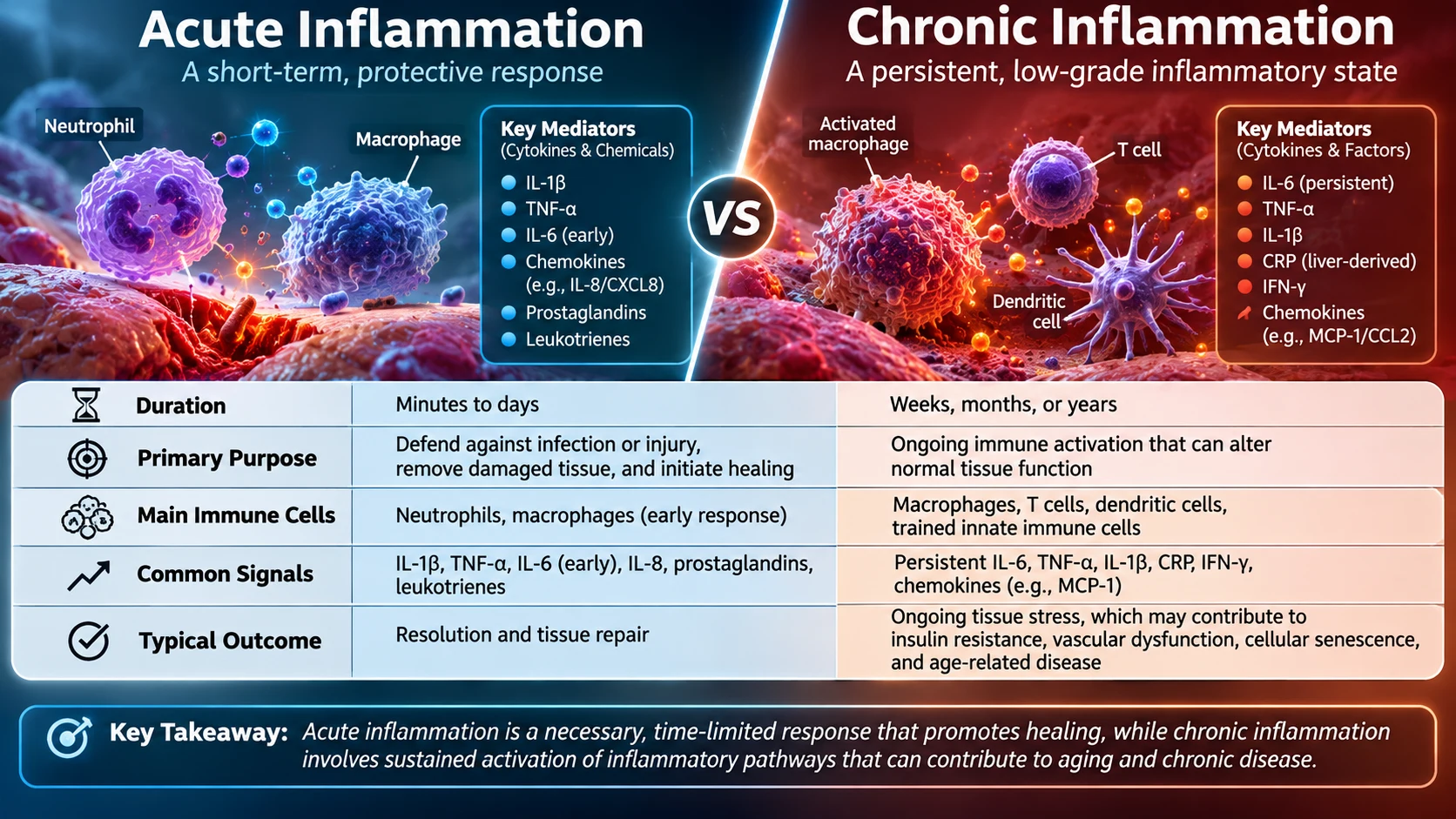
Acute Inflammation vs. Chronic Inflammation
Acute inflammation is generally a protective response.
When you sustain an injury or develop an infection, immune cells release inflammatory molecules that help eliminate pathogens, remove damaged tissue, and initiate healing.
Once the threat has resolved, the inflammatory response should gradually subside.
Chronic inflammation, however, occurs when inflammatory signaling persists for weeks, months, or years.
This prolonged activation can gradually alter normal cellular function.
Rather than supporting tissue repair, persistent inflammation may contribute to:
- Oxidative stress
- Mitochondrial dysfunction
- Impaired insulin signaling
- Endothelial dysfunction
- Abnormal tissue remodeling
- Accelerated cellular senescence
The distinction is important because the goal of healthy aging is not to eliminate inflammation.
It is to maintain an immune system capable of mounting an appropriate response and resolving that response when it is no longer needed.
Why Does Inflammation Increase With Age?
Inflammaging does not arise from a single cause.
Instead, researchers believe it develops through the interaction of several biological processes that become increasingly common with age.
1. Cellular Senescence: When Aging Cells Refuse to Leave
One of the most extensively studied contributors to inflammaging is cellular senescence.
Cellular senescence occurs when cells enter a state of prolonged growth arrest, often in response to DNA damage, telomere dysfunction, oncogene activation, or other forms of cellular stress.
This process can be beneficial.
By preventing damaged cells from dividing, cellular senescence helps protect against uncontrolled cellular proliferation and potentially cancer.
However, senescent cells can also develop what researchers call the senescence-associated secretory phenotype (SASP).
The SASP involves the release of inflammatory cytokines, chemokines, growth factors, and enzymes that influence surrounding tissues.
These substances may include IL-6, IL-8, and various matrix metalloproteinases.
When senescent cells accumulate or are inadequately cleared, their secretions can contribute to chronic inflammatory signaling.
This creates a potentially self-reinforcing cycle:
Cellular damage → Senescence → Inflammatory signaling → Additional tissue stress → Further senescence
Importantly, not all senescent cells are harmful, and senescence also contributes to normal tissue repair.
The concern is the persistent accumulation of certain senescent cell populations and their effects on surrounding tissues.
2. Immunosenescence: The Aging Immune System
As we age, the immune system undergoes structural and functional changes collectively referred to as immunosenescence.
These changes can affect both innate and adaptive immunity.
For example, aging is associated with changes in T-cell populations, reduced production of naïve T cells, altered immune-cell signaling, and changes in the ability to respond to unfamiliar pathogens.
At the same time, certain inflammatory pathways may become more active.
This creates an apparent contradiction.
The aging immune system may become less effective at responding to new infections while simultaneously maintaining a higher baseline level of inflammatory activity.
Immunosenescence and inflammaging are closely related, but they are not identical processes.
One describes age-associated changes in immune function, while the other describes a chronic inflammatory state.
Together, they may contribute to increased susceptibility to infection, impaired vaccine responses, and age-related disease.
3. Visceral Fat: An Overlooked Source of Inflammation
Body fat is not simply a storage compartment for excess calories.
Adipose tissue is metabolically active and produces numerous hormones, cytokines, and signaling molecules.
This is particularly important when discussing visceral adipose tissue, the fat surrounding internal abdominal organs.
Excess visceral fat is associated with increased inflammatory activity, altered adipokine signaling, and metabolic dysfunction.
As visceral adipose tissue expands, it may develop local hypoxia, immune-cell infiltration, and changes in macrophage activity.
These changes can increase the production of inflammatory mediators.
Chronic adipose tissue inflammation is also associated with impaired insulin signaling, contributing to insulin resistance.
This helps explain why two individuals with similar body weights may have very different metabolic risk profiles.
An individual with relatively little visceral fat and greater muscle mass may have a substantially different cardiometabolic risk profile than someone with the same BMI but greater visceral adiposity.
Body composition matters more than the number on the scale alone.
4. Mitochondrial Dysfunction and Oxidative Stress
Mitochondria are responsible for producing much of the energy required for normal cellular function.
They also participate in cellular signaling, metabolic regulation, and immune responses.
With aging, mitochondrial function may become impaired in certain tissues.
Damaged or dysfunctional mitochondria can contribute to increased production of reactive oxygen species (ROS).
Although ROS are essential signaling molecules at physiological concentrations, excessive oxidative stress can damage proteins, lipids, and DNA.
Mitochondrial dysfunction may also activate inflammatory pathways.
For example, mitochondrial DNA released into the cytoplasm or extracellular environment can act as a danger signal, potentially activating innate immune responses.
The relationship is bidirectional.
Inflammation can impair mitochondrial function, while mitochondrial dysfunction can promote further inflammation.
This interaction may contribute to the progressive decline in tissue function associated with aging.
However, mitochondrial dysfunction is not universal across all tissues, and its relationship with aging is more complex than simply producing excessive free radicals.
5. The Gut Microbiome and Intestinal Barrier
The gastrointestinal tract contains trillions of microorganisms that influence digestion, metabolism, immune regulation, and inflammatory signaling.
The composition and function of the gut microbiome can change with age.
These changes may be influenced by diet, medications, physical activity, illness, and other environmental factors.
Some research suggests that age-associated alterations in the microbiome may contribute to chronic inflammation.
One proposed mechanism involves changes in intestinal barrier function.
When the intestinal barrier becomes compromised, bacterial products such as lipopolysaccharide (LPS) may enter circulation in greater quantities and activate immune pathways.
However, the relationship between the microbiome and inflammaging remains an evolving area of research.
It would be premature to suggest that a particular probiotic, microbiome test, or supplement can reliably reverse inflammaging.
How Chronic Inflammation Contributes to Age-Related Disease
Inflammaging is associated with several conditions that become more common with advancing age.
However, an important distinction must be made.
An association between inflammation and disease does not necessarily establish that inflammation is the sole cause of that disease.
In many conditions, inflammation may contribute to disease progression while also being a consequence of the underlying pathology.
Cardiovascular Disease
Chronic inflammation plays an important role in the development and progression of atherosclerosis.
Inflammatory cells participate in the formation, progression, and destabilization of atherosclerotic plaques.
Inflammatory signaling can also contribute to endothelial dysfunction and changes in vascular function.
The clinical importance of inflammation has been demonstrated in cardiovascular research.
For example, the CANTOS trial found that targeting the IL-1β inflammatory pathway with canakinumab reduced recurrent cardiovascular events in selected patients with previous myocardial infarction and elevated high-sensitivity CRP.
Importantly, canakinumab also increased the risk of serious infection and is not routinely used for cardiovascular prevention.
These findings support the role of inflammation in cardiovascular disease, but they do not mean that broadly suppressing the immune system is an appropriate anti-aging strategy.
Insulin Resistance and Type 2 Diabetes
Chronic inflammatory signaling can interfere with insulin receptor pathways and glucose metabolism.
Inflammatory mediators associated with excess adiposity may contribute to impaired insulin sensitivity.
This relationship is particularly relevant in individuals with visceral obesity, metabolic dysfunction, and sedentary lifestyles.
However, insulin resistance is multifactorial and cannot be explained by inflammation alone.
Sarcopenia and Muscle Loss
Age-related muscle loss, known as sarcopenia, is influenced by several factors, including physical inactivity, inadequate protein intake, neurological changes, hormonal changes, and chronic disease.
Persistent inflammation may also contribute.
Elevated inflammatory signaling has been associated with impaired muscle protein metabolism, reduced physical performance, and loss of muscle strength in older adults.
However, the relationship is complex, and circulating inflammatory markers do not reliably predict muscle loss in every individual.
Resistance training remains one of the most effective interventions for preserving muscle mass and strength with aging.
Cognitive Decline and Neurodegeneration
Inflammatory processes within the central nervous system are increasingly recognized as important components of neurodegenerative disease.
Microglia, the resident immune cells of the brain, play essential roles in immune surveillance, synaptic regulation, and the removal of cellular debris.
However, persistent or dysregulated neuroinflammatory signaling may contribute to neuronal dysfunction.
Research has identified relationships between neuroinflammation and conditions such as Alzheimer’s disease.
Nevertheless, Alzheimer’s disease involves numerous interacting processes, including amyloid pathology, tau pathology, vascular dysfunction, and other mechanisms.
Inflammation is one component of this complex biology.
There is currently insufficient evidence that lowering a general inflammatory marker such as CRP will prevent Alzheimer’s disease.
Inflammaging and the Hallmarks of Aging
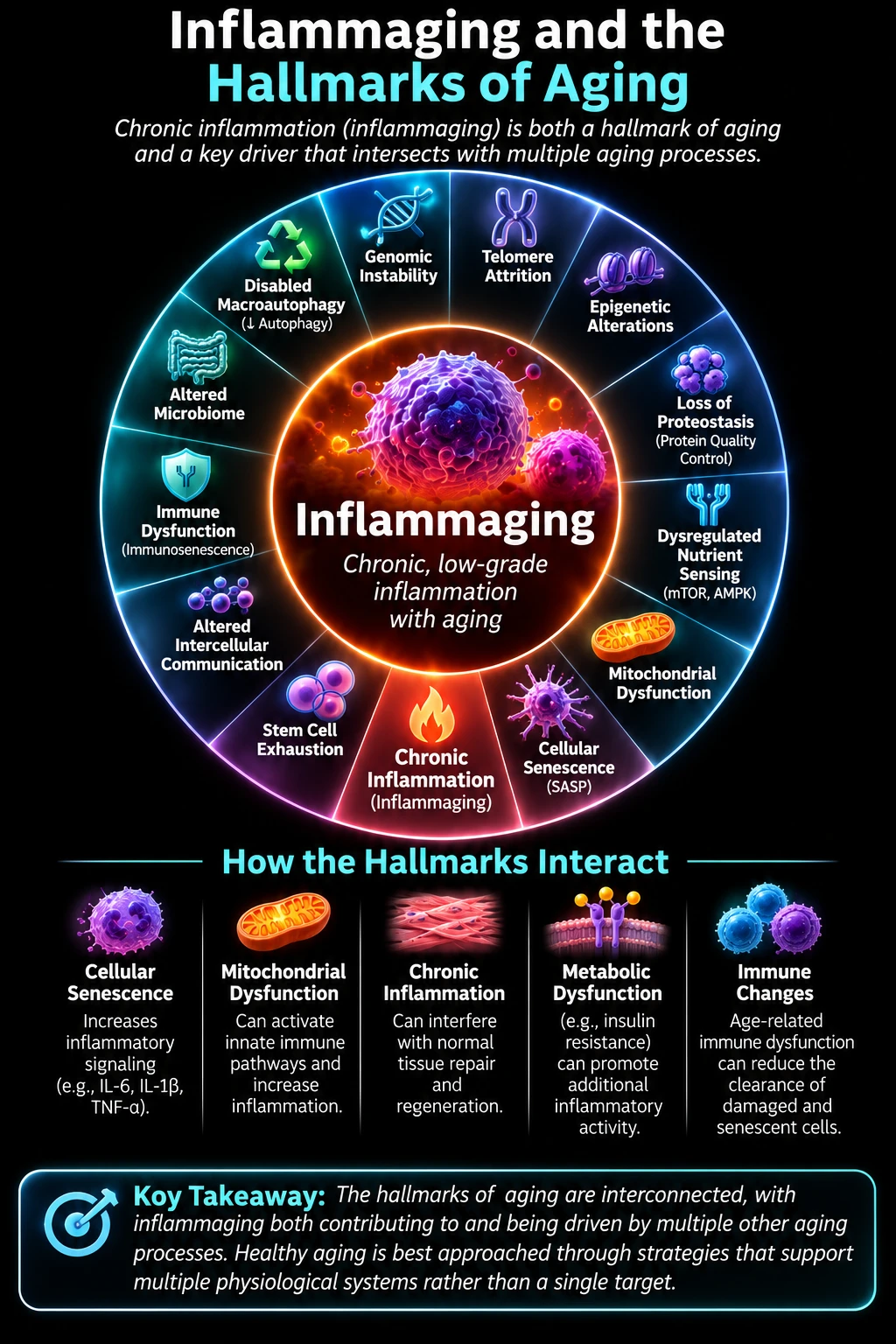
Inflammaging is closely connected to several biological processes described in the modern Hallmarks of Aging framework.
The updated framework includes 12 interconnected hallmarks, such as cellular senescence, mitochondrial dysfunction, dysregulated nutrient sensing, altered intercellular communication, and chronic inflammation.
Chronic inflammation is now recognized as a hallmark in its own right.
These processes do not operate independently.
For example:
- Cellular senescence can increase inflammatory signaling.
- Mitochondrial dysfunction can activate innate immune pathways.
- Chronic inflammation can interfere with tissue repair.
- Metabolic dysfunction can promote additional inflammation.
- Age-related immune changes may reduce the clearance of damaged cells.
This interconnected biology helps explain why aging is difficult to address through any single medication, supplement, or intervention.
It also suggests that interventions affecting multiple physiological systems may be more useful than attempting to suppress one isolated inflammatory pathway.
Can You Measure Inflammaging?
One of the challenges in evaluating inflammaging is that inflammation is a dynamic biological process, while laboratory testing typically provides only a snapshot of inflammatory activity at a particular moment.
There is currently no universally accepted clinical test that directly measures inflammaging or determines an individual’s biological age based on inflammation.
Several laboratory markers can provide information about inflammatory activity, but each has limitations.
Two commonly used tests are high-sensitivity C-reactive protein (hs-CRP) and erythrocyte sedimentation rate (ESR).
Although both are associated with inflammation, they measure different physiological processes and respond differently over time.
High-Sensitivity C-Reactive Protein (hs-CRP): A Snapshot in Time
C-reactive protein is an acute-phase protein produced primarily by the liver in response to inflammatory signaling, particularly interleukin-6.
CRP is highly responsive to changes in inflammatory activity.
Following an inflammatory stimulus, CRP concentrations may begin increasing within approximately 4–6 hours and often peak within 36–50 hours.
Its circulating half-life is approximately 19 hours.
Because CRP production changes rapidly in response to inflammatory signaling, circulating concentrations can rise and fall substantially over relatively short periods.
This makes CRP useful for evaluating certain acute inflammatory conditions.
However, it also creates an important limitation when attempting to assess chronic, low-grade inflammation.
CRP can increase for numerous reasons, including:
- Acute infections
- Recent illness
- Tissue injury
- Surgery
- Strenuous exercise
- Autoimmune or inflammatory disease activity
- Certain allergic or inflammatory conditions
Uncomplicated seasonal allergies do not consistently cause substantial CRP elevations, but inflammatory illnesses associated with allergic conditions may influence results.
Consider an otherwise healthy individual whose usual hs-CRP concentration is approximately 0.7 mg/L.
Following a respiratory infection, the concentration might temporarily increase to 8 mg/L before returning toward baseline during recovery.
If blood is drawn during that period, the result could be interpreted incorrectly as evidence of persistent systemic inflammation.
Conversely, a normal hs-CRP measurement does not exclude chronic inflammatory activity in specific tissues.
This raises an important question:
How accurately can one or two hs-CRP measurements per year characterize an inflammatory process that develops over months or years?
The answer is that they cannot reliably characterize an individual’s entire long-term inflammatory pattern.
A single hs-CRP measurement tells us something about inflammatory activity around the time the blood was collected.
It does not necessarily tell us what occurred during the preceding months or what will occur afterward.
Would More Frequent hs-CRP Testing Be Better?
In principle, repeated measurements obtained over several months would provide a more complete picture of an individual’s inflammatory pattern than a single measurement.
For example, weekly testing could help distinguish temporary elevations from consistently increased inflammatory activity.
It could also demonstrate how much an individual’s hs-CRP fluctuates under different physiological conditions.
However, there are several limitations.
First, there is no established clinical protocol recommending weekly hs-CRP testing to evaluate inflammaging.
Second, repeated measurements do not necessarily distinguish inflammation associated with aging from inflammation caused by obesity, infection, autoimmune disease, or other conditions.
Third, there is no validated calculation that converts serial hs-CRP measurements into an individual’s biological age or long-term inflammatory burden.
Finally, frequent testing would increase costs without established evidence that it improves clinical outcomes.
For these reasons, routine weekly testing is not currently recommended.
Nevertheless, persistent elevations documented through appropriately timed repeat measurements are generally more informative about sustained systemic inflammatory activity than an isolated abnormal result.
Erythrocyte Sedimentation Rate (ESR): A Slower-Changing Marker
ESR measures the rate at which red blood cells settle in a sample of anticoagulated blood.
The measurement is influenced by plasma proteins, particularly fibrinogen, that promote red blood cell aggregation.
Unlike CRP, ESR generally responds more slowly to changes in inflammatory activity.
It may also remain elevated longer after an inflammatory episode has resolved.
This slower response can make ESR useful when evaluating certain sustained inflammatory conditions.
However, ESR has important limitations.
It can be influenced by:
- Age
- Sex
- Anemia
- Red blood cell size and shape
- Immunoglobulin concentrations
- Kidney disease
- Other noninflammatory physiological conditions
Consequently, an elevated ESR does not necessarily indicate active chronic inflammation.
Likewise, a normal ESR does not exclude chronic inflammatory disease.
Although ESR may provide a slower-changing indication of inflammatory activity, that does not automatically make it a more accurate measure of inflammaging.
hs-CRP vs. ESR: Which Is Better?
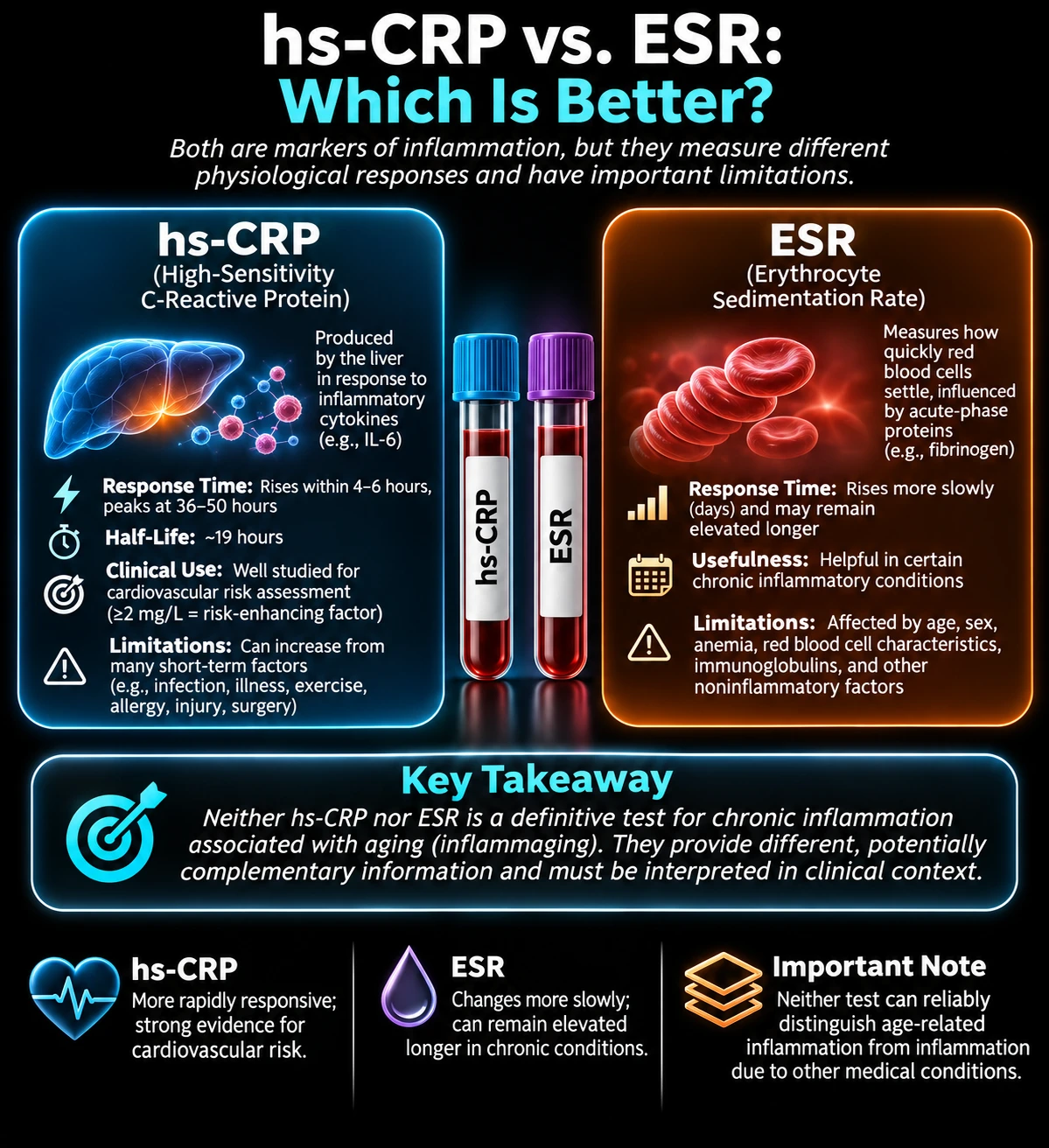
Neither test should be considered a definitive measurement of chronic inflammation associated with aging.
hs-CRP responds rapidly to inflammatory stimuli and has a substantial evidence base supporting its use in cardiovascular risk assessment.
ESR changes more slowly and may remain elevated longer, making it useful in certain chronic inflammatory conditions.
However, the slower response of ESR does not necessarily make it superior for detecting low-grade systemic inflammation.
The two markers provide different, potentially complementary information.
For example, hs-CRP has been studied extensively as a cardiovascular risk marker. An hs-CRP concentration of 2 mg/L or higher is recognized as a risk-enhancing factor in certain cardiovascular prevention guidelines.
However, this threshold is not a diagnostic criterion for inflammaging.
Similarly, an elevated ESR does not establish that an individual is aging more rapidly.
Neither test can reliably distinguish age-associated inflammatory changes from inflammation caused by other medical conditions.
The Bigger Problem: Measuring Biological Aging
The concept of inflammaging involves much more than elevated inflammatory proteins in the bloodstream.
It includes changes in immune-cell function, cellular senescence, mitochondrial signaling, metabolic regulation, and tissue-specific inflammatory pathways.
A circulating biomarker may reflect only a small portion of these processes.
Furthermore, inflammation is not uniform throughout the body.
An individual may have inflammatory activity within adipose tissue, vascular tissue, or the central nervous system without a corresponding elevation in commonly measured blood markers.
This creates a fundamental limitation.
We cannot assume that a normal inflammatory blood test means inflammation is absent, nor can we assume that an elevated result indicates accelerated biological aging.
In clinical practice, inflammatory markers should be interpreted alongside symptoms, medical history, body composition, metabolic health, and other relevant findings.
For cardiovascular risk assessment, hs-CRP may provide useful additional information in selected patients.
For investigating suspected inflammatory disease, ESR and CRP may both be appropriate.
But for measuring inflammaging itself, neither has been validated as a stand-alone diagnostic tool.
Can Inflammaging Be Reversed?
This is one of the most interesting questions in longevity medicine.
The short answer is that certain contributors to chronic inflammation can be modified, but there is currently no established treatment proven to reverse inflammaging as a whole or extend human lifespan by doing so.
Much of the research involving aging-related inflammatory pathways comes from animal studies, observational human studies, or early clinical trials.
These findings are promising, but they should not be confused with established clinical outcomes.
Nevertheless, several interventions have strong evidence for improving metabolic health, physical function, or cardiovascular risk and may also favorably influence inflammatory pathways.
1. Exercise: One of the Most Effective Interventions
Regular physical activity has broad effects on immune regulation, metabolism, and cardiovascular health.
Both aerobic exercise and resistance training can influence inflammatory signaling.
Exercise may help reduce visceral adiposity, improve insulin sensitivity, preserve muscle mass, and support mitochondrial function.
Interestingly, exercise itself produces a temporary inflammatory response.
This is part of the normal adaptive process.
Following exercise, skeletal muscle releases signaling molecules known as myokines, including IL-6.
Although IL-6 is commonly described as a pro-inflammatory cytokine, its effects depend on the biological context.
Exercise-induced IL-6 can participate in metabolic regulation and anti-inflammatory signaling.
This illustrates why simply labeling individual cytokines as good or bad can be misleading.
For most adults, a combination of aerobic exercise and progressive resistance training offers substantial health benefits.
2. Reduce Excess Visceral Fat
Excess visceral adiposity is one of the more modifiable contributors to chronic metabolic inflammation.
Weight loss in individuals with excess adiposity can reduce inflammatory markers and improve insulin sensitivity.
However, preserving muscle mass during weight loss is essential.
Aggressive calorie restriction without adequate protein intake and resistance training may reduce body weight while also contributing to the loss of lean tissue.
The goal should not simply be to weigh less.
It should be to improve body composition and metabolic health.
3. Nutrition and Dietary Patterns
Dietary patterns influence metabolic health and may affect inflammatory activity.
The Mediterranean dietary pattern has been associated with favorable cardiovascular outcomes and improvements in some inflammatory markers.
This pattern emphasizes vegetables, fruits, legumes, whole grains, nuts, olive oil, and fish.
It generally limits highly processed foods and excessive intake of refined carbohydrates and saturated fats.
However, there is no single universally accepted anti-inflammatory diet capable of reversing biological aging.
Individual nutrients and supplements may influence inflammatory biomarkers, but changes in laboratory values do not automatically translate into longer life or reduced disease risk.
4. Sleep and Circadian Health
Sleep plays an important role in immune regulation.
Chronic sleep restriction and disrupted circadian rhythms have been associated with changes in inflammatory signaling.
Poor sleep may also worsen insulin resistance, appetite regulation, and cardiometabolic health.
For most adults, consistently obtaining approximately seven to nine hours of quality sleep is a reasonable goal.
Individuals with symptoms suggesting obstructive sleep apnea should be evaluated, particularly when obesity, hypertension, or daytime sleepiness is present.
5. Smoking, Alcohol, and Environmental Exposures
Smoking promotes oxidative stress, vascular injury, and inflammatory activity.
Smoking cessation reduces cardiovascular risk and provides substantial long-term health benefits.
Excessive alcohol consumption can also contribute to tissue injury and inflammatory dysfunction.
Reducing these exposures is likely to provide far greater health benefits than attempting to compensate for them with anti-inflammatory supplements.
What About Hormones and Inflammaging?
Hormones influence metabolism, body composition, immune function, and tissue maintenance.
Consequently, researchers have investigated whether age-related hormonal changes contribute to chronic inflammation.
Testosterone
Testosterone has complex interactions with immune and inflammatory pathways.
Some observational studies have identified associations between low testosterone levels and elevated inflammatory markers in men.
Testosterone therapy may alter certain inflammatory biomarkers in some populations, but findings have been inconsistent.
It is also important to recognize that low testosterone can coexist with obesity, insulin resistance, chronic disease, and other conditions associated with inflammation.
These relationships make it difficult to determine cause and effect.
Testosterone replacement therapy should not be prescribed solely to lower inflammatory markers or as an anti-aging treatment.
For men with hypogonadism and appropriate clinical indications, testosterone therapy may improve symptoms and certain aspects of body composition.
Whether these changes meaningfully reduce inflammaging or improve longevity remains unproven.
Estrogen
Estrogen influences immune signaling, vascular biology, fat distribution, and metabolic function.
The menopausal transition is associated with changes in body composition, including an increased tendency toward central fat accumulation.
These changes may contribute to metabolic dysfunction and inflammatory activity.
However, estrogen’s effects on inflammation vary by tissue, receptor signaling, dose, and physiological context.
Menopausal hormone therapy can be effective for appropriate indications, particularly vasomotor symptoms and certain other menopause-related concerns.
It should not be prescribed solely to prevent inflammaging or extend lifespan.
DHEA
Dehydroepiandrosterone (DHEA) is an adrenal steroid precursor that declines substantially with age.
DHEA and its metabolites interact with several physiological pathways, including those involved in immune regulation.
Laboratory and animal studies have suggested potential immunomodulatory effects.
However, clinical evidence that DHEA supplementation meaningfully reduces chronic inflammation or improves longevity in otherwise healthy adults remains insufficient.
Low DHEA levels alone do not establish a need for supplementation.
Senolytics: A Future Treatment for Inflammaging?
One of the more promising areas of longevity research involves medications designed to selectively eliminate certain senescent cells.
These compounds are called senolytics.
Because some senescent cells produce inflammatory substances through the SASP, researchers hypothesize that selectively removing these cells may reduce certain forms of chronic inflammatory signaling.
In animal studies, senolytic interventions have produced encouraging results, including improvements in some measures of physical function and age-related pathology.
Small human studies have also explored combinations such as dasatinib and quercetin.
However, these investigations remain preliminary.
There is currently insufficient evidence to recommend senolytic medications or supplement combinations for routine anti-aging treatment.
Potential adverse effects, optimal dosing, long-term safety, and meaningful clinical outcomes remain important unanswered questions.
Furthermore, senescent cells have beneficial biological functions, and indiscriminately eliminating them could produce unintended consequences.
Senolytics represent an exciting research direction, not an established longevity therapy.
Is Lower Inflammation Always Better?
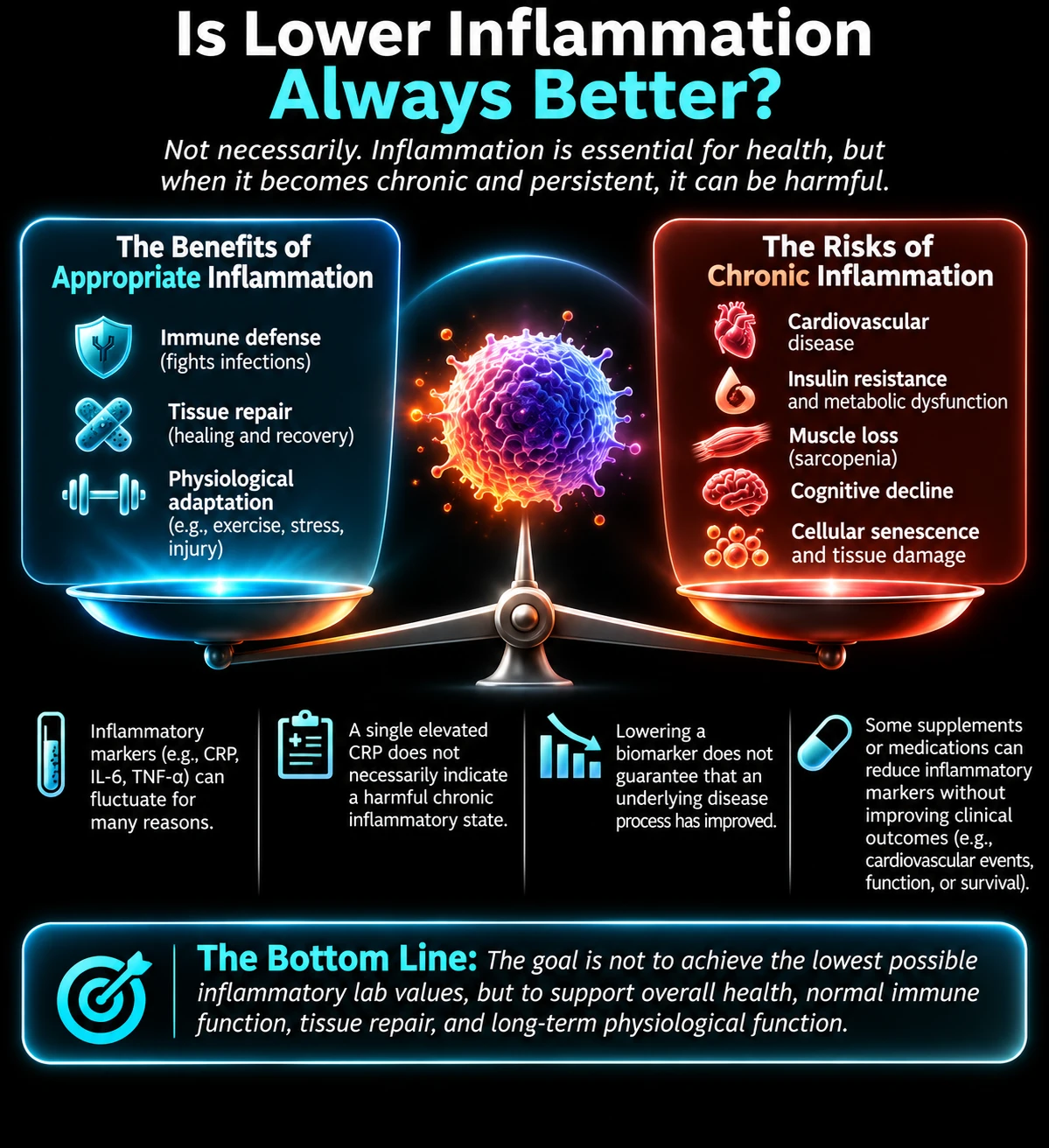
Not necessarily.
Inflammation is essential for normal immune defense, tissue repair, and physiological adaptation.
An excessively suppressed immune response can increase susceptibility to infections and impair normal healing.
Furthermore, inflammatory biomarkers fluctuate for many reasons.
An isolated elevation in CRP does not necessarily indicate a harmful chronic inflammatory state.
Likewise, reducing a biomarker does not guarantee that the underlying disease process has improved.
This distinction is especially important when evaluating supplements or medications marketed as anti-inflammatory or anti-aging.
A treatment may lower IL-6, TNF-α, or CRP without demonstrating meaningful improvements in cardiovascular outcomes, physical function, or survival.
The objective should be better health and physiological function, not simply the lowest possible inflammatory laboratory values.
Inflammaging and Healthspan
The concept of inflammaging is particularly relevant when distinguishing lifespan from healthspan.
Lifespan refers to the total number of years an individual lives.
Healthspan refers to the years spent in relatively good health, maintaining physical function, independence, and quality of life.
Chronic inflammatory processes may contribute to the development of diseases that reduce healthspan.
However, aging is influenced by numerous biological, genetic, behavioral, and environmental factors.
Inflammation is only one part of that equation.
The most practical approach to healthy aging remains focused on interventions that have demonstrated meaningful benefits:
- Maintaining regular physical activity
- Preserving muscle mass and strength
- Managing excess visceral adiposity
- Supporting metabolic and cardiovascular health
- Obtaining adequate sleep
- Avoiding tobacco
- Addressing established medical conditions
- Maintaining appropriate preventive healthcare
These strategies may improve inflammatory regulation while also providing benefits that extend far beyond inflammation itself.
Related Anti-Aging Resources
Cellular Senescence: Zombie Cells
The Hallmarks of Aging: What Actually Happens as We Get Older?
Healthspan vs. Lifespan: What Should We Actually Be Trying to Improve?
Visceral Fat: Why Where You Carry Fat Matters
Why Body Composition Matters More Than the Number on the Scale
DHEA: The Forgotten Hormone — What It Does, Why It Declines, and Should You Replace It?
Telomeres & Aging: Do Longer Telomeres Mean You’re Younger?
Can You Really Measure Your Biological Age?
Methylation Explained: Why This Cellular Process Matters for Your Health
What Does "Anti-Aging" Actually Mean? A Physician's Look at Longevity, Biological Age & Healthspan
Frequently Asked Questions
What is inflammaging?
Inflammaging refers to the chronic, low-grade inflammatory state frequently associated with aging. It involves changes in immune signaling and may contribute to the development or progression of certain age-related diseases.
Is inflammaging a disease?
No. Inflammaging is a biological phenomenon rather than a formally defined medical diagnosis. There are currently no universally accepted diagnostic criteria.
Can a blood test tell me if I have inflammaging?
Not definitively. Tests such as hs-CRP and ESR can provide information about systemic inflammation, but they cannot establish whether an individual has inflammaging or determine the rate of biological aging.
Why can hs-CRP fluctuate so much?
CRP is a rapidly responsive inflammatory protein. Its concentration can increase following infections, injuries, strenuous exercise, and other inflammatory stimuli. Once the stimulus resolves, CRP may decline relatively quickly.
Consequently, a single measurement may not accurately represent an individual’s longer-term inflammatory activity.
Is ESR better than hs-CRP for measuring chronic inflammation?
ESR generally changes more slowly than CRP and may remain elevated longer after an inflammatory episode.
However, ESR is influenced by several factors unrelated to inflammation, including age, anemia, and red blood cell characteristics.
Neither marker has been validated as a definitive measurement of inflammaging.
Would testing hs-CRP every week provide a better picture?
Repeated measurements over several months could provide more information about inflammatory patterns than a single measurement.
However, there is no established recommendation for weekly hs-CRP testing to evaluate inflammaging, and evidence that such testing improves clinical outcomes is lacking.
Does everyone develop inflammaging?
Not to the same degree. Inflammatory markers and immune function vary considerably among older adults. Some individuals maintain relatively low systemic inflammatory activity well into advanced age.
Can exercise reduce chronic inflammation?
Regular physical activity can improve metabolic health and reduce certain inflammatory markers, particularly in individuals with excess adiposity or metabolic dysfunction.
Interestingly, strenuous exercise can also temporarily increase inflammatory markers as part of the normal adaptive response.
Does belly fat cause inflammation?
Excess visceral fat can contribute to chronic inflammatory signaling through changes in adipose tissue function and immune-cell activity. However, inflammation is influenced by numerous additional factors.
Can hormone replacement therapy reduce inflammaging?
Hormones interact with immune and metabolic pathways, but there is insufficient evidence to recommend testosterone or estrogen therapy solely for preventing or treating inflammaging.
Do anti-inflammatory supplements slow aging?
There is currently insufficient evidence that commonly marketed anti-inflammatory supplements extend human lifespan or meaningfully reverse biological aging.
Some may influence inflammatory biomarkers, but this does not establish a clinical longevity benefit.
Can chronic inflammation accelerate biological aging?
Chronic inflammatory signaling may contribute to several biological processes associated with aging, including cellular senescence, mitochondrial dysfunction, and impaired tissue function.
However, there is no validated clinical formula that converts an inflammatory marker into a specific number of years of biological aging.
What is the best way to reduce inflammaging?
There is no single proven treatment.
Regular exercise, maintaining healthy body composition, managing cardiometabolic risk factors, adequate sleep, and avoiding smoking are among the most evidence-supported strategies for promoting healthy aging.
References
- Franceschi C, Bonafè M, Valensin S, et al. Inflamm-aging. An evolutionary perspective on immunosenescence. Annals of the New York Academy of Sciences. 2000;908:244–254. doi:10.1111/j.1749-6632.2000.tb06651.x
- Franceschi C, Garagnani P, Parini P, Giuliani C, Santoro A. Inflammaging: a new immune-metabolic viewpoint for age-related diseases. Nature Reviews Endocrinology. 2018;14:576–590. doi:10.1038/s41574-018-0059-4
- López-Otín C, Blasco MA, Partridge L, Serrano M, Kroemer G. Hallmarks of Aging: An Expanding Universe. Cell. 2023;186(2):243–278. doi:10.1016/j.cell.2022.11.001
- Ferrucci L, Fabbri E. Inflammageing: chronic inflammation in ageing, cardiovascular disease, and frailty. Nature Reviews Cardiology. 2018;15:505–522. doi:10.1038/s41569-018-0064-2
- Furman D, Campisi J, Verdin E, et al. Chronic inflammation in the etiology of disease across the life span. Nature Medicine. 2019;25:1822–1832. doi:10.1038/s41591-019-0675-0
- Ridker PM, Everett BM, Thuren T, et al. Antiinflammatory Therapy with Canakinumab for Atherosclerotic Disease. New England Journal of Medicine. 2017;377:1119–1131. doi:10.1056/NEJMoa1707914
- Rea IM, Gibson DS, McGilligan V, McNerlan SE, Alexander HD, Ross OA. Age and Age-Related Diseases: Role of Inflammation Triggers and Cytokines. Frontiers in Immunology. 2018;9:586. doi:10.3389/fimmu.2018.00586
- Xu M, Pirtskhalava T, Farr JN, et al. Senolytics improve physical function and increase lifespan in old age. Nature Medicine. 2018;24:1246–1256. doi:10.1038/s41591-018-0092-9
- Justice JN, Nambiar AM, Tchkonia T, et al. Senolytics in idiopathic pulmonary fibrosis: Results from a first-in-human, open-label, pilot study. EBioMedicine. 2019;40:554–563. doi:10.1016/j.ebiom.2018.12.052
- Calder PC, Bosco N, Bourdet-Sicard R, et al. Health relevance of the modification of low grade inflammation in ageing (inflammageing) and the role of nutrition. Ageing Research Reviews. 2017;40:95–119. doi:10.1016/j.arr.2017.09.001
- Pepys MB, Hirschfield GM. C-reactive protein: a critical update. Journal of Clinical Investigation. 2003;111(12):1805–1812. doi:10.1172/JCI18921
- Bray C, Bell LN, Liang H, et al. Erythrocyte Sedimentation Rate and C-reactive Protein Measurements and Their Relevance in Clinical Medicine. WMJ. 2016;115(6):317–321.
- Pearson TA, Mensah GA, Alexander RW, et al. Markers of inflammation and cardiovascular disease: Application to clinical and public health practice. Circulation. 2003;107(3):499–511. doi:10.1161/01.CIR.0000052939.59093.45
The Bottom Line
Inflammaging represents an important connection between chronic inflammation and the biological processes associated with aging.
Research increasingly suggests that persistent inflammatory signaling contributes to cardiovascular disease, metabolic dysfunction, cellular senescence, and other conditions that can compromise healthspan.
However, inflammaging is not a disease that can be diagnosed with a single blood test, nor is it a process that can currently be reversed with a particular supplement, medication, or hormone treatment.
One of the most important limitations in evaluating inflammaging is the difficulty of accurately measuring chronic inflammatory activity.
Commonly used markers such as hs-CRP and ESR provide useful information in appropriate clinical settings, but neither reliably captures the complex inflammatory processes associated with biological aging.
A single hs-CRP measurement may reflect a temporary inflammatory response rather than a persistent condition. ESR provides a slower-changing measurement but has its own limitations.
The presence of an elevated inflammatory marker does not necessarily mean someone is aging faster, just as a normal result does not establish the absence of chronic inflammatory activity.
The most effective approach to healthy aging remains focused on maintaining metabolic health, preserving muscle mass, reducing excess visceral adiposity, staying physically active, and addressing established medical risk factors.
At R2 Medical Clinic, we believe healthy aging requires looking beyond individual laboratory values and focusing on the broader relationship between hormones, metabolism, body composition, and long-term physiological function.
The goal is not simply to live longer. It is to preserve the health and physical function that make those additional years meaningful.
Medical Disclaimer: This article is intended for educational purposes only and does not constitute individualized medical advice, diagnosis, or treatment. Research involving inflammaging, senolytics, and other longevity interventions continues to evolve. Patients should consult a qualified healthcare professional before beginning medications, hormone therapy, or supplements intended to modify inflammatory pathways.