Healthspan vs. Lifespan: What Should We Actually Be Trying to Improve?
Lifespan measures how long we live. Healthspan focuses on how long we remain healthy, functional, independent, and capable of enjoying life. The goal of modern
R2 Medical Clinic • 19 min read

Medically reviewed by Erik Natkin, DO — Founder, R2 Medical Clinic, Denver, Colorado
Last medically reviewed: October 2026
Introduction
Modern medicine has become remarkably successful at helping people live longer. Over the past century, advances in sanitation, antibiotics, vaccinations, cardiovascular care, and chronic disease management have dramatically increased life expectancy.
But living longer raises an important question:
Are we actually living healthier, or are we simply spending more years managing chronic disease?
This distinction is at the heart of two increasingly important concepts in longevity medicine: lifespan and healthspan.
Lifespan measures how long we live. Healthspan focuses on how long we remain healthy, functional, independent, and capable of enjoying life.
Although these concepts are closely related, they are not interchangeable.
Someone who lives to 95 but spends the final 20 years struggling with significant disability, frailty, and chronic illness has experienced a very different aging process than someone who remains physically active, cognitively sharp, and independent into their 90s.
Both individuals may have achieved exceptional longevity, but their experiences of aging are dramatically different.
The goal of modern longevity medicine should not simply be to extend life. It should be to extend the healthy, functional years of life.
What Is Lifespan?
Lifespan refers to the total number of years an individual lives, from birth until death.
It is one of the most straightforward measurements of longevity.
Historically, medical progress has focused heavily on increasing lifespan by reducing premature deaths from infectious diseases, cardiovascular disease, cancer, and other life-threatening conditions.
These efforts have been enormously successful.
Over the past 300 years, human life expectancy has increased dramatically. In the 1700s, life expectancy at birth was generally estimated at approximately 30–40 years in populations with available historical records. By 1900, global life expectancy was still only about 32 years. Today, that figure has more than doubled to approximately 73 years worldwide, with many developed countries averaging 80 years or more. Much of this extraordinary improvement resulted from reductions in infant and childhood mortality, improved sanitation, clean drinking water, better nutrition, vaccinations, antibiotics, and advances in medical care. Importantly, this does not mean that people rarely lived into their 70s or 80s three centuries ago. Many did, particularly those who survived childhood. However, improvements in survival have occurred across virtually every age group.
In just a few centuries, humanity has achieved an unprecedented increase in life expectancy. Yet this remarkable success raises a new challenge: We have become exceptionally good at extending life, but have we been equally successful at extending the years spent in good health?
However, longer life does not necessarily mean better health.
Many people now survive conditions that would previously have been fatal, only to spend additional years managing multiple chronic diseases.
For example, an individual might survive a heart attack at age 65 but subsequently develop heart failure, diabetes, progressive muscle loss, and mobility limitations.
Medical treatment may allow that person to live another 20 years, but those additional years may come with substantial physical limitations.
This is not an argument against life-extending medical treatment. Rather, it highlights an important limitation of measuring medical success exclusively through survival.
Living longer is valuable, but the quality and functionality of those additional years matter just as much.
What Is Healthspan?
Healthspan generally refers to the portion of life spent in relatively good health, without substantial disease-related disability or functional impairment.
Unlike lifespan, healthspan is not defined by a single universally accepted measurement.
Healthspan is therefore a multidimensional concept.
A person may have well-controlled blood pressure and cholesterol but still experience significant limitations from muscle weakness, chronic pain, or cognitive decline.
Researchers may evaluate healthspan using combinations of:
- Physical function and mobility
- Cardiovascular and metabolic health
- Cognitive performance
- Muscle strength and endurance
- Chronic disease burden
- Functional independence
- Quality of life
- Ability to participate in meaningful activities
Similarly, someone may have a chronic medical condition yet remain physically active, independent, and highly functional.
The objective is not necessarily to eliminate every diagnosis.
The objective is to preserve the physical, cognitive, and metabolic capabilities that allow people to maintain independence and quality of life as they age.
The Gap Between Healthspan and Lifespan
One of the central challenges in modern medicine is the gap between how long people live and how long they remain healthy.
This gap represents the years spent living with chronic disease, disability, or reduced functional capacity.
Researchers sometimes refer to the concept of reducing this period as compression of morbidity.
The idea is straightforward.
Rather than experiencing a gradual decline over several decades, an individual maintains relatively good health for most of life, with serious illness and disability concentrated into a shorter period near the end.
Consider two hypothetical individuals who both live to age 90.
- Develops type 2 diabetes at 55
- Experiences cardiovascular disease at 65
- Develops significant mobility limitations at 72
- Requires assistance with daily activities by 80
- Dies at 90
- Maintains good metabolic health into their 70s
- Preserves muscle strength and mobility
- Remains cognitively and physically active
- Lives independently into their late 80s
- Dies at 90
Both individuals have the same lifespan.
However, Individual B has experienced a substantially longer period of functional health.
These examples are illustrative, not predictions of how any particular person will age.
The goal of healthspan-focused medicine is to increase the likelihood of the second trajectory.
Importantly, healthspan and lifespan are not competing objectives.
Interventions that reduce cardiovascular disease, improve metabolic health, and preserve physical function may improve both.
Why Do We Lose Health as We Age?
Aging is not simply the passage of time.
It involves a complex series of biological changes that gradually influence cellular function, tissue repair, metabolism, and the body’s ability to maintain physiological stability.
Researchers have identified several interconnected biological processes commonly referred to as the hallmarks of aging.
These include:
- Genomic instability
- Telomere attrition
- Epigenetic alterations
- Loss of proteostasis
- Dysregulated nutrient sensing
- Mitochondrial dysfunction
- Cellular senescence
- Stem cell exhaustion
- Altered intercellular communication
- Disabled macroautophagy
- Chronic inflammation
- Dysbiosis
These mechanisms do not operate independently.
Instead, they interact and contribute to progressive changes in how cells, tissues, and organs function.
For example, mitochondrial dysfunction may reduce cellular energy production, while chronic inflammation can impair tissue repair and contribute to metabolic dysfunction.
Meanwhile, changes in stem cell activity may limit the body’s ability to regenerate damaged tissues.
Over time, these processes can contribute to reduced muscle mass, impaired glucose regulation, vascular dysfunction, cognitive changes, and increased vulnerability to disease.
Understanding these mechanisms has opened the door to an entirely new area of research: interventions that target aspects of the aging process itself rather than treating individual diseases after they develop.
However, identifying a biological mechanism does not automatically mean that modifying it will improve human healthspan.
A treatment that improves a cellular marker of aging is not necessarily proven to extend healthy human life.
That distinction is essential when evaluating emerging longevity therapies.
Muscle Mass and Strength: Critical Components of Healthspan
One of the most important—and frequently underestimated—determinants of healthy aging is the preservation of skeletal muscle.
Beginning in adulthood, muscle mass and strength generally decline with age, although the rate varies considerably among individuals.
When this decline becomes clinically significant, it can contribute to sarcopenia, a condition characterized by reduced muscle strength and muscle quantity or quality.

Muscle loss affects far more than physical appearance.
Skeletal muscle plays an essential role in:
- Glucose disposal and insulin sensitivity
- Metabolic regulation
- Balance and mobility
- Bone health
- Physical resilience
- Recovery from illness or injury
- Maintaining independence
Loss of muscle strength is associated with an increased risk of falls, disability, hospitalization, and mortality.
This is one reason that resistance training has become such an important component of longevity-focused medicine.
Unlike many proposed anti-aging interventions, resistance training has substantial clinical evidence supporting improvements in strength, physical function, and metabolic health.
Adequate protein intake, appropriate resistance exercise, and attention to nutritional deficiencies can help preserve muscle as people age.
For individuals undergoing medical weight loss, preserving lean body mass is especially important.
Losing weight without protecting muscle may improve the number on the scale while compromising an important component of long-term health.
For longevity, maintaining muscle strength and function may be more meaningful than achieving an arbitrary body weight.
Metabolic Health: More Than Just Weight
Metabolic dysfunction is another major contributor to declining healthspan.
Insulin resistance, visceral adiposity, abnormal lipid metabolism, and chronic low-grade inflammation can develop years before overt cardiovascular disease or type 2 diabetes becomes apparent.
Importantly, metabolic health cannot always be determined by body weight alone.
Some individuals with a relatively normal body mass index may have substantial visceral fat accumulation or insulin resistance.
Conversely, body weight alone does not fully describe an individual’s cardiometabolic risk.
A comprehensive metabolic evaluation may include:
- Fasting glucose and hemoglobin A1c
- Lipid profile
- Blood pressure
- Waist circumference and body composition
- Assessment of physical activity
- Sleep quality
- Family history and other cardiovascular risk factors
Additional testing may be appropriate depending on the individual’s medical history and clinical findings.
Improving metabolic health can reduce the risk of several major chronic diseases, including cardiovascular disease and type 2 diabetes.
Medical weight-loss therapies, including incretin-based medications and related agents, have also expanded treatment options for appropriate patients.
Certain medications in these classes have demonstrated cardiovascular or other clinical benefits in defined patient populations.
However, these findings should not be interpreted as proof that such medications slow biological aging or extend lifespan in otherwise healthy individuals.
Their role in longevity medicine should remain grounded in established indications, clinical evidence, and individualized risk assessment.
Hormones and Healthy Aging
Hormonal changes are a normal part of aging, but they can also contribute to symptoms and physiological changes that affect quality of life.
In men, testosterone levels may decline with age, although the degree of decline varies considerably.
In women, the menopausal transition involves substantial changes in estrogen and progesterone production, while androgen levels follow a more variable trajectory.
Thyroid dysfunction and other endocrine disorders can also affect energy, metabolism, cognition, and physical function.
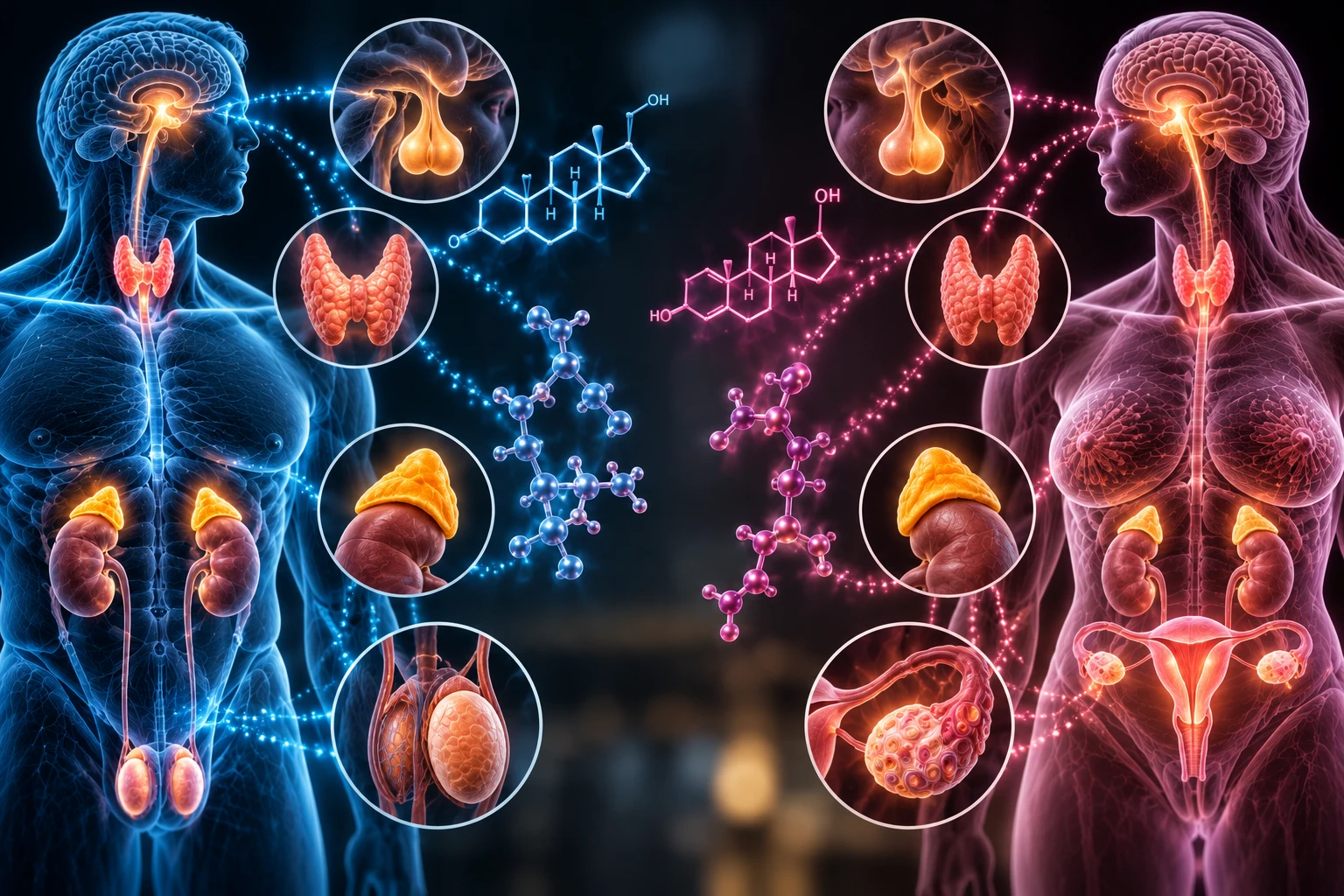
Depending on the individual, clinically significant hormonal deficiencies or changes may contribute to:
- Reduced sexual function
- Changes in body composition
- Fatigue
- Sleep disturbances
- Reduced bone density
- Mood changes
- Decreased exercise tolerance
Hormone therapy can provide meaningful benefits when used for appropriate clinical indications.
For example, testosterone replacement therapy may improve sexual symptoms and certain other outcomes in men with confirmed hypogonadism.
Menopausal hormone therapy can be highly effective for vasomotor symptoms and may help prevent bone loss in appropriately selected women.
However, an important distinction must be made.
Treating a clinically meaningful hormone deficiency is not the same as proving that hormone therapy slows aging or extends lifespan.
Current evidence does not establish testosterone, estrogen, growth hormone, or other hormone therapies as general-purpose treatments for extending human lifespan.
Hormone optimization should therefore focus on identifying genuine clinical needs, improving symptoms and function, and carefully balancing potential benefits against risks.
At R2 Medical Clinic, hormone evaluation is approached as one component of individualized medical care rather than a stand-alone solution to aging.
Cardiovascular Health and the Aging Brain
Two of the greatest threats to healthspan are cardiovascular disease and cognitive decline.
Cardiovascular disease remains a leading cause of death and disability, while neurodegenerative disorders can profoundly affect independence and quality of life.
These conditions share several important risk factors.
Hypertension, diabetes, smoking, physical inactivity, and abnormal lipid metabolism can negatively affect both cardiovascular and neurological health.
Maintaining healthy blood pressure, controlling diabetes, managing cholesterol, exercising regularly, and avoiding tobacco are therefore important strategies for protecting long-term function.
Sleep and social engagement also deserve attention.
Poor sleep can impair cognitive performance, metabolic regulation, and overall well-being.
Social isolation and loneliness have been associated with adverse health outcomes, although the relationships are complex and influenced by many factors.
Healthy aging is not exclusively a matter of laboratory values or physical performance.
Cognitive health, psychological well-being, and meaningful social relationships are also important components of healthspan.
Can We Actually Slow Biological Aging?
This is one of the most exciting questions in longevity research.
Scientists are increasingly investigating whether interventions targeting the biological mechanisms of aging can delay multiple age-related diseases simultaneously.
Rather than treating cardiovascular disease, neurodegeneration, metabolic dysfunction, and frailty as entirely separate problems, researchers are exploring whether some of their shared biological drivers can be modified.
This field is often referred to as geroscience.
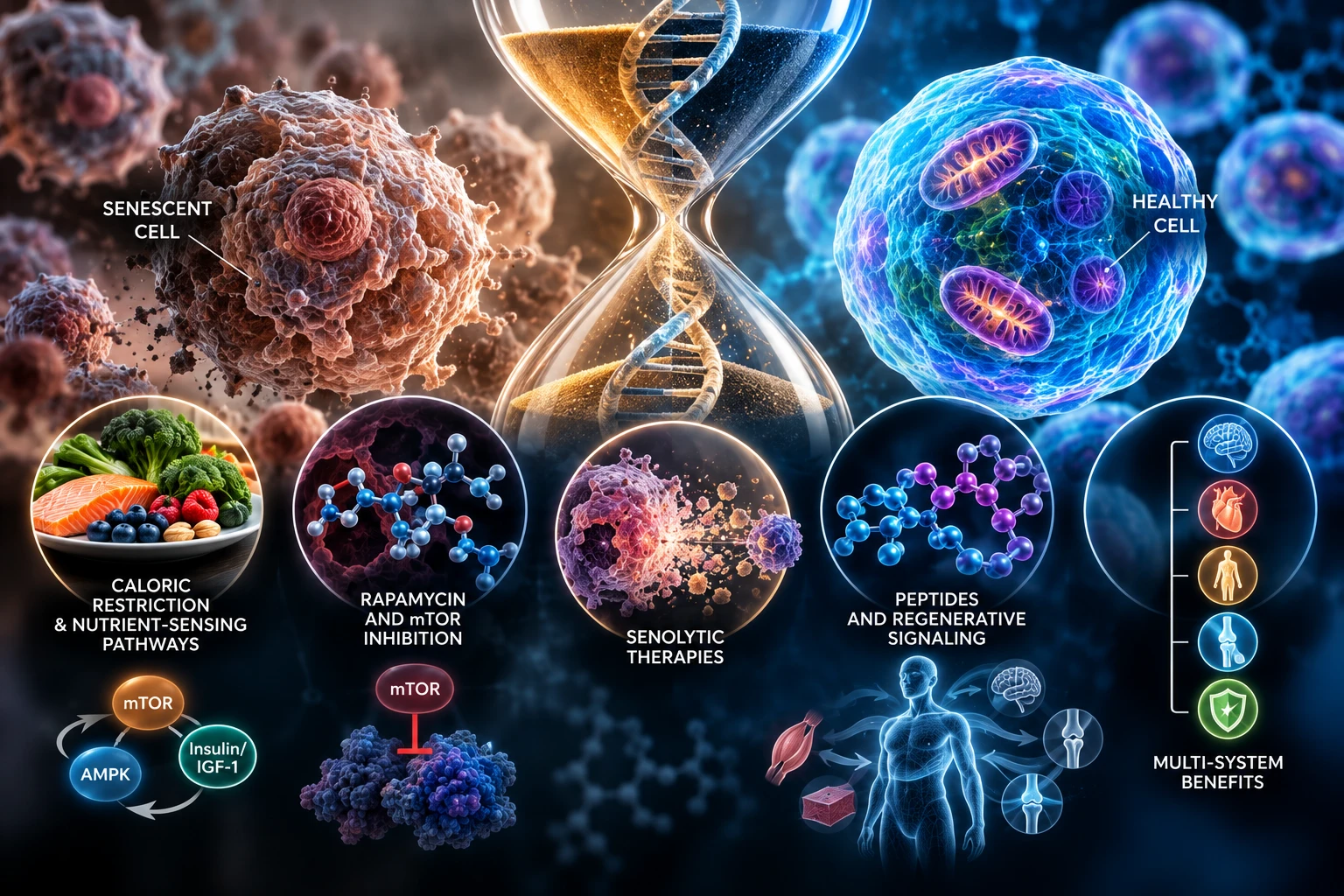
Several approaches are being investigated.
Caloric Restriction and Nutrient-Sensing Pathways
Caloric restriction has extended lifespan in several laboratory organisms.
Research suggests that nutrient-sensing pathways, including mTOR, AMPK, and insulin/IGF-1 signaling, play important roles in cellular maintenance and aging.
However, findings from animal studies cannot be directly translated into human lifespan recommendations.
Excessive caloric restriction may also accelerate muscle loss, reduce bone density, or create nutritional deficiencies, particularly in older adults.
The objective should be metabolic health and adequate nutrition rather than indiscriminate calorie reduction.
Rapamycin and mTOR Inhibition
Rapamycin has demonstrated lifespan-extending effects in multiple animal models.
Its effects on the mTOR pathway have generated substantial interest in longevity research.
However, evidence that rapamycin extends human lifespan or healthspan remains insufficient.
Potential adverse effects, including immunologic and metabolic complications, also require consideration.
Routine use solely for longevity is not currently supported by established clinical outcome evidence.
Senolytic Therapies
Senescent cells are cells that have entered a state of persistent growth arrest and may contribute to chronic inflammation and tissue dysfunction.
Researchers are studying therapies designed to selectively eliminate certain senescent cells.
Animal studies have produced promising findings, but human clinical evidence remains preliminary.
Whether senolytic therapies can meaningfully extend human healthspan remains an open question.
Peptides and Regenerative Signaling
Peptides are another area of growing interest in longevity and regenerative medicine.
Certain peptides influence pathways involved in growth hormone signaling, tissue repair, metabolism, inflammation, or cellular communication.
For example, tesamorelin is FDA-approved for reducing excess abdominal fat in adults with HIV-associated lipodystrophy.
However, its approval for that specific indication does not establish it as a general longevity treatment.
Other peptides being investigated for metabolic or regenerative applications have varying levels of evidence, and many remain experimental or lack FDA approval.
Changes in growth hormone or IGF-1 signaling are particularly complex because these pathways influence tissue maintenance, metabolism, cell proliferation, and potentially cancer-related processes.
Increasing a hormone or activating a regenerative pathway does not necessarily produce a net anti-aging benefit.
The key question is not whether an intervention changes a biological pathway. It is whether that change produces meaningful improvements in human health and function without introducing unacceptable risks.
Biological Age: Are We Measuring the Right Things?
Chronological age tells us how many years have passed since birth.
Biological age attempts to estimate how an individual’s physiological condition compares with expected age-related patterns.
Researchers are developing several approaches to measuring biological aging, including:
- DNA methylation clocks
- Proteomic biomarkers
- Metabolomic profiles
- Inflammatory markers
- Physiological and functional assessments
Some biological aging measures are associated with future disease risk and mortality.
However, these tools are not yet universally validated for directing individual longevity treatment.
A reduction in an estimated biological age score does not necessarily demonstrate that an intervention has extended lifespan or prevented disease.
For example, a therapy might change a DNA methylation pattern without producing a clinically meaningful improvement in cardiovascular function, cognition, or physical independence.
Biological age testing may eventually become an important part of preventive medicine.
For now, its results should be interpreted cautiously and alongside established clinical assessments.
A younger biological age score is interesting. Better physical function, improved metabolic health, and reduced disease risk are clinically more meaningful.
What Actually Has the Strongest Evidence for Improving Healthspan?
While research into aging biology continues, many of the most effective strategies for preserving long-term health are already available.
They are not necessarily new or technologically advanced.
1. Maintain Muscle Strength and Physical Fitness
Regular resistance training helps preserve muscle strength, bone health, and physical function.
Aerobic exercise supports cardiovascular fitness, metabolic regulation, and endurance.
Balance and mobility training become increasingly important with age.
A combination of these activities is generally more beneficial than focusing on only one form of exercise.
2. Protect Cardiovascular and Metabolic Health
Managing blood pressure, cholesterol, glucose regulation, and other cardiovascular risk factors can substantially reduce the likelihood of serious disease.
This includes appropriate medical treatment when lifestyle interventions alone are insufficient.
3. Prioritize Nutrition
A balanced dietary pattern emphasizing adequate protein, vegetables, fruits, fiber, and minimally processed foods supports metabolic health.
Nutritional needs should be individualized, particularly for older adults, patients undergoing weight loss, and individuals with chronic disease.
4. Address Sleep Disorders
Consistent, adequate sleep supports cognitive performance, metabolic function, and overall health.
Conditions such as obstructive sleep apnea should be evaluated and treated when clinically indicated.
5. Avoid Tobacco and Limit Alcohol
Tobacco exposure contributes to cardiovascular disease, cancer, and numerous other conditions that shorten both lifespan and healthspan.
Reducing alcohol exposure can also improve long-term health outcomes.
6. Identify and Treat Medical Conditions Early
Preventive screenings, appropriate laboratory testing, vaccinations, and management of chronic conditions remain essential components of healthy aging.
7. Preserve Cognitive and Social Engagement
Maintaining meaningful relationships, intellectual activity, and participation in daily life supports overall well-being.
These factors may also influence cognitive and functional outcomes.
8. Individualize Medical Treatment
Hormone therapy, medical weight loss, nutritional interventions, and other treatments may improve health or quality of life in appropriately selected patients.
However, treatment should be based on clinical indications and measurable outcomes rather than the assumption that every intervention marketed for longevity is beneficial.
The Future of Longevity Medicine
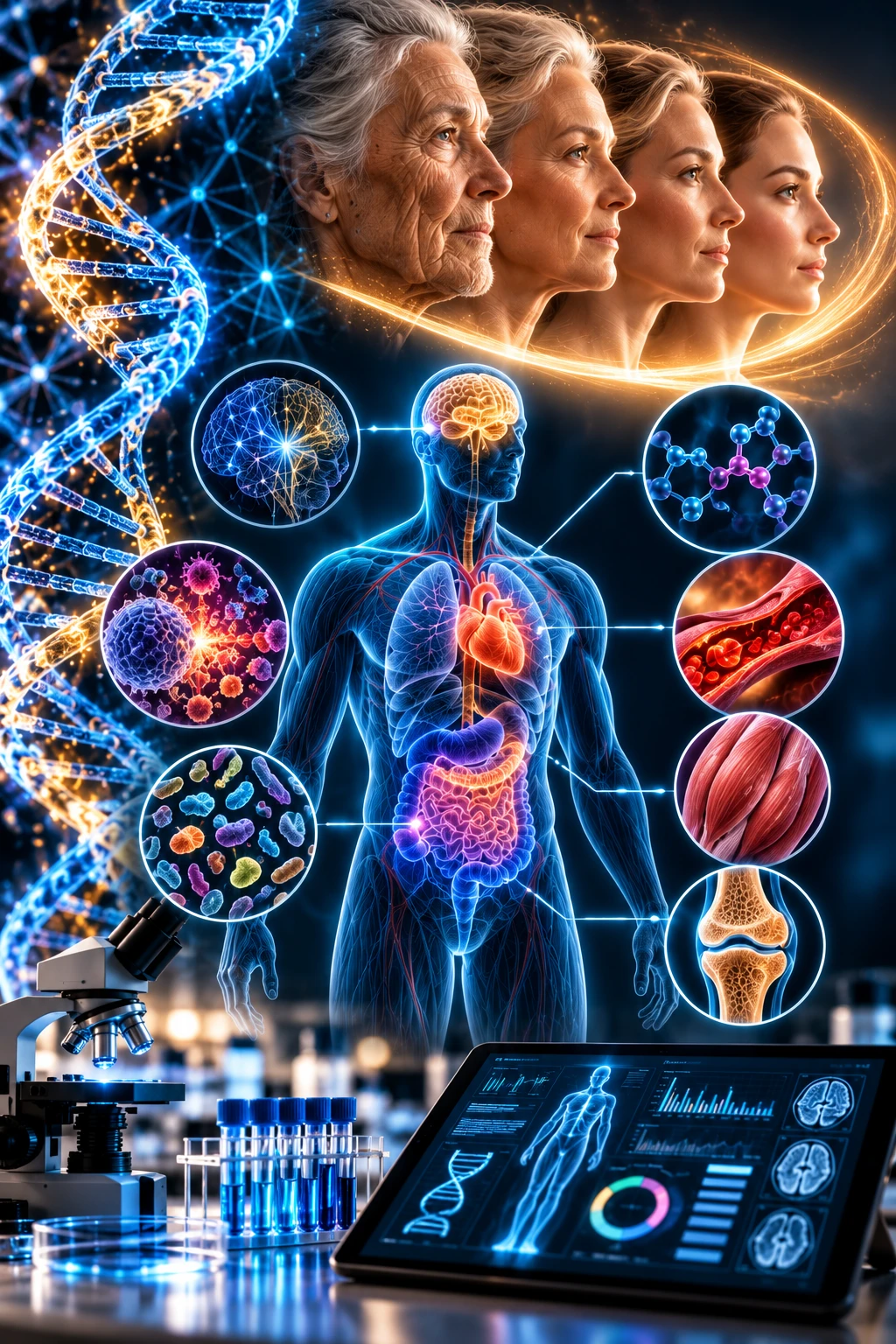
Traditional medicine has often focused on diagnosing and treating disease after symptoms develop.
Longevity medicine seeks to expand that approach by identifying risk factors, preserving physiological function, and potentially intervening earlier in biological processes associated with aging.
This represents an important evolution in preventive healthcare.
Emerging technologies may eventually allow clinicians to assess biological aging more accurately, identify individuals at increased risk for functional decline, and select interventions based on specific physiological abnormalities.
Artificial intelligence, advanced biomarkers, genomics, and personalized medicine may contribute to this progress.
However, these technologies will need to demonstrate that they improve meaningful clinical outcomes.
A sophisticated test or treatment is not inherently more valuable than an established intervention with strong evidence.
The future of longevity medicine should combine scientific innovation with careful clinical judgment.
Should We Focus on Healthspan or Lifespan?
Ideally, both.
Extending lifespan remains an important medical objective, particularly when additional years can be achieved without substantial disability.
But maximizing lifespan at the expense of health and independence should not be the only measure of success.
A more meaningful goal is to increase the proportion of life spent in good health.
This does not mean that individuals living with chronic disease or disability have less valuable lives.
Nor does it mean that aging can or should be reduced to a pursuit of perfect physical performance.
Instead, healthspan-focused care recognizes that maintaining function, autonomy, and quality of life deserves greater attention throughout the aging process.
The most successful longevity strategies may ultimately be those that delay the onset of multiple chronic diseases while preserving physical and cognitive capabilities.
The objective is not simply to add years to life. It is to add healthy, meaningful life to those years.
Related Anti-Aging Resources
The Hallmarks of Aging: What Actually Happens as We Get Older?
Can You Really Measure Your Biological Age?
What Does "Anti-Aging" Actually Mean? A Physician's Look at Longevity, Biological Age & Healthspan
Preserving Muscle During Medical Weight Loss: Why the Scale Is Only Part of the Story
Peptide Therapy for Body Composition and Recovery: What Does the Science Actually Show?
Frequently Asked Questions
What is the difference between healthspan and lifespan?
Lifespan refers to the total number of years a person lives. Healthspan refers to the years spent in relatively good health, with preserved function and without substantial disease-related disability.
Can you increase healthspan without increasing lifespan?
Yes. An intervention may improve mobility, strength, cognitive function, or quality of life without necessarily extending overall survival.
Does improving healthspan also increase lifespan?
Sometimes. Many interventions that reduce cardiovascular and metabolic disease risk can improve both health and survival. However, not every improvement in function or quality of life has been shown to extend lifespan.
Is biological age more important than chronological age?
Biological age may provide additional information about physiological aging, but current biological age tests have important limitations. Chronological age remains relevant, and established clinical measures are often more actionable.
Can hormone therapy extend lifespan?
Current evidence does not establish hormone therapy as a general treatment for extending human lifespan. Hormone therapy may provide meaningful benefits for appropriately selected patients with specific symptoms or medical indications.
Are peptides proven to slow aging?
No peptide therapy has been established through adequate human clinical evidence as a general treatment for slowing biological aging or extending lifespan. Some peptides have approved medical uses, while others remain investigational.
What is the most important thing someone can do to improve healthspan?
There is no single intervention that addresses every aspect of aging. Regular physical activity, preservation of muscle strength, cardiovascular risk reduction, metabolic health, adequate nutrition, and appropriate preventive care have some of the strongest supporting evidence.
At what age should someone start focusing on healthspan?
Healthspan is influenced by behaviors and exposures throughout life.
Although it is beneficial to establish healthy habits early, meaningful improvements in physical function, metabolic health, and disease risk can occur even when interventions begin later in adulthood.
Final Thoughts: Redefining Successful Aging
For decades, longevity has largely been measured by how many years people survive.
But survival alone does not capture the full experience of aging.
A longer life accompanied by preserved strength, mobility, cognitive function, and independence offers a different experience than one dominated by progressive disability.
This is why healthspan deserves a central role in modern preventive and longevity medicine.
Research into cellular aging, metabolic pathways, hormone signaling, and regenerative therapies may eventually provide new tools for delaying age-related decline.
Until those approaches demonstrate meaningful clinical benefits, established interventions remain the foundation of healthy aging.
At the same time, individualized medical care can help identify specific physiological problems that may be contributing to reduced function or quality of life.
The goal is not to chase every new anti-aging therapy or laboratory marker.
It is to identify what matters clinically, intervene where appropriate, and preserve the capabilities that allow people to enjoy their lives.
Because the real measure of longevity is not simply how long we live, but how well we are able to live during those years.
How R2 Medical Clinic Approaches Healthy Aging
At R2 Medical Clinic in Denver, Colorado, we believe that improving healthspan requires more than treating isolated symptoms or focusing exclusively on laboratory numbers.
Our approach emphasizes individualized evaluation, metabolic health, body composition, hormone assessment, and appropriate medical interventions designed to support overall health and quality of life.
Depending on individual needs, this may include:
- Comprehensive hormone evaluation and treatment when clinically appropriate
- Medical weight-loss management
- Body composition and metabolic health assessment
- Strategies to preserve muscle mass during weight loss
- Evaluation of nutritional and metabolic contributors to symptoms
- Education regarding emerging peptide therapies, including their limitations and potential risks
- Individualized treatment planning and ongoing monitoring
Not every patient requires hormone therapy, medication, or advanced treatment.
In many cases, the most meaningful improvements come from addressing identifiable health problems and implementing sustainable changes that support long-term function.
Our objective is to help patients improve how they feel and function today while supporting better health in the years ahead.
To learn more about our approach to hormone optimization, metabolic health, and individualized wellness care, contact R2 Medical Clinic in Denver, Colorado.
References
- Fries JF. Aging, natural death, and the compression of morbidity. New England Journal of Medicine. 1980;303(3):130–135. doi:10.1056/NEJM198007173030304.
- López-Otín C, Blasco MA, Partridge L, Serrano M, Kroemer G. The hallmarks of aging. Cell. 2013;153(6):1194–1217. doi:10.1016/j.cell.2013.05.039.
- López-Otín C, Blasco MA, Partridge L, Serrano M, Kroemer G. Hallmarks of aging: An expanding universe. Cell. 2023;186(2):243–278. doi:10.1016/j.cell.2022.11.001.
- Kennedy BK, Berger SL, Brunet A, et al. Geroscience: Linking aging to chronic disease. Cell. 2014;159(4):709–713. doi:10.1016/j.cell.2014.10.039.
- Cruz-Jentoft AJ, Bahat G, Bauer J, et al. Sarcopenia: Revised European consensus on definition and diagnosis. Age and Ageing. 2019;48(1):16–31. doi:10.1093/ageing/afy169.
- Ekelund U, Tarp J, Steene-Johannessen J, et al. Dose-response associations between accelerometry measured physical activity and sedentary time and all cause mortality: Systematic review and harmonised meta-analysis. BMJ. 2019;366:l4570. doi:10.1136/bmj.l4570.
- Belsky DW, Caspi A, Arseneault L, et al. Quantification of the pace of biological aging in humans through a blood test, the DunedinPoAm DNA methylation algorithm. eLife. 2020;9:e54870. doi:10.7554/eLife.54870.
- Horvath S. DNA methylation age of human tissues and cell types. Genome Biology. 2013;14:R115. doi:10.1186/gb-2013-14-10-r115.
- Campisi J, Kapahi P, Lithgow GJ, Melov S, Newman JC, Verdin E. From discoveries in ageing research to therapeutics for healthy ageing. Nature. 2019;571:183–192. doi:10.1038/s41586-019-1365-2.
- Fontana L, Partridge L. Promoting health and longevity through diet: From model organisms to humans. Cell. 2015;161(1):106–118. doi:10.1016/j.cell.2015.02.020.
- Lamming DW, Ye L, Sabatini DM, Baur JA. Rapalogs and mTOR inhibitors as anti-aging therapeutics. Journal of Clinical Investigation. 2013;123(3):980–989. doi:10.1172/JCI64099.
- National Institute on Aging. Research on aging biology, physical activity, and healthy aging. National Institutes of Health.
Medical Disclaimer: This article is intended for educational purposes only and does not constitute individualized medical advice. Longevity interventions, hormone therapies, medications, and investigational treatments should be evaluated based on individual medical history, clinical indications, available evidence, and potential risks. Not all treatments discussed are FDA-approved for longevity or anti-aging purposes.