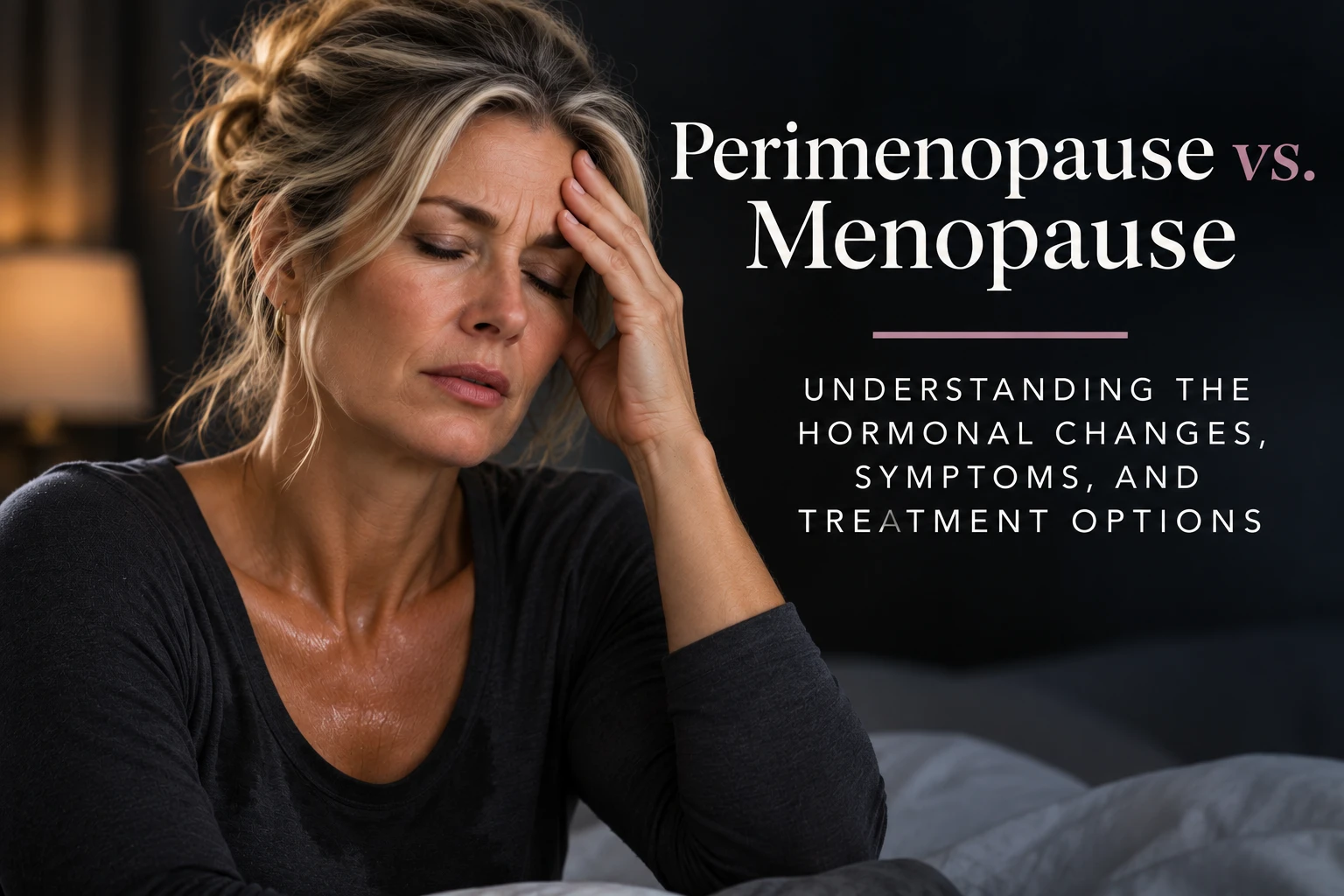
Perimenopause vs. Menopause: Understanding the Hormonal Changes, Symptoms, and Treatment Options
Women frequently experience symptoms such as fatigue, disrupted sleep, weight gain, anxiety, brain fog, declining libido, and irregular menstrual cycles years
R2 Medical Clinic • 27 min read
Medically reviewed by Erik Natkin, DO — Founder, R2 Medical Clinic, Denver, Colorado
Last medically reviewed: November 2026
For many women, the transition into menopause is one of the most significant hormonal changes of their lives. Yet despite affecting approximately half the population, the differences between perimenopause and menopause remain widely misunderstood.
One of the most important distinctions is that perimenopause and menopause are not the same condition.
Perimenopause describes the transitional years when ovarian hormone production becomes increasingly unpredictable. Menopause, on the other hand, marks the end of menstrual cycles and reproductive function.
Women frequently experience symptoms such as fatigue, disrupted sleep, weight gain, anxiety, brain fog, declining libido, and irregular menstrual cycles years before they officially reach menopause.
These symptoms are often attributed to stress, aging, or lifestyle changes. However, fluctuating reproductive hormones may be contributing to many of these experiences.
To understand what happens during this transition, it helps to first understand how hormones normally fluctuate throughout a woman’s reproductive cycle.
Understanding the Normal Four-Week Menstrual Cycle
Before discussing perimenopause and menopause, it is important to understand how the female reproductive system normally functions.
The menstrual cycle is regulated through a complex communication network involving the hypothalamus, pituitary gland, and ovaries. This is known as the hypothalamic-pituitary-ovarian (HPO) axis.
Five hormones are particularly important in understanding this process.
Follicle-Stimulating Hormone (FSH)
FSH is produced by the anterior pituitary gland and stimulates the development of ovarian follicles. These follicles contain immature eggs and produce increasing amounts of estradiol as they mature.
Luteinizing Hormone (LH)
LH is also produced by the anterior pituitary gland. Its most recognizable function is triggering ovulation through a rapid increase known as the LH surge.
Following ovulation, LH supports the corpus luteum, which produces progesterone.
Estradiol
Estradiol is the primary circulating estrogen during the reproductive years.
It influences the development of the uterine lining, reproductive tissues, bone metabolism, brain function, and numerous other physiological systems.
Estradiol levels fluctuate substantially throughout the menstrual cycle.
Progesterone
Progesterone is produced primarily by the corpus luteum following ovulation through support of the hormone LH.
Progesterone stabilizes and maintains the estrogen-developed uterine lining, transforming it into a nutrient-rich, receptive environment for potential embryo implantation.
Progesterone also interacts with neurological pathways involved in sleep and mood regulation.
Testosterone
Although commonly considered a male hormone, testosterone also plays an important role in female physiology.
Within the ovaries, androgen production is an essential step in estrogen synthesis. Under the influence of luteinizing hormone (LH), ovarian theca cells produce androgens, primarily androstenedione and some testosterone.
These androgens then move into the granulosa cells, where follicle-stimulating hormone (FSH) stimulates the enzyme aromatase to convert them into estrogens, including estradiol.
This process is known as the two-cell, two-gonadotropin model of ovarian estrogen production.
In other words, androgen production is a necessary step in the normal ovarian synthesis of estradiol.
Testosterone also contributes to female sexual function and other physiological processes. It is produced by the ovaries and adrenal glands, with additional production occurring through peripheral conversion of androgen precursors.
Unlike estradiol and progesterone, testosterone generally demonstrates less pronounced cyclical variation.
Although the menstrual cycle is frequently described as lasting 28 days, normal cycle lengths vary. In adults, cycles typically range from approximately 24 to 38 days.
Two Different Ways of Looking at the Menstrual Cycle
Traditionally, obstetricians and gynecologists define Day 1 of the menstrual cycle as the first day of menstrual bleeding.
This convention provides a standardized reference for evaluating menstrual regularity, ovulation, fertility, and reproductive hormone measurements.
However, when explaining hormonal changes to patients, I prefer to visualize the cycle somewhat differently.
Rather than beginning with the first day of menstrual bleeding, I often begin the discussion with the first day after menstruation has stopped.
My reasoning is straightforward.
This provides a useful starting point for following the developing ovarian follicle, rising estradiol levels, ovulation, and the subsequent rise in progesterone.
It allows patients to visualize how hormones change during the weeks between menstrual periods.
Importantly, this is a different way of explaining the cycle, not a different biological cycle.
Hormonal changes actually begin before menstruation ends. FSH may already be rising during the late luteal phase of the preceding cycle, and follicular development begins during menstruation.
Nevertheless, beginning the discussion immediately after menstruation can make the hormonal sequence easier to understand.
For the following explanation, we will use a typical 28-day menstrual cycle with approximately five days of menstrual bleeding.
Week 1: Follicular Development and Rising Estrogen
Approximately Days 6–12 of the conventional menstrual cycle
Once menstrual bleeding has ended, the ovaries are already preparing for the next ovulation.
During this phase, FSH production increase and stimulates the growth and development of ovarian follicles.
Each follicle contains an immature egg.
As the follicles develop, granulosa cells increasingly produce estradiol.
Estradiol levels gradually rise, helping stimulate the rebuilding of the uterine lining.
This rising estrogen also influences the brain, reproductive tissues, and other physiological systems.
Testosterone is present throughout the menstrual cycle and may fluctuate modestly, although these changes are considerably smaller and less predictable than those of estradiol and progesterone.
Progesterone remains relatively low because ovulation has not yet occurred.
The primary hormonal pattern is:
FSH supports follicular development → estradiol rises → progesterone remains low.
Week 2: The Estrogen Peak and Ovulation
Approximately Days 13–16
As the dominant ovarian follicle matures, estradiol production increases substantially.
Sustained high estradiol concentrations eventually change the feedback relationship between the ovaries and the hypothalamic-pituitary system.
Instead of suppressing gonadotropin secretion, elevated estradiol triggers positive feedback.
This produces a surge in LH. LH often twice that of FSH.
The LH surge is responsible for triggering ovulation, typically occurring approximately 24–36 hours after the surge begins.
A smaller FSH surge also occurs around this time.
Estradiol generally reaches a preovulatory peak before declining temporarily.
Some studies have identified a modest increase in testosterone around ovulation, although this pattern is variable and is not a reliable indicator of ovulation.
The key hormonal event during this phase is:
High estradiol → LH surge → ovulation.
Week 3: Progesterone Becomes the Dominant Hormonal Signal
Approximately Days 17–23
Following ovulation, the ruptured ovarian follicle transforms into a structure called the corpus luteum.
The corpus luteum produces substantial amounts of progesterone, along with estradiol.
Progesterone becomes the dominant hormonal signal of the luteal phase.
Its primary reproductive function is to transform the estrogen-stimulated uterine lining into a secretory endometrium capable of supporting implantation.
Progesterone also increases basal body temperature slightly.
Estradiol typically experiences a secondary, smaller rise during the luteal phase.
FSH and LH remain relatively suppressed through negative feedback from ovarian hormones and inhibin.
Testosterone continues to circulate but does not exhibit the pronounced cyclical pattern seen with progesterone.
The primary hormonal pattern is:
Ovulation → corpus luteum formation → progesterone rises substantially.
Week 4: Hormone Withdrawal and Menstruation
Approximately Days 24–28 and the Beginning of the Next Cycle
If pregnancy does not occur, the corpus luteum gradually loses its ability to produce progesterone and estradiol.
Both hormones decline.
This hormonal withdrawal destabilizes the uterine lining, eventually triggering menstrual bleeding.
As estradiol, progesterone, and inhibin levels decrease, negative feedback on the pituitary gland diminishes.
FSH begins rising again, helping recruit follicles for the next menstrual cycle.
This is an important point: the hormonal events preparing the next cycle begin before menstrual bleeding has finished.
Once menstruation ends, the next group of developing follicles is already progressing toward another potential ovulation.
The cycle then repeats.
Why Understanding This Cycle Matters
The normal menstrual cycle is not characterized by stable hormone levels.
Instead, it involves coordinated, predictable fluctuations in FSH, LH, estradiol, and progesterone.
Testosterone also circulates throughout the cycle, although its fluctuations are generally less pronounced.
This hormonal coordination is what becomes increasingly disrupted during perimenopause.
- The ovaries may still produce substantial amounts of estradiol, but follicular development and ovulation become less predictable.
- As a result, progesterone production becomes inconsistent, estradiol may fluctuate dramatically, and FSH levels become increasingly variable.
Understanding the normal cycle helps explain why women can experience significant hormonal symptoms years before menopause officially occurs.
What Is Perimenopause?
Perimenopause is the transitional period leading up to menopause, during which ovarian function gradually changes and reproductive hormone levels become increasingly variable.
Although many women associate hormonal decline with menopause, significant hormonal fluctuations often begin years earlier.
Perimenopause commonly begins in a woman’s 40s, although some women experience symptoms in their late 30s.
The transition typically lasts several years, but its duration varies considerably.
During this period, the ovaries become less responsive to hormonal signals from the brain, particularly FSH.
As ovarian function changes, menstrual cycles may become less predictable.
Some women experience shorter cycles initially, followed by increasingly irregular or skipped periods.
However, menstrual irregularity is only one component of perimenopause.
Hormonal fluctuations can also influence sleep, mood, metabolism, sexual function, and cognitive performance.
What Happens to Estrogen During Perimenopause?
A common misconception is that estrogen steadily declines throughout perimenopause.
In reality, estrogen levels can fluctuate dramatically.
During some menstrual cycles, estradiol levels may be higher than those observed during a woman’s earlier reproductive years.
During other cycles, estrogen production may fall substantially.
These fluctuations occur because ovarian follicles become less predictable in their development and response to hormonal stimulation.
As a result, women may experience symptoms that appear inconsistent or change from month to month.
For example, a woman might experience breast tenderness and bloating during one cycle, followed by hot flashes and sleep disturbances during another.
This variability helps explain why perimenopausal symptoms can be difficult to recognize and why a single hormone measurement often provides limited diagnostic information.
What Happens to Progesterone?
Progesterone production also changes during perimenopause.
Unlike estrogen, which can fluctuate widely, progesterone production often becomes less consistent because ovulation occurs less reliably.
Progesterone is primarily produced by the corpus luteum following ovulation.
When ovulation does not occur, the normal postovulatory rise in progesterone is absent.
Consequently, women may experience cycles in which estrogen is present without the usual accompanying progesterone production.
These changes can contribute to irregular menstrual bleeding.
Progesterone also interacts with neurological pathways involved in sleep and mood regulation, although the clinical significance of these effects varies between individuals.
Importantly, symptoms alone cannot reliably establish whether a woman has a progesterone deficiency.
What Happens to FSH and LH?
As the number and quality of ovarian follicles decline, the ovaries become less responsive to pituitary stimulation.
Inhibin B, a hormone produced by developing ovarian follicles, generally declines.
Because inhibin B normally suppresses FSH secretion, its reduction contributes to rising FSH levels.
However, FSH does not increase in a perfectly linear fashion.
During perimenopause, FSH may be elevated during one cycle and substantially lower during another.
LH also changes as ovarian function declines, although FSH typically demonstrates more pronounced increases.
These changes reflect the body’s attempts to stimulate ovaries that are becoming progressively less responsive.
What Happens to Testosterone?
Unlike estradiol and progesterone, testosterone does not typically undergo a sudden decline at natural menopause.
Testosterone levels generally decrease gradually with age.
Both ovarian and adrenal androgen production contribute to circulating testosterone, and the relative contribution of these sources changes over time.
Some women experience changes in sexual desire during perimenopause, but these symptoms cannot reliably be attributed to testosterone levels alone.
Sleep, mood, medications, relationships, and other health conditions may play important roles.
What Is Menopause?
Menopause is a specific biological milestone marking the permanent cessation of menstrual periods due to the loss of ovarian follicular activity.
Natural menopause is diagnosed retrospectively after 12 consecutive months without menstruation, provided there is no other medical explanation for the absence of periods.
In the United States, the average age of natural menopause is approximately 51 years.
However, menopause can occur earlier or later.
The transition is associated with a substantial reduction in ovarian estradiol production.
As ovarian follicles become depleted, the ovaries produce progressively less estrogen and progesterone.
In response, the pituitary gland increases its production of FSH and LH.
This occurs because the normal negative feedback from ovarian hormones becomes diminished.
Although estrogen production decreases substantially, the body does not completely stop producing estrogen.
Peripheral tissues, particularly adipose tissue, continue converting androgen precursors into estrogens.
After menopause, estrone generally becomes the predominant circulating estrogen.
However, these peripheral sources do not fully replace the estradiol previously produced by the ovaries.
What Is Postmenopause?
By definition, once a woman meets the clinical criteria for menopause—12 consecutive months without menstruation—she is already postmenopausal, making the distinction between menopause and postmenopause somewhat redundant and unnecessarily confusing.
During this stage, ovarian estrogen production remains relatively low, although circulating hormone concentrations can vary between individuals.
Some symptoms, particularly hot flashes and night sweats, gradually improve over time.
Others may persist or become more noticeable.
For example, vaginal dryness, painful intercourse, and urinary symptoms associated with genitourinary syndrome of menopause may progress without treatment.
The long-term consequences of estrogen deficiency also become increasingly relevant, particularly regarding bone health.
Perimenopause vs. Menopause: What Are the Main Differences?
Although perimenopause and menopause are closely related, several important biological and clinical differences distinguish them.
1. Hormone Patterns
During perimenopause, estrogen levels may fluctuate substantially from one menstrual cycle to another.
Progesterone production becomes increasingly inconsistent as ovulation becomes less predictable.
FSH levels may fluctuate significantly, sometimes reaching concentrations typically associated with menopause before returning to lower levels.
During postmenopause, ovarian estradiol and progesterone production remain relatively low.
FSH and LH levels are generally elevated.
2. Menstrual Cycles
During perimenopause, menstrual cycles may become shorter, longer, heavier, lighter, or increasingly irregular.
Some women continue having relatively predictable periods despite experiencing significant symptoms.
Menopause is established once 12 consecutive months have passed without menstruation.
After menopause, vaginal bleeding should not be considered a normal menstrual period and requires medical evaluation.
3. Fertility
Pregnancy remains possible during perimenopause because ovulation can still occur.
Even women experiencing irregular periods may occasionally release an egg.
Therefore, contraception remains important for women who do not wish to become pregnant.
After natural menopause, spontaneous pregnancy is no longer expected because ovarian reproductive function has ceased.
4. Symptoms
Perimenopause is frequently characterized by unpredictable symptoms associated with fluctuating hormone levels.
Postmenopausal symptoms are more closely associated with sustained low estrogen levels.
However, there is considerable overlap, and symptoms alone cannot reliably distinguish the two stages.
5. Diagnosis
For women over 45 with typical symptoms and menstrual changes, perimenopause and menopause are generally diagnosed clinically.
Routine FSH or estradiol testing is usually unnecessary.
This is particularly important during perimenopause because hormone levels may change substantially over relatively short periods.
A normal estradiol or FSH result does not exclude perimenopause.
What Are the Most Common Symptoms of Perimenopause?
Perimenopause can affect multiple physiological systems.
Some women experience only mild menstrual irregularities.
Others develop symptoms that significantly interfere with work, relationships, sleep, and quality of life.
Hot Flashes and Night Sweats
Hot flashes are among the most recognizable symptoms of the menopausal transition.
They involve sudden sensations of heat, often accompanied by sweating, flushing, and occasionally palpitations.
Night sweats represent similar episodes occurring during sleep.
These symptoms are collectively known as vasomotor symptoms.
Estrogen fluctuations influence thermoregulatory pathways within the hypothalamus.
Research has identified neurokinin B signaling and specialized hypothalamic neurons as important contributors to menopausal hot flashes.
Changes in these pathways narrow the body’s thermoregulatory zone, making relatively small temperature changes capable of triggering heat-dissipation responses.
Sleep Disturbances
Sleep problems are common during perimenopause.
Women may experience difficulty falling asleep, frequent nighttime awakenings, or early morning awakening.
Night sweats can contribute to disrupted sleep, but sleep disturbances may also occur independently.
Other contributing factors include anxiety, depression, obstructive sleep apnea, and age-related changes in sleep architecture.
Persistent sleep disruption can contribute to fatigue, irritability, and impaired concentration.
Mood Changes and Anxiety
Some women experience increased irritability, anxiety, or depressive symptoms during perimenopause.
Fluctuating reproductive hormones may influence neurotransmitter systems involved in mood regulation.
However, mood symptoms are multifactorial.
Sleep disruption, psychosocial stress, prior mental health history, and other medical conditions may contribute.
Perimenopause is associated with an increased vulnerability to depressive symptoms in some women, particularly those with a history of depression.
Hormonal changes should not automatically be assumed to explain every mood disturbance.
Brain Fog and Memory Complaints
Difficulty concentrating, forgetfulness, and reduced mental clarity are frequently reported during the menopausal transition.
These symptoms are often described as brain fog.
Estrogen interacts with several neurological systems involved in memory, attention, and cognitive processing.
However, research has not established that typical menopausal cognitive complaints represent permanent neurological decline.
Sleep disturbances, mood symptoms, and other health factors may contribute substantially.
Persistent or progressive cognitive symptoms warrant evaluation rather than automatic attribution to menopause.
Weight Gain and Body Composition Changes
Many women notice changes in weight distribution during midlife.
Fat accumulation may shift toward the abdominal region, including increased visceral adipose tissue.
Declining estrogen contributes to changes in regional fat distribution.
However, menopause is not the sole cause of midlife weight gain.
Aging, declining physical activity, changes in energy expenditure, sleep disruption, and dietary patterns also influence body composition.
Loss of skeletal muscle can further complicate metabolic health.
Maintaining muscle through resistance training and adequate protein intake becomes increasingly important during this stage.
Changes in Sexual Function
Perimenopause may also affect sexual desire, arousal, and comfort during intercourse.
Some women experience reduced libido, while others notice little change.
Sexual function is influenced by numerous factors, including hormonal changes, relationship dynamics, psychological health, medications, and underlying medical conditions.
Declining estrogen may contribute to vaginal dryness and discomfort.
Androgen availability may also influence sexual desire, although circulating testosterone levels do not reliably predict libido in individual women.
What Symptoms Become More Important After Menopause?
Although many symptoms overlap, sustained estrogen deficiency after menopause has several important clinical implications.
Vaginal Dryness and Painful Intercourse
Low estrogen levels can cause changes in vaginal and vulvar tissues.
The vaginal epithelium may become thinner, less elastic, and more vulnerable to irritation.
Reduced lubrication can contribute to discomfort during sexual activity.
These changes are part of a broader condition known as genitourinary syndrome of menopause (GSM).
GSM may also involve urinary urgency, burning, and recurrent urinary tract infections.
Unlike hot flashes, which often improve over time, GSM frequently persists or progresses without treatment.
Bone Density Loss
Estrogen plays an important role in maintaining skeletal health.
It helps regulate the balance between bone formation and bone resorption.
Following menopause, reduced estrogen signaling increases bone turnover and can accelerate bone loss.
This is particularly pronounced during the early postmenopausal years.
Over time, declining bone density may contribute to osteopenia and osteoporosis.
Osteoporosis increases the risk of fragility fractures, particularly involving the spine, hip, and wrist.
Bone health assessment should consider age, personal and family history, medications, and other fracture risk factors.
Cardiovascular and Metabolic Health
The menopausal transition is associated with changes in lipid metabolism, vascular function, and body fat distribution.
Women may experience increases in LDL cholesterol, abdominal adiposity, and other cardiometabolic risk factors.
However, cardiovascular risk also increases with chronological aging.
Separating the effects of menopause from aging can be challenging.
Importantly, menopausal hormone therapy should not be prescribed solely to prevent cardiovascular disease.
Long-term cardiovascular risk reduction should emphasize blood pressure control, lipid management, physical activity, smoking cessation, and appropriate metabolic screening.
Can Blood Tests Tell Whether You Are in Perimenopause or Menopause?
Hormone testing is frequently requested by women experiencing symptoms during midlife.
However, interpreting reproductive hormone levels during perimenopause requires an understanding of their biological variability.
Estradiol
Estradiol is the primary circulating estrogen during the reproductive years.
During perimenopause, estradiol concentrations can fluctuate substantially.
A single measurement may appear normal, elevated, or low depending on the timing of the menstrual cycle.
Consequently, a normal estradiol level does not rule out perimenopause.
Follicle-Stimulating Hormone (FSH)
FSH generally rises as ovarian responsiveness declines.
However, FSH levels can fluctuate considerably during perimenopause.
A single elevated FSH level does not necessarily establish menopause.
Likewise, a normal FSH level does not exclude the menopausal transition.
For most women over 45 with typical symptoms, routine FSH testing is not recommended to establish the diagnosis.
Progesterone
Progesterone levels vary significantly throughout the menstrual cycle.
Levels are normally low before ovulation and rise during the luteal phase.
Because ovulation becomes less predictable during perimenopause, progesterone measurements can be difficult to interpret without knowing the timing of ovulation.
Random progesterone testing is not a reliable method of diagnosing perimenopause.
Testosterone and DHEA
Testosterone and dehydroepiandrosterone (DHEA) also change with age.
However, their trajectories differ from those of estrogen.
Testosterone generally declines gradually across adulthood rather than undergoing a sudden decrease specifically at natural menopause.
DHEA and DHEA sulfate also tend to decline with advancing age.
These hormones may be relevant in selected clinical evaluations, but they are not routinely used to diagnose perimenopause or menopause.
The key point is that menopause is primarily a clinical diagnosis, not a laboratory diagnosis.
Testing becomes more important when symptoms are atypical, menopause is suspected before age 45, or another medical condition needs to be excluded.
Women experiencing menstrual cessation before age 40 require evaluation for possible premature ovarian insufficiency.
Can You Treat Perimenopause Before Menopause Begins?
Yes.
Women do not need to wait until their periods have stopped completely before seeking treatment.
Treatment should be individualized according to symptoms, medical history, reproductive goals, and potential risks.
For women experiencing significant vasomotor symptoms, hormone therapy may be appropriate after a careful clinical evaluation.
However, treatment during perimenopause differs in several ways from treatment after menopause.
Women who are still menstruating may require contraception.
Menopausal hormone therapy does not reliably prevent pregnancy.
Depending on the clinical circumstances, certain hormonal contraceptives may help manage irregular bleeding, vasomotor symptoms, and pregnancy prevention.
Other women may benefit from menopausal hormone therapy using estrogen with appropriate endometrial protection.
The choice depends on age, cardiovascular and thrombotic risk factors, bleeding patterns, and individual preferences.
Hormone Replacement Therapy: What Does the Evidence Actually Show?
Menopausal hormone therapy remains the most effective treatment for vasomotor symptoms.
It can also help prevent bone loss and treat certain symptoms associated with estrogen deficiency.
However, not every woman requires hormone therapy, and treatment is not appropriate for everyone.
The benefits and risks depend on several factors, including age, time since menopause, route of administration, dose, duration, and underlying medical history.
For many healthy women younger than 60 or within 10 years of menopause onset, the benefit-risk balance is generally favorable when hormone therapy is used for appropriate indications and no contraindications are present.
Estrogen Therapy
Systemic estrogen therapy can substantially reduce hot flashes and night sweats.
It may also improve sleep when sleep disruption is driven by vasomotor symptoms.
Estrogen is available in several formulations, including oral tablets, transdermal patches, gels, sprays, injections, and pellets.
Transdermal (patches, topicals), pellets, and injection estrogen avoids first-pass hepatic metabolism. This is important because estrogen can increase clotting factors and thus clot formation with first-pass hepatic metabolism. Observational evidence suggests that these forms estrogen replacement therapy may carry a lower risk of venous thromboembolism than oral estrogen, although randomized comparative evidence remains limited.
Treatment selection should consider individual cardiovascular and thrombotic risk factors.
Progesterone Therapy
Women with an intact uterus who receive systemic estrogen generally require a progestogen to protect the endometrium.
Unopposed systemic estrogen can stimulate endometrial proliferation and increase the risk of endometrial hyperplasia and cancer.
Micronized progesterone is one option for endometrial protection when prescribed using an appropriate regimen.
Some women report improvements in sleep while taking oral micronized progesterone.
However, its primary established role when combined with systemic estrogen is endometrial protection.
Women who have undergone a hysterectomy generally do not require progesterone for this purpose.
Testosterone Therapy for Women
Testosterone therapy has received increasing attention in discussions about menopause and sexual health.
However, testosterone should not be considered a routine treatment for all menopausal symptoms.
The strongest evidence supports systemic testosterone therapy for carefully selected postmenopausal women diagnosed with hypoactive sexual desire disorder (HSDD) after a comprehensive biopsychosocial assessment.
Although randomized controlled trials have not established sufficient evidence to recommend testosterone therapy routinely for improving energy, cognition, muscle strength, or general well-being in women, observational studies and clinical experience have reported improvements in several of these areas. These findings suggest potential benefits beyond sexual function, but additional high-quality, long-term randomized controlled trials are needed to establish efficacy, identify which women may benefit, and determine long-term safety.
When prescribed, treatment should maintain testosterone concentrations within the physiological premenopausal female range.
Monitoring is necessary to minimize adverse effects and avoid supraphysiological exposure.
Long-term safety data remain limited.
What About Bioidentical Hormones?
The term bioidentical refers to hormones that are chemically identical to hormones naturally produced by the human body.
FDA-approved estradiol and micronized progesterone are examples of bioidentical hormones.
However, the term is frequently used in marketing to describe compounded hormone preparations.
These are not interchangeable concepts.
FDA-approved bioidentical hormones have undergone standardized evaluation for quality, dosing, and safety.
Compounded hormone products generally lack the same level of regulatory oversight and are not proven to be safer or more effective than approved alternatives.
Professional organizations, including the American College of Obstetricians and Gynecologists, recommend FDA-approved menopausal hormone therapies over compounded preparations when appropriate approved products are available.
Are There Nonhormonal Treatments for Menopause Symptoms?
Yes.
Not every woman wants hormone therapy, and some women have medical contraindications.
Evidence-based nonhormonal treatments are available.
Prescription Medications
Certain antidepressants, particularly selected SSRIs and SNRIs, can reduce vasomotor symptoms.
Gabapentin is another option, particularly when nighttime symptoms are prominent.
Fezolinetant is a nonhormonal neurokinin 3 receptor antagonist that targets hypothalamic pathways involved in thermoregulation.
It is FDA-approved for moderate to severe menopausal vasomotor symptoms.
However, fezolinetant carries an FDA boxed warning regarding rare but serious liver injury and requires liver function monitoring.
Treatment selection should account for medication interactions, medical history, tolerability, and individual preferences.
Cognitive Behavioral Therapy
Menopause-specific cognitive behavioral therapy can help women manage the distress and functional impact associated with hot flashes and sleep disturbances.
Although it may not substantially reduce the frequency of vasomotor episodes, it can improve coping and symptom-related quality of life.
Vaginal Estrogen Therapy
For women experiencing vaginal dryness, painful intercourse, or other symptoms of GSM, low-dose vaginal estrogen is an effective treatment.
Because systemic absorption is generally minimal, low-dose vaginal estrogen has a different risk profile from systemic hormone therapy.
In most women using low-dose local vaginal estrogen, additional progesterone is not required.
Other treatment options include vaginal moisturizers, lubricants, vaginal DHEA, and selected prescription therapies.
Women with a history of estrogen-sensitive cancer require individualized decision-making in coordination with their treating clinicians.
Why Does Menopause Affect Weight and Muscle Mass?
One of the most frustrating changes women report during midlife is an increase in abdominal fat despite maintaining familiar eating and exercise habits.
The relationship between menopause and body composition is complex.
Estrogen influences adipose tissue distribution, insulin sensitivity, and several pathways involved in energy regulation.
As estrogen levels decline, fat distribution tends to shift toward the abdominal region.
This can increase visceral adipose tissue.
Visceral fat is metabolically active and is associated with insulin resistance, dyslipidemia, and cardiovascular risk.
At the same time, aging contributes to progressive losses in skeletal muscle mass and strength.
These changes may reduce physical capacity and make long-term weight management more difficult.
However, menopause does not make weight management impossible.
Resistance Training
Resistance training is one of the most effective strategies for preserving muscle mass and strength during midlife.
Regular progressive resistance exercise can improve muscular strength, physical function, and aspects of metabolic health.
It also provides important skeletal benefits.
Protein Intake
Adequate dietary protein supports muscle protein synthesis, particularly when combined with resistance training.
Protein requirements should be individualized based on body weight, activity level, kidney function, and overall health.
Cardiovascular Exercise
Aerobic exercise supports cardiovascular health, insulin sensitivity, and energy expenditure.
Combining resistance training with regular aerobic activity provides broader benefits than relying on either approach alone.
Sleep and Recovery
Sleep disruption can influence appetite regulation, exercise recovery, mood, and metabolic health.
Addressing vasomotor symptoms and other causes of poor sleep may indirectly support healthier lifestyle behaviors.
Does Menopause Accelerate Aging?
Menopause is associated with physiological changes that overlap with several processes involved in aging.
Estrogen receptors are found throughout the body, including in bone, adipose tissue, blood vessels, and the central nervous system.
Consequently, declining estrogen levels can influence multiple biological systems.
Researchers have investigated whether menopause contributes to changes in biological aging markers, metabolic regulation, and tissue function.
Some observational studies suggest associations between menopause timing and measures of biological aging.
However, these findings do not establish that menopause directly accelerates every aspect of aging.
Chronological aging, genetics, lifestyle, and underlying health conditions remain important contributors.
Likewise, although menopausal hormone therapy may improve symptoms and prevent bone loss, it has not been established as a treatment that broadly reverses biological aging or extends lifespan.
The goal of menopause management should be to improve symptoms, preserve function, and reduce identifiable health risks rather than promise age reversal.
When Should Women Seek Medical Evaluation?
Women should consider medical evaluation when symptoms begin affecting their quality of life or when menstrual changes become concerning.
Women experiencing symptoms suggestive of menopause before age 45 should also seek evaluation.
Menstrual cessation before age 40 may indicate premature ovarian insufficiency, which has implications for bone health, cardiovascular health, and fertility.
Other conditions, including thyroid disorders, pregnancy, medication effects, and certain gynecological conditions, can produce symptoms resembling perimenopause.
A thorough evaluation helps distinguish hormonal transition from other potentially treatable medical problems.
Particular attention is warranted for unusually heavy bleeding, bleeding between periods, or bleeding after intercourse.
Any vaginal bleeding occurring after menopause requires medical assessment.
Related Women’s Hormone Health Resources
Bioidentical HRT for Women in Denver, Colorado
Hormone Optimization for Women: A Physician’s Guide to Estrogen, Progesterone & Testosterone
Hormone Testing for Women: What to Test & Why
Testosterone Therapy for Women: Benefits, Evidence, Risks & Appropriate Use
DHEA: The Forgotten Hormone — What It Does, Why It Declines, and Should You Replace It?
My Hormone Levels Are “Normal”—So Why Do I Still Have Symptoms?
Natural Remedies for Menopause: What Your Doctor Isn’t Telling You
Women’s Sexual Dysfunction Treatment in Denver, CO
Visceral Fat: Why Where You Carry Fat Matters
Frequently Asked Questions About Perimenopause and Menopause
1. What is the biggest difference between perimenopause and menopause?
Perimenopause is the transitional period during which ovarian hormone production fluctuates and menstrual cycles become increasingly irregular.
Menopause is the point reached after 12 consecutive months without menstruation due to the permanent cessation of ovarian follicular activity.
2. At what age does perimenopause usually begin?
Perimenopause commonly begins during the 40s, although some women experience symptoms in their late 30s.
The timing varies considerably.
3. How long does perimenopause last?
The menopausal transition commonly lasts several years.
Some women experience a relatively short transition, while others have symptoms and menstrual changes over a longer period.
4. Why do hormone levels fluctuate during perimenopause?
As ovarian follicles decline in number and responsiveness, the normal feedback relationships between FSH, LH, estradiol, and progesterone become less predictable.
Ovulation may occur inconsistently, causing substantial differences in hormone production between cycles.
5. Can you have normal estrogen levels during perimenopause?
Yes.
Estradiol levels can fluctuate significantly during perimenopause and may occasionally be higher than during earlier reproductive years.
A normal estradiol measurement does not exclude perimenopause.
6. Can you get pregnant during perimenopause?
Yes.
Ovulation can still occur, even when menstrual cycles become irregular.
Women who do not wish to become pregnant should continue using appropriate contraception until pregnancy risk is considered negligible.
7. Can you start hormone replacement therapy during perimenopause?
Yes.
Hormone therapy may be appropriate for selected women experiencing significant symptoms.
However, treatment must account for menstrual patterns, pregnancy potential, medical history, and individual risk factors.
8. Is weight gain inevitable during menopause?
No.
Although menopause is associated with changes in fat distribution, overall weight gain is influenced by multiple factors.
Resistance training, adequate protein intake, physical activity, and appropriate metabolic management can help preserve body composition.
9. Does menopause cause low testosterone?
Natural menopause does not typically cause the abrupt testosterone decline seen with estrogen.
Testosterone levels generally decrease gradually with age.
Low sexual desire cannot be diagnosed solely from a testosterone blood test.
10. Do all women need hormone replacement therapy?
No.
Treatment decisions should reflect symptom severity, medical history, individual risk factors, and patient preferences.
Some women benefit substantially from hormone therapy, while others experience minimal symptoms or prefer nonhormonal approaches.
11. Is menopause hormone therapy safe?
For many healthy women younger than 60 or within 10 years of menopause onset, appropriately prescribed hormone therapy has a favorable benefit-risk profile.
However, risks vary by formulation, dose, route, and individual medical history.
Systemic hormone therapy is generally contraindicated in women with certain conditions, including unexplained vaginal bleeding, some estrogen-sensitive cancers, active liver disease, or a history of particular thromboembolic or cardiovascular events.
Individualized medical evaluation is essential.
The Bottom Line: Understanding Your Hormonal Transition
Perimenopause and menopause are related but distinct stages of reproductive aging.
Understanding the normal menstrual cycle provides important insight into why symptoms develop during this transition.
During the reproductive years, FSH, LH, estradiol, and progesterone follow coordinated patterns that support follicular development, ovulation, and preparation of the uterine lining.
During perimenopause, these patterns become increasingly unpredictable.
Estradiol may fluctuate dramatically, progesterone production becomes inconsistent as ovulation becomes less reliable, and FSH levels generally increase as ovarian responsiveness declines.
Menopause marks the permanent end of menstrual cycles, followed by a period of sustained low ovarian estrogen production.
Both stages can affect sleep, mood, body composition, sexual function, and overall quality of life.
However, symptoms vary considerably between women.
Some experience minimal disruption, while others develop symptoms that significantly interfere with daily functioning.
Women do not need to wait until menopause is complete before addressing symptoms.
Early recognition, appropriate medical evaluation, and individualized treatment can help women navigate the transition more comfortably while protecting long-term health.
At R2 Medical Clinic, our approach to women’s hormone health emphasizes individualized assessment, evidence-based treatment, and consideration of the broader metabolic and lifestyle factors that influence well-being.
Understanding where you are in the menopausal transition is the first step toward making informed decisions about your health.
Women’s Hormone Optimization at R2 Medical Clinic
Hormonal changes during perimenopause and menopause can affect far more than menstrual cycles.
Sleep disturbances, declining sexual function, changes in body composition, and persistent vasomotor symptoms may substantially influence quality of life.
At R2 Medical Clinic, we provide individualized women’s hormone evaluations and treatment options designed to address symptoms while considering each patient’s medical history, goals, and long-term health.
Our approach emphasizes evidence-based hormone therapy when appropriate, metabolic health, and ongoing clinical monitoring.
Schedule a consultation with R2 Medical Clinic to discuss your symptoms and explore whether hormone therapy or other treatment options may be appropriate for you.
References
- The Menopause Society. The 2022 Hormone Therapy Position Statement of The North American Menopause Society. Menopause. 2022;29(7):767–794. DOI: 10.1097/GME.0000000000002028
- The Menopause Society. The 2023 Nonhormone Therapy Position Statement of The North American Menopause Society. Menopause. 2023;30(6):573–590. DOI: 10.1097/GME.0000000000002200
- Harlow SD, Gass M, Hall JE, et al. Executive Summary of the Stages of Reproductive Aging Workshop +10: Addressing the Unfinished Agenda of Staging Reproductive Aging. Menopause. 2012;19(4):387–395. DOI: 10.1097/gme.0b013e31824d8f40
- American College of Obstetricians and Gynecologists. Compounded Bioidentical Menopausal Hormone Therapy. Clinical Consensus No. 6. Obstetrics & Gynecology. 2023;142(5):1266–1273.
- Davis SR, Baber R, Panay N, et al. Global Consensus Position Statement on the Use of Testosterone Therapy for Women. The Journal of Clinical Endocrinology & Metabolism. 2019;104(10):4660–4666. DOI: 10.1210/jc.2019-01603
- Santoro N, Epperson CN, Mathews SB. Menopausal Symptoms and Their Management. Endocrinology and Metabolism Clinics of North America. 2015;44(3):497–515. DOI: 10.1016/j.ecl.2015.05.001
- Davis SR, Lambrinoudaki I, Lumsden M, et al. Menopause. Nature Reviews Disease Primers. 2015;1:15004. DOI: 10.1038/nrdp.2015.4
- The Menopause Society. The 2020 Genitourinary Syndrome of Menopause Position Statement of The North American Menopause Society. Menopause. 2020;27(9):976–992. DOI: 10.1097/GME.0000000000001609
- U.S. Food and Drug Administration. FDA Adds Warning About Rare Occurrence of Serious Liver Injury With Use of Veozah (Fezolinetant) for Menopause Hot Flashes. FDA Drug Safety Communication. Updated December 2024.
- National Institute for Health and Care Excellence. Menopause: Identification and Management. NICE Guideline NG23. Updated November 2024.
- Reed BG, Carr BR. The Normal Menstrual Cycle and the Control of Ovulation. Endotext. NCBI Bookshelf. Updated 2018.
- Hall JE. Neuroendocrine Control of the Menstrual Cycle. In: Williams Textbook of Endocrinology. 14th edition. Elsevier; 2020.
Medical Disclaimer
The information provided in this article is intended for educational and informational purposes only and should not be considered medical advice, diagnosis, or treatment. Individual hormone levels, symptoms, and treatment needs vary. Hormone replacement therapy and other medical treatments should only be considered following a comprehensive evaluation by a qualified healthcare professional.
Always consult your healthcare provider before starting, stopping, or modifying any medical treatment. The information presented does not establish a physician-patient relationship with R2 Medical Clinic.