DHEA: The Forgotten Hormone — What It Does, Why It Declines, and Should You Replace It?
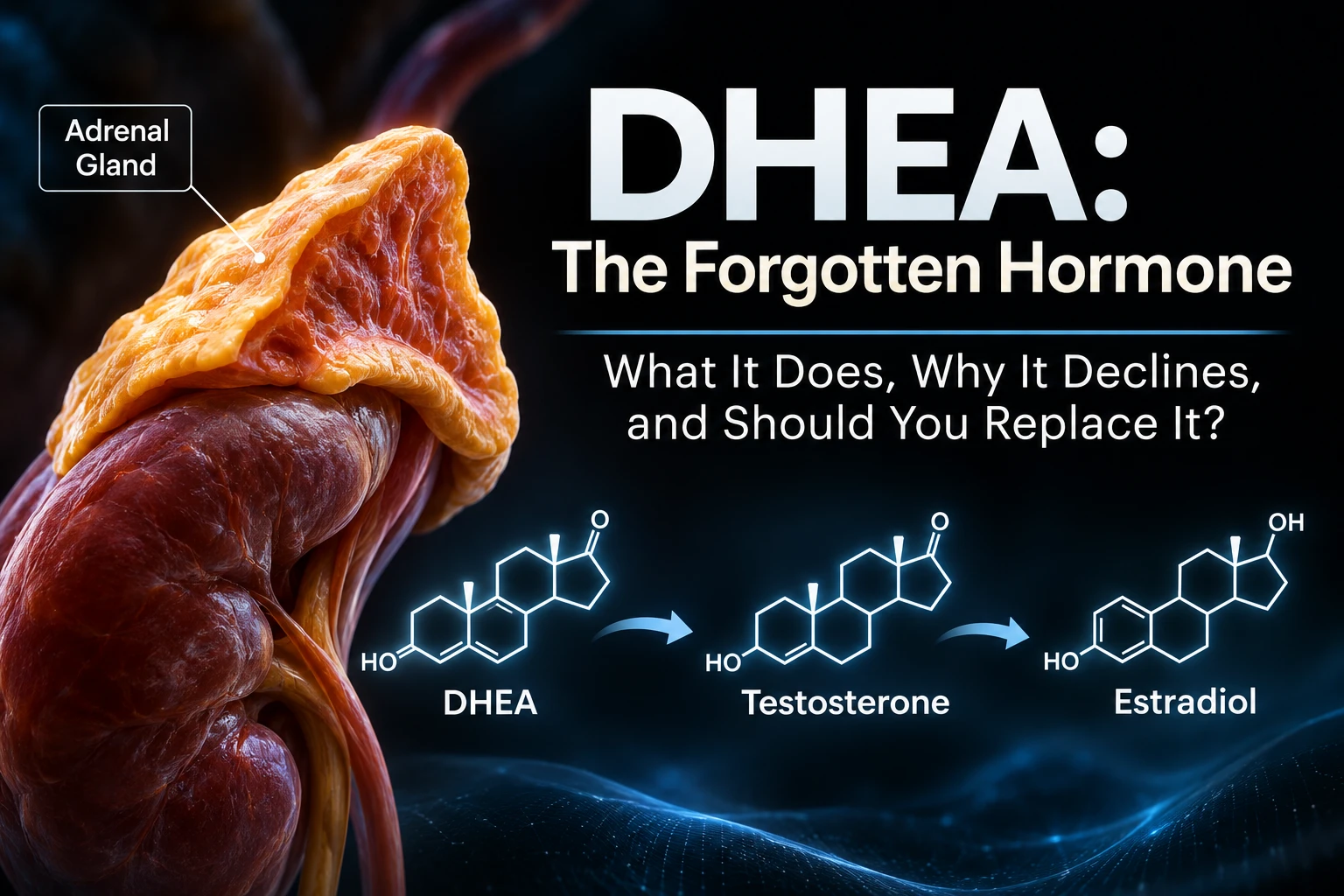
Produced primarily by the adrenal glands, DHEA serves as a precursor for several sex hormones, including testosterone and estrogen. Its decline with age has
R2 Medical Clinic • 17 min read
Medically reviewed by Erik Natkin, DO — Founder, R2 Medical Clinic, Denver, Colorado
Last medically reviewed: November 2026
When discussing hormones and aging, testosterone, estrogen, thyroid, and growth hormone usually receive the most attention.
However, another hormone plays an important role in the body’s endocrine system: dehydroepiandrosterone, commonly known as DHEA.
Produced primarily by the adrenal glands, DHEA serves as a precursor for several sex hormones, including testosterone and estrogen.
Unlike many hormones that fluctuate throughout adulthood, DHEA follows a relatively predictable age-related pattern.
Production increases during adolescence, reaches its highest levels in early adulthood, and then progressively declines with age.
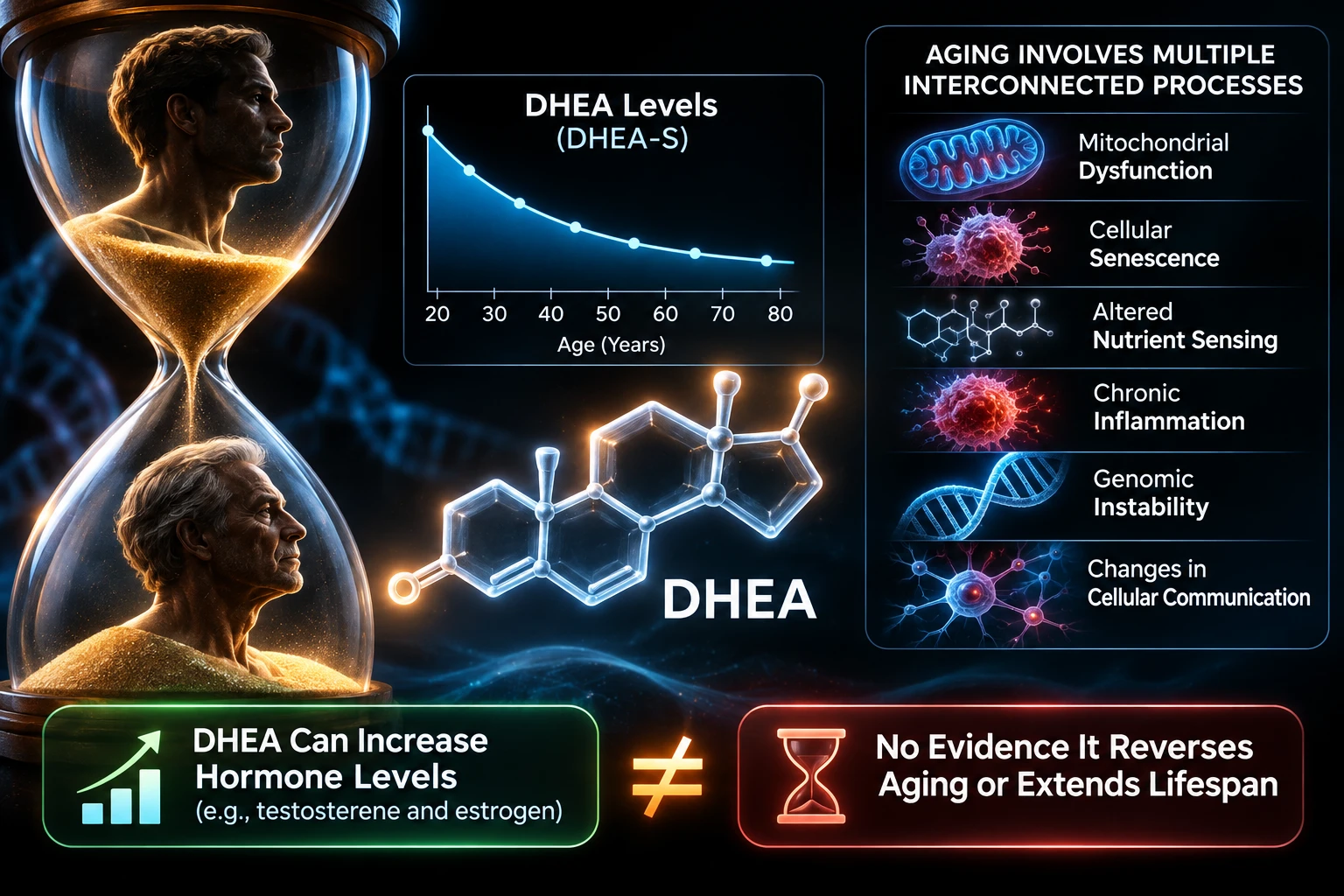
By the seventh or eighth decade of life, circulating DHEA sulfate (DHEA-S) concentrations may be substantially lower than those observed in young adults.
This decline has generated considerable interest in whether replacing DHEA might improve energy, sexual function, muscle mass, metabolic health, or even slow aspects of biological aging.
But an important question remains:
Does declining DHEA contribute to aging, or is it simply another biological marker of the aging process?
Understanding the distinction is essential before considering supplementation.
What Is DHEA?
DHEA is a steroid hormone synthesized primarily in the zona reticularis of the adrenal cortex.
Smaller amounts are produced by the ovaries and testes, and DHEA can also be synthesized within certain peripheral tissues.
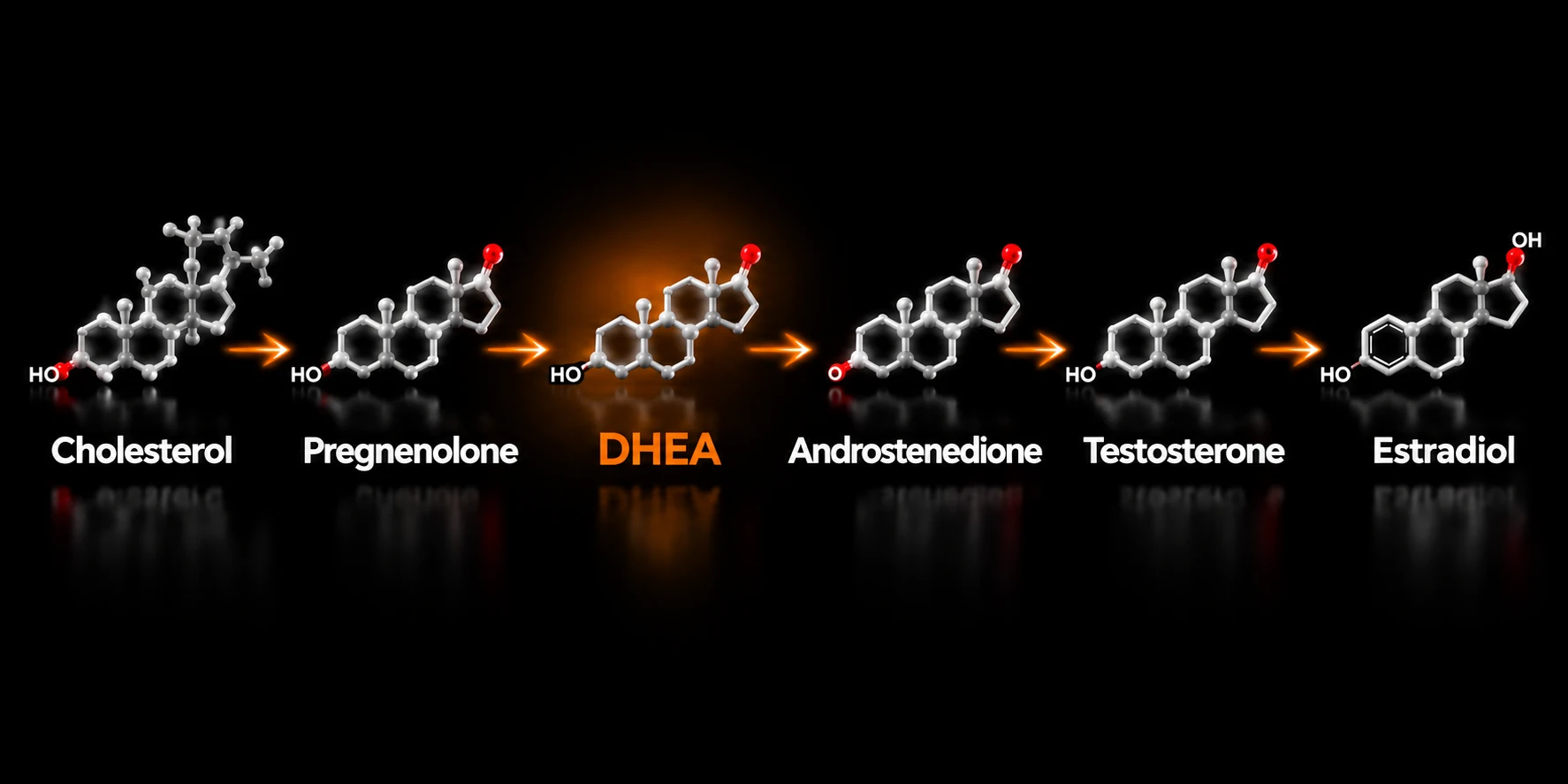
Its production begins with cholesterol, the fundamental building block for steroid hormones.
The simplified pathway is:
Cholesterol → Pregnenolone → DHEA → Androstenedione → Testosterone → Estradiol
This pathway illustrates why DHEA is frequently described as a hormone precursor.
However, steroid hormone metabolism is considerably more complex than this simplified sequence suggests.
DHEA can be converted into androstenedione, testosterone, and estrogens through multiple enzymatic pathways.
These conversions occur in different tissues and are influenced by enzyme activity, age, sex, and underlying hormonal conditions.
Importantly, not all DHEA is converted into testosterone or estrogen.
Much of it circulates as DHEA-S, a sulfated form that serves as a large circulating reservoir of adrenal androgen precursors.
DHEA and DHEA-S can also participate in biological processes independent of their conversion into sex hormones.
This includes potential interactions with neurological signaling, although the clinical significance of these effects remains incompletely understood.
DHEA vs. DHEA-S: What Is the Difference?
Although closely related, DHEA and DHEA-S are not identical.
DHEA is the unconjugated hormone that can undergo conversion into other steroid hormones.
DHEA-S is the sulfated form, produced through the action of sulfotransferase enzymes.
DHEA-S circulates at much higher concentrations and has a longer biological half-life than DHEA.
It also exhibits considerably less variation throughout the day.
For these reasons, DHEA-S is generally the preferred laboratory measurement when evaluating adrenal androgen production.
However, measuring DHEA-S does not directly reveal how much testosterone or estrogen an individual’s tissues are producing from DHEA.
That distinction becomes particularly important when interpreting laboratory results or considering supplementation.
Why Does DHEA Decline With Age?
DHEA production begins increasing during childhood through a process known as adrenarche.
Levels continue rising through adolescence and generally peak during the second or third decade of life.
After early adulthood, circulating DHEA-S concentrations gradually decline.
This process is sometimes referred to as adrenopause.
Unlike menopause, however, adrenopause does not represent a sudden loss of endocrine function.
Instead, it reflects a gradual reduction in adrenal androgen production over several decades.
The decline appears to involve age-related changes in the adrenal zona reticularis and its steroid-producing capacity.
Importantly, this process is not simply caused by reduced ACTH stimulation.
ACTH continues to regulate adrenal steroidogenesis, but the aging adrenal gland changes how it responds and which hormones it produces.
Consequently, cortisol production may remain relatively preserved while DHEA production decreases substantially.
Does Lower DHEA Mean Faster Aging?
Not necessarily.
DHEA-S is frequently described as a biomarker of aging because its circulating concentration declines with age.
However, a biomarker is not automatically a cause of the process it reflects.
Gray hair, for example, becomes more common with age, but restoring hair color does not reverse biological aging.
Similarly, restoring DHEA concentrations to youthful levels does not necessarily restore youthful physiology.
Some observational studies have associated lower DHEA-S concentrations with frailty, poorer physical function, or adverse health outcomes.
However, observational associations cannot establish causation.
Lower DHEA-S may reflect underlying illness, physiological stress, altered adrenal function, or other age-related changes rather than directly causing these conditions.
This distinction is central to evaluating DHEA as a potential longevity intervention.
What Does DHEA Actually Do in the Body?
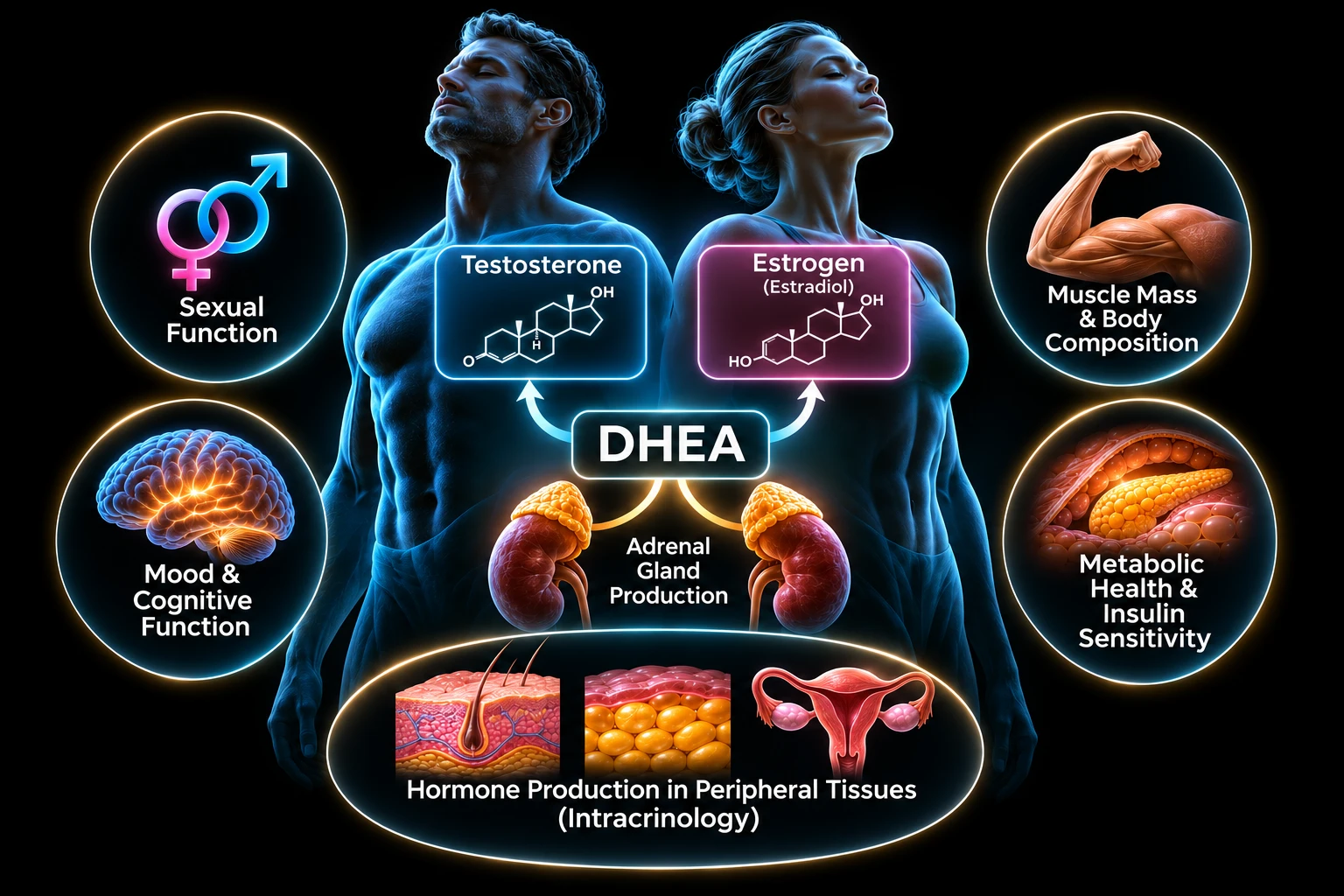
DHEA participates in several physiological processes, although the strength of clinical evidence differs considerably between them.
1. Testosterone and Estrogen Production
One of DHEA’s most established biological functions is serving as a precursor for androgen and estrogen synthesis.
This function is particularly important in women.
After menopause, ovarian estrogen production decreases substantially.
Peripheral tissues continue producing small amounts of estrogens and androgens through the conversion of circulating steroid precursors, including DHEA.
This process is known as intracrinology.
Intracrinology describes the production and action of hormones within individual tissues, sometimes without substantial release of those active hormones into the circulation.
For example, DHEA may be converted into active sex steroids within skin, adipose tissue, or reproductive tissues.
The resulting hormonal activity may therefore differ between tissues even when circulating DHEA-S concentrations are similar.
This helps explain why DHEA supplementation does not produce identical hormonal responses in everyone.
2. Sexual Function
Because DHEA can be converted into testosterone and estrogen, researchers have investigated whether supplementation improves libido and sexual function.
The results have been inconsistent.
Some smaller studies have reported improvements in sexual well-being, particularly among women with adrenal insufficiency.
However, larger evidence reviews and professional society recommendations do not support routine systemic DHEA supplementation for sexual dysfunction in otherwise healthy women.
The 2025 International Menopause Society recommendations conclude that available evidence does not support systemic DHEA for female sexual symptoms.
An important exception involves vaginal DHEA, which has demonstrated benefits for certain symptoms associated with menopause.
We will discuss this distinction below.
3. Mood and Cognitive Function
DHEA and DHEA-S have been investigated for potential effects on neurological function.
Experimental research suggests that these compounds may influence several neurotransmitter systems.
These include pathways involving GABA and glutamate signaling.
Because these systems participate in mood regulation, learning, and memory, researchers have explored DHEA supplementation for depression and cognitive decline.
Some clinical studies have reported improvements in depressive symptoms.
However, the evidence remains limited by small study populations, differences in dosing, and inconsistent results.
At present, DHEA is not an established treatment for depression, cognitive impairment, or dementia.
Its potential neurological effects remain an active area of research rather than a validated anti-aging treatment.
4. Muscle Mass and Body Composition
DHEA has also attracted attention as a potential intervention for age-related muscle loss.
The biological rationale is understandable.
DHEA can contribute to androgen production, and androgens influence muscle protein synthesis and body composition.
However, increasing a hormone precursor does not necessarily produce the same physiological effects as administering an active androgen.
Clinical studies investigating DHEA supplementation in older adults have generally failed to demonstrate consistent, clinically meaningful improvements in muscle mass or strength.
Some studies have reported modest changes in body composition, but these findings have not translated into convincing evidence that DHEA prevents sarcopenia.
For preserving skeletal muscle during aging, resistance training, adequate protein intake, and correction of established hormonal deficiencies remain better-supported strategies.
5. Metabolic Health and Insulin Sensitivity
Researchers have investigated whether DHEA influences abdominal fat, insulin sensitivity, and metabolic health.
Some small clinical trials have reported reductions in visceral adiposity or improvements in insulin-related measurements.
However, these findings have not been consistently reproduced across larger studies.
There is currently insufficient evidence to recommend DHEA as a treatment for obesity, insulin resistance, or metabolic syndrome.
Importantly, the relationship between DHEA-S and metabolic health may differ according to sex, age, and underlying medical conditions.
Higher DHEA-S is not universally associated with better metabolic health.
For example, elevated adrenal androgen activity can contribute to hyperandrogenic conditions in certain women.
This reinforces why hormone concentrations must be interpreted within the appropriate clinical context.
Does DHEA Supplementation Actually Increase Testosterone and Estrogen?
Yes.
Unlike some of the more speculative benefits attributed to DHEA, its ability to influence circulating sex hormone concentrations is supported by clinical evidence.
A 2025 meta-analysis examined 21 studies investigating DHEA supplementation in postmenopausal women.
Researchers found that supplementation increased both testosterone and estradiol concentrations.
Across the included studies, the average increases were approximately:
- Testosterone: 24.3 ng/dL
- Estradiol: 7.9 pg/mL
Greater hormonal changes were generally observed in studies using doses of at least 50 mg daily.
However, these findings require careful interpretation.
The reported changes represent average differences across studies rather than predictable responses in individual patients.
Furthermore, an increase of 24 ng/dL in testosterone may be relatively modest in a man but potentially substantial in a postmenopausal woman.
The clinical consequences depend on baseline hormone concentrations, tissue sensitivity, dose, and individual metabolism.
Most importantly, increasing testosterone or estrogen concentrations does not automatically establish that DHEA supplementation improves symptoms or long-term health outcomes.
This distinction is frequently overlooked in discussions of hormone optimization.
Is DHEA More Important for Women Than Men?
In some respects, yes.
DHEA contributes to androgen precursor availability in both sexes, but its relative importance differs.
In women, adrenal androgen precursors contribute meaningfully to the overall pool of hormones available for peripheral testosterone and estrogen synthesis.
This becomes particularly relevant after menopause, when ovarian hormone production changes.
However, the relationship between DHEA-S concentrations and symptoms is not straightforward.
A woman with relatively low DHEA-S may have normal sexual function and energy levels.
Conversely, a woman with normal DHEA-S may experience fatigue, low libido, or other symptoms for reasons unrelated to adrenal androgen production.
Therefore, low DHEA-S alone does not establish that supplementation is necessary.
In men, the testes produce most circulating testosterone under the regulation of luteinizing hormone.
Adrenal androgen precursors contribute a relatively small proportion of circulating testosterone.
Consequently, DHEA supplementation generally produces much smaller changes in testosterone concentrations in men than direct testosterone replacement.
DHEA should not be considered an equivalent alternative to testosterone therapy in men with confirmed hypogonadism.
For men experiencing symptoms of testosterone deficiency, an appropriate evaluation should include morning testosterone measurements and assessment of the hypothalamic-pituitary-gonadal axis when indicated.
Can DHEA Improve Sexual Function After Menopause?
This question requires distinguishing between oral supplementation and local vaginal treatment.
Systemic DHEA supplementation has been investigated for low libido and sexual dysfunction.
Although some studies have suggested benefits, the overall evidence remains insufficient to support routine use.
The International Menopause Society does not recommend systemic DHEA for female sexual dysfunction.
For postmenopausal women with diagnosed hypoactive sexual desire disorder, carefully selected testosterone therapy has stronger supporting evidence.
Vaginal DHEA is a different treatment approach.
Prasterone, a pharmaceutical form of DHEA, is FDA-approved for moderate to severe painful intercourse associated with vulvar and vaginal atrophy due to menopause.
Unlike oral DHEA, vaginal prasterone is administered directly to vaginal tissues.
Local conversion into androgens and estrogens can improve tissue-related symptoms.
The FDA-approved formulation contains 6.5 mg of prasterone per vaginal insert.
This treatment has demonstrated benefits for menopausal dyspareunia.
However, vaginal DHEA should not be confused with systemic hormone replacement or treatment for generalized low libido.
Patients with unexplained vaginal bleeding or a history of breast cancer require particular attention to the prescribing information and individualized medical evaluation.
What About DHEA for Adrenal Insufficiency?
One of the more clinically established situations in which DHEA replacement may be considered is primary adrenal insufficiency.
In this condition, the adrenal glands cannot produce adequate amounts of certain hormones.
Patients typically require replacement of glucocorticoids and, when indicated, mineralocorticoids.
However, conventional adrenal replacement therapy does not restore adrenal androgen production.
Women with primary adrenal insufficiency may therefore experience very low DHEA concentrations.
Some report persistent fatigue, reduced libido, or depressive symptoms despite otherwise adequate adrenal hormone replacement.
The Endocrine Society suggests that a trial of DHEA may be considered in selected women with these symptoms.
The guideline describes doses of approximately 25–50 mg daily, with monitoring of DHEA-S concentrations and clinical response.
A trial period of six months is suggested.
If no sustained clinical improvement occurs, treatment should be discontinued.
Importantly, this is a conditional recommendation based on limited evidence.
It does not mean that every patient with adrenal insufficiency requires DHEA.
It also does not justify routine DHEA supplementation in otherwise healthy individuals.
Is DHEA an Anti-Aging Hormone?
DHEA is frequently marketed as an anti-aging supplement.
The reasoning is usually based on three observations:
- First, DHEA concentrations are relatively high in young adults.
- Second, DHEA concentrations decline substantially with age.
- Third, aging is associated with changes in muscle mass, sexual function, metabolism, and cognitive performance.
From these observations, it is tempting to conclude that restoring DHEA might reverse some of these changes.
However, this reasoning contains an important scientific limitation.
A hormone declining with age does not prove that replacing it will reverse the biological consequences of aging.
Aging involves numerous interconnected processes, including mitochondrial dysfunction, cellular senescence, altered nutrient sensing, chronic inflammation, genomic instability, and changes in cellular communication.
DHEA participates in endocrine signaling, but there is no convincing evidence that supplementation reverses these fundamental aging mechanisms in humans.
Nor have randomized clinical trials demonstrated that DHEA supplementation extends human lifespan.
At present, DHEA should not be considered a proven longevity intervention.
What Are the Risks of Taking DHEA?
One of the most common misconceptions about DHEA is that it is harmless because it is available without a prescription.
However, DHEA is a biologically active steroid hormone precursor.
Its conversion into testosterone and estrogen can produce clinically relevant effects.
The long-term safety of chronic DHEA supplementation remains insufficiently established.
This is particularly important for individuals considering DHEA as a lifelong anti-aging supplement.
Does DHEA Increase Cancer Risk?
The relationship between DHEA supplementation and cancer risk remains uncertain.
Because DHEA can increase exposure to testosterone and estrogen, theoretical concerns exist regarding hormone-sensitive tissues.
However, available clinical evidence does not establish that DHEA supplementation causes cancer.
At the same time, the absence of definitive evidence of harm should not be interpreted as proof of long-term safety.
Patients with a history of breast cancer, prostate cancer, or other hormone-sensitive malignancies should avoid unsupervised supplementation and discuss any proposed hormone therapy with their treating clinicians.
Potential adverse effects include:
- Acne and oily skin: Increased androgen activity may stimulate sebaceous glands.
- Unwanted facial or body hair: Women may experience hirsutism from increased androgen exposure.
- Scalp hair loss: Individuals susceptible to androgen-related hair loss may experience worsening symptoms.
- Menstrual changes: Hormonal fluctuations may alter menstrual patterns in premenopausal women.
- Mood changes: Some individuals report irritability, agitation, or other changes in mood.
- Changes in lipid concentrations: Some studies have identified reductions in HDL cholesterol, particularly in women.
- Hormone-sensitive conditions: Because DHEA can be converted into estrogens and androgens, its use requires particular caution in patients with hormone-sensitive malignancies or related medical conditions.
Should You Have Your DHEA Levels Checked?
DHEA-S testing can be useful in selected clinical circumstances.
For example, DHEA-S may be measured when evaluating suspected adrenal androgen excess, certain cases of hirsutism, or specific adrenal disorders.
It can also help monitor DHEA replacement in selected patients with adrenal insufficiency.
However, routine DHEA-S screening is not recommended for every adult simply because they are aging.
A low DHEA-S concentration in an older individual may reflect normal age-related physiology.
Laboratory reference intervals vary substantially with age and sex.
Therefore, comparing a 65-year-old patient’s DHEA-S concentration with that of a healthy 25-year-old can be misleading.
Similarly, a single low result does not establish a diagnosis of adrenal insufficiency.
When adrenal insufficiency is suspected, appropriate testing generally involves cortisol and ACTH evaluation rather than relying on DHEA-S alone.
The goal of laboratory testing should be to answer a specific clinical question, not simply identify every hormone that has declined with age.
Should You Take DHEA if Your Levels Are Low?
Not automatically.
This is perhaps the most important practical consideration.
A laboratory result below a youthful reference range does not necessarily indicate a pathological hormone deficiency.
Before considering supplementation, several questions should be addressed.
- Is the DHEA-S concentration genuinely abnormal for the patient’s age and sex?
- Are symptoms present that could plausibly be related to altered adrenal androgen production?
- Have more common explanations for those symptoms been evaluated?
- Is there a specific clinical indication supported by available evidence?
- And, perhaps most importantly, is there evidence that treatment is likely to improve a meaningful clinical outcome?
For example, fatigue may result from poor sleep, obstructive sleep apnea, anemia, thyroid dysfunction, depression, medication effects, or numerous other conditions.
Finding a relatively low DHEA-S concentration does not establish that DHEA is responsible.
Similarly, reduced sexual desire may involve hormonal, psychological, relational, medication-related, or medical factors.
Treating a laboratory value without understanding the underlying problem may expose patients to unnecessary risks without addressing the actual cause of their symptoms.
Can DHEA Be Taken With Testosterone Replacement Therapy?
DHEA and testosterone are distinct hormones with different physiological roles.
Testosterone replacement therapy directly increases testosterone exposure.
DHEA supplementation provides additional steroid precursors that may undergo conversion into testosterone, estrogen, and other metabolites.
For men receiving testosterone replacement therapy, adding DHEA has not been shown to consistently improve treatment outcomes.
Furthermore, testosterone replacement does not inherently create a need for DHEA supplementation.
In women receiving testosterone therapy, adding DHEA may increase androgen exposure and potentially contribute to unwanted effects.
Therefore, DHEA should not automatically be included in a hormone replacement regimen.
Any decision to combine therapies should be based on a clear clinical rationale, relevant laboratory findings, and careful monitoring.
Related Hormone Health Resources
Testosterone Therapy for Women: Benefits, Evidence, Risks & Appropriate Use
My Hormone Levels Are “Normal”—So Why Do I Still Have Symptoms?
Hormone Testing for Women: What to Test & Why
The Hallmarks of Aging: What Actually Happens as We Get Older?
Frequently Asked Questions About DHEA
Is DHEA the Same as Testosterone?
No.
DHEA is a steroid hormone precursor that can be converted into testosterone and other sex hormones.
Testosterone is an active androgen with direct effects on androgen receptors.
DHEA supplementation does not reliably reproduce the effects of testosterone replacement therapy.
Does DHEA Increase Estrogen?
Yes, it can.
DHEA may undergo conversion into estrogens through peripheral steroid metabolism.
A 2025 meta-analysis found that supplementation increased circulating estradiol concentrations in postmenopausal women.
However, the magnitude of the increase varies between individuals.
Does DHEA Help With Weight Loss?
There is insufficient evidence to recommend DHEA for weight loss.
Although some small studies have reported changes in abdominal fat or metabolic measurements, clinical findings remain inconsistent.
DHEA is not an established obesity treatment.
Can DHEA Improve Energy?
Some studies involving women with adrenal insufficiency have reported improvements in well-being or energy.
However, these findings have not been consistently reproduced.
There is insufficient evidence that DHEA supplementation reliably improves energy in otherwise healthy adults.
Does DHEA Increase Muscle Mass?
Not consistently.
Clinical trials have generally failed to demonstrate meaningful improvements in muscle mass or strength among older adults taking DHEA.
Resistance training and adequate nutrition remain substantially better-supported approaches.
Is DHEA Safe to Take Every Day?
Daily DHEA supplementation can alter circulating sex hormone concentrations.
Potential adverse effects include acne, unwanted hair growth, changes in lipid concentrations, and other androgen-related effects.
Long-term safety data remain limited.
Daily supplementation should not be assumed safe simply because DHEA is available over the counter.
What Is a Normal DHEA-S Level?
Normal DHEA-S concentrations vary considerably according to age, sex, and laboratory methodology.
Levels are generally highest in young adulthood and decline progressively with age.
Results should be interpreted using appropriate age- and sex-specific reference intervals.
There is no universally established DHEA-S concentration that guarantees optimal health or longevity.
Does DHEA Extend Lifespan?
No clinical trial has demonstrated that DHEA supplementation extends human lifespan.
Although DHEA has been investigated in aging research, current evidence does not establish it as an effective longevity therapy.
The Bottom Line: Should DHEA Be Part of Hormone Optimization?
DHEA is an important component of human steroid hormone physiology.
It serves as a precursor for testosterone and estrogen, participates in tissue-specific hormone production, and declines substantially with age.
However, its biological importance should not be confused with proof that supplementation improves health.
Research demonstrates that DHEA can increase circulating sex hormone concentrations, particularly in postmenopausal women.
Yet evidence supporting improvements in muscle mass, metabolic health, sexual function, cognitive performance, or longevity remains inconsistent or insufficient.
There are specific clinical situations in which DHEA treatment may be appropriate, including selected women with primary adrenal insufficiency and postmenopausal women receiving FDA-approved vaginal prasterone for painful intercourse.
Outside these circumstances, routine supplementation is not supported by strong clinical evidence.
At R2 Medical Clinic, our approach to hormone health emphasizes individualized evaluation, appropriate laboratory testing, and treatment decisions based on both clinical evidence and patient-specific needs.
The objective of hormone optimization should not be to recreate the laboratory values of a 25-year-old. It should be to identify clinically meaningful abnormalities and improve health outcomes using treatments supported by evidence.
DHEA is an important hormone.
Whether replacing it improves health is an entirely different question.
Take Control of Your Hormonal Health
Hormonal changes are a normal part of aging, but symptoms such as fatigue, changes in sexual function, and reduced physical performance deserve a thoughtful medical evaluation.
At R2 Medical Clinic, we focus on understanding the underlying causes of hormonal symptoms rather than treating laboratory numbers in isolation.
Our individualized approach combines clinical assessment, laboratory testing, and evidence-based treatment options when medically appropriate.
Schedule a consultation with R2 Medical Clinic to learn more about your hormonal health and available treatment options.
References
- Endocrine Society. Bornstein SR, et al. Diagnosis and Treatment of Primary Adrenal Insufficiency: An Endocrine Society Clinical Practice Guideline. Journal of Clinical Endocrinology & Metabolism. 2016;101(2):364–389.
- International Menopause Society. IMS Recommendations and Key Messages on Women’s Midlife Health and Menopause. 2025–2026.
- Endocrine Society. Wierman ME, et al. Androgen Therapy in Women: A Reappraisal. Journal of Clinical Endocrinology & Metabolism. 2014;99(10):3489–3510.
- DHEA Supplementation and Sex Hormones. Impact of DHEA Supplementation on Testosterone and Estradiol Levels in Postmenopausal Women: A Meta-analysis of Randomized Controlled Trials Assessing Dose and Duration Effects. 2025.
- U.S. Food and Drug Administration. Prasterone Vaginal Inserts. FDA-approved prescribing information.
Medical Disclaimer
This article is intended for educational purposes only and does not constitute individualized medical advice. DHEA supplementation may alter circulating androgen and estrogen concentrations and may not be appropriate for individuals with certain medical conditions. Patients should consult a qualified healthcare professional before initiating hormone supplementation.