Why Body Composition Matters More Than the Number on the Scale
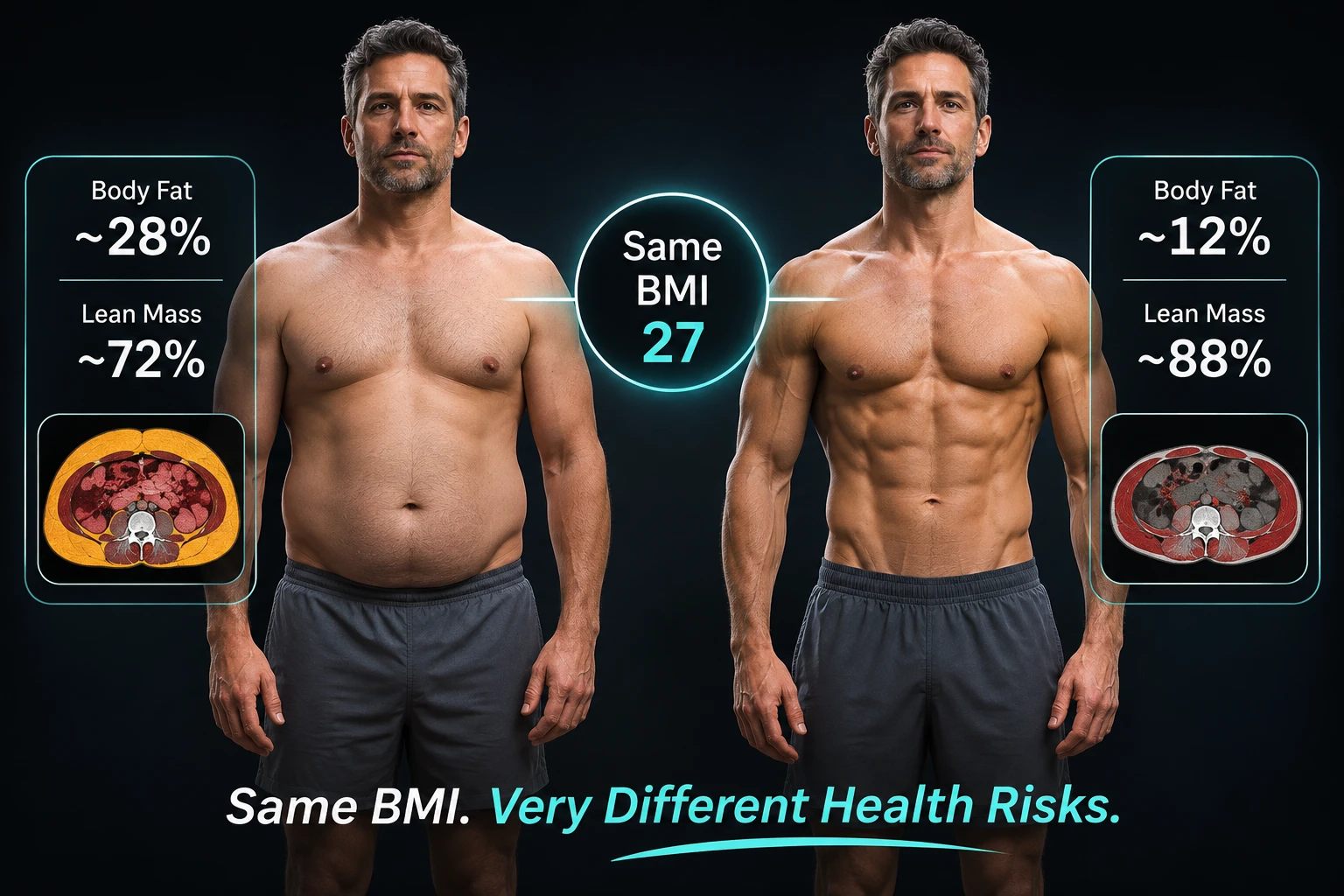
Two individuals can have identical heights, weights, and BMI measurements while having dramatically different metabolic health, physical capabilities, and
R2 Medical Clinic • 35 min read
Medically reviewed by Erik Natkin, DO — Founder, R2 Medical Clinic, Denver, Colorado
Last medically reviewed: November 2026
For decades, body weight has been one of the most commonly used measurements of health.
Patients step on a scale, receive a number, and are often told whether they should lose weight based on that measurement.
Body mass index (BMI), which calculates weight relative to height, has also become a standard screening tool in clinical medicine.
However, neither body weight nor BMI tells us what the body is actually made of.
Two individuals can have identical heights, weights, and BMI measurements while having dramatically different metabolic health, physical capabilities, and long-term disease risks.
One person may have substantial skeletal muscle mass and relatively little body fat.
The other may have significantly less muscle and a greater accumulation of visceral fat surrounding the internal organs.
Although the scale displays the same number, their physiological profiles may be very different.
This distinction is why body composition is increasingly recognized as an important component of metabolic health, healthy aging, and long-term disease prevention.
Understanding the relationship between muscle mass, fat distribution, and metabolic function provides a more complete picture of health than body weight alone.
What Is Body Composition?

Body composition describes the relative amounts of different tissues that make up the human body.
Although the body contains numerous tissue types, clinical body composition assessments generally focus on several major components.
Fat Mass
Fat mass represents the total amount of adipose tissue in the body.
Adipose tissue serves several important physiological functions, including energy storage, insulation, mechanical protection, and hormone signaling.
However, excessive fat accumulation, particularly within certain anatomical regions, can contribute to metabolic dysfunction.
Lean Body Mass
Lean body mass includes everything in the body that is not fat.
This includes skeletal muscle, organs, blood, connective tissue, and body water.
Lean body mass should not be confused with skeletal muscle mass.
Although muscle represents a substantial component of lean mass, the two measurements are not interchangeable.
Skeletal Muscle Mass
Skeletal muscle is responsible for voluntary movement, physical strength, and much of the body’s glucose disposal.
Muscle also contributes to metabolic regulation, physical independence, and resilience during illness.
Preserving skeletal muscle becomes particularly important during weight loss and aging.
Bone Mineral Content
Bone provides structural support, protects internal organs, and serves as a reservoir for minerals.
Bone mineral density and bone strength are important considerations in aging, particularly among postmenopausal women and older adults.
Together, these components provide a more meaningful assessment of physical health than total body weight alone.
Why the Scale Can Be Misleading
Body weight measures the combined mass of every tissue in the body.
It does not distinguish between muscle, fat, bone, or water.
Consider two individuals who are both 5 feet 10 inches tall and weigh 190 pounds.
Their BMI is approximately 27.3, placing both in the conventional overweight category.
However, their body compositions may differ substantially.
- Body weight: 190 pounds
- Body fat: 16%
- Fat mass: 30.4 pounds
- Fat-free mass: 159.6 pounds
- Body weight: 190 pounds
- Body fat: 32%
- Fat mass: 60.8 pounds
- Fat-free mass: 129.2 pounds
Both individuals have the same BMI.
Yet Individual B carries approximately 30 pounds more body fat and 30 pounds less fat-free mass.
These differences may have important implications for insulin sensitivity, physical function, and cardiometabolic risk.
The actual health implications also depend on age, sex, fat distribution, fitness, and other clinical characteristics.
Nevertheless, the example illustrates a fundamental limitation of body weight.
The scale measures how much you weigh, not what your weight consists of.
Why Does Your Weight Fluctuate Even When You’re Losing Fat?
One of the most frustrating experiences during weight loss is watching the number on the scale increase despite following a consistent nutrition and exercise program.
However, short-term changes in body weight do not necessarily reflect changes in body fat.
Body weight can fluctuate by several pounds over relatively short periods due to changes in hydration, glycogen storage, sodium intake, gastrointestinal contents, and hormonal physiology.
Water Retention and Sodium Intake
Sodium plays an important role in regulating fluid balance.
Following a meal containing substantial amounts of sodium, the body may temporarily retain additional water.
This can cause body weight to increase even when no meaningful fat accumulation has occurred.
Similarly, changes in hydration status can produce noticeable fluctuations in scale weight.
Glycogen and Water Storage
Glycogen is the stored form of glucose found primarily in skeletal muscle and the liver.
Each gram of stored glycogen is associated with approximately three grams of water, although the relationship varies with physiological conditions.
Consequently, changes in carbohydrate intake can influence body weight independently of changes in body fat.
For example, individuals beginning a low-carbohydrate diet may experience rapid initial weight loss as glycogen stores and associated water decrease.
Conversely, increasing carbohydrate intake can temporarily increase body weight as glycogen stores are replenished.
These changes do not necessarily indicate fat loss or fat gain.
Hormonal Changes
Hormonal fluctuations can also influence fluid retention.
In women, changes in estrogen and progesterone throughout the menstrual cycle may contribute to temporary changes in body weight.
Similar fluctuations can occur during perimenopause.
Stress, sleep disruption, and certain medications may also affect fluid regulation.
Exercise and Temporary Weight Gain
Beginning a resistance training program can sometimes produce temporary increases in body weight.
Exercise-induced muscle damage and the associated repair process may contribute to localized inflammation and transient fluid retention.
Increased muscle glycogen storage can also influence weight.
Therefore, an individual may be losing body fat while temporarily maintaining or gaining weight.
Why Daily Weight Measurements Can Be Misleading
A single weight measurement provides limited information.
For individuals who choose to weigh themselves regularly, tracking a weekly average can help reduce the influence of normal daily fluctuations.
Measurements should ideally be obtained under consistent conditions, such as in the morning after using the bathroom and before eating.
Clinical takeaway: Short-term changes in body weight frequently reflect fluctuations in water, glycogen, and gastrointestinal contents rather than changes in body fat. Evaluating trends over several weeks provides a more meaningful assessment of progress than focusing on individual measurements.
Why BMI Does Not Tell the Whole Story

BMI is calculated by dividing body weight in kilograms by height in meters squared.
It is widely used because it is inexpensive, reproducible, and associated with population-level health outcomes.
BMI remains useful for screening and epidemiological research.
However, it has several important limitations.
First, BMI cannot distinguish skeletal muscle from body fat.
A muscular individual may have an elevated BMI despite having relatively little excess adipose tissue.
Second, BMI does not identify where fat is stored.
Two individuals with similar BMI measurements may have substantially different amounts of visceral fat.
Third, BMI does not directly measure muscle quality, strength, or physical function.
Finally, BMI may underestimate adiposity in individuals with relatively low muscle mass.
This is particularly relevant in older adults.
A person may have a BMI within the conventional normal range while carrying excessive body fat and relatively little skeletal muscle.
This phenotype is sometimes described as normal-weight obesity.
Although definitions vary across studies, the concept illustrates why normal body weight does not necessarily indicate optimal metabolic health.
BMI should therefore be interpreted as one component of a broader clinical assessment rather than a definitive measurement of health.
Muscle Is More Than a Tool for Movement
Skeletal muscle is often discussed primarily in terms of strength, athletic performance, and physical appearance.
However, muscle is also a metabolically active tissue that plays an important role in glucose regulation and whole-body physiology.
1. Muscle Is a Major Site of Glucose Disposal
Following a meal, blood glucose concentrations increase.
Insulin facilitates glucose uptake into several tissues, including skeletal muscle.
Under insulin-stimulated conditions, skeletal muscle accounts for a large proportion of glucose disposal in healthy individuals.
This makes muscle an important component of glucose homeostasis.
Resistance training can improve insulin sensitivity and glucose regulation, even when substantial weight loss does not occur.
Importantly, these benefits arise from several adaptations, including improved insulin signaling, increased glucose transporter activity, and changes in muscle metabolism.
Simply increasing muscle mass does not guarantee improved metabolic health, but maintaining functional skeletal muscle supports glucose regulation.
2. Muscle Contributes to Resting Energy Expenditure
Skeletal muscle requires energy to maintain normal cellular function.
Consequently, muscle contributes to resting energy expenditure.
However, claims that adding a pound of muscle dramatically increases daily calorie expenditure are often exaggerated.
At rest, skeletal muscle uses considerably less energy per kilogram than highly metabolically active organs such as the brain, liver, heart, and kidneys.
Nevertheless, maintaining muscle can help preserve resting energy expenditure during weight loss.
Muscle also enables greater physical activity, which can increase total daily energy expenditure.
3. Muscle Supports Healthy Aging
Age-related reductions in muscle mass, strength, and physical performance are associated with functional decline.
Sarcopenia is a progressive skeletal muscle disorder characterized primarily by reduced muscle strength, with low muscle quantity or quality supporting the diagnosis.
Severe sarcopenia also involves impaired physical performance.
Sarcopenia is associated with increased risks of falls, disability, hospitalization, and mortality.
Importantly, muscle strength and physical performance often provide more clinically meaningful information than muscle mass alone.
A person with substantial muscle mass but poor muscle function may still experience limitations.
Preserving muscle therefore requires more than simply maintaining a favorable body composition measurement.
It requires maintaining strength, mobility, and physical capability.
Visceral Fat: Why Fat Location Matters
Not all body fat carries the same metabolic implications.
Adipose tissue is distributed throughout the body in several compartments.
Two particularly important categories are subcutaneous fat and visceral fat.
Subcutaneous Fat
Subcutaneous fat is located directly beneath the skin.
It serves as an energy reservoir and provides insulation and mechanical protection.
Although excessive subcutaneous fat can contribute to overall adiposity, its metabolic effects vary depending on anatomical location and individual physiology.
Visceral Fat
Visceral adipose tissue accumulates within the abdominal cavity, surrounding internal organs.
Visceral adipose tissue is metabolically active and can contribute to altered fatty acid metabolism and inflammatory signaling.
Increased visceral adiposity is also associated with ectopic fat accumulation, including fat deposition within the liver.
However, visceral fat is not the only determinant of metabolic dysfunction.
Genetics, total adiposity, physical activity, diet, sleep, and other factors also influence metabolic risk.
Imagine two individuals with similar total body fat percentages.
One stores a larger proportion of fat subcutaneously.
The other has substantially greater visceral fat accumulation.
Despite similar body weights and total adiposity, the second individual may have a less favorable metabolic profile.
This is one reason waist circumference and waist-to-height ratio can provide useful information beyond BMI.
The location of body fat can be as important as the total amount of fat.
What Happens When You Lose Weight but Also Lose Muscle?
Weight loss is commonly interpreted as a positive outcome.
However, weight loss can involve reductions in several different tissue compartments.
Depending on the intervention, weight loss may include:
- Fat mass
- Skeletal muscle and other lean tissues
- Glycogen
- Body water
The relative contribution of each compartment depends on factors such as calorie restriction, protein intake, physical activity, age, baseline body composition, and the rate of weight loss.
Consider an individual who loses 30 pounds.
If most of that reduction comes from fat mass while skeletal muscle is largely preserved, the individual may experience meaningful improvements in body composition.
However, if a substantial portion of the weight loss comes from muscle, the person may lose strength and physical capacity.
This distinction becomes especially important in older adults, who may already have reduced muscle reserves.
Why Rapid Weight Loss Can Be Problematic
Aggressive calorie restriction can increase the likelihood of losing fat-free mass.
Inadequate protein intake and insufficient resistance exercise may further contribute to muscle loss.
However, not all reductions in measured lean mass represent actual loss of contractile skeletal muscle.
Changes in glycogen, hydration, and other nonfat components can influence body composition measurements.
This is particularly relevant during the early stages of weight loss.
The goal should not simply be to minimize every change in lean mass.
Instead, it should be to preserve functional skeletal muscle and physical performance while reducing excess adiposity.
GLP-1, GLP-1/GIP Medications and the Importance of Muscle Preservation
These medications can produce clinically meaningful reductions in body weight and improve several cardiometabolic risk factors.
However, weight loss achieved through pharmacological treatment is not exclusively fat loss.
Clinical studies using body composition measurements have demonstrated reductions in both fat mass and lean mass during treatment.
Does This Mean These Medications Cause Muscle Wasting?
Not necessarily.
A reduction in lean mass does not automatically mean clinically significant muscle wasting has occurred.
Lean mass measurements include water, organs, connective tissue, and skeletal muscle.
Furthermore, some reduction in lean tissue is expected during substantial weight loss.
The clinically important questions are whether skeletal muscle function, strength, and physical performance are preserved.
Available evidence suggests that these therapies generally produce greater absolute reductions in fat mass than lean mass.
Nevertheless, muscle preservation deserves particular attention in older adults, individuals with low baseline muscle mass, and patients undergoing substantial weight loss.
Strategies to Preserve Muscle During Medical Weight Loss
Resistance training is one of the most important interventions for maintaining skeletal muscle.
Adequate dietary protein is also essential.
For many adults engaged in resistance training or intentional weight loss, protein intakes around 1.2–1.6 grams per kilogram of body weight per day may be appropriate. (45.5Kg = 100lbs)
Some individuals may benefit from higher intakes, depending on their training, age, body composition, and clinical circumstances.
Protein recommendations should be individualized, particularly in patients with kidney disease or other conditions requiring dietary modification.
Combining resistance exercise, adequate protein intake, and appropriate nutritional support can help preserve muscle during weight reduction.
Why Body Recomposition May Be More Important Than Weight Loss
Body recomposition refers to changes in body composition that involve reducing fat mass while maintaining or increasing skeletal muscle.
This process can occur even when total body weight changes very little.
For example, imagine an individual who loses 10 pounds of fat while gaining 5 pounds of muscle.
The scale would show a reduction of only 5 pounds.
However, the individual would have experienced a meaningful change in body composition.
Waist circumference may decrease.
Strength and physical performance may improve.
Insulin sensitivity and other metabolic markers may also improve.
This is why focusing exclusively on scale weight can create a misleading impression of progress.
A patient may become metabolically healthier and physically stronger without experiencing dramatic changes in body weight.
Conversely, a patient may lose substantial weight while also experiencing reductions in muscle strength and physical performance.
Successful body recomposition is not simply about becoming lighter. It is about improving the quality and function of the tissues that make up the body.
Why Can the Scale Stop Moving Even When You’re Losing Fat?

Weight-loss plateaus are common, but a stable number on the scale does not always mean that fat loss has stopped.
Several physiological processes can explain why body weight remains relatively unchanged despite improvements in body composition.
Body Recomposition
One explanation is simultaneous fat loss and muscle gain.
An individual participating in resistance training while following an appropriate nutrition program may lose fat while increasing skeletal muscle mass.
Because these changes can partially offset each other, total body weight may remain relatively stable.
For example, losing four pounds of fat while gaining three pounds of muscle would produce only a one-pound reduction in body weight.
However, the individual may experience a noticeable reduction in waist circumference and improvements in strength.
This is particularly relevant for individuals beginning resistance training or returning to exercise after a period of inactivity.
Water Retention Can Temporarily Mask Fat Loss
Changes in hydration can obscure short-term reductions in fat mass.
For example, an individual may lose two pounds of body fat over several weeks while temporarily retaining an additional two pounds of water.
The scale may show no change despite a reduction in fat mass.
Changes in sodium intake, carbohydrate consumption, exercise, and hormonal physiology can all contribute to this effect.
Metabolic Adaptation
Not every weight-loss plateau is caused by body recomposition or water retention.
As body weight decreases, total energy expenditure generally declines.
A smaller body requires less energy for movement and maintenance.
Additionally, adaptive thermogenesis may contribute to reductions in energy expenditure beyond those predicted by changes in body size and composition.
Spontaneous physical activity may also decrease during prolonged calorie restriction.
Consequently, a calorie intake that initially produced weight loss may eventually approach the individual’s new energy requirements.
At that point, fat loss may genuinely slow or stop.
How Can You Tell the Difference?
This is where combining several measurements becomes valuable.
If body weight remains stable while waist circumference decreases, BIA-estimated fat mass trends downward, and muscle strength improves, these findings may suggest continued body recomposition.
However, if body weight, waist circumference, and body composition estimates remain unchanged over several weeks, a true plateau becomes more likely.
No single measurement can definitively distinguish these situations.
Clinical takeaway: A stable scale weight does not necessarily indicate a lack of progress. Changes in waist circumference, estimated body fat, and physical performance can help distinguish meaningful body recomposition from a true weight-loss plateau.
How Do We Accurately Measure Body Composition?
Several methods are available for estimating body composition.
Each has advantages and limitations.
1. Dual-Energy X-Ray Absorptiometry (DEXA)
DEXA uses low-dose X-rays to estimate bone mineral content, fat mass, and lean soft tissue.
It can also provide regional estimates of body composition.
For example, DEXA can evaluate differences in fat and lean tissue distribution between the trunk, arms, and legs.
This makes it useful for monitoring changes during weight-loss interventions.
However, DEXA does not directly measure skeletal muscle tissue in the same way as CT or MRI.
Its lean tissue estimates can also be influenced by hydration and other physiological factors.
DEXA provides valuable information, but results should be interpreted in the context of the measurement method and clinical circumstances.
2. Bioelectrical Impedance Analysis (BIA)
Bioelectrical impedance analysis (BIA) is a convenient, noninvasive method used to estimate body fat percentage, fat mass, lean body mass, and total body water.
The technology works by passing a small electrical current through the body and measuring the resistance and reactance encountered by that current.
These measurements are incorporated into predictive equations to estimate body composition.
Although BIA is widely available and relatively inexpensive, it is not the most accurate method for determining an individual’s actual body fat percentage.
Results can be influenced by several factors, including hydration, recent meals, exercise, alcohol consumption, and the specific device being used.
Consequently, an individual whose actual body fat percentage is 25% might receive a somewhat different estimate depending on the device and testing conditions.
However, this does not mean BIA lacks clinical value.
One of BIA’s greatest advantages is its ability to provide a convenient reference point for monitoring changes in body composition over time.
For example, a patient undergoing medical weight loss may begin treatment with a BIA-estimated body fat percentage of 35%.
Several months later, that measurement may decrease to 30%.
Although neither measurement should be considered an exact representation of actual body fat percentage, the downward trend may suggest meaningful fat loss, particularly when accompanied by reductions in waist circumference and improvements in other clinical measurements.
The key is consistency.
Using the same device under similar conditions, ideally at approximately the same time of day and with comparable hydration, can improve the usefulness of serial measurements.
However, consistent testing does not eliminate measurement error, and small changes may reflect normal fluctuations rather than actual changes in body composition.
Clinical takeaway: BIA does not need to provide a perfectly accurate body fat percentage to be useful. Its greatest value is as an accessible, repeatable tool for following trends, evaluating progress, and helping guide weight-management strategies when interpreted alongside other clinical measurements.
Can Body Fat Scales Actually Measure Visceral Fat?
Many modern body composition scales report measurements such as body fat percentage, skeletal muscle mass, metabolic age, and visceral fat.
Although these features may appear sophisticated, it is important to understand what the devices are actually measuring.
Bioelectrical impedance analysis does not directly visualize fat surrounding the internal organs.
Instead, BIA devices measure electrical properties of the body and use mathematical equations to estimate different tissue compartments.
Some devices then generate a visceral fat estimate using proprietary algorithms that incorporate impedance measurements and characteristics such as age, sex, height, and weight.
How Accurate Are These Estimates?
The accuracy of visceral fat estimates varies substantially between devices.
Some advanced, multifrequency, segmental BIA systems have demonstrated correlations with visceral fat measurements obtained using imaging techniques.
However, correlation does not mean that the measurements are interchangeable.
An individual device may overestimate or underestimate visceral fat, particularly when the patient’s characteristics differ from those of the population used to develop its prediction equations.
Consumer scales may also report visceral fat using a numerical rating rather than an actual measurement of tissue volume or mass.
These ratings should not be interpreted as direct anatomical measurements.
CT and MRI Provide More Direct Measurements
Computed tomography and magnetic resonance imaging can distinguish visceral adipose tissue from subcutaneous abdominal fat.
These methods can quantify fat within specific anatomical regions.
However, CT involves ionizing radiation, and neither CT nor MRI is routinely necessary solely to monitor weight-loss progress.
Are Visceral Fat Estimates Still Useful?
Potentially.
When the same BIA device is used repeatedly under consistent conditions, changes in its estimated visceral fat measurement may provide additional information about trends.
However, small changes should be interpreted cautiously because hydration, measurement variability, and the device’s prediction algorithm can influence results.
Waist circumference and waist-to-height ratio provide additional, inexpensive ways to monitor central adiposity.
Although these measurements also cannot directly quantify visceral fat, they are associated with cardiometabolic risk and can complement BIA estimates.
Clinical takeaway: Consumer body fat scales do not directly measure visceral fat. Their reported values are estimates derived from mathematical models. These estimates may help monitor trends, but they should not be interpreted as precise measurements of fat surrounding the internal organs.
3. CT and MRI
Computed tomography and magnetic resonance imaging can provide detailed information about specific tissue compartments.
These techniques can distinguish skeletal muscle from adipose tissue and quantify visceral fat in selected anatomical regions.
MRI does not use ionizing radiation, while CT does.
Although these methods are valuable in research and certain clinical situations, they are generally not necessary, and are potentially cost prohibited, for routine body composition monitoring.
4. Waist Circumference and Waist-to-Height Ratio: A Simple Measurement with Important Health Implications
One of the simplest methods for evaluating body composition and metabolic risk requires nothing more than a measuring tape.
Waist circumference provides an estimate of abdominal adiposity, which is closely associated with cardiometabolic health.
Unlike body weight or BMI, waist circumference offers information about where excess fat may be accumulating.
This distinction is important because abdominal fat, particularly visceral adipose tissue surrounding internal organs, is associated with insulin resistance, type 2 diabetes, hypertension, cardiovascular disease, and metabolic dysfunction.
Although waist circumference cannot directly distinguish visceral fat from subcutaneous abdominal fat, it provides a practical clinical indicator of central adiposity.
Why Waist Circumference Matters
Research consistently demonstrates that abdominal adiposity is associated with cardiometabolic risk, even after accounting for BMI.
For example, two individuals may have identical BMI measurements but substantially different waist circumferences.
The individual with the larger waist may have greater visceral fat accumulation and a less favorable metabolic profile.
This helps explain why BMI alone can underestimate cardiovascular and metabolic risk in some individuals.
Waist circumference is particularly valuable because it can be measured repeatedly, requires no specialized equipment, and may identify meaningful changes in abdominal adiposity even when body weight remains relatively stable.
The Waist-to-Height Ratio: Keep Your Waist Below Half Your Height
An increasingly recognized measurement is the waist-to-height ratio (WHtR).
Rather than evaluating waist circumference as an isolated number, this measurement compares waist size with overall height.
The calculation is straightforward:
Waist-to-height ratio = Waist circumference ÷ Height
Both measurements must use the same units.
A commonly recommended target is:
Keep your waist circumference below half your height.
For example:
A person who is 5 feet 6 inches tall (66 inches) would aim for a waist circumference below approximately 33 inches.
A person who is 5 feet 10 inches tall (70 inches) would aim for a waist circumference below approximately 35 inches.
A person who is 6 feet tall (72 inches) would aim for a waist circumference below approximately 36 inches.
A person who is 6 feet 4 inches tall (76 inches) would aim for a waist circumference below approximately 38 inches.
This approach recognizes that a 36-inch waist may have different implications for someone who is 5 feet 4 inches tall compared with someone who is 6 feet 4 inches tall.
What Does Your Waist-to-Height Ratio Mean?
The UK National Institute for Health and Care Excellence (NICE) recommends using waist-to-height ratio alongside BMI to help assess central adiposity and associated health risks in adults with a BMI below 35.
Commonly used categories include:
Ratio: 0.40–0.49: Healthy central adiposity
Generally associated with a more favorable cardiometabolic risk profile.
Ratio: 0.50–0.59: Increased central adiposity
Associated with increased risk of cardiometabolic conditions.
Ratio: 0.60 or higher: High central adiposity
Associated with further increases in cardiometabolic risk.
These categories are screening thresholds rather than diagnostic criteria.
A waist-to-height ratio below 0.50 does not guarantee metabolic health, and a value above 0.50 does not establish that an individual has cardiovascular disease.
Additionally, waist-to-height ratio may be less informative in certain populations, including pregnant individuals, people with conditions affecting abdominal size, and those with unusually high muscularity.
Is Waist-to-Height Ratio Better Than BMI?
Several systematic reviews and meta-analyses suggest that waist-to-height ratio may perform better than BMI for identifying certain cardiometabolic risk factors.
This is particularly relevant for hypertension, type 2 diabetes, and metabolic syndrome.
However, the degree of improvement varies across studies and populations.
Waist-to-height ratio should therefore be considered a complementary measurement rather than a universal replacement for BMI.
BMI provides information about total body mass relative to height.
Waist-to-height ratio provides information about central adiposity relative to height.
Together, they offer a more complete assessment than either measurement alone.
Why This Measurement Is Useful During Weight Loss
Waist circumference can be particularly valuable when monitoring changes in body composition.
Consider an individual who begins a weight-loss program weighing 200 pounds with a waist circumference of 40 inches.
After several months, the individual weighs 195 pounds, but waist circumference has decreased to 36 inches.
Although the scale shows only a five-pound reduction, the substantial change in waist circumference suggests a meaningful reduction in abdominal size.
When accompanied by improvements in strength, physical activity, and metabolic markers, this may represent significant progress.
Conversely, a patient may lose substantial body weight without experiencing a proportional reduction in waist circumference.
This illustrates why monitoring multiple measurements can provide a more complete picture of treatment response.
How to Measure Waist Circumference Correctly

Accurate measurement requires a consistent technique.
One commonly used clinical approach is to measure the waist midway between the lowest rib and the top of the iliac crest.
The patient should stand upright, relax the abdomen, and breathe normally.
The measuring tape should remain horizontal and snug against the skin without compressing the underlying tissue.
Measurements are typically taken at the end of a normal exhalation.
Importantly, different organizations use slightly different anatomical landmarks.
Some recommend measuring at the level of the iliac crest, while others use the midpoint between the lowest rib and the iliac crest.
These methods can produce different results.
For monitoring progress, using the same anatomical landmark and measurement technique each time is essential.
The Limitations of Waist-to-Height Ratio
Despite its advantages, waist-to-height ratio is not a direct measurement of visceral fat.
It also does not assess skeletal muscle mass, muscle strength, or physical performance.
A highly muscular individual may have a relatively large waist circumference without having the same metabolic risk profile as someone with substantial visceral adiposity.
Likewise, an individual with a favorable waist-to-height ratio may still have elevated blood pressure, insulin resistance, abnormal cholesterol levels, or other cardiovascular risk factors.
Therefore, waist-to-height ratio should be interpreted alongside other clinical measurements.
Clinical takeaway: Waist-to-height ratio is one of the simplest and most practical tools for evaluating central adiposity. Keeping waist circumference below half of height is a useful general screening target, while tracking changes over time can help assess progress during weight management. However, it should complement—not replace—body composition measurements, metabolic testing, and clinical evaluation.
When combined with bioelectrical impedance analysis (BIA), waist-to-height ratio becomes an even more useful tool for monitoring body composition. BIA provides estimates of fat mass and lean mass, while waist measurements help track changes in abdominal adiposity. Together, these inexpensive, accessible measurements can help patients and clinicians evaluate progress without requiring frequent DEXA scans.
5. Strength and Physical Performance
Body composition measurements should not replace functional assessment.
Grip strength, walking speed, chair-rise performance, and resistance exercise capacity can provide information about physical function.
These measures become particularly important in older adults and individuals at risk for sarcopenia.
Hormones, Aging, and Changes in Body Composition
Body composition changes throughout adulthood.
These changes are influenced by genetics, physical activity, nutrition, disease, medications, and hormonal physiology.
Testosterone and Muscle Mass
Testosterone contributes to the regulation of skeletal muscle protein metabolism, muscle development, and body composition in both men and women.
In men, testosterone deficiency is associated with reduced lean body mass, increased adiposity, and, in some cases, reduced muscle strength.
Clinical trials have demonstrated that testosterone replacement therapy in appropriately selected men with confirmed hypogonadism can increase lean body mass and reduce fat mass.
However, increases in muscle mass do not always translate into proportional improvements in muscle strength or physical performance.
Although most testosterone replacement studies have focused on men, emerging evidence suggests that testosterone may also influence muscle mass, fat distribution, and physical function in women.
Observational studies have identified associations between circulating androgen concentrations and measures of body composition in women, although findings vary across populations.
Some interventional studies have also demonstrated increases in lean body mass following testosterone administration in women, particularly at doses producing testosterone concentrations above the normal female physiological range.
However, these findings have not consistently translated into improvements in muscle strength or physical performance.
Furthermore, observational associations do not establish that lower testosterone concentrations directly cause unfavorable changes in body composition.
The relationship between testosterone, estrogen, aging, and body composition is complex, particularly during perimenopause and after menopause.
Declining ovarian hormone production, changes in physical activity, alterations in energy metabolism, and age-related reductions in skeletal muscle can all contribute to changes in body composition during this period.
Although testosterone clearly plays a role in skeletal muscle physiology in both men and women, the evidence supporting testosterone therapy specifically for improving body composition is substantially stronger in men with confirmed hypogonadism.
In women, observational and limited interventional studies suggest potential benefits for lean muscle mass and fat distribution. However, larger, well-designed clinical trials are needed to establish the magnitude of these effects, their long-term clinical significance, and the safety of treatment.
At present, the available evidence is insufficient to recommend either for or against testosterone therapy specifically for improving body composition in women.
Menopause and Fat Distribution
Menopause is associated with changes in body composition and fat distribution.
Declining estrogen levels may contribute to increased central adiposity and changes in visceral fat accumulation.
However, these changes also occur alongside chronological aging, alterations in physical activity, and other metabolic factors.
Menopausal hormone therapy may influence body composition modestly in some women, but it is not recommended solely as a treatment for weight loss.
Growth Hormone, Body Composition, and Aging
Growth hormone (GH), also known as human growth hormone (HGH), plays an important role in regulating body composition, protein metabolism, fat utilization, and tissue growth.
Growth hormone stimulates the production of insulin-like growth factor 1 (IGF-1), primarily in the liver, which contributes to many of its anabolic effects.
Growth hormone secretion naturally declines with age, a process sometimes referred to as somatopause.
This decline occurs alongside age-related reductions in skeletal muscle mass, increases in body fat, and changes in metabolic function.
However, the age-related decline in growth hormone does not necessarily represent a pathological deficiency requiring treatment.
Does Growth Hormone Improve Body Composition?
Clinical studies have demonstrated that growth hormone administration can alter body composition in healthy older adults.
A systematic review of randomized controlled trials found that growth hormone treatment produced an average reduction in fat mass of approximately 2.1 kilograms (4.6 pounds) and an increase in lean body mass of approximately 2.1 kilograms.
However, these changes did not consistently translate into improvements in muscle strength, exercise capacity, or physical performance.
Importantly, some of the observed increases in lean body mass may reflect fluid retention rather than actual increases in functional skeletal muscle tissue.
This distinction is particularly relevant when interpreting body composition measurements such as DEXA or bioelectrical impedance analysis.
An increase in measured lean body mass does not necessarily mean an individual has developed more functional muscle.
Potential Risks of Growth Hormone Administration
Although growth hormone can influence fat mass and lean tissue measurements, administration in healthy adults without established growth hormone deficiency is associated with several adverse effects.
These include:
- Fluid retention and edema: Growth hormone can promote sodium and water retention, resulting in swelling and increased body weight.
- Joint and muscle pain: Arthralgia, stiffness, and muscle discomfort are relatively common adverse effects.
- Carpal tunnel syndrome: Fluid retention and tissue swelling may compress peripheral nerves, causing numbness, tingling, and pain.
- Insulin resistance: Growth hormone can reduce insulin sensitivity and increase circulating glucose concentrations.
- Impaired glucose tolerance and diabetes: Prolonged treatment may worsen glucose regulation, particularly in individuals with existing metabolic risk factors.
- Gynecomastia: Breast tissue enlargement has been reported in men receiving growth hormone.
- Potential cardiovascular complications: Fluid retention may worsen hypertension or exacerbate underlying cardiovascular conditions in susceptible individuals.
Growth hormone also increases circulating IGF-1 concentrations.
Because IGF-1 participates in cellular growth and proliferation, concerns have been raised regarding the potential effects of prolonged growth hormone exposure on cancer development or progression.
However, current evidence does not establish that growth hormone administration causes cancer in otherwise healthy adults.
Long-term safety data remain limited, particularly regarding cardiovascular outcomes, cancer incidence, and mortality.
Growth Hormone Deficiency Versus Normal Aging
It is important to distinguish adults with confirmed growth hormone deficiency from otherwise healthy individuals experiencing normal age-related hormonal changes.
Adults with established growth hormone deficiency may experience increased adiposity, reduced lean body mass, impaired exercise capacity, and reduced quality of life.
In appropriately selected patients, growth hormone replacement therapy can improve certain aspects of body composition and metabolic health.
However, these findings should not be extrapolated to healthy adults with normal growth hormone physiology.
Current evidence does not support routine growth hormone administration solely for anti-aging purposes or body composition enhancement in individuals without confirmed deficiency.
Similarly, growth hormone secretagogues and peptides marketed to stimulate endogenous growth hormone production have not consistently demonstrated meaningful improvements in long-term physical function or health outcomes in healthy adults.
Clinical takeaway: Growth hormone can reduce fat mass and increase measured lean body mass, but these changes do not necessarily translate into greater muscle strength or improved physical function. In healthy adults without growth hormone deficiency, the potential benefits must be weighed against documented adverse effects and uncertain long-term safety. Preserving muscle through resistance training, adequate protein intake, and appropriate metabolic management remains a more established approach to improving body composition and supporting healthy aging.
The Connection Between Body Composition and Longevity

Body composition is increasingly studied in relation to healthy aging and long-term health outcomes.
Excess visceral adiposity is associated with cardiometabolic disease.
Low muscle strength and impaired physical performance are associated with disability, hospitalization, and mortality.
However, these associations do not mean that any single body fat percentage or muscle mass measurement can accurately predict lifespan.
The relationship between body composition and mortality is influenced by age, disease status, fitness, smoking, and other factors.
In older adults, preserving muscle strength and physical function may be especially important.
Muscle provides a functional reserve that helps individuals tolerate illness, hospitalization, and periods of reduced activity.
This reserve can influence recovery and independence.
At the same time, maintaining a healthy amount and distribution of adipose tissue supports metabolic function.
The goal is not to minimize body fat at all costs.
Very low body fat can also be associated with adverse physiological consequences, particularly when accompanied by inadequate energy availability.
Healthy aging requires maintaining sufficient muscle, appropriate fat stores, and the physical capacity to remain active and independent.
What Should You Track Instead of Just Body Weight?
Body weight remains a useful measurement, but it becomes significantly more informative when evaluated alongside other indicators of body composition and metabolic health.
A comprehensive assessment may include:
- Body weight and changes over time.
- Waist circumference and waist-to-height ratio.
- Estimated body fat percentage using bioelectrical impedance analysis (BIA).
- Fat mass and lean mass trends.
- Muscle strength and physical performance.
- Blood pressure.
- Glucose regulation and hemoglobin A1c.
- Lipid measurements.
- Physical activity and exercise capacity.
Combining Simple Measurements to Track Meaningful Progress
Patients do not necessarily need expensive imaging or frequent DEXA scans to monitor changes in body composition.
Combining body weight, BIA, waist-to-height ratio, and muscle strength provides a practical and accessible approach to evaluating progress.
Each measurement offers different information.
Body weight tracks overall changes in mass but cannot distinguish between muscle and fat.
BIA estimates changes in fat mass and lean mass. Although individual measurements may not be perfectly accurate, consistent testing under similar conditions can help identify meaningful trends over time.
Waist circumference and waist-to-height ratio provide information about central adiposity, which is associated with cardiometabolic risk.
Muscle strength and physical performance help determine whether functional capacity is being maintained or improved.
For example, consider a patient undergoing a medical weight-loss program.
After three months, the patient’s body weight has decreased by only five pounds.
However, waist circumference has decreased by three inches, BIA measurements suggest a reduction in body fat, and resistance training performance has improved.
Although the scale shows relatively modest weight loss, these findings collectively suggest meaningful improvements in body composition and physical fitness.
Conversely, a patient who loses 25 pounds while experiencing declining strength and substantial reductions in estimated lean mass may require adjustments to nutrition, exercise, or the rate of weight loss.
These measurements are most useful when evaluated together rather than individually.
The objective is not simply to document weight loss. It is to determine whether a patient is losing excess fat, preserving functional muscle, and improving overall metabolic health.
Related Weight Management and Hormone Health Resources
Physician-Supervised Medical Weight Loss in Denver, Colorado
Preserving Muscle During Medical Weight Loss
Visceral Fat: Why Where You Carry Fat Matters
Medical Weight Loss: A Physician’s Guide
Injectable vs. Oral Weight-Loss Medications
Hormonal Belly: How to Lose Stubborn Belly Fat
Creatine: Energy, Strength, Aging & Brain Health
Testosterone Replacement Therapy for Men in Denver
Bioidentical HRT for Women in Denver, Colorado
Testosterone Therapy for Women: Benefits, Evidence, Risks & Appropriate Use
Peptide Therapy for Body Composition and Recovery: What Does the Science Actually Show?
Healthspan vs. Lifespan: What Should We Actually Be Trying to Improve?
Frequently Asked Questions
1. Is body fat percentage more important than BMI?
Body fat percentage provides information that BMI cannot, particularly regarding the relative amount of fat and fat-free tissue.
However, body fat percentage alone does not fully describe health.
Fat distribution, muscle strength, physical activity, and metabolic measurements also matter.
2. Can you lose fat without losing weight?
Yes.
An individual can lose fat while gaining muscle or experiencing changes in body water.
These changes may produce little movement on the scale despite meaningful improvements in body composition.
3. Can you gain muscle while losing fat?
Yes.
This is particularly possible in individuals who are new to resistance training, returning after inactivity, or beginning a structured exercise and nutrition program.
The extent of simultaneous muscle gain and fat loss varies considerably between individuals.
4. What is a healthy body fat percentage?
There is no single ideal body fat percentage for everyone.
Appropriate ranges vary according to age, sex, health status, and measurement method.
Clinical interpretation should focus on overall health and function rather than pursuing a universal numerical target.
5. Does muscle weigh more than fat?
A pound of muscle and a pound of fat weigh the same.
However, skeletal muscle is denser than adipose tissue.
Consequently, a pound of muscle occupies less volume than a pound of fat.
6. Does losing weight always improve metabolic health?
Weight loss often improves cardiometabolic risk factors in individuals with excess adiposity.
However, the magnitude of benefit depends on the amount and distribution of fat lost, changes in physical activity, muscle preservation, and other factors.
Scale weight alone does not capture every relevant outcome.
7. Do GLP-1 medications cause muscle loss?
GLP-1-based weight-loss treatments can produce reductions in measured lean mass alongside fat loss.
However, lean mass is not equivalent to skeletal muscle, and changes in lean mass do not necessarily indicate clinically important muscle dysfunction.
Resistance training and adequate protein intake remain important during treatment.
8. Is DEXA the best way to measure body composition?
DEXA is a useful and well-established method for estimating fat mass, lean soft tissue, and bone mineral content.
However, it is not a perfect measurement of skeletal muscle or visceral fat.
The most appropriate method depends on the clinical question.
9. Can you have too little muscle even if your weight is normal?
Yes.
A person can have a normal BMI while having relatively low muscle mass or strength.
This becomes particularly relevant with aging and physical inactivity.
10. What is the best way to improve body composition?
For most adults, a combination of progressive resistance training, adequate protein intake, regular physical activity, and appropriate energy balance provides a strong foundation.
Medical treatment may be appropriate when obesity, hormonal deficiencies, or other clinical conditions are present.
11. Why does my weight fluctuate several pounds from one day to the next?
Daily weight fluctuations are common and usually reflect changes in hydration, glycogen storage, sodium intake, gastrointestinal contents, and hormonal physiology rather than significant changes in body fat.
For example, eating a carbohydrate-rich meal may increase glycogen storage and associated water retention, temporarily increasing body weight.
Similarly, consuming a high-sodium meal can contribute to short-term fluid retention.
These fluctuations do not necessarily indicate that a weight-loss program is failing.
Tracking weight trends over several weeks, rather than focusing on individual measurements, provides a more reliable assessment of progress.
12. Can I lose body fat even when the scale stops moving?
Yes.
Body fat can decrease while total body weight remains relatively stable.
This may occur when an individual loses fat while gaining muscle, a process known as body recomposition.
Temporary water retention can also mask reductions in body fat.
However, prolonged weight stability may indicate that energy intake and expenditure have reached a new balance.
Monitoring waist circumference, estimated body fat percentage, muscle strength, and weight trends can help determine whether meaningful progress is occurring.
13. Can a smart scale accurately measure visceral fat?
Smart scales using bioelectrical impedance analysis cannot directly measure visceral fat.
Instead, they estimate visceral fat using mathematical algorithms based on electrical impedance and other individual characteristics.
Although these estimates may be useful for monitoring trends, they are not equivalent to direct measurements obtained through CT or MRI.
For most individuals, tracking waist circumference, waist-to-height ratio, and overall body composition provides a practical approach to monitoring changes in abdominal adiposity without requiring advanced imaging.
The Bottom Line: Stop Judging Your Health by a Single Number
Body weight is easy to measure, but it provides an incomplete picture of health.
The number on the scale cannot distinguish muscle from fat, identify visceral adiposity, or measure physical strength.
Two individuals with identical weights can have substantially different body compositions and metabolic profiles.
Likewise, an individual can improve body composition without experiencing dramatic weight loss.
Preserving skeletal muscle, reducing excess adiposity, maintaining physical function, and improving metabolic health are often more meaningful goals than achieving a particular number on the scale.
This becomes especially important during aging and medically assisted weight loss.
The objective should not simply be to weigh less. It should be to carry an appropriate amount of body fat, preserve functional muscle, and maintain the metabolic and physical capacity needed for long-term health.
R2 Medical Clinic | Denver, Colorado
At R2 Medical Clinic, we recognize that successful weight management involves more than reducing the number on the scale.
Our approach to medical weight loss and hormone optimization emphasizes metabolic health, preservation of lean tissue, and individualized treatment.
Understanding body composition can help patients establish more meaningful goals and evaluate changes that may not be apparent through body weight alone.
Whether the objective is reducing excess body fat, preserving muscle during weight loss, or addressing medically established hormonal deficiencies, treatment should be guided by appropriate clinical evaluation and evidence-based strategies.
References
- Heymsfield SB, Wadden TA. Mechanisms, pathophysiology, and management of obesity. New England Journal of Medicine. 2017;376:254–266. doi:10.1056/NEJMra1514009.
- Ross R, Neeland IJ, Yamashita S, et al. Waist circumference as a vital sign in clinical practice: A consensus statement from the IAS and ICCR Working Group on Visceral Obesity. Nature Reviews Endocrinology. 2020;16:177–189. doi:10.1038/s41574-019-0310-7.
- Cruz-Jentoft AJ, Bahat G, Bauer J, et al. Sarcopenia: Revised European consensus on definition and diagnosis. Age and Ageing. 2019;48(1):16–31. doi:10.1093/ageing/afy169.
- Wolfe RR. The underappreciated role of muscle in health and disease. American Journal of Clinical Nutrition. 2006;84(3):475–482. doi:10.1093/ajcn/84.3.475.
- Goodpaster BH, Park SW, Harris TB, et al. The loss of skeletal muscle strength, mass, and quality in older adults: The Health, Aging and Body Composition Study. Journal of Gerontology: Medical Sciences. 2006;61(10):1059–1064. doi:10.1093/gerona/61.10.1059.
- Cava E, Yeat NC, Mittendorfer B. Preserving healthy muscle during weight loss. Advances in Nutrition. 2017;8(3):511–519. doi:10.3945/an.116.014506.
- Morton RW, Murphy KT, McKellar SR, et al. A systematic review, meta-analysis and meta-regression of the effect of protein supplementation on resistance training-induced gains in muscle mass and strength in healthy adults. British Journal of Sports Medicine. 2018;52(6):376–384. doi:10.1136/bjsports-2017-097608.
- Bhasin S, Brito JP, Cunningham GR, et al. Testosterone therapy in men with hypogonadism: An Endocrine Society clinical practice guideline. Journal of Clinical Endocrinology & Metabolism. 2018;103(5):1715–1744. doi:10.1210/jc.2018-00229.
- St-Onge MP, Gallagher D. Body composition changes with aging: The cause or the result of alterations in metabolic rate and macronutrient oxidation? Nutrition. 2010;26(2):152–155. doi:10.1016/j.nut.2009.07.004.
- Ashwell M, Gunn P, Gibson S. Waist-to-height ratio is a better screening tool than waist circumference and BMI for adult cardiometabolic risk factors: Systematic review and meta-analysis. Obesity Reviews. 2012;13(3):275–286. doi:10.1111/j.1467-789X.2011.00952.x.
- Browning LM, Hsieh SD, Ashwell M. A systematic review of waist-to-height ratio as a screening tool for the prediction of cardiovascular disease and diabetes: 0.5 could be a suitable global boundary value. Nutrition Research Reviews. 2010;23(2):247–269. doi:10.1017/S0954422410000144.
- National Institute for Health and Care Excellence (NICE). Overweight and obesity management (NG246). Guidance on BMI, waist-to-height ratio, and central adiposity.
- Hall KD, Kahan S. Maintenance of lost weight and long-term management of obesity. Medical Clinics of North America. 2018;102(1):183–197. doi:10.1016/j.mcna.2017.08.012.
- Müller MJ, Enderle J, Bosy-Westphal A. Changes in energy expenditure with weight gain and weight loss in humans. Current Obesity Reports. 2016;5:413–423. doi:10.1007/s13679-016-0237-4.
Medical disclaimer: This article is intended for educational purposes and does not replace individualized medical advice. Body composition testing, weight-loss medications, and hormonal treatments should be considered in consultation with a qualified healthcare professional.