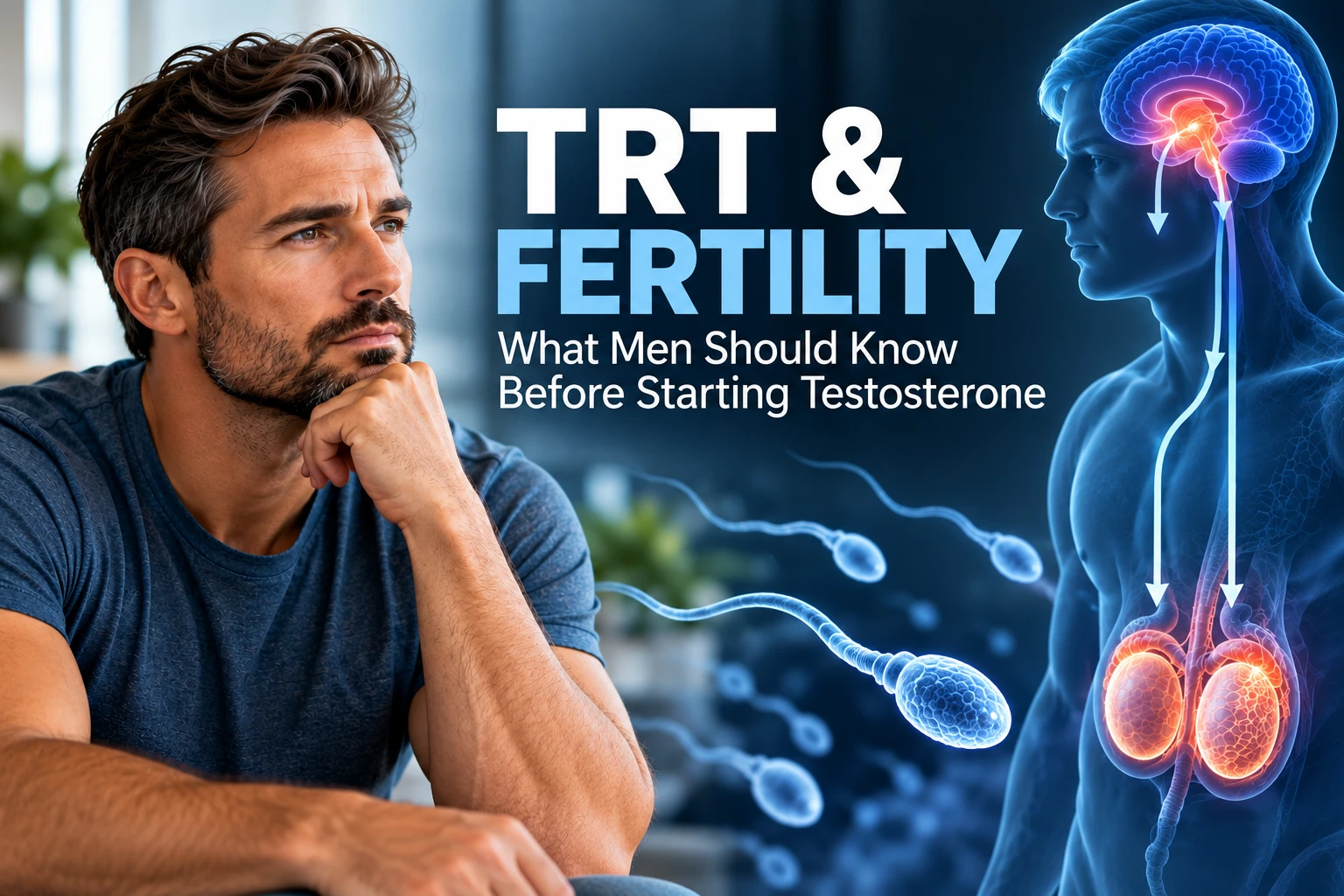
TRT & Fertility: What Men Should Know Before Starting Testosterone
Many men assume that because testosterone is essential for sperm production, increasing testosterone levels should improve fertility. In reality, the opposite
R2 Medical Clinic • 23 min read
Medically reviewed by Erik Natkin, DO — Founder, R2 Medical Clinic, Denver, Colorado
Last medically reviewed: October 2026
Testosterone replacement therapy (TRT) has become an increasingly popular treatment for men experiencing symptoms associated with low testosterone. Improvements in energy, libido, sexual function, body composition, and overall well-being are among the potential benefits that lead men to explore treatment.
However, one of the most important considerations before starting testosterone therapy is frequently overlooked: the potential impact on male fertility.
Many men assume that because testosterone is essential for sperm production, increasing testosterone levels should improve fertility. In reality, the opposite can occur.
Exogenous testosterone, whether administered through injections, gels, pellets, or other formulations, can significantly suppress sperm production. In some men, this suppression can lead to azoospermia, a condition in which no sperm are detectable in the ejaculate.
The good news is that testosterone-related suppression of fertility is often reversible. However, recovery is not guaranteed, and the time required to restore sperm production can vary considerably.
Understanding how testosterone regulates reproductive function, why TRT can interfere with sperm production, and what alternatives may be available is essential for men who want to preserve their fertility.
Understanding the Relationship Between Testosterone and Sperm Production
Testosterone plays a central role in male reproductive health, but sperm production depends on more than simply maintaining adequate testosterone levels in the bloodstream.
The process is regulated by the hypothalamic-pituitary-gonadal (HPG) axis, a hormonal communication system connecting the brain and testes.
The hypothalamus releases gonadotropin-releasing hormone (GnRH), which signals the pituitary gland to produce two important hormones:
- Luteinizing hormone (LH): Stimulates Leydig cells in the testes to produce testosterone.
- Follicle-stimulating hormone (FSH): Acts on Sertoli cells within the seminiferous tubules to support sperm development.
Together, these hormones maintain the environment necessary for spermatogenesis, the process by which sperm are produced.
One particularly important distinction is the difference between circulating testosterone and intratesticular testosterone.
Intratesticular testosterone concentrations are substantially higher than testosterone concentrations in the bloodstream, often approximately 50–100 times higher.
These elevated concentrations are necessary to support normal sperm production.
A man can therefore have normal or even elevated testosterone levels on a blood test while simultaneously having insufficient testosterone activity within the testes to maintain spermatogenesis.
This distinction explains why testosterone replacement therapy can improve symptoms of low testosterone while impairing fertility.
Why Testosterone Replacement Therapy Can Reduce Fertility
When testosterone is administered from an external source, circulating testosterone concentrations increase. Some of this testosterone is converted into estradiol through an enzyme called aromatase.
Estradiol is often thought of primarily as a female hormone, but it plays an essential role in male reproductive physiology, including the regulation of testosterone production.
One of its most important functions is providing negative feedback to the hypothalamus and pituitary gland.
The Role of Estradiol in Hormonal Negative Feedback
As circulating testosterone concentrations increase during TRT, more testosterone may become available for conversion into estradiol.
Estradiol acts through estrogen receptors in the hypothalamus and pituitary gland, contributing to suppression of the hormonal signals that normally stimulate testosterone and sperm production.
The process occurs through several interconnected steps:
- Exogenous testosterone increases circulating testosterone concentrations.
- Some testosterone is converted into estradiol through the enzyme aromatase.
- Estradiol contributes to negative feedback at the hypothalamus and pituitary gland.
- The hypothalamus reduces gonadotropin-releasing hormone (GnRH) signaling.
- The anterior pituitary decreases secretion of luteinizing hormone (LH) and follicle-stimulating hormone (FSH).
- Reduced LH stimulation decreases endogenous testosterone production within the testes.
- Reduced FSH stimulation impairs Sertoli cell function and sperm development.
- The combined effects can significantly suppress spermatogenesis.
Testosterone itself also contributes to this negative feedback through androgen receptor signaling, independently of its conversion into estradiol.
Additionally, inhibin B, a hormone produced by Sertoli cells, provides negative feedback specifically on FSH secretion.
However, estradiol-mediated feedback represents an important component of the body’s regulation of reproductive hormone production.
Why Intratesticular Testosterone Matters
The testes normally maintain testosterone concentrations far higher than those found in the bloodstream.
This elevated intratesticular testosterone environment is essential for normal sperm development.
When exogenous testosterone suppresses LH secretion, Leydig cells receive less stimulation to produce testosterone.
As a result, intratesticular testosterone concentrations can decline dramatically, even when blood testosterone levels are normal or elevated.
At the same time, reduced FSH signaling interferes with Sertoli cell function.
The combination can produce a progressive reduction in sperm concentration.
Depending on the degree of suppression, men may develop:
- Oligospermia: A sperm concentration below the normal reference range.
- Severe oligospermia: A markedly reduced sperm concentration.
- Azoospermia: No detectable sperm in the ejaculate.
Importantly, these changes can occur even when testosterone therapy successfully improves libido, erections, energy, and other symptoms.
Feeling better on testosterone does not necessarily mean reproductive function is being preserved.
Does Lowering Estradiol Prevent Fertility Suppression?
Because estradiol contributes to negative feedback, it may seem logical that lowering estradiol during TRT would prevent suppression of LH and FSH.
However, the physiology is more complicated.
Testosterone itself also provides negative feedback through androgen receptor signaling. Consequently, reducing estradiol does not necessarily restore normal gonadotropin secretion while a man continues receiving exogenous testosterone.
Aromatase inhibitors can increase endogenous testosterone production in selected men by reducing estrogen-mediated negative feedback, but they are not a reliable method of preserving fertility during conventional TRT.
Furthermore, estradiol is not inherently harmful to male reproductive health.
Normal estradiol concentrations contribute to sexual function, bone health, and reproductive physiology.
The problem during testosterone therapy is not simply the presence of estradiol, but rather the suppression of the hormonal signals required to maintain intratesticular testosterone and normal sperm production.
This is why fertility considerations should be addressed before treatment begins rather than after a couple experiences difficulty conceiving.
How Common Is Fertility Suppression During TRT?
Suppression of sperm production is a well-established effect of exogenous testosterone.
In fact, testosterone has been investigated as a potential form of male hormonal contraception because of its ability to suppress gonadotropin secretion and reduce sperm production.
Clinical studies of testosterone-based contraceptive regimens have demonstrated that many men experience profound suppression of spermatogenesis, although the degree of suppression varies between individuals.
Some men develop azoospermia, while others continue producing small numbers of sperm.
This variability is important because testosterone therapy should never be considered a reliable form of birth control.
Even men with substantially suppressed sperm concentrations may retain enough sperm production to cause pregnancy.
Conversely, men hoping to conceive may experience significant fertility impairment despite having testosterone levels within the therapeutic range.
The response depends on several factors, including the testosterone regimen, duration of treatment, baseline reproductive function, age, and individual hormonal physiology.
Does the Type of Testosterone Therapy Matter?
Men frequently ask whether certain testosterone formulations are less likely to interfere with fertility.
Although these formulations differ in absorption, pharmacokinetics, and dosing schedules, most conventional forms of exogenous testosterone can suppress LH and FSH.
The degree of suppression may differ depending on the formulation and treatment regimen.
For example, small studies of short-acting intranasal testosterone have reported less gonadotropin suppression and greater preservation of sperm parameters than is typically observed with longer-acting testosterone formulations.
Common testosterone delivery methods include:
- Intramuscular or subcutaneous injections
- Transdermal gels and creams
- Testosterone pellets
- Oral testosterone formulations
- Intranasal testosterone
However, the available evidence is insufficient to establish intranasal testosterone as a reliable fertility-preserving treatment.
Men who are actively trying to conceive should not assume that switching testosterone formulations will adequately protect sperm production.
The central issue is not simply how testosterone enters the body, but how treatment affects the hormonal signals required for spermatogenesis.
Can Fertility Recover After Stopping Testosterone?
One of the most common questions men ask is whether testosterone-induced infertility is permanent.
For many men, sperm production gradually recovers after testosterone therapy is discontinued.
As circulating testosterone concentrations decline, negative feedback on the hypothalamus and pituitary gland decreases.
GnRH, LH, and FSH secretion may then resume, allowing the testes to restore intratesticular testosterone production and spermatogenesis.
However, this process takes time.
A complete cycle of sperm development requires approximately 74 days, followed by additional time for sperm maturation and transport through the epididymis.
Consequently, meaningful improvements in semen parameters generally occur over months rather than days or weeks.
How Long Does Recovery Take?
Data from male hormonal contraceptive studies provide useful information about recovery following testosterone-induced suppression.
A pooled analysis of 1,549 men found that the estimated probability of recovering to a sperm concentration of at least 20 million/mL was approximately:
- 67% within 6 months
- 90% within 12 months
- 96% within 16 months
- 100% within 24 months
These findings are encouraging, but they require important interpretation.
The participants were generally healthy men enrolled in controlled contraceptive studies. Their results may not accurately predict recovery in older men, men with preexisting hypogonadism, or individuals who have used testosterone or anabolic steroids for prolonged periods.
Furthermore, recovery to a particular sperm concentration does not necessarily mean that every aspect of fertility has returned to normal.
Some men recover relatively quickly, while others require substantially longer.
A subset may experience incomplete recovery, particularly when underlying testicular dysfunction was present before testosterone treatment.
For this reason, men should not assume that stopping TRT will automatically restore fertility within a predictable period.
What Happens if a Man Wants Children While Already Taking TRT?
For men currently receiving testosterone therapy who decide they want to conceive, the first step is to evaluate their reproductive function.
A semen analysis can determine whether sperm production is occurring and provide information about sperm concentration, motility, and morphology.
Additional testing may include:
- Total testosterone
- Free testosterone, when clinically appropriate
- LH and FSH
- Estradiol
- Prolactin, when indicated
- Other testing based on the clinical history
The results help determine whether fertility impairment is primarily related to testosterone-induced hormonal suppression or whether additional factors may be contributing.
In many cases, discontinuing exogenous testosterone is necessary to allow recovery of the HPG axis.
However, simply stopping testosterone can be challenging.
Men who have experienced improvements in energy, libido, mood, or other symptoms may experience a return of those symptoms while endogenous testosterone production recovers.
In selected cases, fertility specialists may use medications that stimulate gonadotropin activity or support testicular testosterone production.
The appropriate strategy depends on the patient’s reproductive goals, treatment history, baseline testicular function, and laboratory findings.
Men with azoospermia or persistent fertility impairment should be evaluated by a reproductive urologist.
Can hCG Help Preserve Fertility During Testosterone Therapy?
Human chorionic gonadotropin (hCG) is frequently discussed in conversations about testosterone therapy and fertility preservation.
Although hCG is best known for its role in pregnancy, it also acts on the same receptor as luteinizing hormone.
In men, hCG can stimulate Leydig cells within the testes to produce testosterone.
This is important because exogenous testosterone suppresses endogenous LH production, reducing the stimulation necessary to maintain intratesticular testosterone.
By mimicking LH activity, hCG may help maintain testicular testosterone production despite suppression of the pituitary gland.
What Does the Research Show?
A small controlled study published in the Journal of Clinical Endocrinology & Metabolism evaluated the effects of hCG administration in healthy men receiving testosterone.
The researchers found that testosterone administration alone markedly suppressed intratesticular testosterone concentrations.
However, adding hCG reduced or prevented this suppression in a dose-dependent manner.
These findings support the physiological rationale for using hCG to maintain testicular function during testosterone treatment.
Additional small observational studies have reported preservation of sperm production in selected men receiving testosterone alongside low-dose hCG.
However, several important limitations remain.
Maintaining intratesticular testosterone does not guarantee normal sperm production.
FSH also plays an important role in spermatogenesis, and hCG does not directly replace FSH activity.
Furthermore, much of the available evidence involves relatively small studies with limited follow-up.
Consequently, hCG should not be viewed as a guaranteed method of fertility preservation during TRT.
Current reproductive medicine guidelines generally recommend avoiding exogenous testosterone in men actively seeking fertility, even though selected specialists may consider individualized approaches in particular circumstances.
What About Clomiphene and Enclomiphene?
For men with symptomatic low testosterone who want to preserve fertility, medications that stimulate endogenous testosterone production may offer an alternative to conventional TRT.
Two medications commonly discussed in this setting are clomiphene citrate and enclomiphene.
These medications belong to a class known as selective estrogen receptor modulators (SERMs).
Rather than directly supplying testosterone, they alter estrogen-mediated feedback signaling at the hypothalamus and pituitary gland.
This can increase the release of LH and FSH, stimulating the testes to produce testosterone while potentially supporting sperm production.
Clomiphene has been used off-label in selected men with secondary hypogonadism.
Unlike conventional testosterone therapy, clomiphene generally stimulates endogenous testosterone production rather than suppressing it.
This distinction may make it useful for men who want to improve testosterone concentrations without compromising fertility.
However, the response varies.
Men with primary testicular failure, in which the testes cannot adequately respond to gonadotropin stimulation, may not benefit substantially.
Potential adverse effects include visual disturbances, mood changes, headaches, and other estrogen-related effects.
Clomiphene is not FDA-approved for treating male hypogonadism.
Enclomiphene is one of the two isomers that make up clomiphene citrate.
Clinical studies have demonstrated that enclomiphene can increase testosterone concentrations while maintaining LH and FSH secretion and preserving sperm concentrations more effectively than exogenous testosterone in selected men with secondary hypogonadism.
This makes it an interesting potential treatment for men concerned about fertility.
However, enclomiphene is not FDA-approved as a treatment for male hypogonadism, and long-term clinical outcome data remain limited.
It is also important to distinguish improvements in testosterone levels and semen parameters from demonstrated improvements in pregnancy or live-birth rates.
A medication that preserves sperm production is not necessarily proven to improve the likelihood of conception.
Treatment decisions should therefore consider the underlying cause of hypogonadism, the patient’s symptoms, and reproductive goals rather than testosterone levels alone.
Can Clomiphene Be Combined With Testosterone Therapy to Preserve Fertility?
Although clomiphene is frequently discussed as an alternative to testosterone replacement therapy, emerging research suggests that it may also have a role when administered alongside exogenous testosterone.
The rationale is based on the hormonal negative feedback mechanisms discussed earlier.
When testosterone is administered externally, some of it is converted into estradiol through aromatase.
Estradiol contributes to suppression of GnRH, LH, and FSH secretion through negative feedback at the hypothalamus and pituitary gland.
Clomiphene interferes with estrogen-mediated feedback signaling, potentially allowing the hypothalamus and pituitary gland to maintain some gonadotropin secretion despite elevated circulating testosterone concentrations.
This is particularly relevant because maintaining LH and FSH activity may help support intratesticular testosterone production and spermatogenesis.
What Does the Research Show?
Studies of clomiphene administered without testosterone have consistently demonstrated increases in LH, FSH, and endogenous testosterone concentrations in appropriately selected men.
For example, a study published in the Journal of Clinical Endocrinology & Metabolism reported that 30 days of clomiphene administration in healthy men produced substantial increases in reproductive hormones:
- Testosterone increased approximately 146%.
- LH increased approximately 177%.
- FSH increased approximately 170%.
These findings demonstrate the ability of clomiphene to stimulate the hypothalamic-pituitary-gonadal axis.
However, the more clinically relevant question for men already receiving TRT is whether clomiphene can counteract the suppression caused by exogenous testosterone.
A retrospective study published in World Journal of Men’s Health in 2026 evaluated 6,999 men receiving different hormonal treatment regimens.
The treatment groups included:
- 6,364 men receiving testosterone combined with hCG.
- 552 men receiving testosterone combined with clomiphene.
- 83 men receiving clomiphene alone.
Over six months, researchers evaluated changes in testosterone, LH, FSH, and patient-reported outcomes.
In men receiving testosterone combined with hCG, both LH and FSH decreased significantly.
In men receiving testosterone combined with clomiphene, FSH decreased significantly, but LH did not demonstrate a statistically significant reduction.
Men receiving clomiphene alone experienced increases in both LH and FSH.
These findings suggest that clomiphene may partially counteract testosterone-induced suppression of pituitary gonadotropin secretion.
However, the combination did not prevent all hormonal suppression, and the study did not establish that normal sperm production was maintained.
Additional preliminary research involving clomiphene combined with oral testosterone has reported preservation of measurable LH and FSH concentrations near pretreatment levels.
Although these findings are encouraging, the available studies are limited by their observational designs, relatively short follow-up periods, and lack of comprehensive semen analysis data.
Does Maintaining LH and FSH Mean Fertility Is Preserved?
Not necessarily.
LH and FSH are essential for normal reproductive function, but their circulating concentrations do not directly establish whether adequate sperm production is occurring.
LH stimulates Leydig cells to maintain intratesticular testosterone production, while FSH supports Sertoli cell function and sperm development.
Preserving these signals could theoretically reduce the fertility suppression associated with conventional TRT.
However, normal or measurable gonadotropin concentrations do not guarantee normal intratesticular testosterone concentrations or spermatogenesis.
Furthermore, clomiphene primarily addresses estrogen-mediated negative feedback. Exogenous testosterone can also suppress the reproductive axis through androgen receptor signaling.
Consequently, clomiphene may not completely overcome testosterone-induced gonadotropin suppression.
The available evidence suggests that combining clomiphene with testosterone may help preserve some pituitary hormonal activity, but it has not established that this approach reliably maintains fertility.
Larger prospective studies incorporating semen analyses, pregnancy rates, and live-birth outcomes are needed.
For men actively attempting conception, current reproductive medicine guidelines generally recommend avoiding exogenous testosterone and considering fertility-directed treatments instead.
Nevertheless, the emerging research highlights the importance of understanding estradiol-mediated negative feedback and the potential role of medications that modify this pathway.
What About FSH Therapy?
Although LH activity is essential for maintaining intratesticular testosterone, FSH provides a separate signal required for normal sperm development.
In certain men with hypogonadotropic hypogonadism, treatment with hCG alone may not produce adequate sperm production.
Adding FSH therapy can help stimulate Sertoli cells and support spermatogenesis.
This approach is particularly relevant for men with deficiencies in pituitary gonadotropin secretion.
However, FSH therapy is not routinely required for every man experiencing testosterone-related fertility suppression.
Its use generally depends on the clinical diagnosis, semen analysis findings, and response to other treatment.
Management is best coordinated with a reproductive endocrinologist or reproductive urologist experienced in male infertility.
Should Men Have a Semen Analysis Before Starting TRT?
For men who may want biological children in the future, obtaining a baseline semen analysis before initiating testosterone therapy can provide valuable information.
A semen analysis evaluates several aspects of sperm production, including:
- Semen volume
- Sperm concentration
- Total sperm count
- Sperm motility
- Sperm morphology
This information helps establish whether normal sperm production was present before treatment.
Without baseline testing, it can be difficult to determine whether abnormal semen parameters discovered later were caused entirely by TRT or whether a preexisting fertility problem was present.
A baseline semen analysis is especially valuable for men who have:
- A history of infertility
- Previous testosterone or anabolic steroid use
- Testicular injury or surgery
- A history of undescended testes
- Prior chemotherapy or radiation exposure
- Known hormonal abnormalities
- Plans to conceive in the near future
Not every man beginning TRT requires a semen analysis, particularly if he has completed his family and has no interest in future fertility.
However, reproductive goals should be discussed and documented before treatment begins.
For men uncertain about future family planning, baseline testing may help inform the decision.
Should Men Consider Sperm Banking Before TRT?
Sperm cryopreservation, commonly referred to as sperm banking, is another option for men who want to preserve future reproductive possibilities.
The process involves collecting a semen sample and freezing sperm for potential future use in assisted reproductive procedures.
For men with normal sperm production before starting TRT, cryopreservation may provide an additional layer of protection against future fertility difficulties.
This can be particularly relevant for men who:
- Want children but are not planning to conceive immediately
- Are uncertain about their future reproductive goals
- Have a history of fertility problems
- Are considering prolonged testosterone treatment
- Have other medical conditions that may affect fertility
Frozen sperm can remain viable for many years when properly stored.
However, sperm banking does not guarantee a future pregnancy.
The likelihood of successful conception depends on factors such as sperm quality, the number of viable sperm stored, the reproductive health of the partner, and the assisted reproductive techniques used.
Men interested in sperm banking should ideally complete the process before starting testosterone therapy, while sperm production remains unaffected by treatment.
Does Age Affect Fertility Recovery After TRT?
Age can influence reproductive function, although male fertility does not decline as abruptly as female fertility.
As men age, changes may occur in testosterone production, sperm quality, testicular function, and reproductive hormone signaling.
Older men may also have a higher prevalence of underlying conditions that affect fertility, including obesity, metabolic dysfunction, diabetes, and primary testicular impairment.
These factors can complicate recovery following testosterone-induced suppression.
However, age alone does not determine whether fertility will return.
Duration of testosterone exposure, baseline testicular function, previous anabolic steroid use, and the presence of other reproductive disorders may all influence recovery.
The evidence is not sufficient to predict an individual man’s fertility recovery based on age or treatment duration alone.
This is another reason why baseline evaluation and individualized treatment planning are important.
Does Low Testosterone Always Mean Reduced Fertility?
Low testosterone and male infertility frequently overlap, but they are not interchangeable diagnoses.
Some men with low circulating testosterone maintain adequate sperm production.
Conversely, men with normal testosterone levels may have significantly impaired fertility.
The distinction depends partly on where the dysfunction occurs within the reproductive system.
Primary hypogonadism occurs when the testes cannot adequately produce testosterone despite stimulation from the pituitary gland.
LH and FSH concentrations are often elevated because the pituitary is attempting to stimulate poorly functioning testes.
Depending on the underlying cause, sperm production may also be impaired.
In these men, medications that increase LH or FSH signaling may have limited effectiveness.
Secondary hypogonadism occurs when the hypothalamus or pituitary gland does not provide adequate stimulation to the testes.
LH and FSH concentrations may be low or inappropriately normal despite reduced testosterone.
In selected men, stimulating endogenous gonadotropin activity can improve testosterone production and potentially support fertility.
This distinction is clinically important because the best treatment for low testosterone depends on why testosterone is low in the first place.
Simply prescribing testosterone without evaluating the underlying hormonal pattern may overlook potentially treatable causes and unnecessarily compromise reproductive function.
Lifestyle Factors That Influence Testosterone and Fertility
Hormonal treatment is only one component of male reproductive health.
Several modifiable factors can influence both testosterone production and sperm quality.
Obesity and Metabolic Health
Excess adipose tissue is associated with hormonal changes that can contribute to reduced testosterone concentrations.
Obesity is also associated with insulin resistance, chronic low-grade inflammation, and changes in reproductive hormone regulation.
Weight reduction in men with obesity can improve testosterone concentrations, although improvements in semen parameters and fertility outcomes are less predictable.
Sleep
Sleep is important for normal testosterone regulation.
Insufficient sleep and certain sleep disorders can disrupt hormonal signaling and contribute to symptoms associated with low testosterone.
Evaluating sleep quality and identifying conditions such as obstructive sleep apnea may therefore be appropriate.
Alcohol and Recreational Drugs
Heavy alcohol consumption and certain recreational drugs can adversely affect reproductive hormones and sperm production.
Anabolic androgenic steroids are particularly important because they can profoundly suppress the HPG axis.
Men using anabolic steroids may develop severe oligospermia or azoospermia, sometimes with prolonged recovery after discontinuation.
Heat Exposure
Normal sperm production requires testicular temperatures slightly below core body temperature.
Frequent exposure to excessive heat, including repeated hot-tub use, may temporarily impair sperm production in some men.
Nutrition and Exercise
Adequate nutrition, regular physical activity, and maintaining a healthy body composition support general metabolic and reproductive health.
However, excessive training combined with inadequate caloric intake can suppress reproductive hormone signaling.
The goal is to support normal physiology rather than assume that more exercise, more supplements, or higher testosterone concentrations will necessarily improve fertility.
When Should Men Seek a Fertility Evaluation?
Men should consider a reproductive evaluation before starting TRT if they are actively trying to conceive or anticipate wanting children in the future.
For men already taking testosterone, evaluation is particularly important when pregnancy is desired and sperm production may have been suppressed.
A reproductive urologist can assess semen parameters, hormonal function, testicular health, and other potential causes of infertility.
In general, couples are advised to seek an infertility evaluation after 12 months of regular unprotected intercourse without conception, or after 6 months when the female partner is 35 years or older.
However, men with known risk factors, including testosterone-induced suppression of sperm production, should not necessarily wait this long.
Earlier evaluation may identify a reversible problem and reduce unnecessary delays in family planning.
Related Men’s Hormone Health Resources
TRT & Estradiol: Why Men Need Estrogen
TRT Bloodwork Explained: Testosterone, SHBG, Estradiol, PSA
Testosterone & Hormone Optimization for Men: A Physician's Guide
Frequently Asked Questions About TRT and Fertility
Can I Get My Partner Pregnant While Taking Testosterone?
Yes. Although testosterone therapy can significantly suppress sperm production, it does not reliably eliminate fertility.
Some men continue producing enough sperm to achieve pregnancy.
TRT should never be used as contraception.
Will Testosterone Therapy Make Me Permanently Infertile?
Not necessarily.
Many men recover sperm production after discontinuing testosterone therapy, but recovery times vary and complete recovery is not guaranteed.
Men with preexisting testicular dysfunction or prolonged exposure may face additional challenges.
How Long Should I Stop TRT Before Trying to Conceive?
There is no universal timeline.
Some men recover meaningful sperm production within several months, while others require a year or longer.
A semen analysis and hormonal evaluation can help guide treatment and monitor recovery.
Can I Take hCG With Testosterone to Protect My Fertility?
hCG may help maintain intratesticular testosterone production and may preserve sperm production in some men.
However, the evidence is limited, and hCG does not guarantee fertility preservation.
Men actively attempting conception are generally advised to avoid exogenous testosterone and discuss fertility-directed treatment with a specialist.
Can Clomiphene Be Added to TRT to Preserve Fertility?
Possibly, although the evidence remains limited.
Clomiphene can increase LH and FSH secretion by modifying estrogen-mediated negative feedback.
Emerging studies suggest that combining clomiphene with testosterone may partially preserve pituitary gonadotropin activity.
However, maintaining LH and FSH concentrations does not guarantee normal sperm production, and this combination has not been established as a reliable fertility-preserving treatment.
Is Clomiphene Better Than Testosterone if I Want Children?
For selected men with secondary hypogonadism, clomiphene may increase endogenous testosterone while maintaining gonadotropin signaling and sperm production.
However, it is not appropriate for every patient and is not FDA-approved for male hypogonadism.
The best option depends on the underlying diagnosis and reproductive goals.
Can Testosterone Improve Sperm Production if My Testosterone Is Low?
Conventional exogenous testosterone generally does not improve sperm production and may suppress it.
In men with certain forms of secondary hypogonadism, treatments that stimulate endogenous testosterone production may improve reproductive function.
Should I Freeze My Sperm Before Starting TRT?
Men who may want biological children in the future should consider discussing sperm banking before treatment.
Cryopreservation is not necessary for every patient, but it may provide an additional reproductive option if fertility becomes impaired.
Can Testosterone Therapy Cause Testicular Shrinkage?
Yes.
Suppression of LH and FSH can reduce testicular activity and may lead to decreased testicular volume.
This effect is associated with reduced endogenous testosterone production and impaired spermatogenesis.
Does a Normal Testosterone Level Mean My Fertility Is Normal?
No.
Serum testosterone concentrations do not directly measure sperm production.
A semen analysis is necessary to evaluate sperm concentration and other important sperm parameters.
The Bottom Line: Fertility Should Be Part of the TRT Conversation
Testosterone replacement therapy can provide meaningful benefits for appropriately selected men with symptomatic testosterone deficiency.
However, treatment decisions should extend beyond improving a laboratory value or relieving symptoms.
Exogenous testosterone can significantly suppress sperm production, even when circulating testosterone levels are normal or elevated.
A major contributor to this effect is the hormonal negative feedback associated with testosterone and its conversion into estradiol, which suppresses LH and FSH secretion.
Without adequate gonadotropin stimulation, intratesticular testosterone concentrations decline and sperm production may become severely impaired.
Emerging research suggests that medications such as clomiphene may help counteract some of this hormonal suppression, while hCG may help maintain intratesticular testosterone production.
However, neither approach guarantees preservation of fertility during conventional TRT.
For men who have completed their families, fertility suppression may not represent a major concern.
For men who want children now or may want them in the future, the implications can be substantial.
Fortunately, fertility preservation strategies and alternative treatments may be available.
The most important steps are to evaluate reproductive goals before treatment, understand the potential consequences of testosterone-induced hormonal suppression, and select a treatment strategy appropriate for the individual’s circumstances.
Men should not have to discover the fertility implications of testosterone therapy only after experiencing difficulty conceiving.
Testosterone Therapy and Fertility Counseling at R2 Medical Clinic
At R2 Medical Clinic, we believe testosterone optimization should begin with a comprehensive understanding of each patient’s symptoms, hormonal health, medical history, and long-term goals.
For men considering testosterone replacement therapy, reproductive planning is an important part of that discussion.
Our approach emphasizes appropriate laboratory evaluation, identification of potential causes of testosterone deficiency, and individualized treatment planning.
For men who want to preserve fertility, this may include discussing alternatives to conventional testosterone therapy or coordinating care with a reproductive specialist.
Testosterone treatment should be about more than raising testosterone levels. It should support your health while accounting for your future goals.
If you are experiencing symptoms of low testosterone or have questions about how TRT may affect your fertility, the team at R2 Medical Clinic in Denver, Colorado, can help you better understand your options.
Learn more about our testosterone replacement therapy services at R2 Medical Clinic or schedule a consultation to discuss your hormonal health and treatment goals.
References
- American Urological Association. Testosterone Deficiency Guideline. Recommendations regarding testosterone therapy, reproductive counseling, and fertility preservation.
- American Urological Association and American Society for Reproductive Medicine. Diagnosis and Treatment of Infertility in Men: AUA/ASRM Guideline. Recommendations regarding exogenous testosterone and male fertility.
- Liu PY, Swerdloff RS, Christenson PD, Handelsman DJ, Wang C. Rate, extent, and modifiers of spermatogenic recovery after hormonal male contraception: An integrated analysis. Lancet. 2006;367(9520):1412–1420.
- Coviello AD, Matsumoto AM, Bremner WJ, et al. Low-dose human chorionic gonadotropin maintains intratesticular testosterone in normal men with testosterone-induced gonadotropin suppression. Journal of Clinical Endocrinology & Metabolism. 2005;90(5):2595–2602.
- Hsieh TC, Pastuszak AW, Hwang K, Lipshultz LI. Concomitant intramuscular human chorionic gonadotropin preserves spermatogenesis in men undergoing testosterone replacement therapy. Journal of Urology. 2013;189(2):647–650.
- Kaminetsky J, Werner M, Fontenot G, Wiehle RD. Oral enclomiphene citrate stimulates the endogenous production of testosterone and sperm counts in men with low testosterone: Comparison with testosterone gel. Journal of Sexual Medicine. 2013;10(6):1628–1635.
- McBride JA, Coward RM. Recovery of spermatogenesis following testosterone replacement therapy or anabolic-androgenic steroid use. Asian Journal of Andrology. 2016;18(3):373–380.
- Patel AS, Leong JY, Ramos L, Ramasamy R. Testosterone is a contraceptive and should not be used in men who desire fertility. World Journal of Men’s Health. 2019;37(1):45–54.
- Endocrine Society. Testosterone Therapy in Men With Hypogonadism: An Endocrine Society Clinical Practice Guideline. 2018.
- Hypothalamic-Pituitary-Testicular Axis Effects and Urinary Detection Following Clomiphene Administration in Males. Journal of Clinical Endocrinology & Metabolism. 2019;104(3):906–914.
- Pituitary Axis Impacts and Effectiveness of Clomiphene and Human Chorionic Gonadotropin in Treating Hypogonadism: Cohort Study. World Journal of Men’s Health. 2026.
- Clomiphene Citrate Combined With Oral Testosterone Undecanoate: Effects on Gonadotropin Secretion. Journal of Sexual Medicine. 2025. Conference abstract.
Medical Disclaimer
This article is intended for educational and informational purposes only and should not be considered medical advice, diagnosis, or treatment. The information presented reflects current medical knowledge and available research but may not apply to every individual.
Testosterone replacement therapy and fertility-related treatments should be undertaken only under the supervision of a qualified healthcare professional. Some treatments discussed, including clomiphene and enclomiphene for male hypogonadism, are not FDA-approved for these indications.
Treatment decisions should be based on an individualized medical evaluation, laboratory findings, and personal health and reproductive goals.
Always consult a qualified healthcare provider before starting, stopping, or modifying any medical treatment.