Erectile Dysfunction & Men's Sexual Health Treatment in Denver
Restore Your Confidence
Personalized Treatment Solutions
Erectile dysfunction (ED), low libido, changes in sexual performance and other sexual health concerns can have hormonal, vascular, neurological, medication-related and psychological causes. At R2 Medical Clinic, we take a physician-led approach to identifying potential contributors and developing an individualized treatment plan.
Male sexual dysfunction is a common medical condition that can affect men at any stage of life. It can manifest as difficulty with desire, arousal, performance, or satisfaction, and it often has a significant impact on quality of life, relationships, and self-esteem.
Causes can be multifactorial — including hormonal imbalances (especially low testosterone), cardiovascular issues, neurological conditions, medication side effects, psychological factors, and age-related changes. Because of this complexity, a one-size-fits-all approach rarely works.
A comprehensive medical evaluation — including lab work, medical history review, and physical assessment — allows our physicians to identify the specific factors contributing to your symptoms and develop a targeted, personalized treatment plan.
Our goal is to restore your confidence, performance, and overall quality of life using the most advanced, evidence-based treatments available today.
How We Evaluate Erectile Dysfunction
Erectile dysfunction can have multiple contributing causes, which is why evaluation should extend beyond simply determining whether an ED medication works. At R2 Medical Clinic, we take a comprehensive, physician-led approach that considers medical and sexual history, hormonal health, cardiovascular and metabolic factors, medications, lifestyle, and psychological influences.
The goal is to identify the factors that may be contributing to your symptoms and use that information to develop an individualized treatment strategy.
Medical and Sexual Health History
Evaluation begins with a detailed discussion of your symptoms and overall health. We consider when erectile difficulties began, whether they are consistent or intermittent, changes in libido, the presence of morning or spontaneous erections, previous treatments, and how well those treatments worked.
Sexual dysfunction can involve more than erections, so we may also discuss changes in sexual desire, ejaculation, orgasm, sexual satisfaction, and other concerns when relevant.
We also review medical conditions that may affect erectile function, including cardiovascular disease, high blood pressure, diabetes, metabolic disease, neurological conditions, previous pelvic or prostate surgery, psychiatric conditions, and other relevant health concerns.
Understanding both your medical and sexual history helps identify potential contributors to erectile dysfunction and determine what additional evaluation may be appropriate.
Hormone Evaluation
Hormones play an important role in sexual desire and overall sexual function.Testosterone deficiency and other hormonal abnormalities may contribute to low libido and, in some men, erectile difficulties.
When symptoms or clinical findings suggest a possible hormonal component, laboratory testing may include total testosterone, free testosterone, sex hormone-binding globulin (SHBG), estradiol, and additional testing when clinically appropriate.
Hormone results should not be interpreted in isolation. A testosterone level that falls within a laboratory reference range does not necessarily explain a man’s symptoms, just as erectile dysfunction does not automatically mean that testosterone is low.
We evaluate laboratory findings in the context of symptoms, medical history, medications, metabolic health, age, and other potential contributors to sexual dysfunction.
Cardiovascular and Metabolic Health
Healthy erections depend heavily on healthy blood flow. Conditions that affect the cardiovascular system and blood vessels can therefore have a significant effect on erectile function.
High blood pressure, abnormal cholesterol, diabetes, insulin resistance, obesity, smoking, and cardiovascular disease may contribute to ED by affecting circulation and vascular function.
Depending on your medical history and risk factors, evaluation may include consideration of blood pressure, glucose control, cholesterol, body composition, smoking history, physical activity, and overall cardiovascular risk.
Because erectile dysfunction and cardiovascular disease share many of the same risk factors, new or unexplained ED may sometimes warrant evaluation beyond sexual health alone.
Medication and Lifestyle Review
Certain medications can affect erections, libido, ejaculation, orgasm, or overall sexual performance. We review prescription medications, over-the-counter medications, supplements, and previous ED treatments to identify factors that may be contributing to symptoms or influencing treatment response.
Medications associated with sexual side effects can include certain antidepressants, blood pressure medications, medications that affect hormones, and other prescription drugs.
Lifestyle factors are also considered. Smoking, alcohol use, sleep quality, physical activity, weight, stress, and other aspects of overall health can influence vascular health, hormone function, sexual desire, and erectile performance.
The goal is not simply to add another medication, but to identify potentially modifiable contributors whenever possible. Prescribed medications should not be discontinued or changed without consultation with the clinician managing that medication.
Psychological and Relationship Factors
Sexual function is influenced by both physical and psychological health. Stress, anxiety, depression, performance anxiety, relationship difficulties, and previous negative sexual experiences may contribute to erectile dysfunction.
These factors may also develop as a consequence of ED. A man who initially experiences erectile difficulty because of a physical problem may begin worrying about whether it will happen again. That anxiety can subsequently interfere with sexual arousal and make the underlying problem more difficult to overcome.
Considering psychological factors does not mean that erectile dysfunction is simply “in your head.” Physical and psychological contributors frequently occur together, and both may need to be addressed as part of an effective treatment strategy.
When psychiatric conditions or significant psychological concerns appear to be contributing to sexual dysfunction, coordination with an appropriate mental health professional may be recommended.
Developing an Individualized Treatment Plan
Once the evaluation is complete, we review the factors most likely contributing to your symptoms and discuss appropriate treatment options.
There is no single ED treatment that is appropriate for every man. A patient with primarily vascular erectile dysfunction may require a different approach than someone whose symptoms are associated with hormonal changes, diabetes, medication effects, neurological disease, performance anxiety, or a combination of several factors.
Depending on the individual, treatment may include oral ED medications, hormone therapy when clinically appropriate, penile injection therapy, lifestyle and metabolic optimization, selected device-based therapies, psychological support, or referral to another specialist when necessary.
We discuss the potential benefits, limitations, risks, and alternatives of the treatments being considered so that you can make an informed decision about your care.
The objective is not simply to improve an erection. It is to understand the factors contributing to sexual dysfunction and develop a treatment strategy based on your health, symptoms, risk factors, previous treatment response, and goals.
Common Types of Male Sexual Dysfunction
Erectile Dysfunction (ED)
Inability to achieve or maintain an erection sufficient for sexual activity.
Low Libido
Persistent decrease in sexual desire, often linked to low testosterone levels.
Premature Ejaculation
Ejaculation that occurs sooner than desired during sexual activity.
Delayed Ejaculation
Persistent difficulty or inability to reach ejaculation despite adequate stimulation.
Peyronie's Disease
Fibrous scar tissue that develops on the penis, causing curved or painful erections.
Low Testosterone
Decreased testosterone production leading to reduced sexual function, energy, and vitality.
What Causes Erectile Dysfunction?
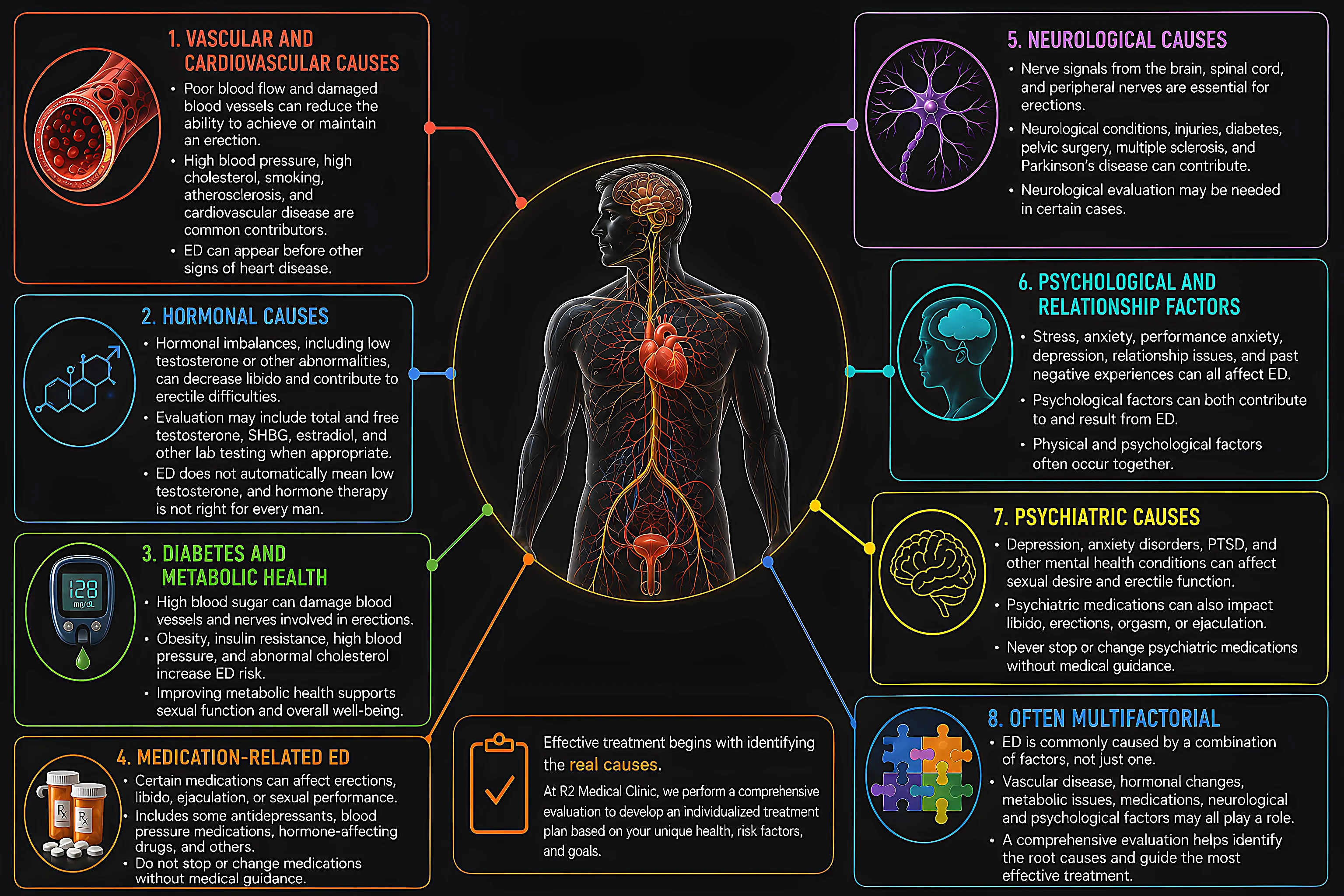
Erectile dysfunction (ED) is not a single disease and does not have one cause. An erection depends on the coordinated function of the blood vessels, nervous system, hormones, and psychological response. A problem affecting any of these systems can interfere with the ability to achieve or maintain an erection.
For many men, ED is multifactorial, meaning several factors may be contributing at the same time. Identifying those factors is an important part of determining which treatment options are most appropriate.
Vascular and Cardiovascular Causes
Healthy erections depend on adequate blood flow into the penis and the ability to maintain that blood flow during sexual activity. Conditions that damage blood vessels or reduce circulation can therefore contribute to erectile dysfunction.
High blood pressure, high cholesterol, smoking, atherosclerosis, and cardiovascular disease can all affect the blood vessels involved in erectile function. Because the penile arteries are relatively small, erectile difficulties can sometimes appear before more obvious symptoms of cardiovascular disease.
For this reason, particularly when ED is new or unexplained, evaluation should consider a man’s overall cardiovascular and vascular health, not simply his sexual symptoms.
Hormonal Causes
Hormones play an important role in libido, sexual function, energy, body composition, and overall well-being. Testosterone deficiency or other hormonal abnormalities may contribute to reduced sexual desire and, in some men, erectile difficulties.
Testosterone, however, is only one part of the hormonal picture. Depending on a man’s symptoms and medical history, evaluation may include total testosterone, free testosterone, sex hormone-binding globulin (SHBG), estradiol, and other laboratory testing when clinically appropriate.
Importantly, erectile dysfunction does not automatically mean a man has low testosterone, and testosterone therapy is not an appropriate treatment for every man with ED. Hormone results should be interpreted alongside symptoms, medical history, medications, metabolic health, and other potential causes of sexual dysfunction.
Diabetes and Metabolic Health
Diabetes is a significant risk factor for erectile dysfunction because chronically elevated blood glucose can damage both blood vessels and nerves involved in erectile function.
Insulin resistance, obesity, abnormal cholesterol levels, high blood pressure, and other components of metabolic dysfunction may also contribute to ED by affecting vascular health, inflammation, hormone levels, and circulation.
Addressing metabolic health can therefore be an important component of a comprehensive ED treatment plan. For some men, improving weight, blood pressure, glucose control, physical activity, sleep, and other cardiovascular risk factors may support both sexual function and overall health.
Medication-Related Erectile Dysfunction
Some medications can contribute to changes in erections, libido, ejaculation, or sexual performance. These may include certain antidepressants, blood pressure medications, medications that affect hormones, and other prescription drugs.
Medication-related sexual dysfunction does not necessarily mean that an important medication should be discontinued. Instead, the medication history should be considered as part of the overall evaluation.
Patients should not stop or change prescribed medications without discussing the potential risks and alternatives with the clinician managing that medication.
Neurological Causes
An erection requires communication between the brain, spinal cord, peripheral nerves, and blood vessels. Conditions or injuries that interfere with these neurological pathways can contribute to erectile dysfunction.
Potential neurological contributors include peripheral neuropathy, spinal cord disorders or injuries, multiple sclerosis, Parkinson’s disease, pelvic surgery, and nerve damage associated with diabetes.
Men who develop erectile dysfunction following prostate or other pelvic surgery may also experience changes in erectile function because nerves and blood vessels involved in erections can be affected.
When neurological disease or injury is suspected, additional evaluation or referral to an appropriate specialist may be necessary.
Psychological and Relationship Factors
Sexual function is influenced by both physical and psychological health. Stress, anxiety, depression, performance anxiety, relationship difficulties, and previous negative sexual experiences can all affect erectile function.
Psychological factors can also develop because of erectile dysfunction. For example, a man who initially experiences ED because of a physical problem may begin worrying about whether he will be able to perform during future sexual encounters. That anxiety can then make the underlying erectile difficulty worse.
This does not mean that ED is simply “in your head.” Physical and psychological factors frequently occur together, and both should be considered when determining the most appropriate approach to treatment.
Erectile Dysfunction Often Has More Than One Cause
It is common for several factors to contribute to erectile dysfunction simultaneously. A man may have mild vascular disease, metabolic dysfunction, hormonal changes, medication effects, and performance anxiety rather than one isolated cause.
That is why effective ED treatment should begin with a comprehensive evaluation rather than automatically prescribing the same treatment for every patient.
At R2 Medical Clinic, we evaluate the potential contributors to erectile dysfunction and use those findings to develop an individualized treatment strategy based on each patient’s symptoms, medical history, laboratory findings, risk factors, and treatment goals.
Psychiatric Causes
Psychiatric conditions can have a significant effect on sexual desire, arousal, and erectile function. Depression, anxiety disorders, post-traumatic stress disorder (PTSD), and other mental health conditions may contribute to erectile dysfunction through changes in mood, motivation, sexual interest, stress response, and the brain pathways involved in sexual arousal.
Depression, in particular, may reduce libido and sexual responsiveness, while anxiety can interfere with the neurological and physiological processes necessary for an erection. In some men, the psychiatric condition itself contributes to sexual dysfunction; in others, medications used to treat the condition may also play a role.
Certain antidepressants and other psychiatric medications are well known to potentially affect libido, erectile function, orgasm, or ejaculation. This can make it important to distinguish between symptoms related to the underlying condition and those that may be associated with treatment.
Psychiatric medications should not be stopped or changed solely because of sexual side effects without discussing the risks and alternatives with the clinician prescribing them. When a psychiatric condition or its treatment appears to be contributing to ED, coordination with the patient’s mental health provider may be an important part of the overall treatment strategy.
Treatment Options
Testosterone Replacement Therapy (TRT)
Testosterone and other hormonal factors can contribute to low libido, erectile dysfunction and changes in sexual function. When symptoms or clinical findings suggest a hormonal component, laboratory evaluation may help determine whether hormone therapy should be considered as part of the treatment plan.
PDE5 Inhibitors (Tadalafil, Sildenafil)
Oral medications that enhance blood flow for improved erectile response.
Vasodilator Injections (Bimix, Trimix, Quadmix)
Direct injection therapy for men who don't respond adequately to oral medications, producing rapid and reliable results.
PT-141 (Bremelanotide)
A peptide that works through the central nervous system to enhance sexual desire and arousal.
Oxytocin
Supports arousal, bonding, and sexual satisfaction.
Regenerative and Device-Based ED Therapies
Some men are interested in non-pharmaceutical or regenerative approaches to erectile dysfunction. Depending on the individual, options may include low-intensity shockwave therapy, platelet-rich plasma (PRP) and radiofrequency-based treatments. Research regarding these therapies continues to evolve, and results can vary. These treatments should not be considered appropriate for every cause of erectile dysfunction.
P-Wave Therapy (Shockwave Treatment)
Low-intensity extracorporeal shockwave technology that stimulates new blood vessel growth and improves blood flow to penile tissue — a drug-free, non-invasive approach that addresses root causes of ED.
P-Shot
Uses your own platelet-rich plasma to stimulate tissue regeneration, improve blood flow, and enhance sensitivity for improved erectile function.
APEXRF
Non-invasive procedure that uses Radiofrequency (RF) generated heat therapy to stimulate tissue repair, neocollagenesis, revascularization, angiogenesis, and neurogenesis addressing the root causes of erectile dysfunction (ED).
Can Erectile Dysfunction Be a Sign of Another Health Problem?
Yes. Erectile dysfunction can sometimes be an early indication of an underlying medical condition rather than an isolated sexual problem.
Achieving an erection requires healthy blood vessels, nerves, hormones, and cardiovascular function. Conditions affecting any of these systems may first become noticeable through changes in erectile function.
Cardiovascular Disease
One of the most important associations is between erectile dysfunction and cardiovascular disease.
The blood vessels supplying the penis are relatively small, and vascular changes that reduce blood flow may affect erectile function before a man develops more obvious cardiovascular symptoms. For some men, new or worsening ED may therefore warrant evaluation of cardiovascular risk factors such as blood pressure, cholesterol, smoking history, diabetes, obesity, and family history.
ED does not mean that a man has heart disease, but unexplained erectile dysfunction—particularly when accompanied by cardiovascular risk factors—should not automatically be treated as an isolated sexual problem.
Diabetes and Insulin Resistance
Diabetes can affect both the blood vessels and nerves necessary for normal erectile function. Men with diabetes may therefore experience ED as a consequence of vascular disease, neuropathy, or both.
Insulin resistance, obesity, abnormal cholesterol levels, and other metabolic abnormalities may also contribute to vascular dysfunction and increase the likelihood of erectile difficulties.
Hormonal Abnormalities
Low testosterone and other hormonal abnormalities may contribute to reduced libido and sexual dysfunction in some men.
Depending on the patient’s symptoms and history, laboratory evaluation may help determine whether testosterone or another hormonal factor is contributing to the problem.
Neurological Conditions
Because erections require communication between the brain, spinal cord, peripheral nerves, and blood vessels, neurological disease or nerve injury can affect erectile function.
Diabetic neuropathy, spinal cord disease or injury, multiple sclerosis, Parkinson’s disease, pelvic surgery, and other neurological conditions may contribute to ED.
Sleep and Overall Health
Poor sleep, obstructive sleep apnea, obesity, chronic illness, excessive alcohol consumption, smoking, and physical inactivity may also affect sexual function directly or indirectly.
For these reasons, persistent erectile dysfunction should sometimes be viewed as a potential health signal rather than simply a sexual performance problem.
Why Erectile Dysfunction Treatment Should Be Individualized
There is no single treatment that is appropriate for every man with erectile dysfunction.
Two men may experience nearly identical symptoms while having very different underlying causes. One may have primarily vascular ED associated with diabetes or cardiovascular disease, while another may have medication-related sexual dysfunction, hormonal abnormalities, neurological disease, performance anxiety, or several contributing factors at the same time.
Treatment should therefore be based on the cause of the problem, severity of symptoms, medical history, laboratory findings when appropriate, previous treatment response, overall health, and the patient’s goals.
For example, testosterone therapy may be appropriate for a patient with symptoms and clinical findings supporting a hormonal component, but it should not automatically be considered an ED treatment for every man. Similarly, increasing the dose of an oral ED medication may accomplish little if the primary problem is severe vascular disease, low sexual desire, medication-related dysfunction, or significant performance anxiety.
An individualized approach may involve one treatment or a combination of strategies, including medication, hormone management, metabolic optimization, lifestyle modification, injection therapy, device-based treatments, psychological support, or referral to another specialist.
At R2 Medical Clinic, our objective is to identify the factors contributing to sexual dysfunction and develop a treatment strategy appropriate for the individual rather than applying the same protocol to every patient.
What to Expect
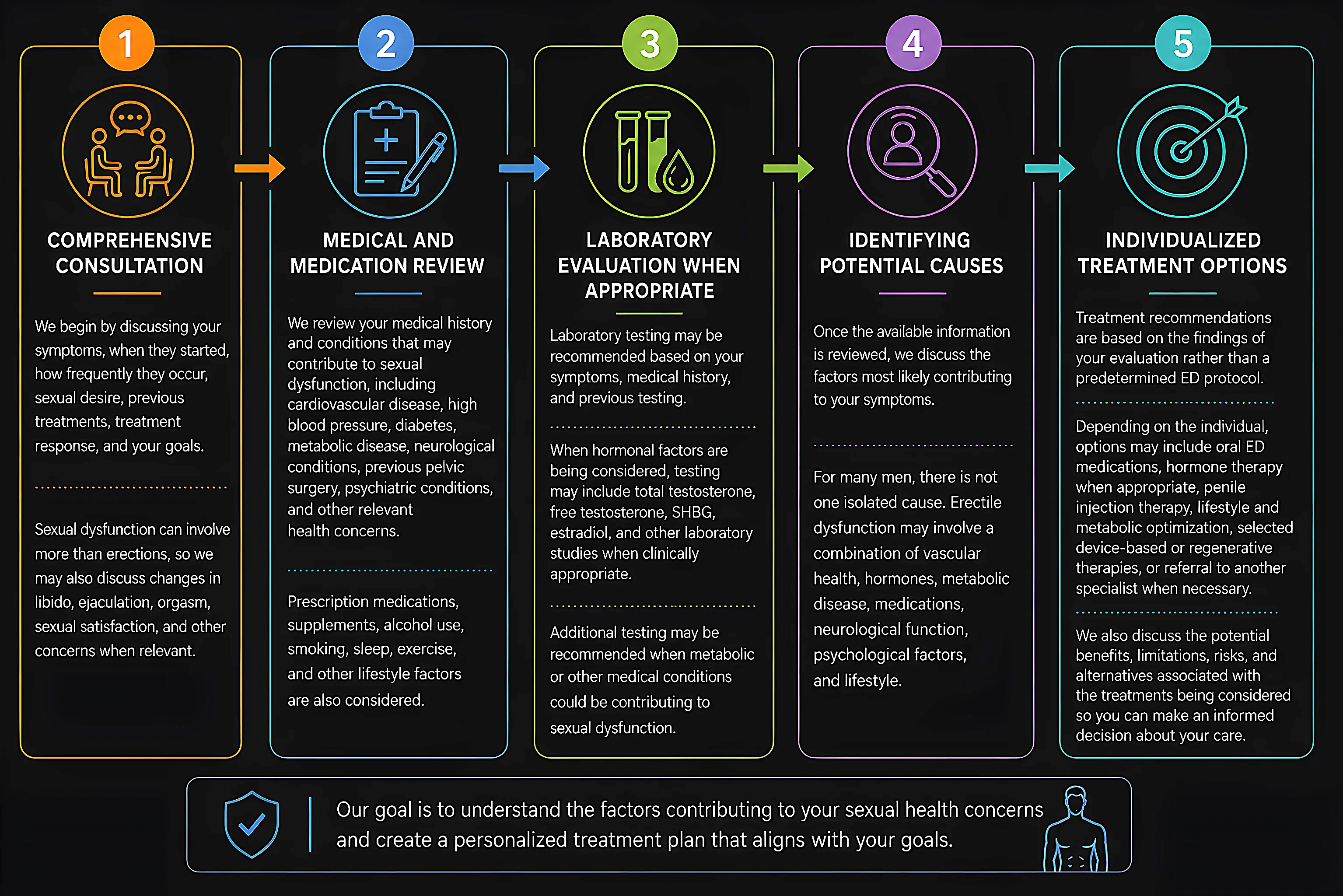
1. Comprehensive Consultation
We begin by discussing your symptoms, when they started, how frequently they occur, sexual desire, previous treatments, treatment response, and your goals.
Sexual dysfunction can involve more than erections, so we may also discuss changes in libido, ejaculation, orgasm, sexual satisfaction, and other concerns when relevant.
2. Medical and Medication Review
We review your medical history and conditions that may contribute to sexual dysfunction, including cardiovascular disease, high blood pressure, diabetes, metabolic disease, neurological conditions, previous pelvic surgery, psychiatric conditions, and other relevant health concerns.
Prescription medications, supplements, alcohol use, smoking, sleep, exercise, and other lifestyle factors are also considered.
3. Laboratory Evaluation When Appropriate
Laboratory testing may be recommended based on your symptoms, medical history, and previous testing.
When hormonal factors are being considered, testing may include total testosterone, free testosterone, SHBG, estradiol, and other laboratory studies when clinically appropriate.
Additional testing may be recommended when metabolic or other medical conditions could be contributing to sexual dysfunction.
4. Identifying Potential Causes
Once the available information is reviewed, we discuss the factors most likely contributing to your symptoms.
For many men, there is not one isolated cause. Erectile dysfunction may involve a combination of vascular health, hormones, metabolic disease, medications, neurological function, psychological factors, and lifestyle.
5. Individualized Treatment Options
Treatment recommendations are based on the findings of your evaluation rather than a predetermined ED protocol.
Depending on the individual, options may include oral ED medications, hormone therapy when appropriate, penile injection therapy, lifestyle and metabolic optimization, selected device-based or regenerative therapies, or referral to another specialist when necessary.
We also discuss the potential benefits, limitations, risks, and alternatives associated with the treatments being considered so you can make an informed decision about your care.
Treatment Benefits
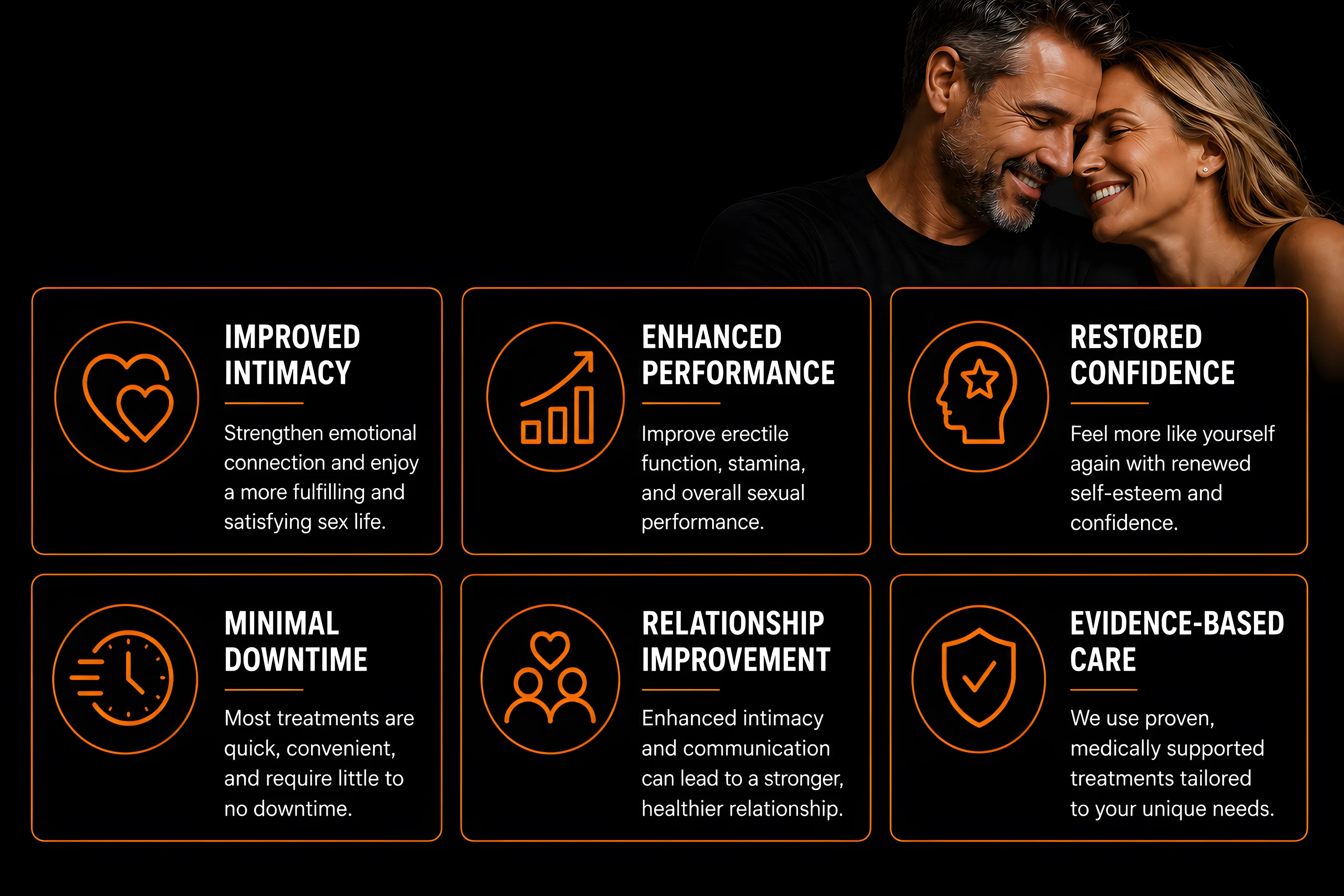
Our comprehensive approach to men's sexual dysfunction delivers real, measurable results.
Related Men's Sexual Health Resources
TRT & Estradiol: Why Men Need Estrogen and When Levels Matter
My Testosterone Is Normal—So Why Do I Still Have Symptoms?
Testosterone & Hormone Optimization for Men: A Physician’s Guide
TRT Bloodwork Explained: Testosterone, Free Testosterone, SHBG, Estradiol, Hematocrit, PSA & More
The Relationship Between High Blood Pressure and Erectile Dysfunction (ED)
How Platelet-Rich Plasma (PRP) Therapy Improves Erectile Function
Frequently Asked Questions About Erectile Dysfunction
Schedule Your Free Consultation
References & Medical Resources
The following clinical guidelines and peer-reviewed resources provide additional information regarding erectile dysfunction, cardiovascular risk, hormonal evaluation, and treatment options.
- American Urological Association (AUA). Erectile Dysfunction: AUA Guideline. American Urological Association.
auanet.org
Clinical guidance regarding the evaluation, diagnosis, counseling, and treatment of men with erectile dysfunction. - Kloner RA, et al. Princeton IV Consensus Guidelines: PDE5 Inhibitors and Cardiac Health. Journal of Sexual Medicine. 2024;21(2):90–116.
doi:10.1093/jsxmed/qdad163
Comprehensive consensus recommendations addressing erectile dysfunction as a cardiovascular risk marker, cardiovascular evaluation of men with ED, PDE5 inhibitor safety, and treatment options beyond oral medications. - European Association of Urology (EAU). EAU Guidelines on Sexual and Reproductive Health: Management of Erectile Dysfunction. European Association of Urology.
uroweb.org
Evidence-based recommendations regarding the diagnosis, evaluation, and management of erectile dysfunction. - Bhasin S, Brito JP, Cunningham GR, et al. Testosterone Therapy in Men With Hypogonadism: An Endocrine Society Clinical Practice Guideline. Journal of Clinical Endocrinology & Metabolism. 2018;103(5):1715–1744.
doi:10.1210/jc.2018-00229
Clinical guidance regarding the diagnosis of testosterone deficiency, appropriate hormonal testing, testosterone therapy, contraindications, and monitoring. - Burnett AL, Nehra A, Breau RH, et al. Erectile Dysfunction: AUA Guideline. Journal of Urology. 2018;200(3):633–641.
doi:10.1016/j.juro.2018.05.004
Evidence-based recommendations for evaluating and treating erectile dysfunction, including oral medications, vacuum devices, injection therapy, and surgical options. - Miner M, Parish SJ, Billups KL, et al. Erectile Dysfunction and Subclinical Cardiovascular Disease. Journal of Sexual Medicine. 2019;16(12):1891–1911.
doi:10.1016/j.sxmr.2018.01.001
Reviews the relationship between erectile dysfunction, vascular disease, and cardiovascular risk and discusses the importance of cardiovascular assessment in appropriate patients. - Endocrine Society. Testosterone Therapy for Hypogonadism Guideline Resources.
endocrine.org
Clinical resources addressing appropriate diagnosis, laboratory evaluation, treatment, and monitoring of men with testosterone deficiency.
Medical research and treatment recommendations continue to evolve. Some therapies used or discussed in the treatment of erectile dysfunction have substantially more clinical evidence than others. Treatment recommendations should be individualized based on a patient’s symptoms, medical history, examination, laboratory findings when appropriate, underlying causes, potential risks, and treatment goals.
Medically reviewed by Erik Natkin, DO — Founder, Medical Director, & Physician, R2 Medical Clinic. Content last reviewed August 2026.